Buying your first set of containers before you’ve checked what your building allows is the most common order of operations for a new balcony garden, and it’s backward. A soaked bag of potting mix, a cracked terracotta pot, or a drainage stain on the concrete below your unit can all turn into a conversation with a landlord or an HOA board that’s a lot more awkward after the fact than before. None of this means you need permission to grow a few herbs. It means knowing what’s actually in your lease or your governing documents, what questions are worth asking out loud, and which setups sidestep most restrictions entirely, whether you’re renting or you own the unit.
This isn’t legal advice, and it can’t be. Lease terms, HOA rules, and local landlord-tenant or condo law all vary by building, by management company, and by where you live, sometimes significantly. What follows is practical groundwork: what to check, what to ask, and how to garden in a way that’s unlikely to cause a dispute in the first place. Your actual lease, your HOA’s governing documents, and your local rules are the final word, not this article.
Start with your governing documents, not a guess
If you rent, that means your lease. If you own, it means your HOA, condo association, or (in some regions) strata bylaws. Either way, “balcony garden” is almost never mentioned by name, but several common clauses affect one indirectly. It’s worth reading through specifically looking for these instead of assuming silence means permission, since an absence of language usually just means the document was written before anyone thought to address it, not that the activity is approved.
Alterations and attachments. Nearly every standard lease, and nearly every HOA’s governing documents, has a clause prohibiting alterations without written or board consent, and balconies usually count as part of the unit for this purpose. This clause is typically aimed at drilling, painting, or permanently attaching anything to railings, walls, or the floor, which matters directly for balcony gardening since railing planters, trellises, and shelving often involve exactly that kind of attachment.

Exterior appearance and common-area rules. Buildings with an HOA, or ones with a visible street-facing facade, often include language about what can be visible from outside the unit. This is sometimes separate from the alterations clause and worth checking independently, since it can restrict things that don’t involve any drilling at all, like tall plants visible over a railing or a certain style of furniture. This is usually the single biggest difference between a standard lease and an HOA-governed building: the HOA cares about what the whole building looks like from outside, not just what happens inside your unit.

Weight and structural language. A smaller number of leases and HOA documents reference weight limits or structural load directly, usually in older buildings or ones that have had documented balcony issues in the past. If yours does, treat that number as a hard ceiling, not a suggestion. Balcony weight limits are a genuine structural question, not just a paperwork formality, and the math behind them (soaked potting mix is far heavier than it looks, and it adds up fast across several containers) is covered in detail in our guide to how much weight your balcony can hold. Read that one before you buy containers, regardless of what your governing documents do or don’t say about weight, since the structural reality doesn’t change based on what’s written down.

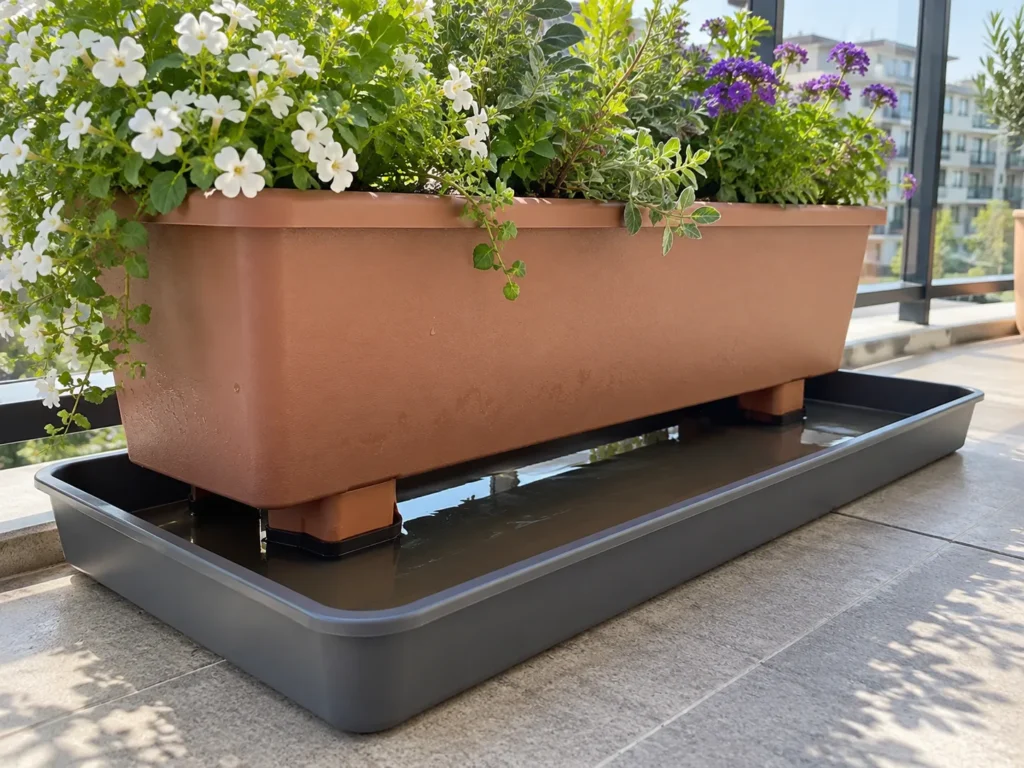
Drainage and water damage. Nearly every lease and most HOA rule sets hold the resident responsible for damage they cause, and water damage from an overflowing or poorly drained planter is one of the more common balcony-related disputes, for owners and renters alike. Look for language about water damage or maintenance responsibilities, since this is usually where a dispute over a soggy ceiling in the unit below gets resolved in practice.
Pest and inspection clauses. Some leases and HOA rules include a right-of-entry or inspection clause that technically applies to balconies as much as interior rooms. It’s rarely enforced over a planter box, but it’s worth knowing it exists, particularly if you’re growing anything that could attract pests you’d prefer to address on your own timeline instead of discovering during a scheduled walkthrough or inspection.
Insurance language. Whether you carry renters insurance or a homeowner’s/condo policy, it’s worth a quick check of what your coverage includes for water damage you cause to your own unit or a neighboring one. Some policies cover accidental water damage from something like an overflowing planter; others explicitly exclude it. Knowing which situation you’re in before anything happens is far more useful than finding out during a claim.
Questions worth asking before you start
A short conversation before you plant anything resolves more potential disputes than any amount of careful document-reading alone, because it puts your plans on record and gives whoever’s on the other end, a landlord, a property manager, or an HOA board, a chance to flag a building-specific issue you’d have no way of knowing about otherwise. A few questions are worth asking directly, even if your lease or your HOA documents seem to already answer them:
- “Is there anything specific about this balcony I should know, like weight limits, drainage issues, or past damage?” This single question sometimes surfaces information that never made it into writing at all, like a balcony that’s already had water intrusion problems or one that was flagged in a recent building inspection.
- “Are railing-mounted planters or clamp-on boxes okay, or does everything need to be freestanding?” This distinction matters a lot for layout and for weight distribution, and buildings vary widely on it.
- “Is there a plant height or visibility rule, especially for anything visible from the street or a shared courtyard?” Some buildings care a lot about this for aesthetic or HOA-compliance reasons that have nothing to do with a general alterations clause.
- “Who’s responsible if a planter causes water staining on the floor or the unit below?” Getting this answered up front, ideally in writing (a text or email reply works fine for this purpose), removes ambiguity later.
- “Can I drill or attach anything to the railing or wall, even something small like a hook?” Don’t assume a small hook is exempt from a no-alterations clause; ask specifically, since “no drilling” is one of the more commonly enforced rules even when everything else is loosely managed.
Asking these questions makes you look like someone who’s thinking ahead, not someone asking permission reluctantly, and that framing tends to get a more generous answer than silence followed by a surprise discovery later.

If you own: HOA, condo, and strata rules work differently than a lease
If your building is part of a homeowners association, a condo association, or (in some regions) a strata council, there’s an entirely separate layer of rules sitting on top of (or in place of) a lease. These rules usually live in a governing document often called the CC&Rs (covenants, conditions, and restrictions) or bylaws, and they tend to be stricter and more specific than a typical lease, because they’re written to protect the building’s uniform appearance and to prevent one unit’s choices from affecting its neighbors.
A few things show up often enough in these documents to be worth checking for specifically. Many associations restrict what’s visible from the street or from common areas, sometimes down to plant height or pot color. Some require architectural review committee approval for anything attached to a railing or exterior wall, even something as small as a hanging basket bracket, which can mean a multi-week approval process rather than a same-day yes or no. Many explicitly address drainage onto a neighbor’s balcony or a shared walkway below, since this is one of the most common sources of HOA complaints involving balcony gardens. And in buildings with an architectural style the association actively enforces, there can be rules about plant types or colors that have nothing to do with structural or water concerns at all, purely aesthetic ones.
If you’re renting in an HOA-governed building, there are two layers to check instead of one: ask your landlord directly whether they have a copy of the current rules or know who to contact for a balcony-specific question, instead of assuming your lease covers it. Landlords are sometimes several steps removed from day-to-day HOA enforcement themselves, especially if they own the unit as an investment property and don’t live in the building. If you own the unit outright, you’re dealing with the HOA directly, but the same advice applies: get the specific rule in writing rather than relying on what a neighbor says is allowed.
Avoiding a dispute over damage
Most balcony-related disputes, whether it’s a security deposit for a renter or a violation notice for an owner, come down to a disagreement over what counts as damage versus what counts as ordinary wear and tear. A little documentation up front makes that disagreement much easier to resolve in your favor if it comes up.
Photograph the balcony before you add anything. A few dated photos of the empty balcony floor, railing, and any existing marks or wear, taken when you move in or the day before you start gardening, establish a clear baseline. This is the single most useful thing you can do, and it costs nothing, regardless of whether you rent or own.
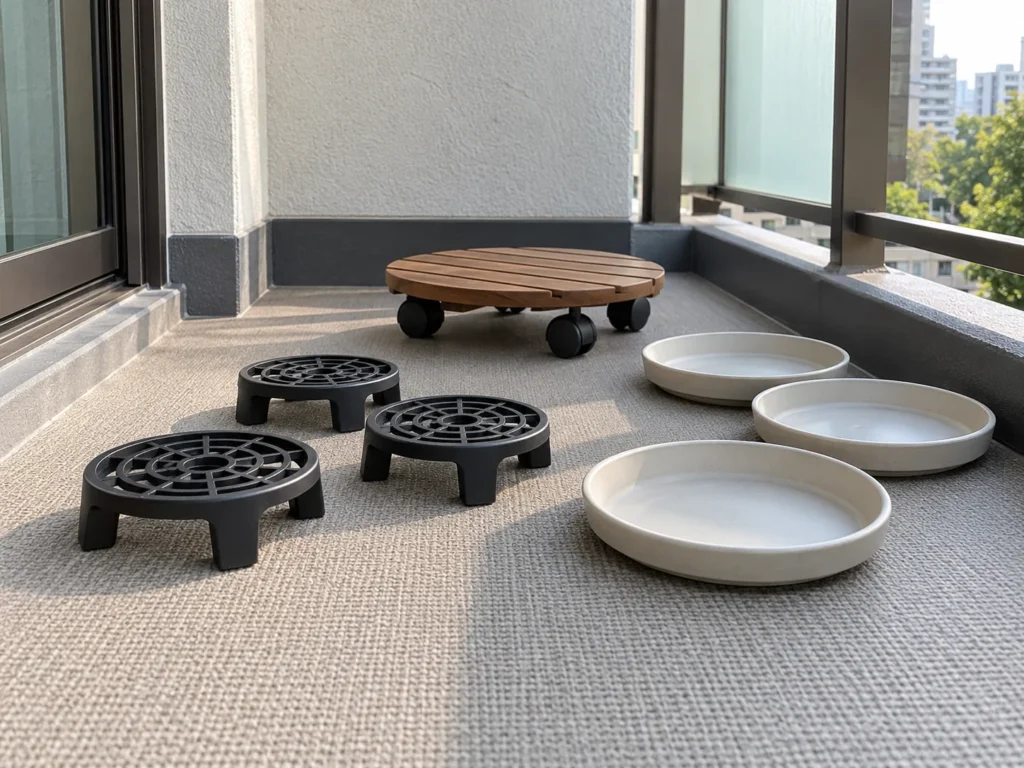
Use trays, saucers, or risers under every container. Direct contact between a wet pot and a painted or sealed balcony floor is one of the most common sources of staining and discoloration, and it’s also one of the easiest to prevent entirely. A simple plastic saucer or a set of pot feet that lift the container slightly off the surface handles most of this risk.
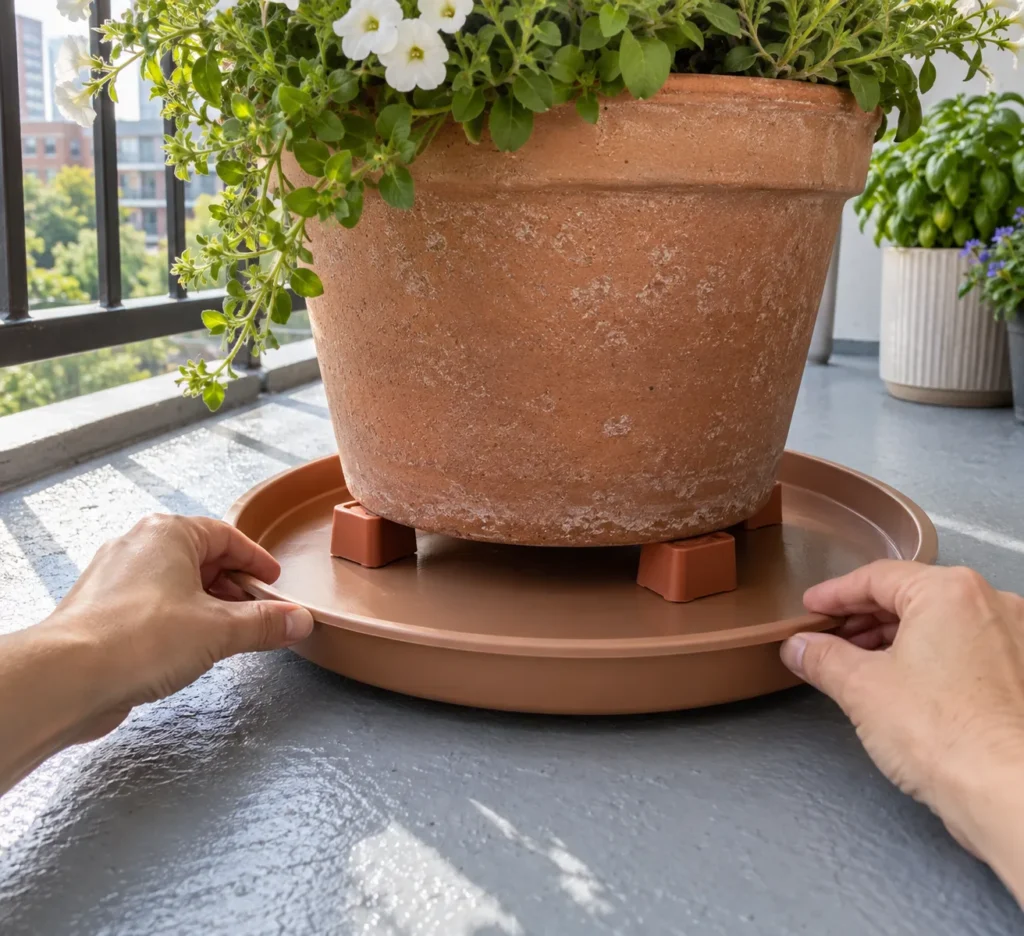
Keep drainage water off the floor below you, not just your own. Excess water running off a balcony onto the one below, or onto a shared walkway, is a frequent source of complaints that can escalate into a damage claim or an HOA violation even when your own balcony looks fine. A saucer that catches runoff, not one that just sits under the pot for looks, matters more than it might seem to.
Remove anything attached before you need to, and patch what you can. If you did get approval for something like a small hook or clamp, take it down before a final walkthrough (or before listing the unit, if you own it) and address any resulting marks yourself rather than leaving it for someone else to notice and flag. Proactively restoring a space tends to get more benefit of the doubt than leaving it for someone else to find.
Know that the burden of proof generally sits with whoever’s making the claim. In most jurisdictions, a landlord withholding part of a security deposit, or an HOA issuing a fine, needs to be able to demonstrate that the damage or violation exists and that it goes beyond normal wear and tear, not just assert it. This doesn’t mean disputes never happen, but it does mean your dated photos and any written exchanges about what you planned to do are useful evidence if a disagreement arises later.
What usually counts as wear and tear versus damage
This distinction is the crux of most balcony disputes, and it generally comes down to whether the issue resulted from ordinary use or from something avoidable. A faint water ring under a saucer that was always there, minor fading of a balcony floor finish from sun exposure, or small scuff marks from moving pots around typically fall on the wear-and-tear side, since they’d have happened to some degree no matter who lived there. A cracked tile from a dropped heavy pot, a stain that soaked through to the subfloor because there was no saucer at all, or a hole left from a drilled bracket that was never approved fall on the damage side, since a different resident with different choices wouldn’t have caused them. The line isn’t always crisp, which is exactly why the preventive steps above (saucers, photos, written approval for anything attached) matter more than arguing the definition after the fact.
Portable, no-damage setups that satisfy most rules
The gardening setups least likely to trigger any lease, HOA, or damage concern share a few features: nothing attached to the building itself, nothing resting directly on the floor without a barrier, and nothing that can’t be fully removed in an afternoon if you need to move out, sell the unit, or a rule turns out to be stricter than you expected.
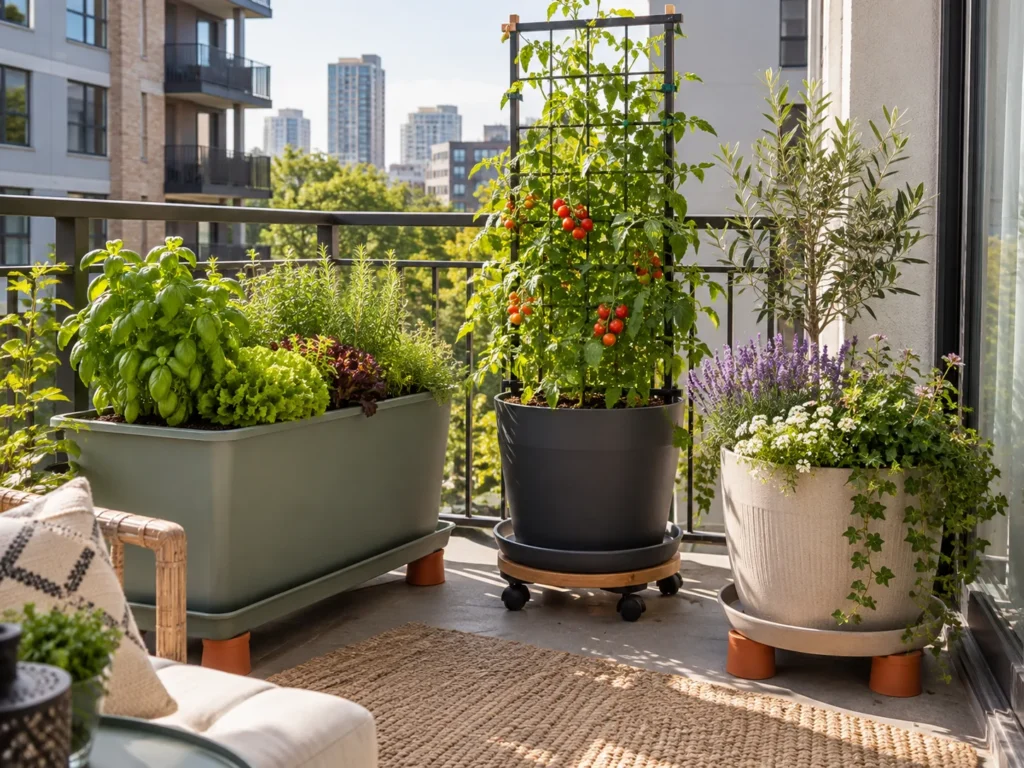
Freestanding containers on pot feet or a wheeled plant caddy sit at the foundation of this approach, since they distribute weight more evenly, lift pots off the floor surface to prevent staining, and can be relocated instantly for cleaning or an inspection. Railing-mounted planters that use a clamp or hook system rather than screws or drilled brackets achieve a similar look to a permanently attached box without the alteration. Self-watering containers with a built-in reservoir reduce both the water-damage risk and the frequency of attention your plants need, which matters if you travel; our guide to self-watering planter setup and care and our comparison of self-watering versus traditional pots both go into which situations benefit most from the upgrade. A handful of large, well-chosen pots usually beats a sprawling collection of small ones, since fewer, better-placed containers mean less total weight, fewer points of potential water damage, and a faster full teardown if you ever need one; our guide to small balcony garden layouts covers this kind of space-efficient approach directly. And for furniture or planter boxes themselves, building or buying from budget and upcycled materials, as covered in our guide to DIY balcony planters, often produces something just as functional as a built-in box without ever involving a drill.
None of these setups require a difficult conversation, and most survive a typical inspection or walkthrough without issue, because nothing about them is permanent. If you’re starting from scratch, our general guide to starting a balcony garden is a useful next step once you’ve worked through the questions above, since it covers the planning side (light, layout, plant selection) that applies regardless of what kind of building you’re in or whether you rent or own.
When a rule is unclear or two rules seem to conflict
It happens more often than you’d expect: a lease says one thing, a property manager says something slightly different in person, and an HOA document says a third thing entirely. When that happens, default to whichever answer is most reversible and lowest-commitment, and get anything unusual confirmed in writing before you act on it, even if that just means a text message you can screenshot and keep. A verbal “that should be fine” is worth having on record, not because anyone expects a dispute, but because memories of casual conversations fade and a dated message doesn’t. If a property manager and an HOA document genuinely disagree, raise that discrepancy directly instead of picking whichever version is more convenient for you; a short email asking which one governs is a normal, reasonable question, and it puts the burden of resolving the conflict where it belongs.
A balcony garden and a clean move-out, sale, or inspection aren’t in tension with each other. The people who run into trouble are almost always the ones who skipped the document-reading and the short conversation up front, not the ones who asked a slightly awkward question before buying a single pot.