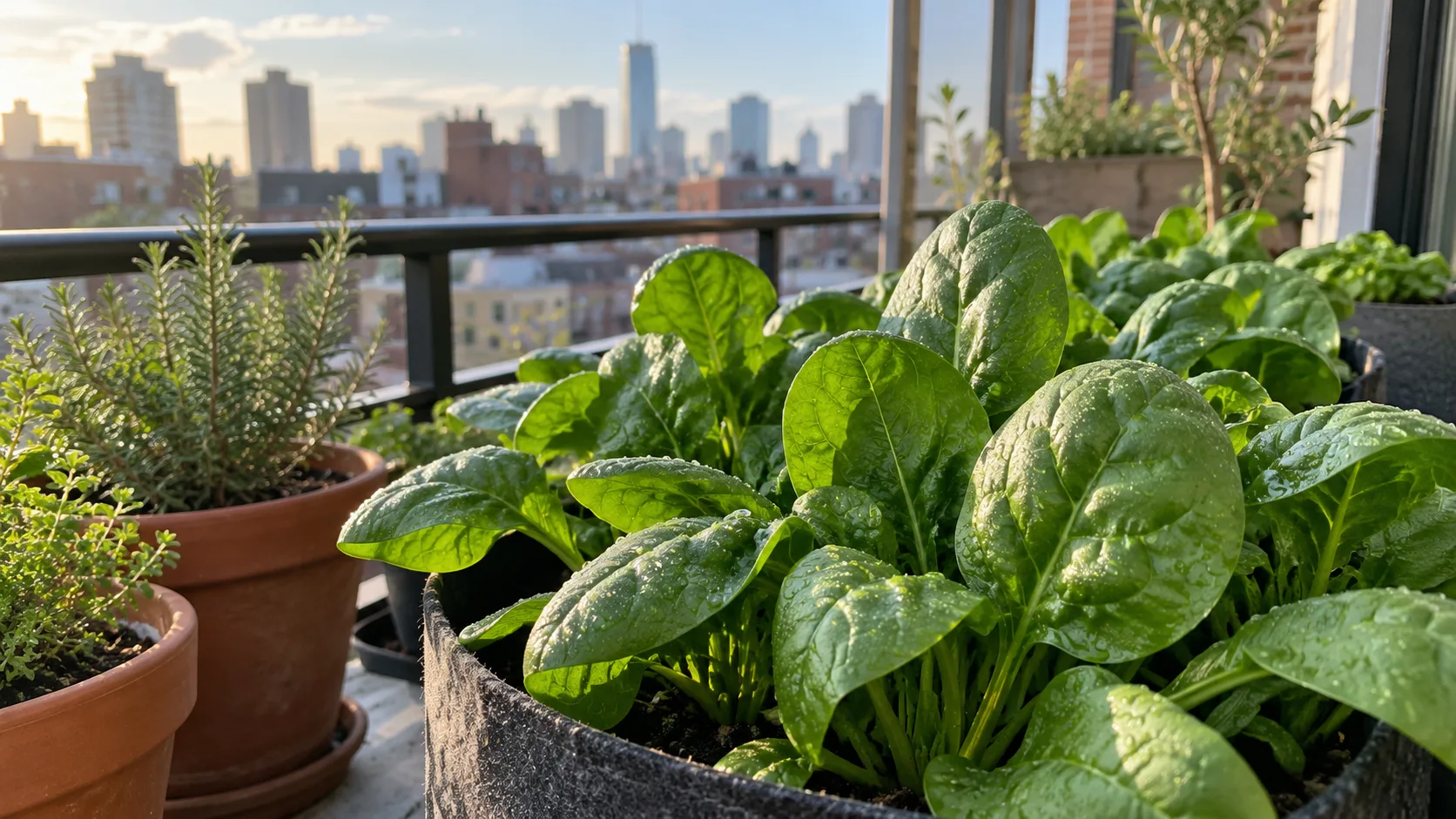
If your balcony spinach shot up a tall central stalk and turned bitter before you got more than one or two real harvests out of it, the plant did exactly what it’s built to do. Spinach is wired to flower and set seed once day length and temperature cross a threshold, and once that switch flips, there’s no watering or feeding routine that reverses it. Fixing it means working inside the two narrow windows when spinach is actually willing to grow, instead of applying a better care routine to a planting that was mistimed from the start.
Why spinach acts differently from other balcony vegetables
Most of the vegetables people grow on a balcony (tomatoes, peppers, cucumbers) are warm-season plants that stall out in cold weather. Spinach runs the opposite way. Utah State University Extension puts optimal growth below 75°F (24°C), with young plants tolerating temperatures down to 32°F (0°C) without serious damage. Above that 75°F threshold, growth and quality both decline and the plant comes under pressure to bolt, flowering early with leaves that turn bitter.

Iowa State University Extension’s yard and garden program narrows the ideal range further, putting spinach’s best daytime growth at 70 to 75°F (21 to 24°C) with nighttime temperatures of 55 to 60°F (13 to 16°C). That’s a tight band, and it explains why spinach thrives in early spring and again in fall but turns into a losing battle by midsummer on a balcony that bakes in afternoon sun.
Setting up the container
Spinach has a shallow, fibrous root system, nothing like a radish or carrot’s single taproot, so depth is forgiving. A container 6 to 8 inches (15 to 20 cm) deep is enough. Width is the bigger factor, since you’ll usually want several plants going at once to get a worthwhile harvest from a crop you eat by the leaf, not the root.
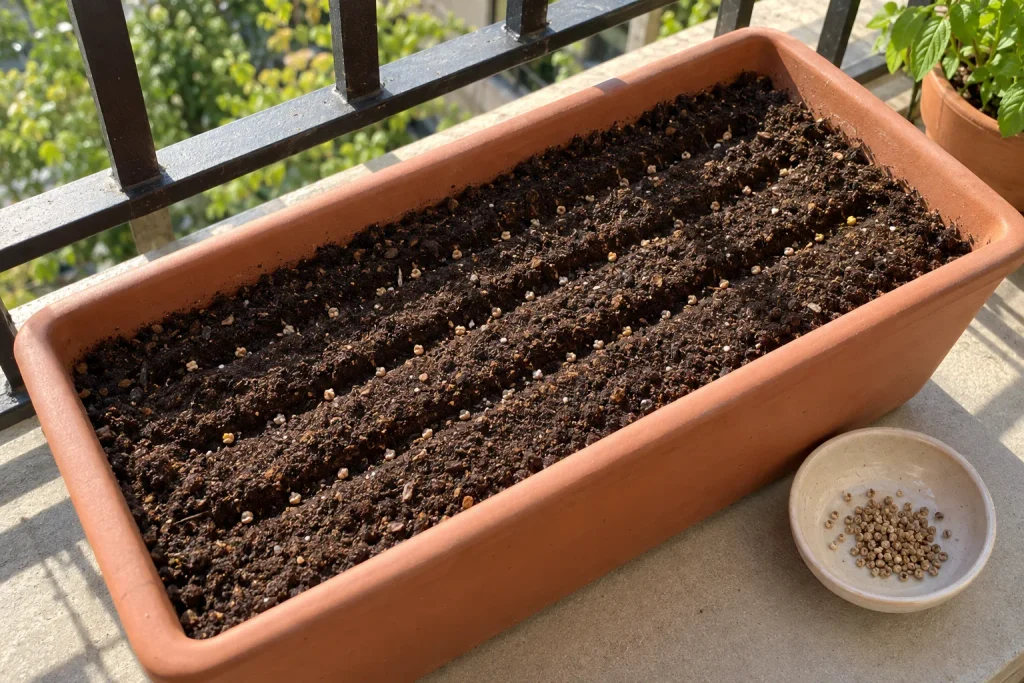
Utah State’s spacing recommendation for an in-ground row translates reasonably well to a container: about 3 inches (7.5 cm) between plants, with the equivalent of 12 inches (30 cm) between rows if you’re running more than one line across a window box. In a round pot, that works out to roughly one plant per 9 square inches (58 sq cm) of surface area once seedlings are thinned. Crowding spinach beyond that doesn’t just stunt growth; it also raises humidity between leaves at soil level, which is one of the conditions that favors fungal leaf problems in a packed container.

Because spinach’s roots sit shallow and the plant is grown for leaf mass, not a single thick root, it dries out faster than a deep-rooted crop in an identical container, especially once the surrounding air warms up. A self-watering reservoir-style planter buys more margin here than it would for something like a pepper or tomato, since it keeps the shallow root zone at a steadier moisture level between waterings instead of letting the top inch of soil swing dry every afternoon. If you’re setting up a dedicated spinach container from scratch, that style of planter is worth the extra cost over a plain pot for this crop specifically.
| Season | When to Sow | Soil Temp for Germination | Typical Harvest Window | Main Risk |
|---|---|---|---|---|
| Spring | 2 to 3 weeks before your last frost date | 40°F (4°C) and up; best at 55 to 65°F (13 to 18°C) | 4 to 6 weeks after sowing | Bolting if a late heat wave arrives before harvest |
| Fall | 50 to 75 days before your anticipated maturity date, timed so harvest lands around your first fall frost | Same 40°F-and-up range, typically easier to hold steady as temperatures drop | 1 to 2 weeks after first fall frost, sometimes longer with mild weather | Seed germination stalling if sown during a late-summer heat spike |
Utah State notes that spinach seed can be sown once soil reaches 40°F (4°C), germinates best between 55 and 65°F (13 and 18°C), takes 7 to 10 days to emerge, and germinates poorly above 80°F (27°C). If you’re sowing a fall crop during a warm stretch, start seeds indoors in a cooler spot or in the shaded side of the balcony, then move seedlings into full sun once temperatures settle, instead of sowing directly into hot container soil where germination may simply fail.
Variety choices that change your odds
Not every spinach variety handles a balcony’s heat swings the same way, and picking the right one matters more here than it does in an open garden bed with more buffer against temperature spikes. Bloomsdale Long Standing, an heirloom variety, was bred specifically to hold in the ground longer before bolting than most other types, which makes it a reasonable default for a spring container that might see an early warm spell. Tyee is a hybrid bred with resistance to downy mildew, a fungal disease that shows up on spinach leaves as yellow patches on top with a fuzzy gray-purple growth underneath, useful if your balcony stays humid between buildings or under an overhang. Space and Catalina are both bred for quicker bolt resistance in warmer conditions, making them a better match for a late-spring sowing that’s pushing right up against the 75°F ceiling.
For a fall planting where bolting isn’t the concern and cold tolerance is, flatter-leaf savoy types generally handle frost exposure a little better than the crinkled semi-savoy types, since the smoother leaf surface sheds ice more evenly. None of these differences matter much in a mild, well-timed window, but they widen your margin for error when the sowing date and the weather don’t line up perfectly, which on a balcony with one fixed microclimate is often the case.
Placing the container for light
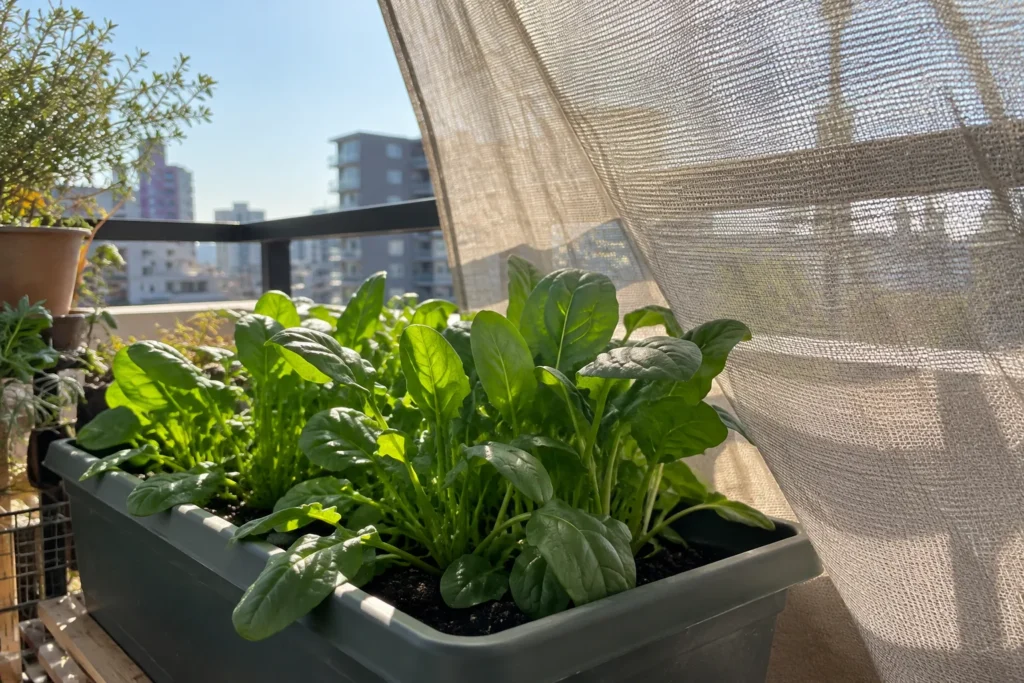
Spinach wants full sun in its cool-season windows but benefits from afternoon shade the moment temperatures start climbing toward that 75°F ceiling. On a balcony with a fixed orientation, this often means moving the container partway through the season instead of picking one spot and leaving it there for three months. A spinach pot that gets morning sun and afternoon shade from a railing, wall, or neighboring plant will hold quality longer into late spring than one that bakes all day. BalconySprout’s guide on plants for shady and north-facing balconies covers which exposure patterns count as true partial shade versus deep shade, which matters here since spinach still needs real light, just not nonstop direct heat.
Succession sowing and cut-and-come-again harvesting
Because the growing window is short, a single sowing gives you a short harvest season unless you stagger plantings. Sow a fresh round every 10 to 14 days through the spring window and again through the fall window, instead of planting one container and hoping it lasts. Each new sowing becomes ready roughly 4 to 6 weeks after seeding, per Iowa State’s figures, so staggered sowings keep something at harvest size continuously instead of producing one big flush followed by a gap.

Harvest method matters as much as timing. Spinach regrows new leaves from the center of the plant after an outer-leaf harvest, so cutting or pinching the outer, larger leaves and leaving the inner crown intact lets a single plant produce multiple pickings over its growing window instead of one single harvest. Pull the whole plant only on your last harvest of that window, right before bolting risk rises, so you’re not leaving a plant in the container past the point where it’s still producing usable leaves.

What to do once bolting starts
Once a spinach plant sends up a central flowering stalk, the leaves below it turn more bitter with every additional day, and no amount of water, shade, or fertilizer reverses the process. At that point the only useful move is to harvest everything usable immediately and compost the plant, then start a fresh sowing timed to the next window instead of nursing the bolted plant along. Trying to save a bolting plant by moving it into deeper shade slows the process slightly but doesn’t stop it, and the leaf quality during that extra time is rarely worth the container space.
The better long-term fix is heading off bolting before it starts: watch your local forecast for the first stretch of days consistently over 75°F, and plan your last spring sowing so it reaches harvest size before that stretch arrives, not partway through growth. Once you know your typical date for that heat threshold, count backward 4 to 6 weeks to find your final safe spring sowing date.
Pests specific to spinach
Aphids show up on spinach the same way they do on most balcony plants, but leaf miners are the pest that’s more specific to leafy greens like spinach and chard. Iowa State’s extension pest list for leafy greens names leafminers alongside aphids, leafhoppers, slugs, and caterpillars as the common problems on this crop group. Leaf miner larvae tunnel between the leaf’s upper and lower surfaces, leaving pale, winding trails visible through the leaf instead of a hole or a chewed edge, which is the giveaway that separates them from caterpillar or beetle damage.

Because the tunnels are inside the leaf tissue, sprays applied to the leaf surface don’t reach the larvae effectively. The practical response is removing and disposing of affected leaves as soon as you spot the tunnels, before the larvae mature and drop to the soil to pupate, and keeping a lightweight insect mesh over the container during the weeks when adult leaf miner flies are laying eggs. Since spinach is almost always eaten raw, this exclusion-first approach is generally a better fit than reaching for a spray on a crop you’re not going to cook. BalconySprout’s rundown of balcony pests beyond aphids covers leaf miners and several other insects in more depth if you’re trying to identify damage you’re not sure about.
Watering and feeding
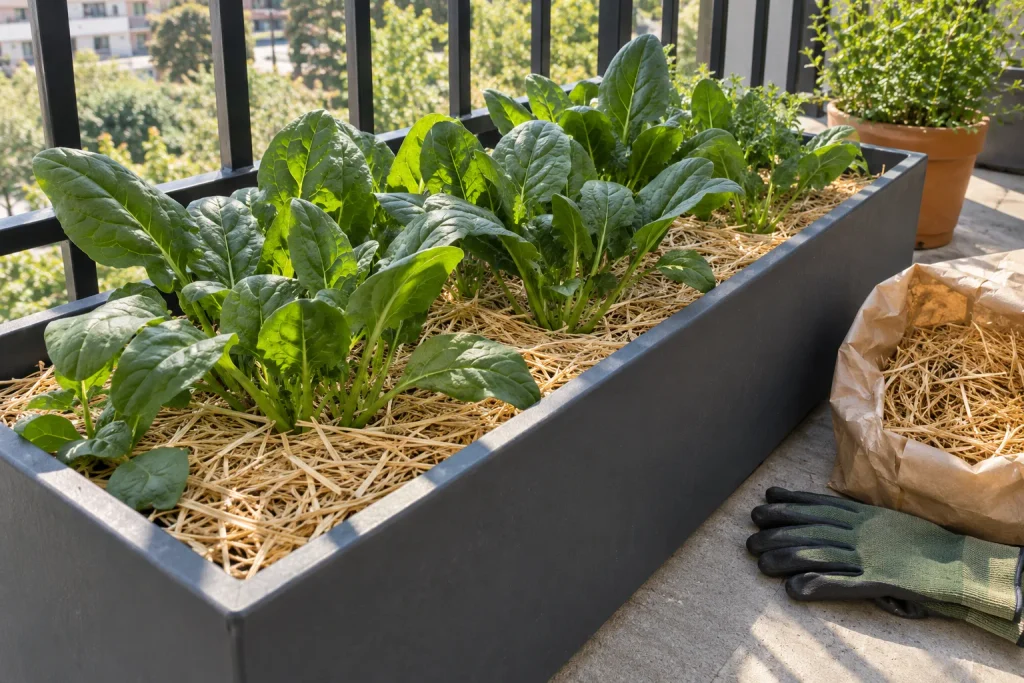
Spinach’s shallow roots dry out faster than a deep-rooted crop in the same size container, so check soil moisture daily once temperatures climb into the growing season’s warmer end. Iowa State notes that an in-ground spinach planting uses roughly an inch of water a week; in a container, that translates to more frequent, lighter watering instead of one weekly soak, since potting mix in a small pot loses moisture faster than garden soil. A thin layer of mulch (even a half inch of straw or shredded leaves) on the soil surface slows that moisture loss and keeps root-zone temperature a few degrees cooler on hot days, both of which buy a little extra time before bolting pressure sets in.
Spinach is a relatively light feeder compared to fruiting crops, but because it’s grown for leaf mass in a short window, a dilute feeding every other week during active growth supports faster, larger leaves than letting a container coast on whatever nutrients were in the original potting mix. Skip feeding in the final two weeks before an expected bolt-triggering heat stretch; by that point the plant’s energy is shifting toward flowering regardless, and the extra nitrogen mostly goes to waste.
Yellowing on spinach is worth distinguishing from the bolting bitterness problem, since the two get confused but have different causes and different fixes. Pale, yellowing older leaves on a plant that’s otherwise growing normally usually points to a container running low on nitrogen partway through its harvest window, not heat stress, and responds to a feeding within a few days. Yellowing paired with a slowed-down, stunted plant that isn’t putting out new leaves is more often a sign of a container that’s gone too dry between waterings for too many cycles, which spinach’s shallow root system tolerates worse than most other balcony crops. Either way, catching yellowing early and correcting it fast matters more with spinach than with a longer-season crop, since there isn’t much growing window left to recover in before the plant bolts regardless of what you do.
Yield expectations and fall-specific notes
Utah State’s data for an in-ground 10-foot row puts yield at 4 to 6 pounds (1.8 to 2.7 kg) of spinach. Scaled down to a typical balcony planter holding six to eight plants, that works out to roughly a pound to a pound and a half (0.45 to 0.7 kg) of leaves across the full harvest window with staggered outer-leaf picking, enough for a few salads and a couple of cooked side dishes, not a bulk harvest.
Fall-grown spinach gets a quality bonus that spring spinach doesn’t: light frost improves flavor by triggering the plant to convert stored starches into sugars, so leaves harvested after a cold night often taste sweeter than the same variety grown in spring. If you’re deciding which window to prioritize with limited container space, the fall run tends to produce better-tasting leaves with less bolting risk, provided you time the sowing correctly against your local frost dates. For a broader look at what else grows well in that same fall window, BalconySprout’s guide to fall vegetables and herbs for balcony containers lays out companion crops that share spinach’s cool-season timing, so you can fill out the rest of the container with plants that want the same conditions instead of guessing.

Both windows share one rule that matters more than any single technique: match the sowing date to the temperature forecast, not the calendar date. A spring that warms up two weeks early shrinks your harvest window by exactly that much, and a fall that stays warm into October pushes your sowing date back to match. Spinach rewards growers who track actual weather over growers who plant by habit.
Sources: Utah State University Extension, “How to Grow Spinach in Your Garden” (extension.usu.edu); Iowa State University Extension and Outreach, “Growing Leafy Greens in Iowa” (yardandgarden.extension.iastate.edu).