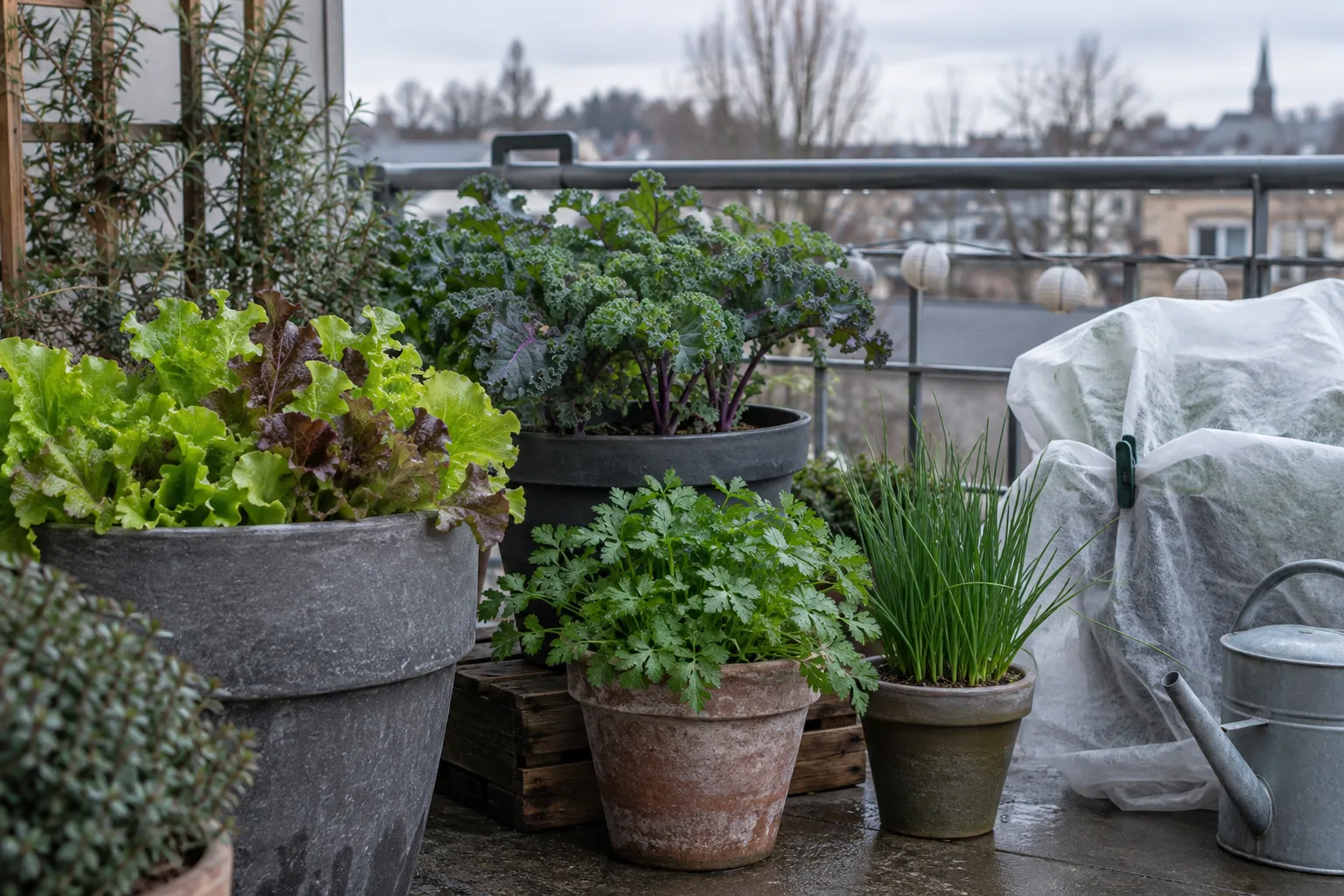
A short, cold-edged growing season doesn’t rule out a balcony garden. It just changes what you plant and when. The winning approach in a cool climate is to lean on cold-tolerant crops, hold warm-weather plants until the nights settle, and give your pots a little shelter at each end of the season.
Containers make this both easier and harder than gardening in the ground. Easier because you can move pots to catch warmth or dodge a frost; harder because a pot’s roots sit exposed to the cold on all sides. This guide covers how to work with a short season on a balcony without any permanent fixtures.
A simple seasonal pattern: Start and end the season with cold-hardy crops like lettuce, spinach, radishes, kale, and chives. Hold heat-lovers like tomatoes and basil until nights stay above about 50 °F (10 °C). Shelter pots against the building wall, and be ready to cover or move them when frost threatens.
Know your frost dates and night temperatures
Two numbers shape a cool-climate garden more than anything else: your last expected frost in spring and your first expected frost in autumn. The stretch between them is your growing season. Local extension services and gardening groups publish average frost dates for most regions; worth a quick look before you plant.
Night temperature matters as much as the calendar. Warm-season plants stall when nights drop below about 50 °F (10 °C), even if the days feel pleasant. A balcony can run a little warmer than open ground because the building holds heat, but an exposed, windy balcony can also lose that warmth fast after sunset. Watch your own conditions rather than assuming.
Cold-tolerant crops that suit short seasons
Cool-season crops are the backbone of a short-season balcony. Many prefer cool weather and shrug off a light frost, which lets you plant early in spring and keep going into autumn.
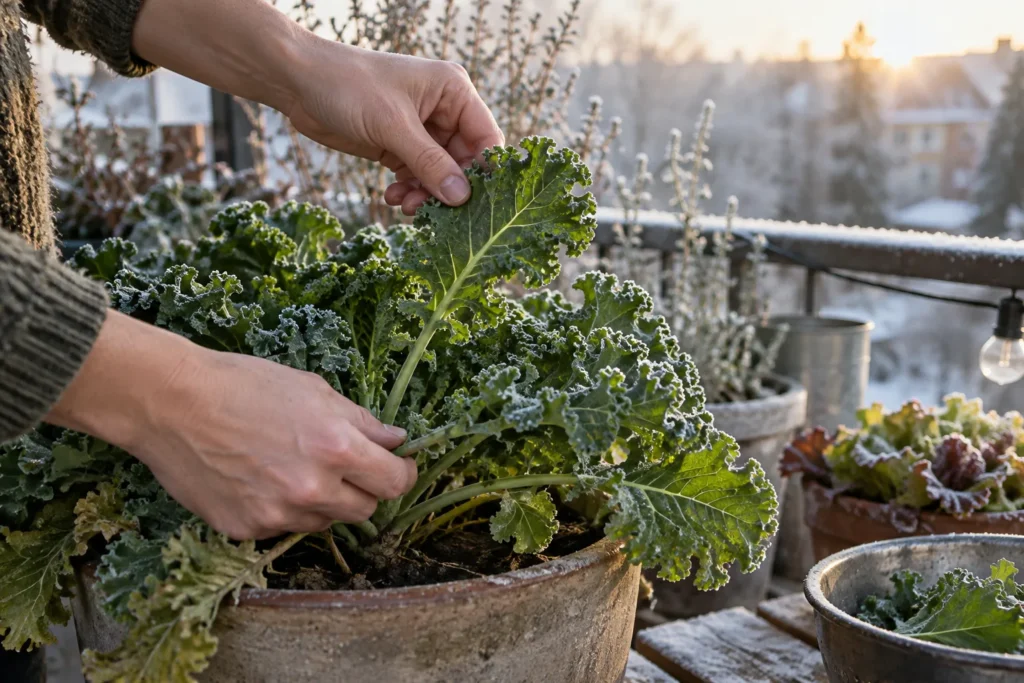
According to Penn State Extension, vegetables that tolerate a light frost (around 30 to 32 °F / -1 to 0 °C) include leaf lettuce, spinach, radishes, green onions, Swiss chard, and beets. Hardier crops that take a harder freeze; down toward the low 20s °F (around -6 °C): include kale, carrots, and broccoli. Some, like kale, even taste sweeter after a light frost.
- Leaf lettuce and spinach: fast, shallow-rooted, and happy in cool weather and part shade. Ideal for early spring and autumn pots.
- Radishes: ready in about a month and tolerant of cold, so you can sow them early.
- Kale and Swiss chard: tough, productive over a long season, and cold-hardy well past the first light frosts.
- Chives and other cold-hardy herbs: perennial in many cool regions and among the first green things each spring.
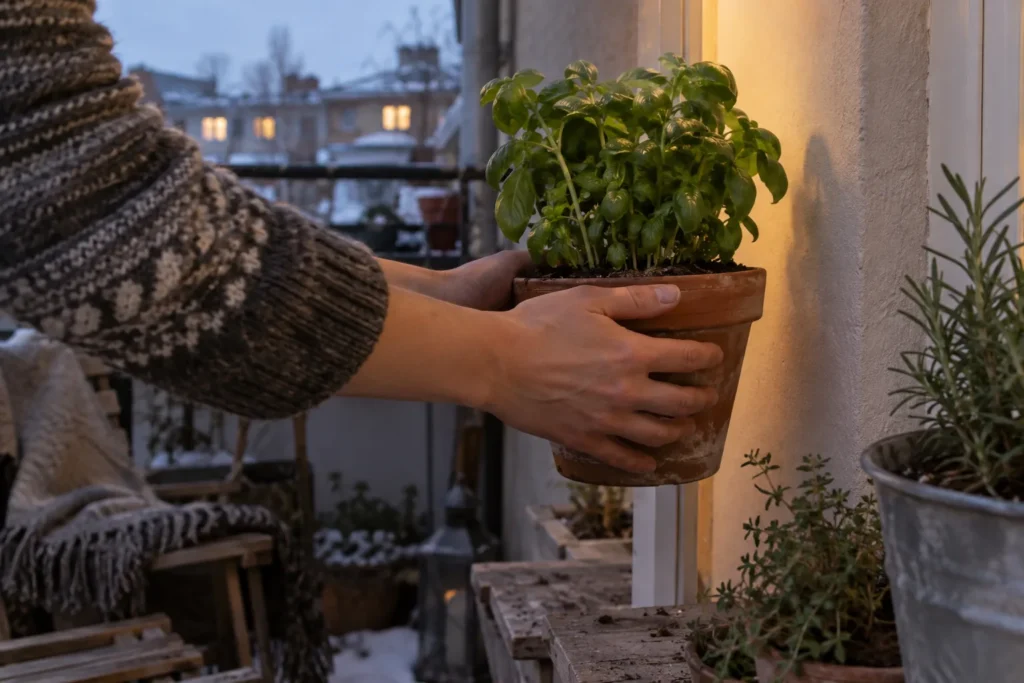
Warm-season crops still have a place; a cherry tomato, a pepper, some basil; but treat them as the summer centerpiece, planted after the frost risk passes, not as your season openers.
Stretching the season without permanent fixtures
Renters and most condo dwellers can’t build a greenhouse or bolt anything to the structure, but a few portable tricks add useful weeks at each end of the season.
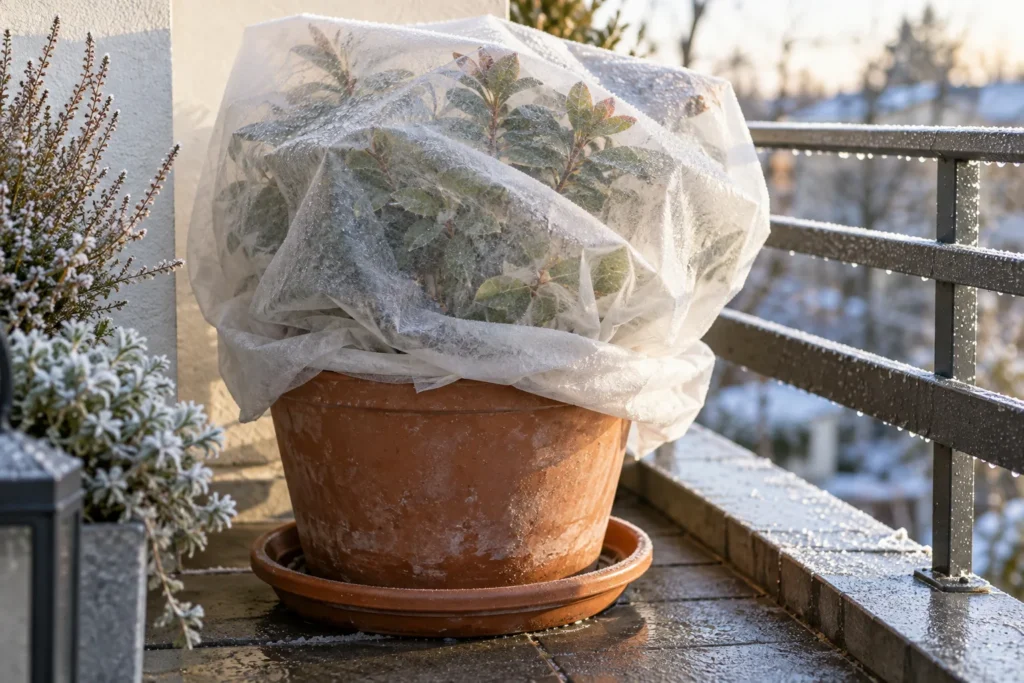
- Cover plants on frosty nights. A lightweight fabric row cover, an upturned bucket, or even an old sheet draped over a pot traps enough ground warmth to fend off a light frost. Uncover in the morning so the plant gets light and air.
- Use the wall. The building wall holds daytime heat and releases it slowly at night. Grouping pots against it gives a few degrees of shelter compared with the open railing edge.
- Move pots indoors temporarily. When a hard frost is forecast, the ability to carry a tender pot inside for a night is a container gardener’s biggest advantage. Keep your frost-sensitive plants light enough to lift.
- Start early indoors. Raising seedlings on a bright windowsill a few weeks before the last frost gives them a head start, so they’re ready to go out the moment conditions allow.
Keep any covers loose and remove them by day. A sealed cover in sun can overheat a plant as surely as frost can damage it.
Wind chill makes a balcony colder than the forecast
Balconies above the second or third floor are windier than ground-level gardens, and wind pulls heat and moisture out of pots quickly. On a cold day, an exposed balcony can feel; and behave; several degrees colder than the sheltered street below.
Group pots together so they shelter each other, tuck the most tender ones into a corner or against the wall, and choose sturdy, lower-growing plants over tall, fragile ones on an exposed balcony. Wind also dries soil fast, so even in cool weather, check moisture more often than you’d expect.
Protect containers from freeze damage
Common mistake: leaving terracotta and ceramic pots full of wet soil outside all winter. Water in the pot freezes, expands, and cracks the container. Empty or move rigid pots before hard frost.
Cold is hard on pots as well as plants. Terracotta and cheap ceramic crack first when trapped water freezes and expands. Resin, thick plastic, and fabric grow bags handle freezing far better and are the safer choice if pots stay out through winter.
Before the first hard frost, empty any pots you’re not overwintering, store what folds or stacks, and lift pots that stay outside onto pot feet so they aren’t sitting in ice or standing water. Raising a pot off a cold, wet floor also helps the roots.
Overwintering perennial herbs and plants
Some perennial herbs come back each year in mild climates but need help where winters are harsh, because a pot gives roots far less insulation than the ground. Chives, thyme, oregano, and sage are relatively cold-hardy; rosemary is more tender and usually needs to come indoors.
For the tender ones, move the pot to a bright indoor windowsill before the first hard frost, water less through the dark months, and expect slow growth until spring. Hardier herbs can often stay outside if you group them against the wall and accept that they’ll die back and return. Check a plant hardiness zone map for your area, and remember that a container runs colder than the zone suggests.
Choose fast-maturing varieties
When the frost-free window is short, the variety matters as much as the crop. Seed packets and plant labels list a “days to maturity” figure; how long from planting to harvest. In a cool climate, favor the shorter numbers.
Look for tomatoes described as early or short-season, which ripen in fewer days than large beefsteak types and are far more likely to finish before autumn cold arrives. The same logic applies to peppers and other warm crops: a compact, quick variety in a pot beats an ambitious one that never ripens. For greens and radishes, the fast maturity is built in, which is exactly why they suit short seasons so well.
A simple cool-climate planting plan
You don’t need a detailed calendar; just three rough waves built around your last spring frost and first autumn frost.
- Early spring, before the last frost: sow cold-hardy greens, radishes, and spinach. They tolerate chilly weather and get your balcony growing weeks ahead of the warm crops.
- After the last frost, once nights are mild: plant the warm-season centerpieces; a cherry tomato, a pepper, some basil; in their large pots.
- Late summer into autumn: sow another round of quick greens and radishes as the heat fades. Cool weather sweetens them, and covers can stretch the harvest past the first light frosts.
Timing errors in a short season
- Planting warm crops too early. A single cold week sets back tomatoes and basil more than an early start helps. Wait for settled warm nights.
- Trusting the daytime forecast. Pleasant afternoons can hide near-freezing nights. Watch overnight lows, not just the daytime high.
- Ignoring wind. An exposed balcony loses heat and moisture fast. Shelter tender pots against the wall.
- Leaving rigid pots full of wet soil out all winter. Freeze-cracking ruins terracotta and ceramic. Empty or store them first.
When cold slows the plants
- Seedlings stalled and sitting still. Usually cold nights. Warm-season plants pause below about 50 °F (10 °C); wait for warmth rather than adding fertilizer.
- Blackened, mushy leaves after a cold night. Frost damage on a tender plant. Trim the damage and protect or move the pot on future cold nights.
- A cracked pot after winter. Freeze damage. Next year switch to resin or fabric, or bring rigid pots in.
- Bolting greens in a warm spell. Cool-season crops run to seed in heat. Harvest them before the warmest weeks and replant for autumn.
Set the first planting dates
Look up your average last-frost date, then plan two waves: cold-hardy greens and radishes to open and close the season, with a warm-season centerpiece in the middle once nights are reliably mild. Keep tender pots light enough to move, and have a cover ready for surprise frosts.
From there, choosing the right plants for your light is the next step. Our guides on measuring balcony sunlight and the best balcony herbs help you build a garden that fits both your climate and your conditions.
Adjust for exposure
A cold balcony may also be a windy one; use the wind-resistant setup. For low direct light, choose from the shade guide.
Cold tolerance varies a lot by plant type; see our guide to annuals vs perennials for a balcony garden before assuming a favorite won’t survive.