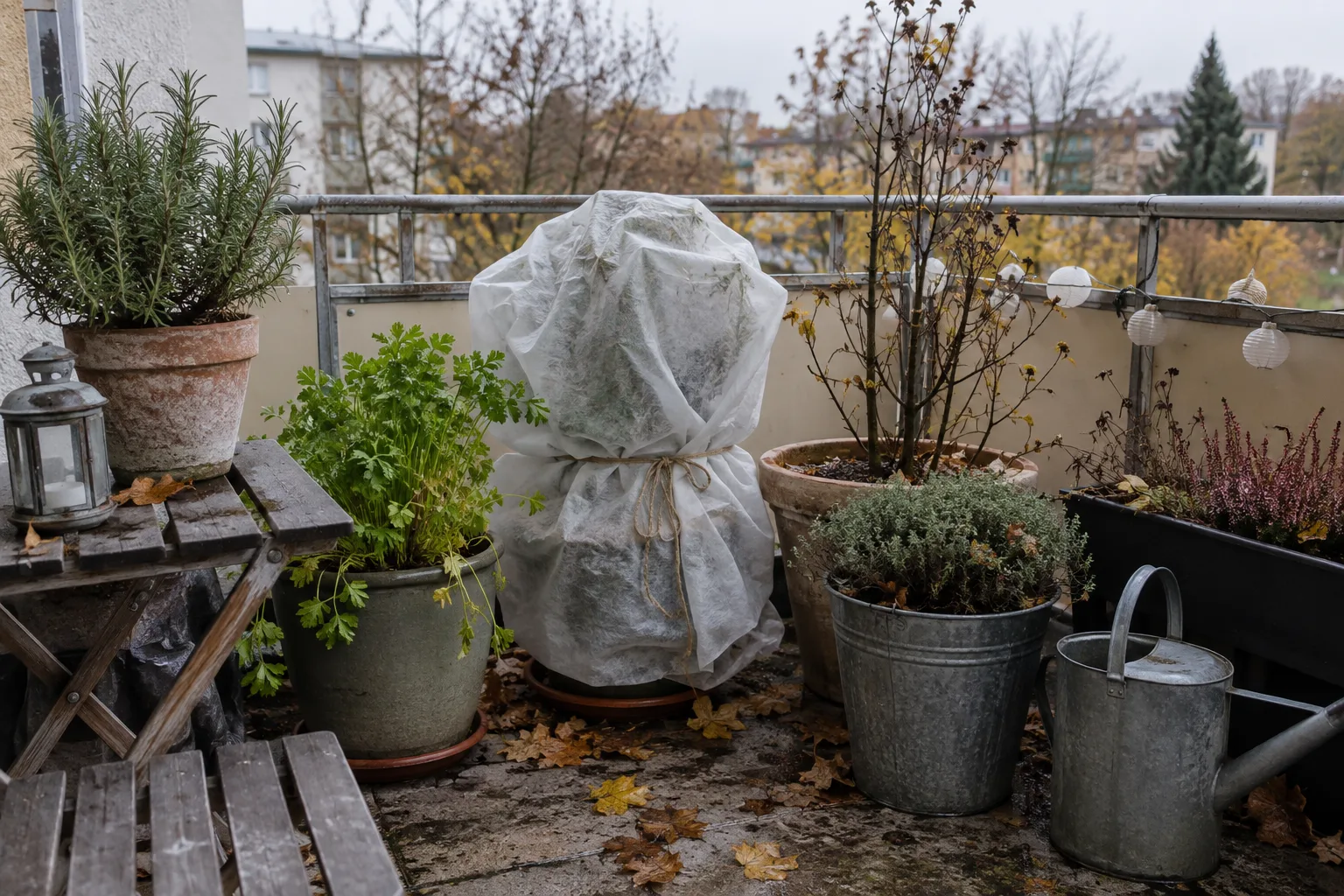
A balcony garden faces winter with less protection than a backyard bed. Pots have no surrounding soil mass to buffer temperature swings, roots are exposed on more sides, and wind at height hits harder than it does at ground level. A little preparation before the first hard freeze protects both your plants and your containers, so you’re not starting from zero next spring, scrambling to replace pots or plants that could have made it through with a bit of forethought. It’s not glamorous work, but there’s a real satisfaction in tucking a beloved rosemary or a favorite perennial in for the winter and seeing it come back to greet you in April.
This checklist covers what to do with plants, pots, and equipment as the season turns, whether you’re gardening somewhere with a mild winter or one with hard, sustained freezes.
Part of our complete guide to fall balcony gardening.
Quick answer: Before your first hard freeze, bring tender and tropical plants indoors, cut back perennials that die to the ground, empty and store unglazed terracotta pots (they crack when wet soil freezes), and drain any self-watering reservoirs. Hardy perennials left in containers benefit from extra insulation around the pot, since roots in a container are far more exposed to cold than roots in the ground.
Why container roots are more vulnerable than garden roots
A plant’s roots are usually hardy to a lower temperature than its top growth, but that hardiness rating assumes roots insulated by the surrounding earth. In a container, roots are exposed to cold air on every side of the pot instead of just from above, so a plant rated for your winter in the ground may still struggle in a pot outdoors. As a rule of thumb, treat a containerized perennial as if it’s hardy to one full zone colder than its rating when deciding whether it needs protection or needs to come inside, and when in doubt about a borderline plant, protect it; losing a season’s growth to an unnecessary precaution costs far less than losing the plant outright.
Sort your plants into three groups
Bring indoors
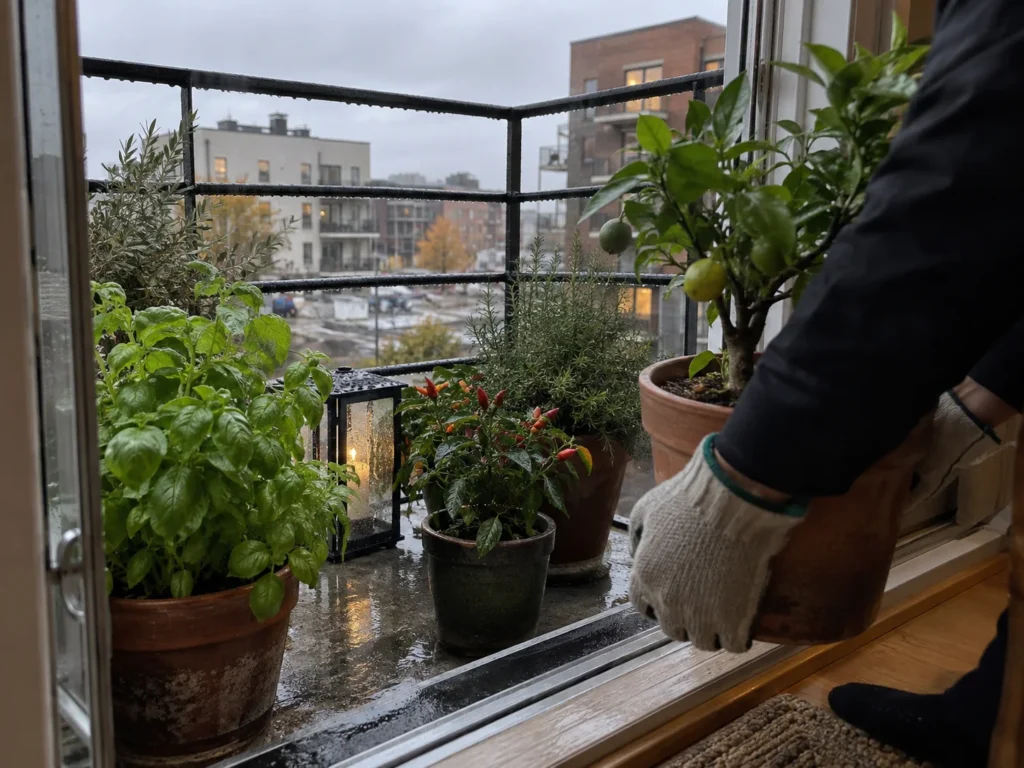
Tropical and tender plants that can’t handle any frost, think many herbs like basil, tender flowering annuals, and houseplants that spent summer outside, need to come inside before the first frost, not after. Check plants closely for pests before bringing them in, since aphids or other insects that were manageable outdoors can multiply quickly indoors. A bright windowsill or grow light helps plants adjust to lower indoor light levels, and expect some leaf drop in the first couple of weeks as the plant adjusts to a lower-light, less humid indoor environment; that’s normal transition stress, not a sign something’s wrong. In spring, reverse the process gradually instead of moving a plant straight from indoor light back into full outdoor sun, which can scorch leaves that adjusted to weaker indoor light over the winter.
Cut back and leave in place
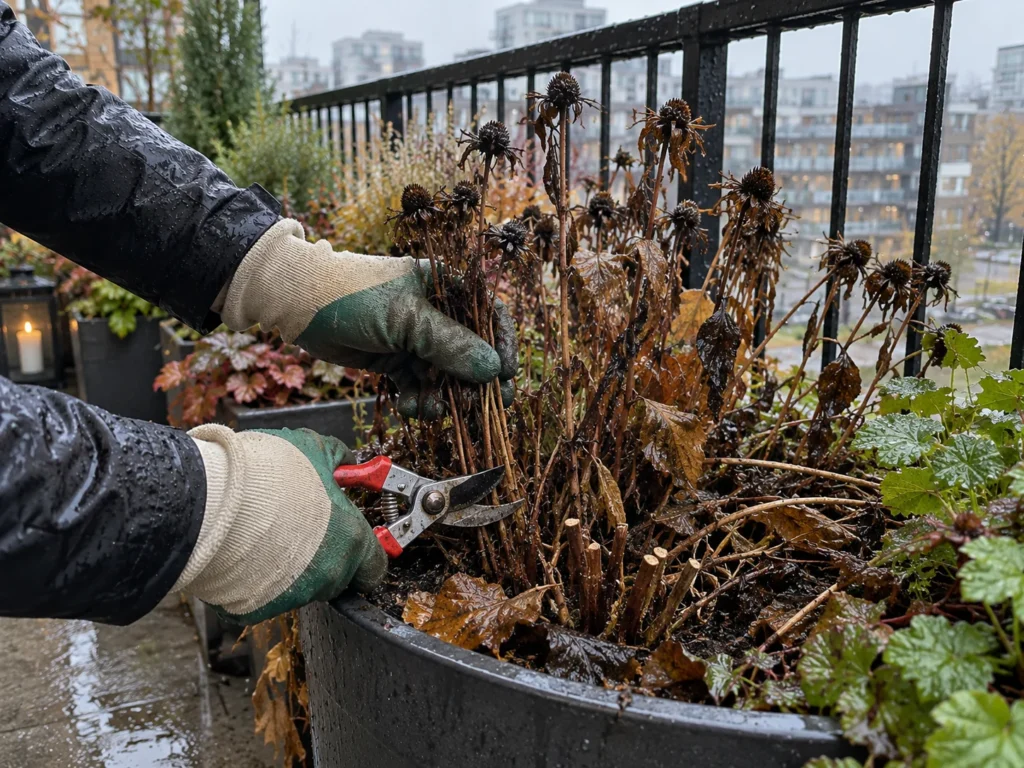
Many perennials that die back to the ground in winter (ornamental grasses, some flowering perennials) can stay in their containers outside if the container itself is protected. Cut back dead foliage after it’s been blackened by frost, which signals the plant has gone dormant, not while it’s still green. Leaving a few inches of stem instead of cutting all the way to the soil line gives the crown a little extra insulation.
Protect in place
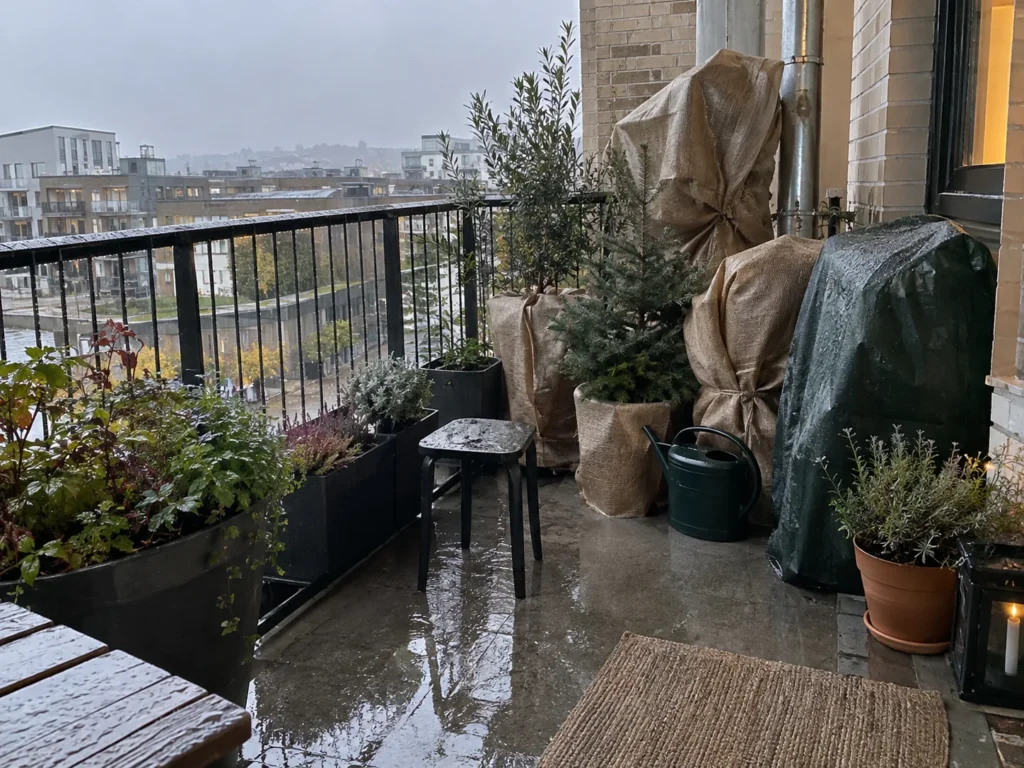
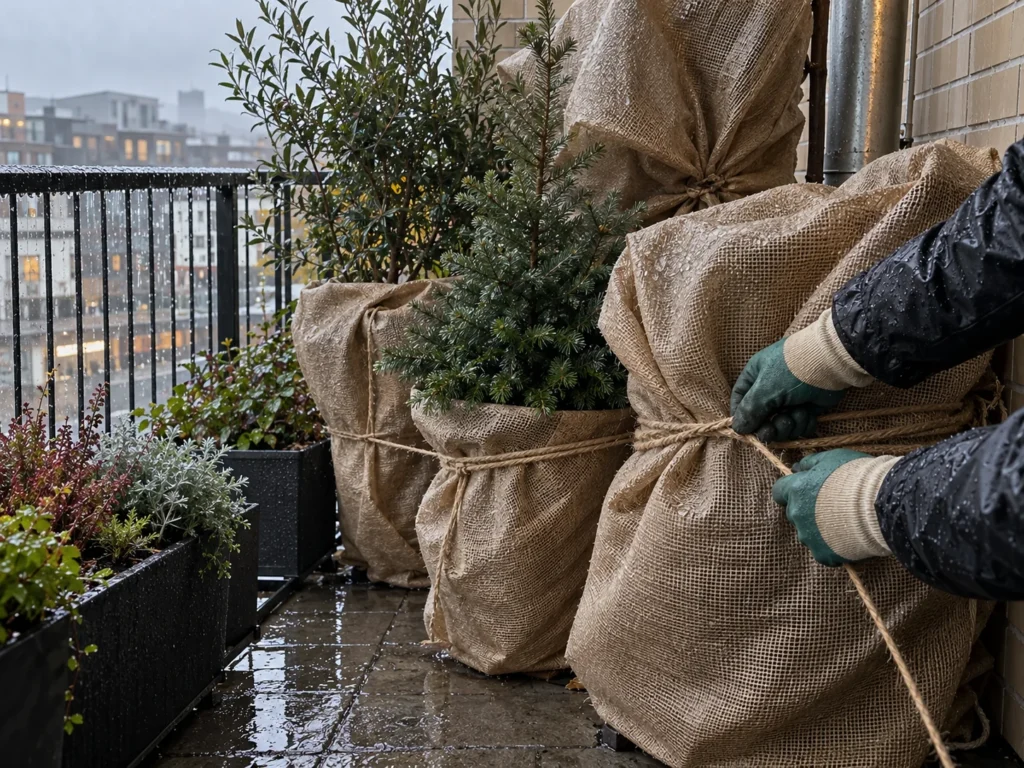
Hardy perennials and shrubs that are rated for your winter can often stay outside in their containers with some extra insulation. Group pots together against a wall, which is usually the warmest, most wind-sheltered spot on a balcony. Wrapping the outside of the pot in burlap, bubble wrap, or a commercial pot insulation sleeve reduces how much the root zone swings with outdoor temperature. A thick layer of mulch on top of the soil adds further insulation from above.
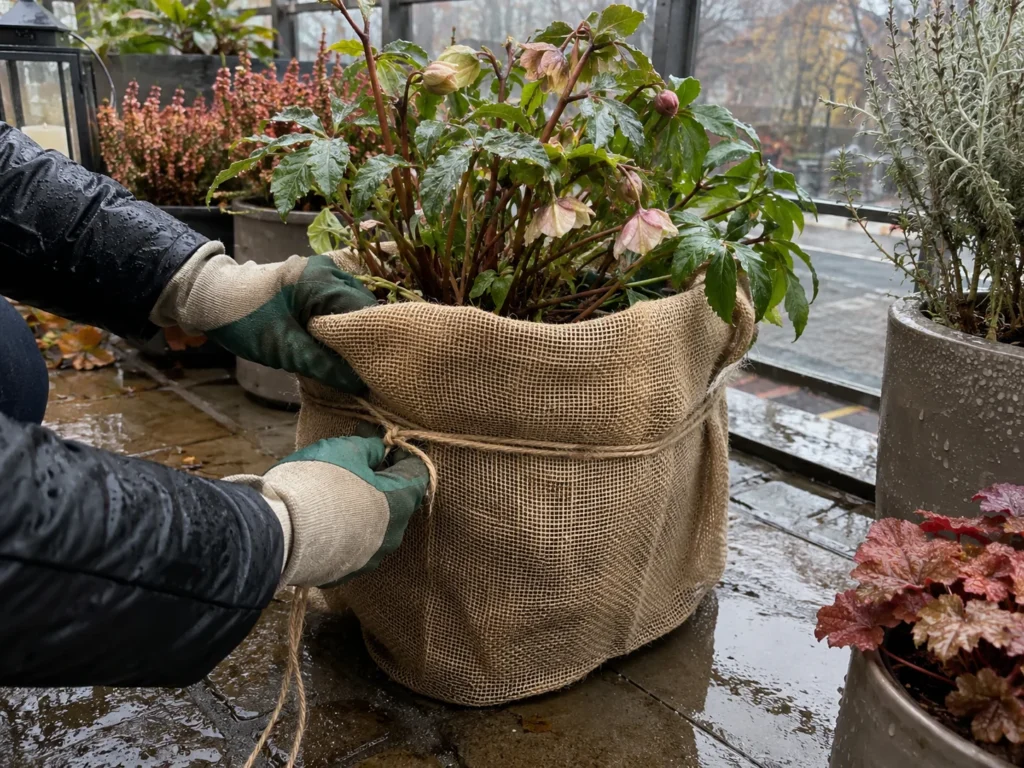
Two more ways to overwinter a hardy container plant
Beyond grouping pots against a sheltered wall, two other techniques handle harder winters well if your balcony setup allows for them.
Sinking the pot. If you have even a small planter box or a spare large container filled with mulch, wood chips, or straw, burying a hardy plant’s pot into that material up to its rim insulates the root zone the same way garden soil would. The surrounding material buffers temperature swings far better than a pot sitting exposed on four sides in open air.
Thermal blankets or frost cloth. Once nights are consistently dropping into the mid-20s°F (around -4°C), wrapping a grouped cluster of pots in a frost blanket or heavy row cover can create a noticeably warmer pocket of air underneath, often 8 to 10°F (about 4 to 6°C) warmer than the surrounding air. This won’t turn a tender plant hardy, but it can be the difference for a borderline-hardy perennial during your coldest week of the year. Remove or vent the cover once temperatures moderate so plants don’t overheat or stay damp underneath it.
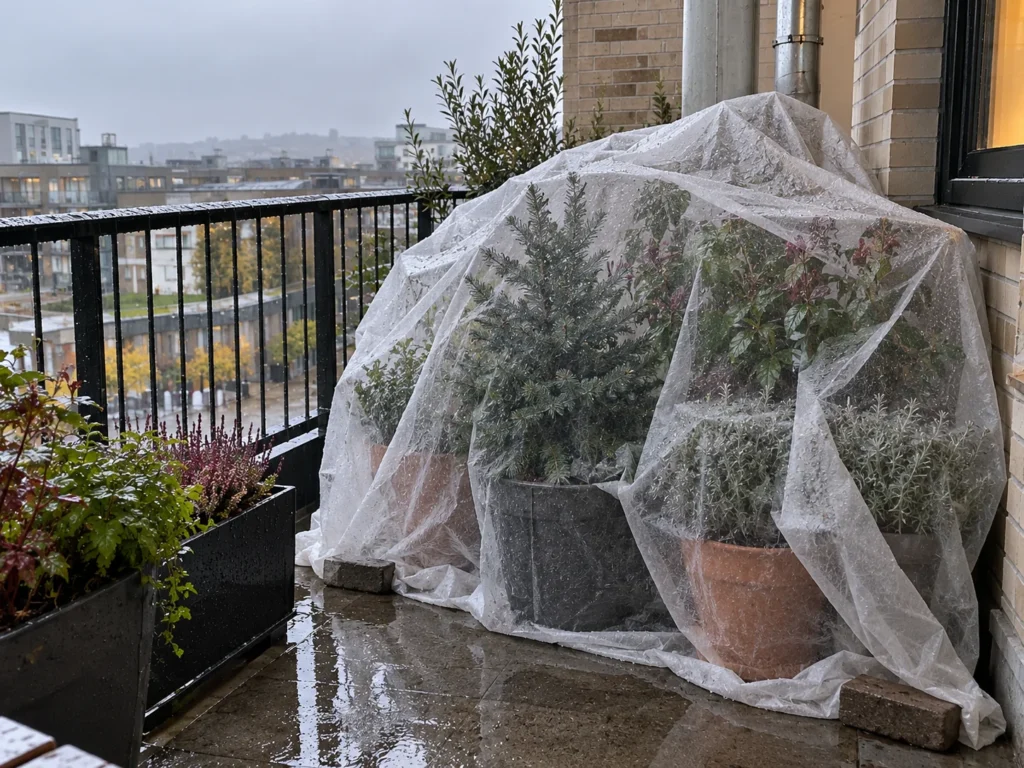
Whichever method you use, water the plant well before a hard freeze arrives if the soil is dry. Even a dormant plant’s roots continue taking up some water through the winter, and moist potting mix freezes more slowly than bone-dry mix, giving roots a bit more of a buffer during a cold snap. Avoid the other extreme too: saturated mix that never drains can be just as damaging in freezing weather as bone-dry soil, so aim for evenly moist, not soaking wet.
Protecting the containers themselves
Unglazed terracotta and some glazed ceramic pots can crack when the wet soil inside freezes and expands. If you’re not overwintering a plant in one of these pots, empty it, clean it, and store it somewhere dry instead of leaving it outside full of soil all winter. If a hardy plant does need to stay in a terracotta or ceramic pot over winter, raise it off the ground on pot feet so it isn’t sitting in standing water that freezes against the base, and consider slipping it inside a slightly larger plastic or resin pot for an added layer of insulation.
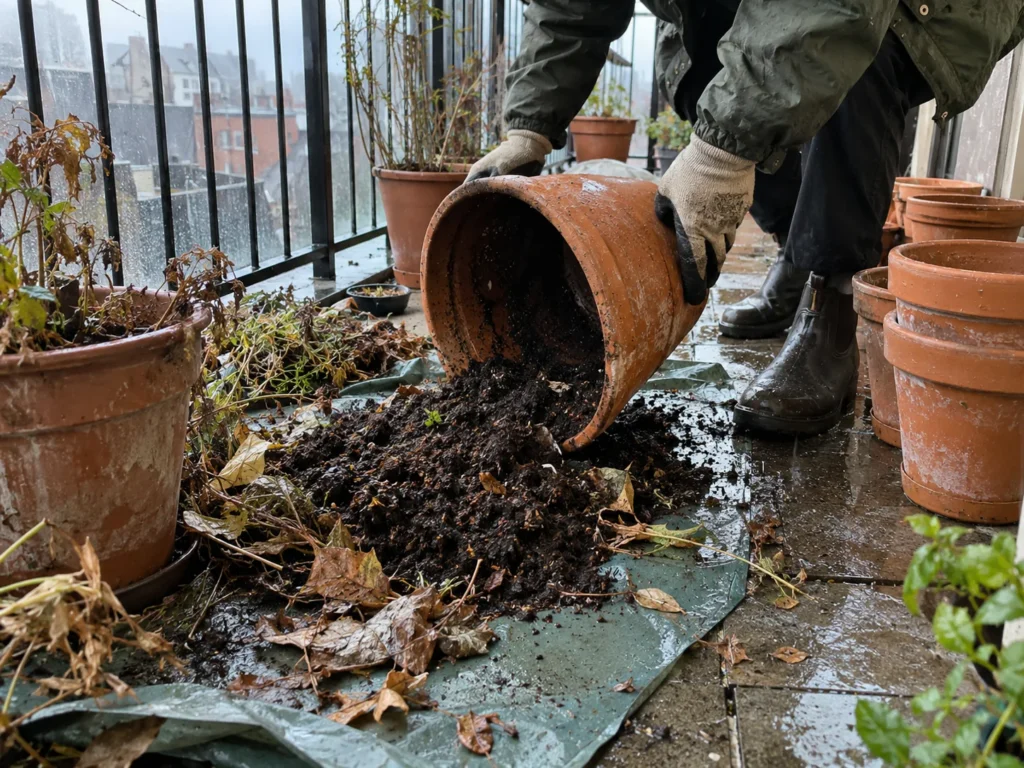
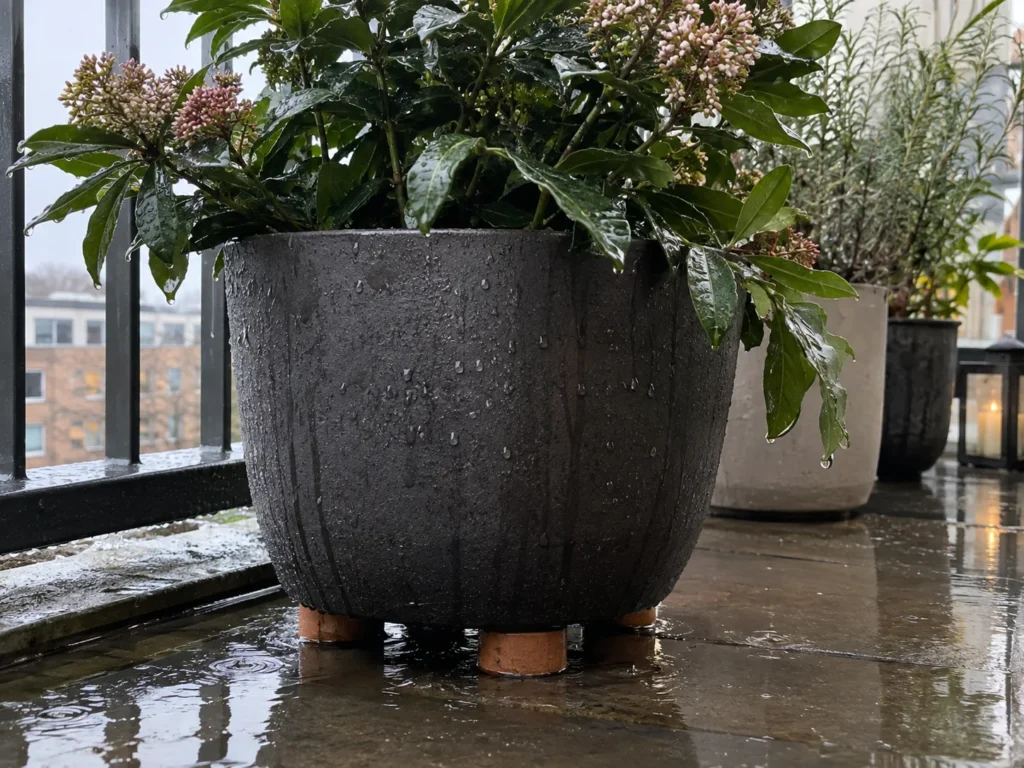
For more on which materials handle winter best long-term, see our comparison of balcony pots and containers.
Draining self-watering planters and hoses
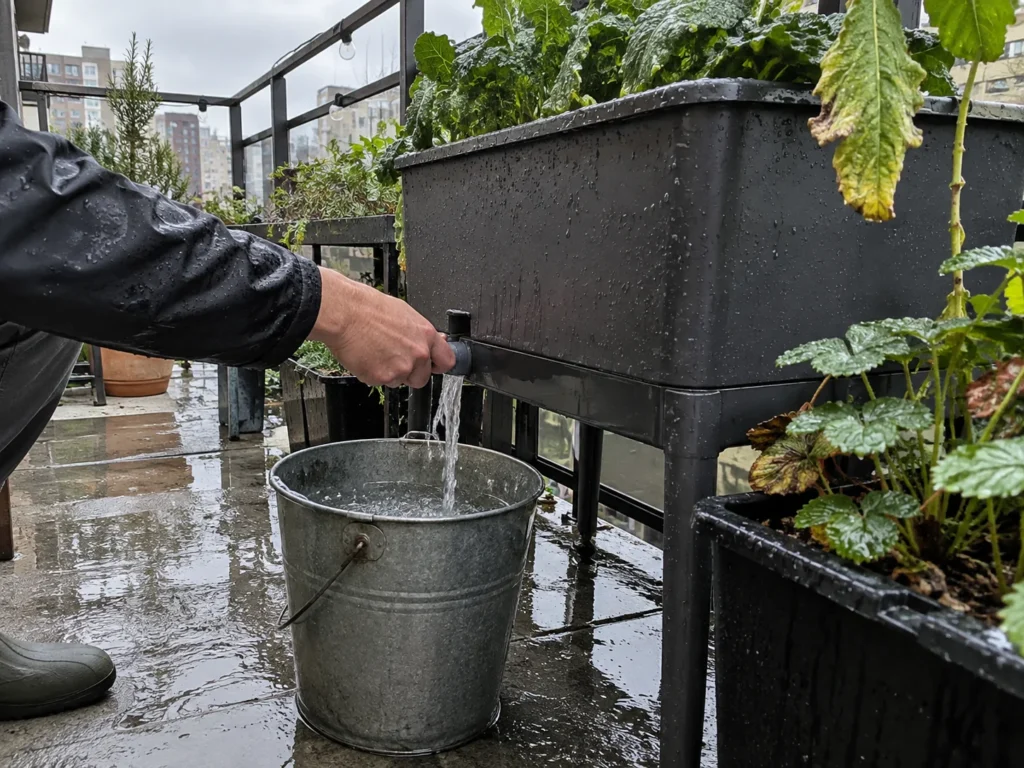
Any self-watering planter with a water reservoir needs to be drained completely before a hard freeze. Water left in a reservoir will freeze, expand, and can crack the plastic housing or damage the wicking system. If you use a small watering can or a length of hose or tubing to fill reservoirs, drain and store those too; a hose left connected outdoors is one of the more common freeze-related casualties on a balcony. See our self-watering planter setup and care guide for reservoir details specific to those systems.
Wind is still a factor in winter
Cold isn’t the only thing that gets worse on a balcony in winter; wind chill and exposure do too, and a bare winter balcony often feels windier than the same space did surrounded by summer’s leaf cover. Grouped, insulated pots are more stable than a single exposed container, but check that nothing wrapped in burlap or frost cloth has enough loose fabric to catch wind like a sail. If your balcony is a properly exposed, high-wind spot, the placement and anchoring advice in our wind-resistant balcony garden guide applies just as much in winter as it does in summer storms.
Checking on plants through the winter
Winter prep isn’t entirely a set-and-forget job. On mild days, especially during a winter thaw, check that pots protected in place haven’t dried out completely; dormant roots still need occasional moisture, just far less than during the growing season. After any heavy, wet snow, brush accumulation off evergreen or woody plants so the weight doesn’t snap branches, and confirm insulation like burlap or mulch hasn’t shifted or blown loose. A five-minute check every few weeks is usually enough to catch a problem before it becomes a dead plant by spring.
Winter prep checklist
- Bring tender and tropical plants inside before the first frost, checking for pests first.
- Cut back perennials once frost has blackened their foliage, leaving a few inches of stem.
- Group hardy potted perennials against a sheltered wall and insulate the pot exterior.
- Empty and store unglazed terracotta and ceramic pots not being used for overwintering.
- Raise any pots staying outside onto feet to prevent them freezing to the floor.
- Drain self-watering reservoirs, hoses, and any tubing completely.
- Clean and dry hand tools before storing them for the season.
- Note which spots on your balcony stayed warmest through winter, useful information for next year’s placement.
- Check protected pots every few weeks for dryness and wind or snow damage instead of tucking them away and forgetting them for the whole season.
A head start on spring
Winter prep isn’t just damage control, it’s also when a lot of next year’s success gets decided. Pots stored clean and dry, tools put away in good condition, and perennials that made it through the cold intact all mean less scrambling when it’s time to start planting again. If this is your first winter with a balcony garden, our guide on starting a balcony garden is a useful refresher for what to plan before spring arrives. And for what to do with the soil, seeds, and fertilizer themselves, see our guide to storing potting soil, seeds, and fertilizer between seasons.
Not sure which of your plants are worth protecting through winter in the first place? See our guide to annuals vs perennials for a balcony garden.