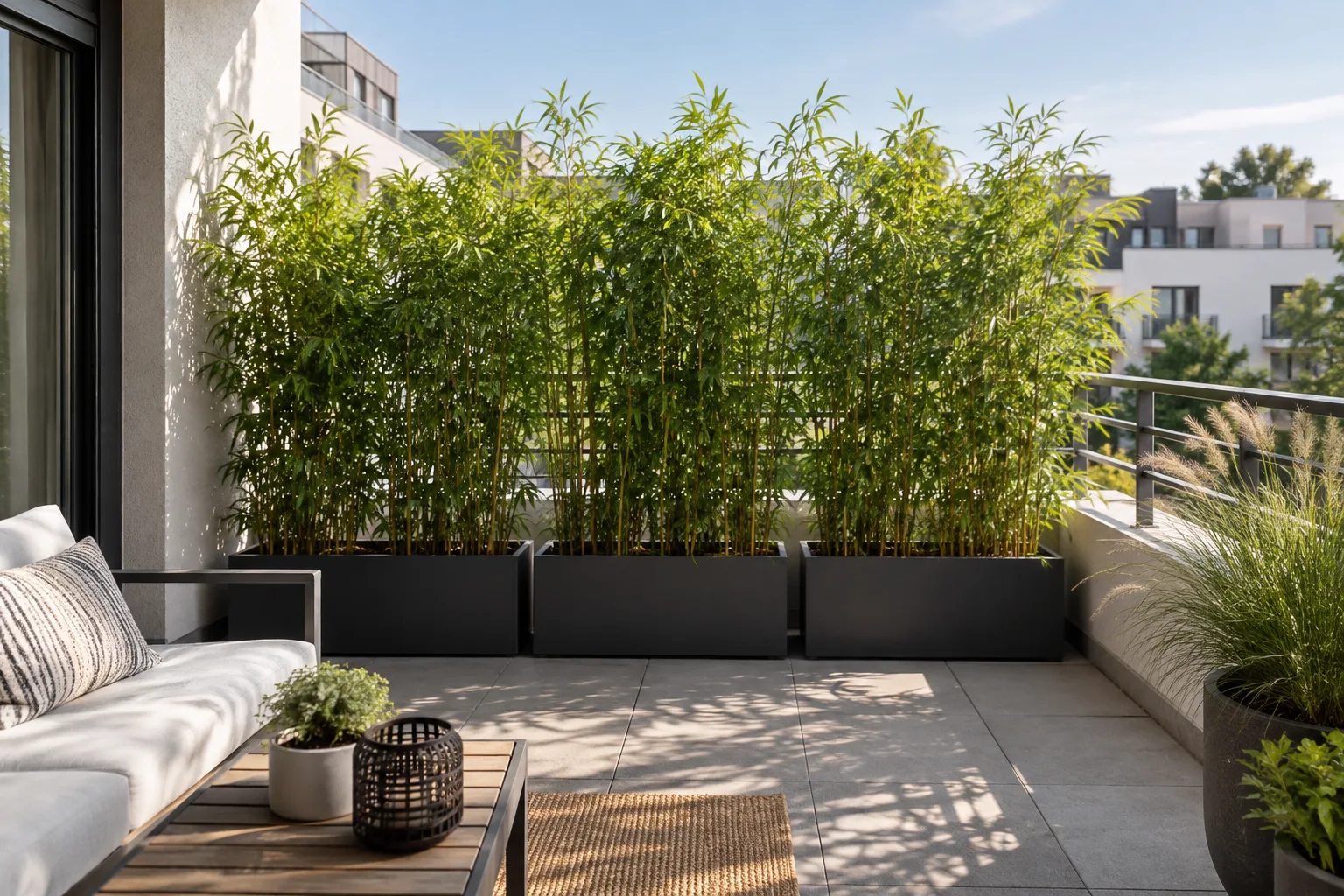
A useful plant screen needs height, leaf cover, and a base that stays stable in wind. On a balcony, building rules and the weight of the wet container decide which options are safe before appearance does. Start with a freestanding plan that does not rely on the railing.
Privacy on a balcony is as much a safety and rules question as a plant question. Before the plant list, it’s worth sorting out weight, attachment, and wind, because those decide what you can safely put up in the first place.
A stable screen often starts with: For balcony privacy, use tall ornamental grasses, clumping (not running) bamboo, columnar evergreens, or climbers trained up a freestanding trellis. Keep screens in stable, wall-side pots, choose wind-tolerant plants, and check your building’s rules before attaching anything to the railing.
Rules and safety come first
A privacy screen is taller and heavier than a normal pot, so it touches the parts of balcony gardening that matter most. Sort these out before you buy.
- Check the rules. Many buildings limit what can hang on or over a railing, and some restrict screening on balconies for appearance or safety reasons. Your lease, HOA, or strata documents are the place to look, and a quick email to the building manager settles anything unclear.
- Respect weight. A tall planter full of wet soil is heavy, and several lined up along the edge concentrate a lot of load. Keep big containers near the building wall where the structure is strongest, and ask your building about limits before adding anything large. Structural questions are answered by your building, not a gardening guide.
- Never let anything overhang the drop. A screen or planter that leans or hangs outside the railing is a serious falling hazard. Keep everything inside the balcony footprint and firmly stable.
- Keep water off the neighbors. Tall planters still need saucers or trays so watering doesn’t drip onto the balcony below.
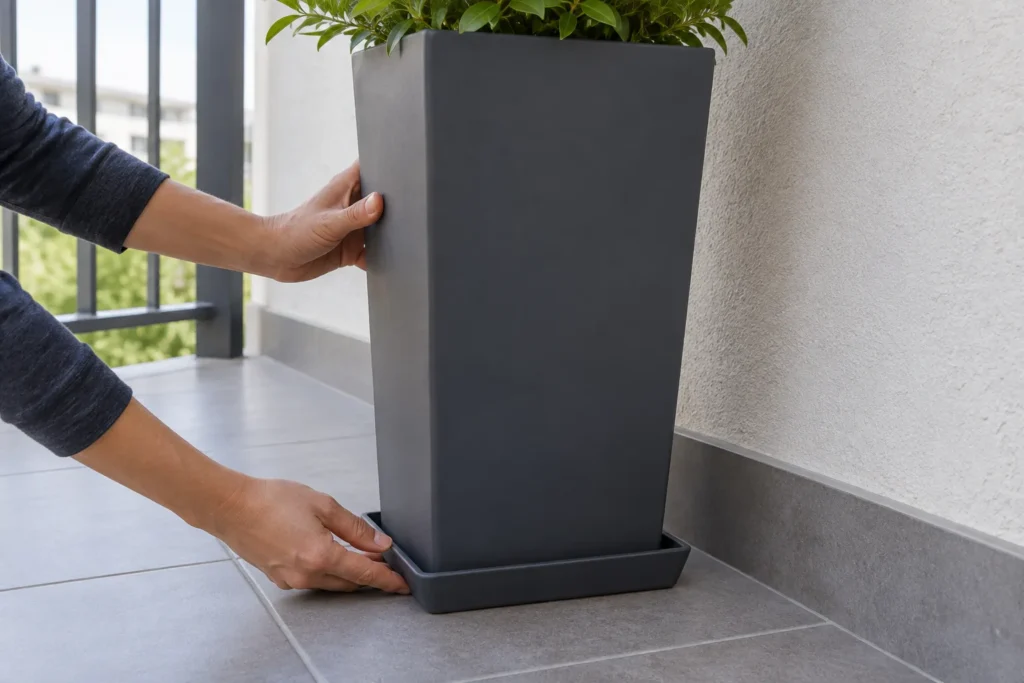
None of this makes privacy planting risky; it just means picking stable, sensible setups over tall, top-heavy ones perched where they shouldn’t be.
Freestanding screens beat railing-mounted ones
There are two ways to screen a balcony: plants in stable floor pots, or planters and trellises fixed to the railing. For most people, freestanding wins.
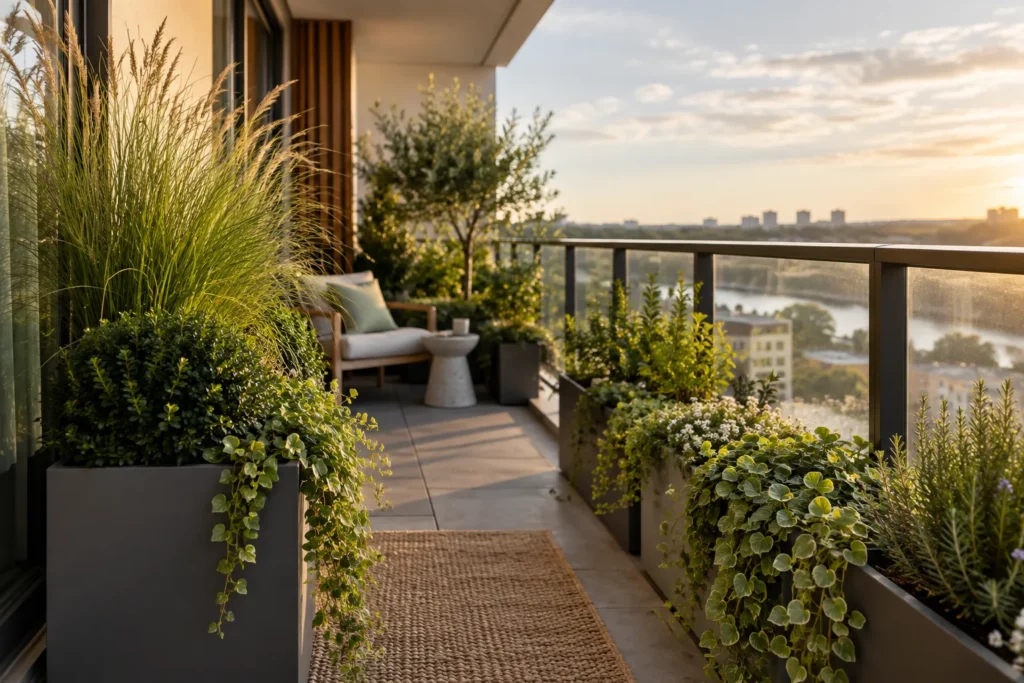
A tall plant in a wide, heavy-based floor pot; or a freestanding trellis in a planter; gives privacy without attaching anything to the structure, which sidesteps most building rules and the risk of a railing mount failing. Set it just inside the railing and you get the screen without the hazard. Railing-mounted planters can work where the building allows them and the brackets lock securely, but they’re the more regulated, higher-risk option. When in doubt, freestanding is the safer default.
What plant privacy can realistically do
Set expectations before you shop. Plants give softer, partial privacy; they break up sightlines and screen a specific angle rather than walling off the whole balcony. That’s often exactly what you want: enough cover to sit unwatched, without boxing yourself in or cutting your light.
Think about the one direction you need to screen; a neighbor’s window, a facing balcony; and place a screen there rather than trying to enclose everything. Remember, too, that leafy screens are seasonal unless you use evergreens, so a summer wall of climbers thins out come winter. A couple of well-placed plants usually beat a heavy, all-round green wall.
The best privacy plants for a balcony
Tall ornamental grasses
Ornamental grasses are among the best balcony screens: they grow tall and full, sway instead of snapping in wind, and stay relatively light. Many are drought-tolerant and unfussy. Karl Foerster feather reed grass and Miscanthus ‘Morning Light’ are two widely available, reliable choices for a container, both upright enough to screen without flopping. Choose a variety suited to your climate and give it a wide, stable pot so it doesn’t tip in a gust.
Clumping bamboo; never running
Important: choose clumping bamboo, not running bamboo. Running types spread aggressively by underground stems and are widely considered invasive; clumping types stay put. For a container, always pick a clumping variety.
Bamboo makes a lush, fast privacy screen, but the type matters enormously. According to the Missouri Botanical Garden, running bamboo spreads quickly by underground rhizomes and can be invasive, while clumping bamboo grows in tight clumps and spreads only slowly. Clemson Extension notes that running bamboo’s rhizomes can travel well beyond the original plant, which is why it becomes a problem.
Look specifically for a Fargesia species, the cold-hardy genus that includes the true clumping types: Fargesia rufa and Fargesia nitida are both widely sold and reliably stay put in a container. For a balcony container, clumping bamboo is the sensible choice: it stays contained, gives good height and cover, and won’t send runners anywhere. Give it a large, sturdy pot, keep it watered (bamboo dislikes drying out completely), and choose a variety hardy in your climate.
Columnar evergreens and compact shrubs
For year-round cover, narrow upright evergreens and compact shrubs hold their leaves through winter, unlike grasses and annuals that die back. Dwarf Alberta spruce, a columnar boxwood cultivar, or a dwarf Italian cypress are all well-suited to container growing and hold their shape with little pruning. Dwarf conifers and small evergreen shrubs suited to containers give a solid, tidy screen.
They are slower-growing and heavier than grasses, so mind the weight and keep them in stable pots near the wall. Choose types rated for your hardiness zone, since evergreens in exposed pots face a cold, windy winter.
If you’d rather screen with flowers than foliage, a compact panicle hydrangea bred for containers, Bobo® or Firelight Tidbit® are two widely sold examples, tolerates more sun than other hydrangea types and stays full enough to block a sightline on its own.
Climbers on a freestanding trellis
A trellis in a planter, covered by a climbing plant, makes an attractive summer screen. Fast climbing annuals; like climbing beans, morning glory, or sweet peas; fill a trellis in a single season and come down easily at the end of it, which suits renters.
For a longer-lived option than an annual vine, star jasmine and clematis both climb readily in a container and come back year after year in a suitable climate. Keep the trellis freestanding and well-anchored in a heavy-based pot rather than fixed to the railing, and remember that a leafed-out trellis catches wind like a sail. On an exposed balcony, keep it lower and firmly weighted.
Tall annuals for a quick summer screen
For seasonal privacy with no long-term commitment, tall sun-loving annuals fill in fast: a branching sunflower variety or Mexican sunflower (Tithonia) can reach 6 feet or more in a single season. They won’t last the winter, but they’re cheap, light, and easy to replace, which makes them a low-risk way to test where you want a screen.
Red twig dogwood, for winter color the others can’t give you
Every option above leans on live foliage, which is exactly why they all fade or vanish in winter. Red twig dogwood solves that differently: once its leaves drop, the bare stems themselves turn a bright red, a color that actually intensifies with cold and sun through the winter months. A compact cultivar like ‘Arctic Fire’ stays small enough for a large container and still gives a real wall of color when grasses and annuals have nothing left to offer.
The color only shows up on younger wood, stems under about three years old, so it fades on its own if you let the shrub grow unpruned. Each late winter, cut the oldest third of the stems back to the ground rather than shearing the whole plant; that renewal pruning keeps a steady supply of young, brightly colored stems coming without ever losing the shrub’s size or shape.
Wind is the deciding factor
A privacy screen is, by design, a large surface that catches wind; and balconies above the second or third floor are windier than the street. That makes wind the single biggest factor in whether a screen survives.
- Choose plants that flex. Grasses and clumping bamboo bend and recover; stiff, brittle plants snap.
- Use wide, heavy-based pots. A tall plant in a narrow pot tips in a gust. Weight the base and keep the center of gravity low.
- Stay near the wall on exposed balconies. The wall breaks some wind and is the strongest part of the structure for heavier pots.
- Expect faster drying. Wind pulls moisture from tall plants and their pots, so screens usually need more water than you’d think.
Mind the weight of a big screen
Privacy plants live in some of the largest pots on a balcony, and a row of them along the edge is exactly the kind of concentrated load worth thinking about. A large planter full of wet soil can weigh as much as a person, and several together add up quickly.
Keep the heaviest screens near the building wall, spread them out rather than clustering them mid-span or along the outer edge, and confirm load limits with your landlord, strata, or building management before installing anything substantial. If you want a long green wall, several medium pots are safer and more flexible than a few massive ones.
Privacy-screen mistakes
- Planting running bamboo. It’s invasive and hard to control. Always choose a clumping variety for a container.
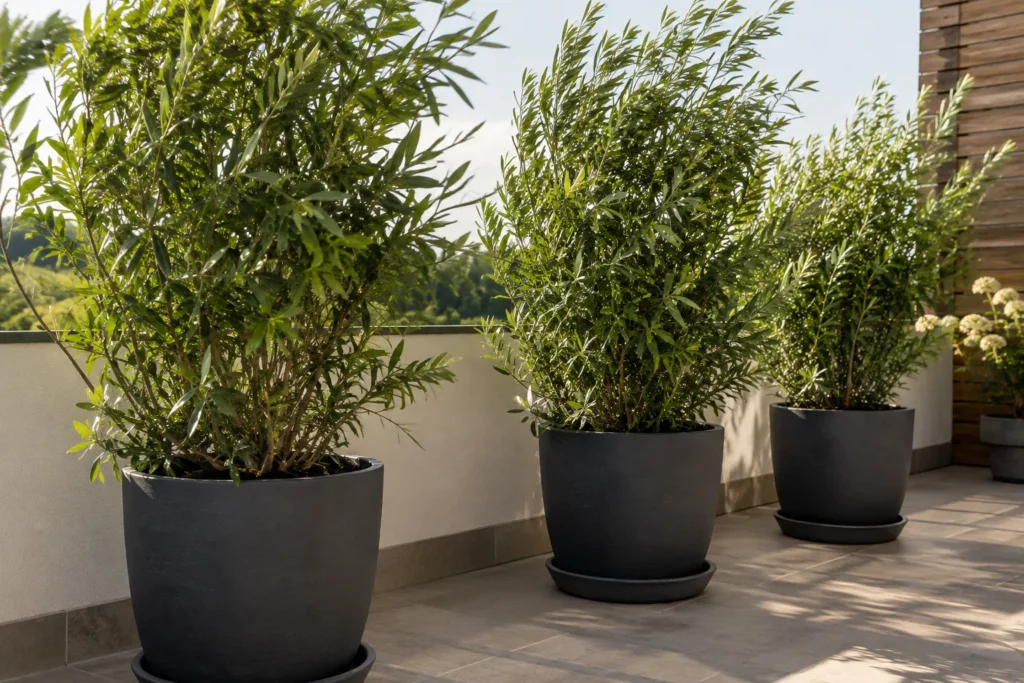
- Tall plants in narrow, light pots. They blow over in the first real gust. Use wide, heavy-based containers.
- Hanging heavy planters on the railing. Weight over a drop is the highest-risk setup there is. Prefer freestanding pots, and only use railing mounts if your building allows them and the brackets lock.
- Ignoring winter. Grasses and annuals die back, leaving you exposed in the cold months. Mix in an evergreen, or a red twig dogwood for color instead of just cover, if you want something to look at through the cold months.
When a planted screen becomes unstable
- Screen keeps blowing over. The pot is too light or narrow for the plant’s height. Move to a wider, heavier base and shift it closer to the wall.
- Tall plant leaning toward the light. Rotate the pot regularly so it grows evenly, and place it where light comes from more than one side if you can.
- Bamboo or grass browning at the tips. Often dryness or wind burn. Water more consistently and give some shelter from constant wind.
- Sparse, thin growth that doesn’t screen well. Usually too little light or a pot that’s too small. Move to a brighter spot and pot up so roots have room to fill out.
- Evergreen browning over winter. Exposed pots run cold. Group pots together against the wall and choose types hardy for your zone.
Sketch the screen before buying
Start with one stable, wide pot of ornamental grass or clumping bamboo where you most want to block a view, and see how it handles your wind before adding more. It’s the lowest-risk way to learn what your balcony can carry and screen.
Because privacy plants push the limits on weight and wind, the container matters as much as the plant. Our guides on choosing balcony containers and plants for a hot, sunny balcony help you build a screen that stays put and thrives. For floor planning, compare the small balcony garden layouts.
Build the screen around the space
Keep the base steady with the wind guide, then use the spacing plan to preserve access.