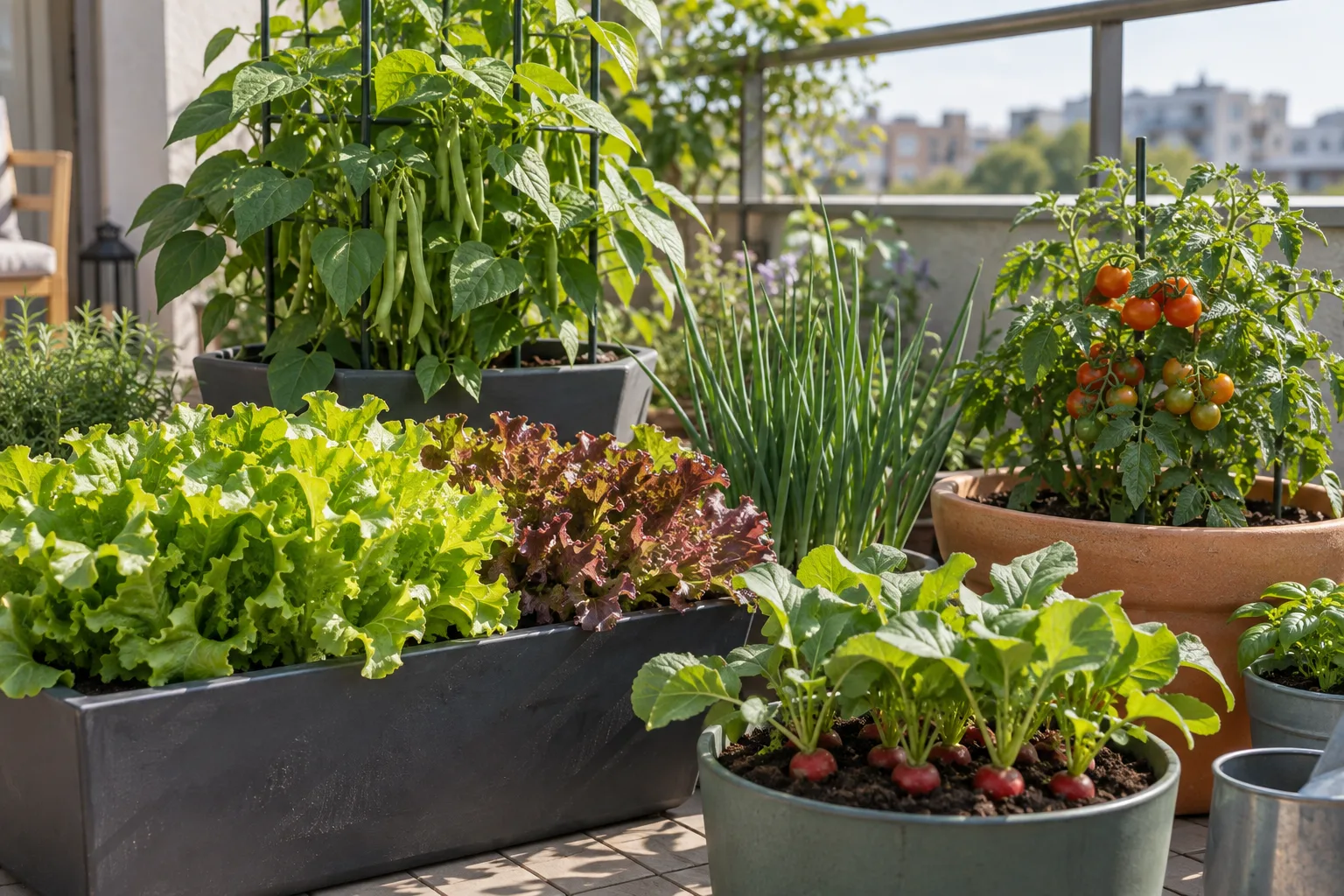
A balcony vegetable earns its container by producing in the light and root space available. Lettuce, radishes, and green onions are forgiving; tomatoes and peppers ask for more sun, soil, and water. Start with the crops your balcony can support, then add the demanding ones if the measurements justify it.
Almost any vegetable can technically grow in a container, but on a balcony the winners are the ones that match your real limits: how much sun you get, how big a pot you can carry, and how often you can water. This guide covers the vegetables that reliably work in balcony containers and how to give each one a fair start.
Good first crops: For most balconies, the easiest first vegetables are loose-leaf lettuce, radishes, green onions, and bush beans; they’re forgiving and fine with 4 to 6 hours of sun. Cherry tomatoes and peppers are worth it only if you get 6 or more hours of direct sun and a large pot.
What to check before you buy seeds
Three things decide which vegetables will work for you. Sort these out first and the plant list mostly picks itself.
Sunlight. This is the big one. Count only direct sun; the kind that casts a sharp shadow. Fruiting crops like tomatoes and peppers want a lot of it; leafy crops get by with much less. If you haven’t measured yet, spend one clear day noting when sun reaches the spot your pot will sit.
Pot depth. Roots need room. Shallow crops like lettuce are happy in 8 inches (20 cm) of soil, while a tomato wants a pot closer to 14 to 18 inches (35 to 45 cm) across. Too small a pot dries out by noon and starves the plant.
Watering access. Containers dry out fast, sometimes daily in summer wind. If your only water source is the kitchen tap and a watering can, decide how many pots you can keep up with. Fewer, larger pots are easier to keep alive than many small ones.
The best vegetables for balcony containers
Loose-leaf lettuce and salad greens
The most forgiving balcony vegetable there is. Loose-leaf lettuce, arugula, and other cut-and-come-again greens grow fast, root shallowly, and tolerate part shade; around 4 hours of sun is enough. Pick outer leaves as you need them and the plant keeps producing for weeks.
They prefer cooler weather, so they’re a strong choice for spring and autumn. In summer heat, lettuce tends to turn bitter and bolt (send up a flower stalk), so move it to your shadiest spot or grow it before and after the hottest months.
Radishes
Radishes are the fastest reward in container gardening; many are ready in about a month from seed. They’re shallow-rooted, cope with cool weather and a light frost, and don’t need full sun. That speed makes them ideal for impatient beginners and for testing a new pot or spot before committing to a slower crop.
Sow seeds directly into the pot and thin the seedlings so each radish has room to swell. Crowded radishes grow leaves instead of roots.
Green onions (scallions)
Green onions ask for very little: a small pot, modest sun, and regular water. Snip the green tops and they regrow. You can even start them from the white root ends of grocery-store bunches, which makes them a cheap, low-risk first crop.
Bush beans
Bush beans stay compact, so they don’t need a trellis or tall stakes that would catch balcony wind. They’re productive for their size and reasonably forgiving. Give them a pot at least 10 to 12 inches (25 to 30 cm) wide and a spot with 5 or more hours of sun, and a couple of pots can keep a household in beans through summer.
Cherry tomatoes
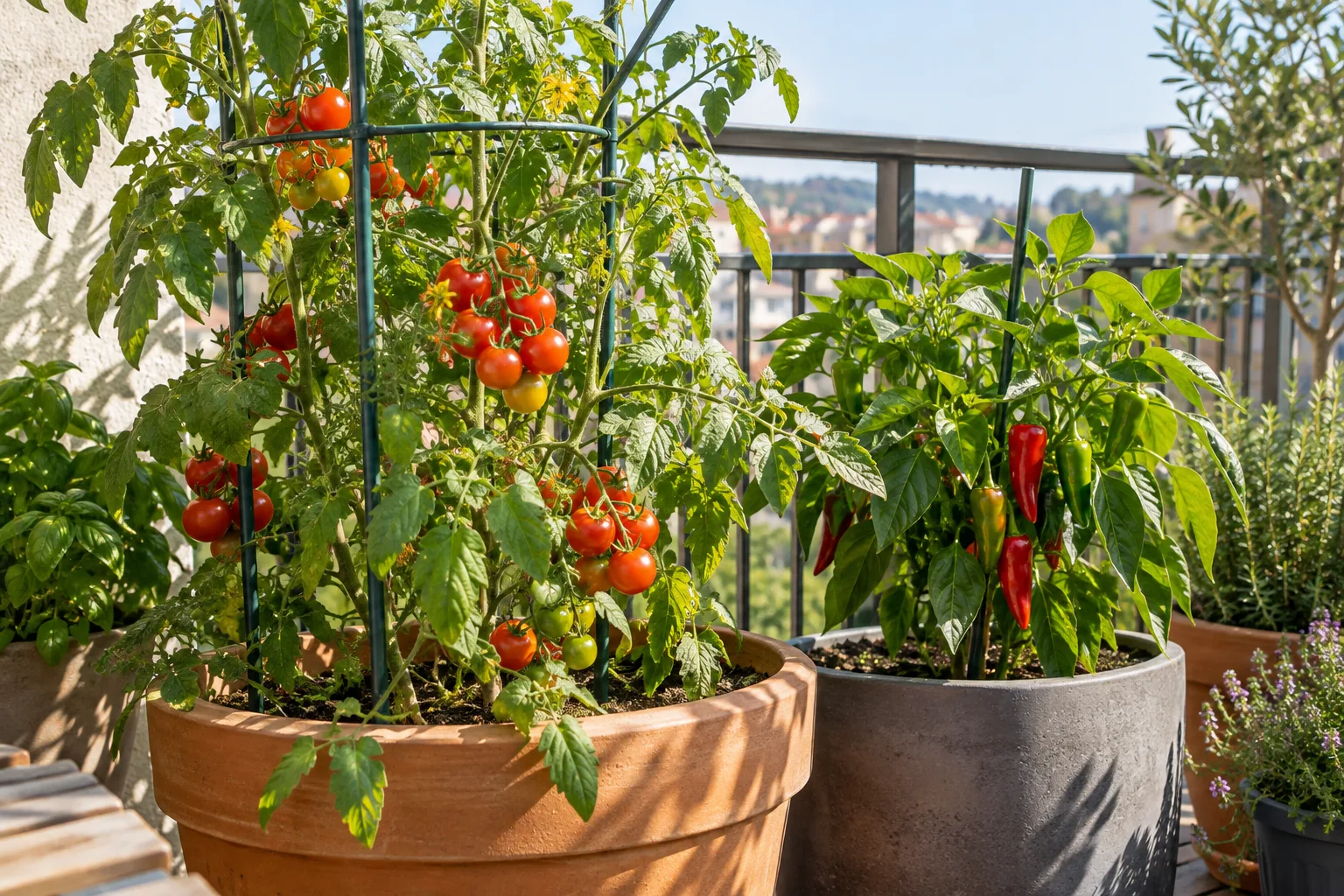
The classic balcony crop, but the one with the strictest demands. Tomatoes are a warm-season, sun-hungry plant: Oregon State University Extension recommends 6 to 8 hours of sun for tomatoes and peppers. Cherry and “patio” varieties are bred to stay compact and crop well in pots, so choose those over full-size types.
Give a tomato a large container; around 14 to 18 inches (35 to 45 cm) across, or roughly a 5-gallon (20-liter) pot. A big pot holds enough water and root room to get through a hot, windy afternoon without wilting. In cooler regions, wait to set tomatoes out until nights stay reliably above about 50 °F (10 °C); cold nights stall them even when days feel warm.
Peppers
Peppers want the same conditions as tomatoes; plenty of sun and warmth; but stay a bit smaller, so they suit a 10 to 12 inch (25 to 30 cm) pot. They’re a good pick for a hot, bright balcony that would scorch leafy greens. Like tomatoes, they resent cold nights early in the season, so hold off until the weather settles.
Herbs deserve a mention here too, because most cooks want them alongside their vegetables. Many herbs are as easy as salad greens and share the same pots and care. Our balcony herb guide covers which ones suit sun and shade.
Start from seed or buy seedlings?
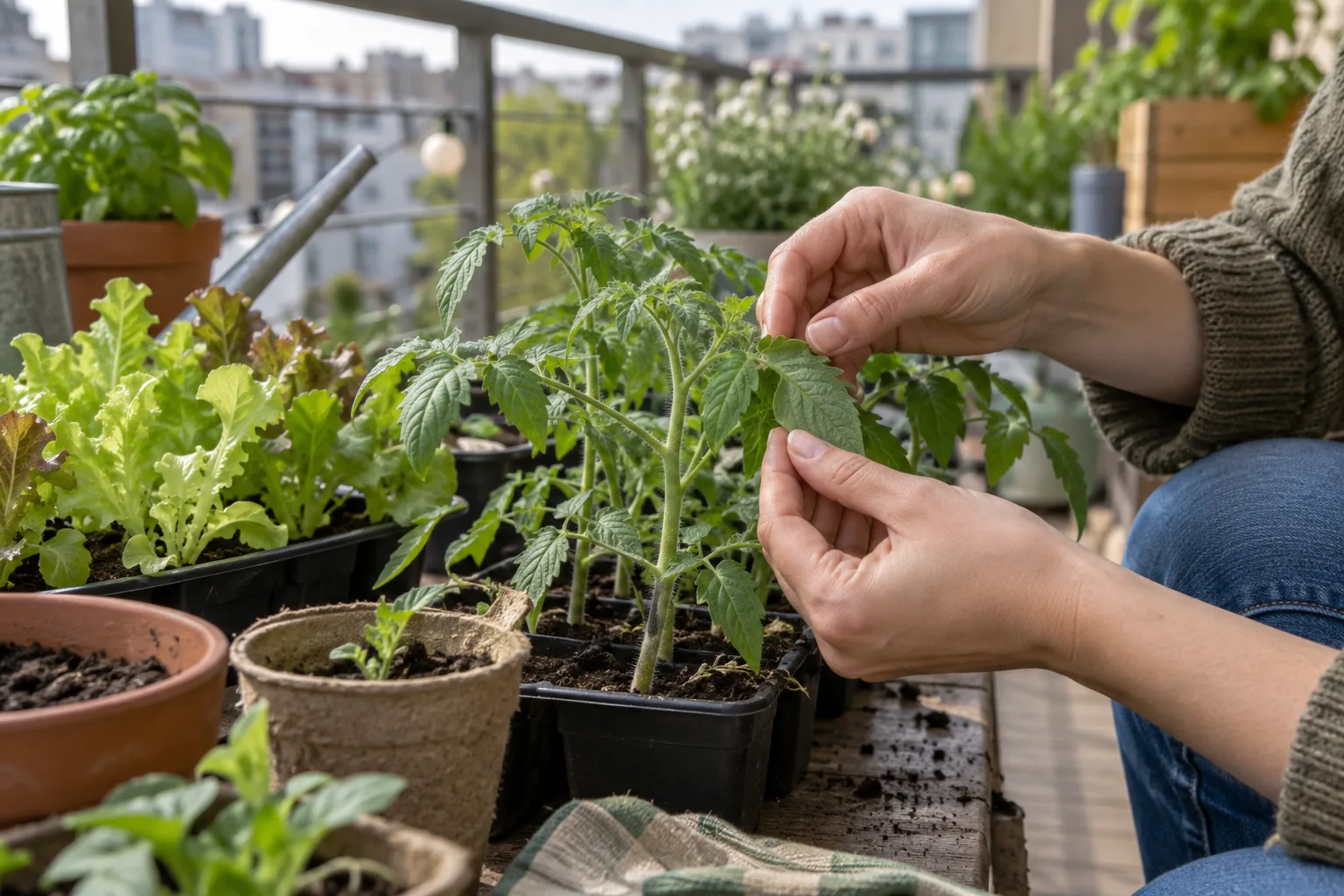
For a first season, do both; but split them sensibly. Grow the fast, cheap crops from seed sown straight into the pot: lettuce, radishes, green onions, and beans all sprout quickly and cost pennies per plant. Our guide to starting seeds for a balcony garden covers germination, light, and transplanting in more depth.
Buy young plants (seedlings) for the slow or fussy ones; tomatoes and peppers especially. A tomato started from seed indoors in late winter is a months-long project you don’t need yet, while a healthy seedling from the garden center skips the trickiest stage. One habit worth keeping: check any plant for pests before it comes home. A quick look under the leaves for tiny insects or webbing saves your whole balcony from an aphid problem, because a small balcony has nowhere to quarantine a sick plant.
Container sizes at a glance
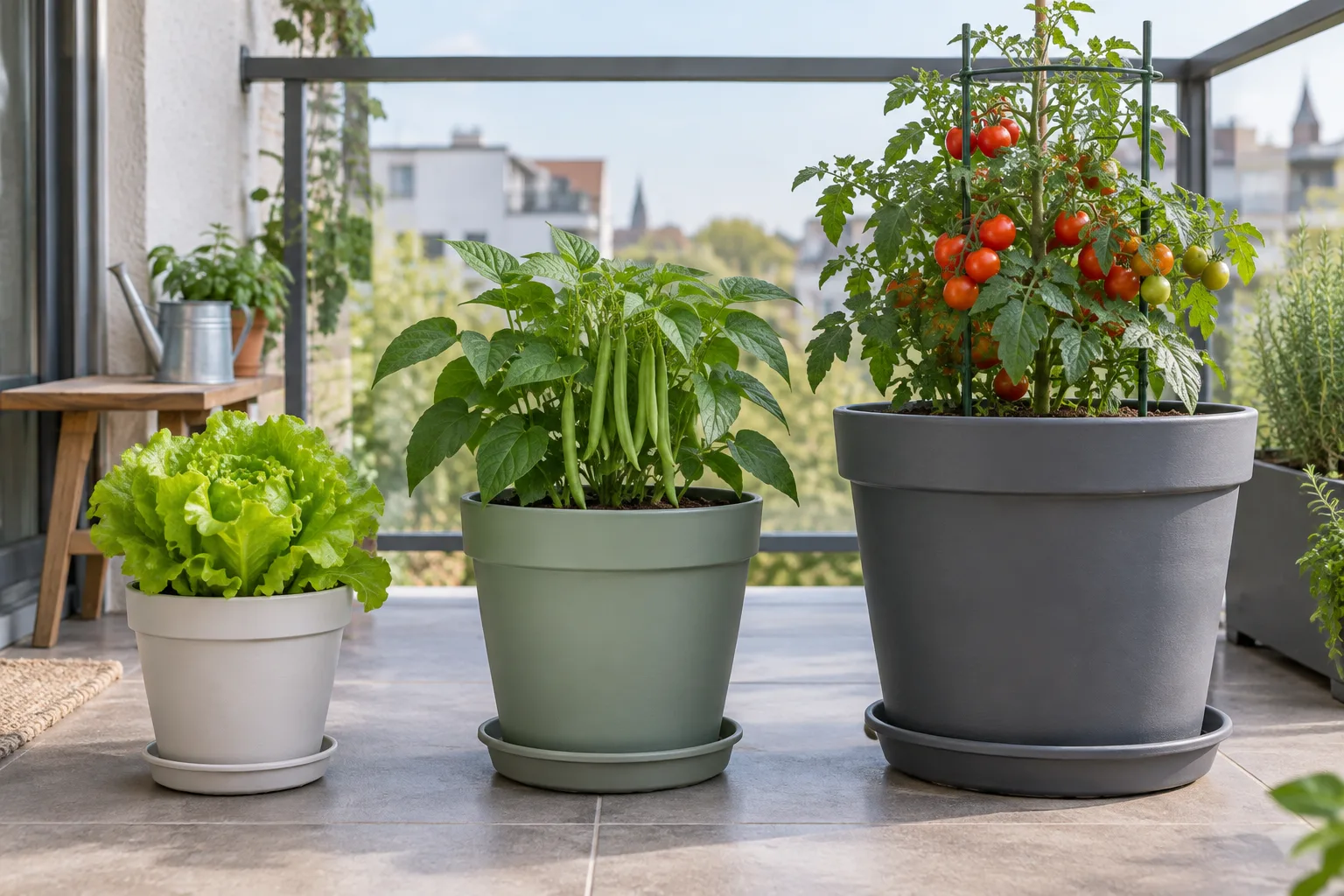
When you’re choosing between two pot sizes, take the bigger one; unless the bigger pot pushes you into heavy-lifting territory, in which case use two smaller pots instead. These are practical minimums:
| Vegetable | Minimum pot size | Rough sun need |
|---|---|---|
| Loose-leaf lettuce, greens | 8 to 10 in (20 to 25 cm) | 4+ hours |
| Radishes | 6 to 8 in (15 to 20 cm) deep | 4+ hours |
| Green onions | 6 to 8 in (15 to 20 cm) | 4+ hours |
| Bush beans | 10 to 12 in (25 to 30 cm) | 5+ hours |
| Peppers | 10 to 12 in (25 to 30 cm) | 6+ hours |
| Cherry tomato | 14 to 18 in (35 to 45 cm), ~5 gal | 6+ hours |
Every pot needs drainage holes and a saucer underneath. The saucer protects your floor and keeps water off the balcony below; on a shared building, that’s a neighbor-relations issue as much as a plant one.
Where balcony vegetables stall
Common mistake: buying tomatoes for a balcony that only gets four hours of sun. It’s the number-one reason first-year balcony vegetables disappoint. Match the crop to the light you measured, not the light you wish you had.
- Pots too small. A cramped pot dries out fast and limits the harvest. Small pots are cheaper, but they’re the most common cause of constant wilting.
- Too many crops at once. Five pots you can water daily beat fifteen you neglect by July. Start with a few and add more next season.
- Planting warm crops too early. A cold week sets back tomatoes and peppers more than it helps to plant early. Wait for settled warm nights.
- Skipping the saucer. The cheapest item in the setup prevents the most expensive problem: water dripping onto a neighbor below.
Diagnose a weak container crop
Most container-vegetable problems trace back to water, light, or pot size. Here’s how to read the common signs.
- Wilting every afternoon, even watered. The pot is too small or too exposed to sun and wind. Move it to a slightly sheltered spot, or pot up into a larger container that holds more water.
- Leggy, floppy plants. Not enough light. Shift the pot to your brightest spot, or swap to a crop that suits the hours you have.
- Lettuce turning bitter and shooting up. That’s bolting, triggered by heat. Grow greens in the cooler parts of the year and give them afternoon shade in summer.
- Tomato plant tall and leafy but no fruit. Usually too little sun, sometimes early-season cold nights. More fertilizer won’t fix a light shortage.
- Yellowing lower leaves. Frequent watering washes nutrients out of pots. Feed lightly with an all-purpose fertilizer through the growing season.
Renter and balcony notes
Vegetable pots full of wet soil get heavy, especially the big tomato containers. Keep the heaviest pots near the building wall rather than out at the edge, and check your lease or building rules before adding anything large or hung on the railing.
Light, movable containers also make life easier at season’s end and on moving day. Fabric grow bags and medium pots travel well; a giant planter full of soil doesn’t move at all.
Build the first container crop
Start with two or three easy crops that fit your light; a pot of loose-leaf lettuce, some radishes, and green onions will teach you how your balcony behaves without much risk. Add a cherry tomato next month if your sun turns out generous.
If you haven’t measured your sunlight yet, do that first; it decides half of this list. Our guides on measuring balcony sunlight and choosing the right containers cover the two things that make the biggest difference to a container vegetable garden. When you are ready to combine crops, use the balcony salsa garden plan.
Before planting the first crop
Compare the crop list with the container-size guide, or use the same sunny space for a small salsa garden.
Not every balcony vegetable suits every space. For a broader starting point that weighs light, wind, heat, pot size, and maintenance together, see our guide to choosing the best plants for your balcony.