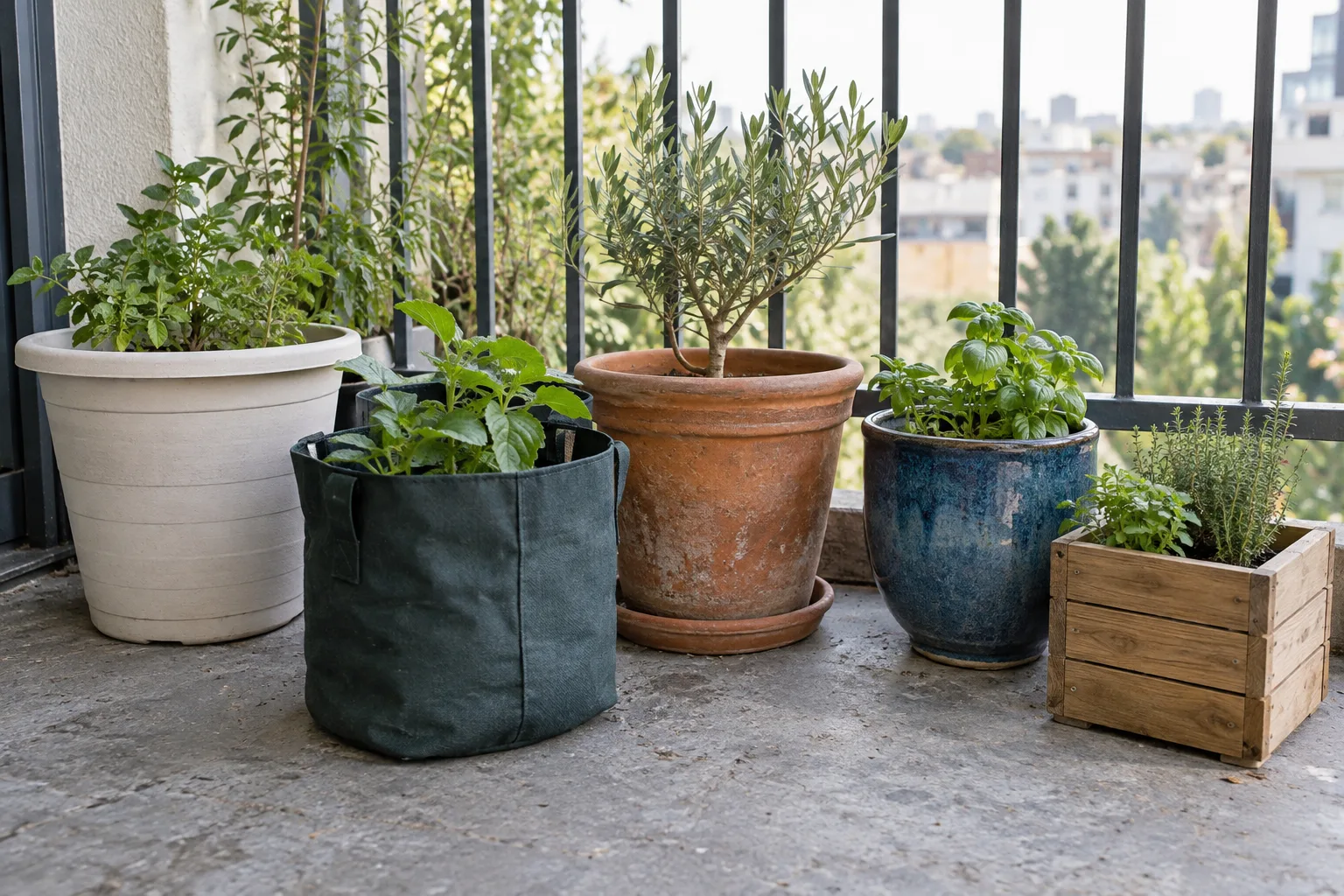
The plant matters, but the pot decides whether that plant survives a summer on a balcony. Material changes how fast soil dries out, how heavy a container gets when wet, and how well it holds up to sun, wind, and freeze-thaw cycles. Getting this right before you buy saves you from cracked terracotta, waterlogged roots, or a pot too heavy for your railing to bear, and it’s the kind of decision that pays off every single time you water for years afterward. For the research behind exactly how much heat a dark container adds to the root zone, see does pot color and material affect root temperature?
This guide compares the materials you’ll find at a garden center or online, plus the drainage and weight questions that matter more on a balcony than in a backyard bed.
Quick answer: For most balconies, lightweight resin or fabric grow bags are the safest all-around choice; they’re easy to move, drain well, and won’t overload a railing or floor. Terracotta looks great and breathes well but dries fast and cracks in freezing weather. Glazed ceramic and wood hold moisture longer but are heavy. Whatever material you choose, drainage holes are non-negotiable.
Why material matters more on a balcony
In a backyard bed, a heavy ceramic pot just sits on the ground. On a balcony, every pot adds to a live load that your railing, floor, or downstairs neighbor’s ceiling has to carry, especially once soil and water are added. A 14-inch pot can easily weigh 25 to 40 lbs (11 to 18 kg) once it’s planted and watered, and a row of them adds up fast.
Balconies are also more exposed than ground-level gardens: more direct sun on the pot itself, more wind, and less insulation from the surrounding soil. That means the material’s effect on drying speed, heat absorption, and stability is magnified compared to an in-ground garden.
Comparing container materials
Terracotta and unglazed clay
Terracotta is porous, which lets air and moisture pass through the walls. That’s good for plants that hate wet feet, rosemary, lavender, and succulents are the classic reason gardeners reach for it, because the soil dries evenly and roots rarely sit soggy. The tradeoff is that terracotta dries out fast in full sun and wind, so thirstier plants like tomatoes or leafy vegetables may need watering twice a day in a heatwave. Unglazed clay is also brittle: it can crack if it freezes while wet, so bring it in or empty it before winter in any climate that sees hard frost.
Glazed ceramic
Glazed pots seal the porous clay underneath, so they hold moisture longer than raw terracotta while still looking like traditional pottery. They’re heavier than plastic or resin, a real plus in wind, but that same weight and cost mean fewer of them fit a typical balcony budget or load limit. Like unglazed clay, most glazed ceramic can crack in a hard freeze if left outside full of wet soil, so check the manufacturer’s frost rating before leaving one out year-round.
Plastic and resin
Modern resin planters are the balcony workhorse: lightweight, inexpensive, available in large sizes, and immune to cracking from freeze-thaw. They hold moisture longer than terracotta, which is helpful in a hot spot but means you need to watch drainage more carefully so roots don’t sit wet. Darker plastic can get hot to the touch in direct sun, which warms the root zone; a pale or light-colored resin pot stays noticeably cooler on a west-facing balcony.
Fabric grow bags
Fabric pots are breathable like terracotta but a fraction of the weight, and they fold flat for storage when empty. The porous fabric air-prunes roots, which tends to produce a healthier, more branched root system than a solid-walled pot. The downside is the same as terracotta: fast drying in sun and wind, so pair fabric bags with a consistent watering routine or a self-watering setup. They also have the shortest lifespan of the materials here, typically a few growing seasons before the fabric degrades.
Wood
Wooden planters, especially cedar, insulate roots well against both summer heat and light frost, which is useful for perennials you plan to leave out year-round. They’re heavy once filled, and unless the wood is rot-resistant or lined, moisture from the soil will eventually break it down. A plastic liner with drainage holes extends the life of a wood planter significantly.
Metal and galvanized containers
Galvanized steel and other metal planters are sturdy and weather-resistant, and they’ve become a popular look for balcony and patio gardens. Metal conducts heat efficiently, so a dark metal container in full sun can heat the soil enough to stress roots; light colors or a spot with some afternoon shade help. Always confirm a metal container has drainage holes, since many are sold as decorative planters without any.
Checking quality before you buy
Two pots in the same material can age very differently depending on how well they’re made. A few checks at the store save you from a pot that fails within a season.
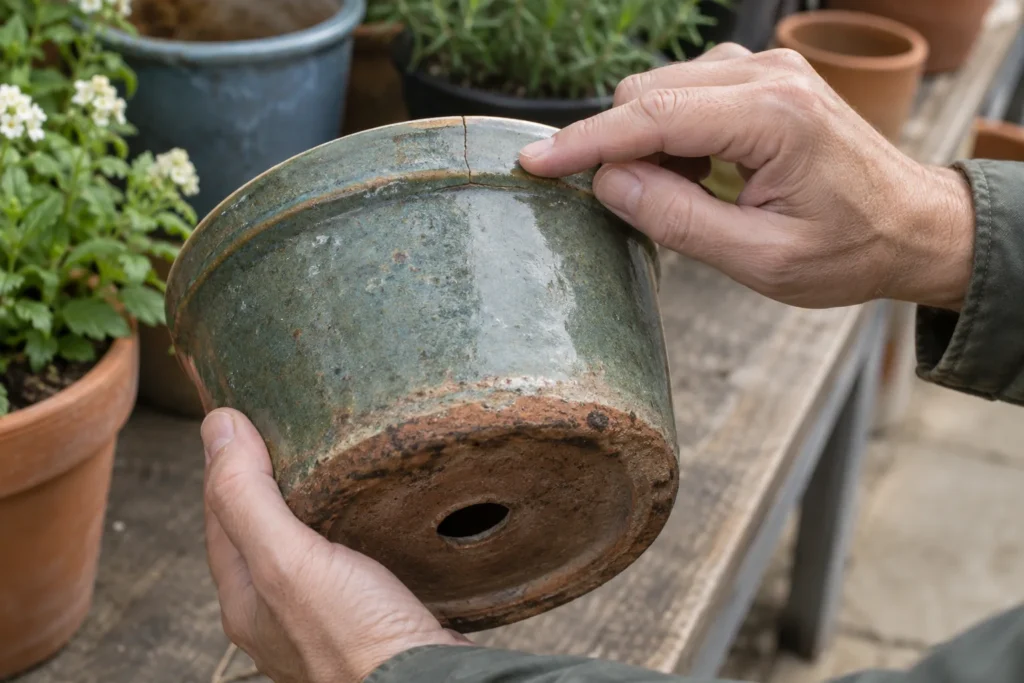
- Clay and ceramic: run a hand around the rim and base feeling for hairline cracks, and tap the side; a dull thud can mean a weak spot, while a clear ring suggests solid, evenly fired clay. Thicker walls generally hold up to temperature swings better than thin, lightweight clay.
- Plastic and resin: look for a pot rated or sold specifically for outdoor use. Cheaper indoor plastic isn’t UV-stabilized and can turn brittle and crack within a single sunny season, while outdoor-rated resin is built to handle UV exposure for years.
- Wood: check whether the listing specifies a rot-resistant species like cedar or redwood, or whether it’s an untreated softwood that will need a liner and a shorter replacement cycle.
- Any material: lift the pot, even empty, to get a feel for base weight before adding soil and water on top of it, especially if you’re buying several for one balcony.
Container materials at a glance
| Material | Weight | Drying speed | Freeze risk |
|---|---|---|---|
| Terracotta / clay | Heavy | Fast | High (cracks) |
| Glazed ceramic | Heavy | Medium | Medium-high |
| Plastic / resin | Light | Slow | Low |
| Fabric grow bag | Very light | Fast | Low |
| Wood | Heavy | Medium | Low (if lined) |
| Metal | Medium-heavy | Medium-fast | Low |
Drainage: the one rule that applies to every material
No material fixes a pot with nowhere for water to go. Standing water in the base suffocates roots regardless of whether the container is clay, plastic, or metal. Look for a pot with drainage holes already in the base, or be ready to drill or punch your own before planting. If you’re using a decorative outer pot without drainage, keep the plant in a nursery pot with holes inside it, and pour off any water that collects in the base after a rain instead of leaving the plant to sit in it.
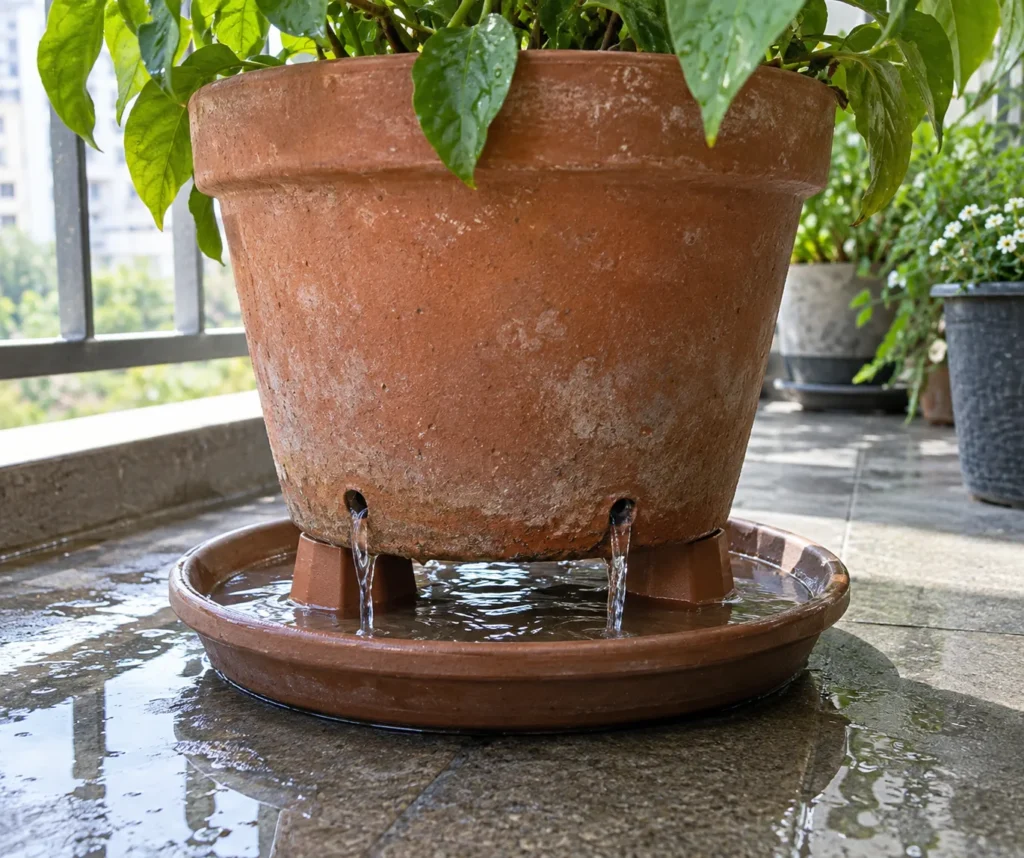
A layer of gravel at the bottom of a pot does not improve drainage the way many gardeners assume; it raises the water table inside the container instead. Skip it, and lean on a well-draining potting mix and a hole at the base that’s truly open.
Weight and wind: balcony-specific checks
- Check your lease or building rules for any weight limits on balcony floors before committing to several large ceramic or wood planters.
- Group heavier pots near the wall of the building or over a support beam instead of the outer edge of the balcony, and spread the weight out instead of clustering it all in one corner.
- In wind, weight helps stability, so a lightweight resin pot may need a wider base or a bit of gravel mixed low in the pot (below the root zone) to keep it from tipping, especially with a tall plant.
- Use pot feet or a stand to lift containers slightly off the floor. This improves drainage flow and airflow, and protects the balcony surface from staining or trapped moisture.
- Set casters or a plant dolly under your largest pots if you’ll ever need to move them, to chase the sun seasonally, shift them for cleaning, or bring them in before winter. A 40 lb (18 kg) planted container is far easier to roll than to lift.
Common container mistakes to avoid
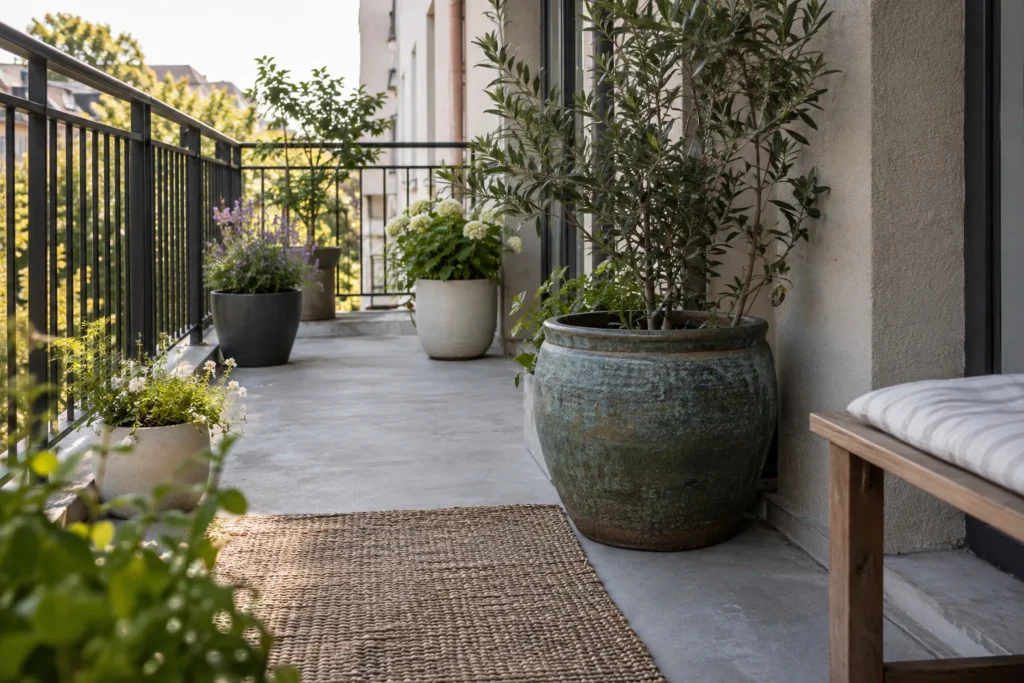
- Buying a decorative pot with no drainage and planting straight into it. Keep the plant in its nursery pot with holes, set inside the decorative pot, and lift it out to drain after watering.
- Choosing a pot sized for the plant today instead of the plant in a year. A container that’s too small forces frequent repotting and dries out faster than one with room to grow into.
- Matching the wrong material to a thirsty plant. A tomato in an unlined fabric bag on a hot, windy balcony can need watering more than once a day; if that’s more than your schedule allows, choose a slower-drying material instead.
- Leaving an unrated ceramic or terracotta pot outside all winter full of wet soil in a climate that freezes, which is one of the most common ways a favorite pot ends up cracked by spring.
Matching the pot to the plant
Once the material fits your balcony’s sun, wind, and weight limits, the last step is sizing it to the plant. Deep-rooted vegetables like tomatoes need more soil volume than shallow-rooted plants such as herbs or strawberries, and undersized pots dry out and stunt growth no matter what they’re made of. For the specific depth and diameter each type of plant needs, see our balcony container size guide.
If fast drying is a concern in a hot or windy spot regardless of material, a self-watering planter can buy you a day or two of buffer between waterings, and it’s worth pairing with lightweight materials so the combined weight stays manageable.