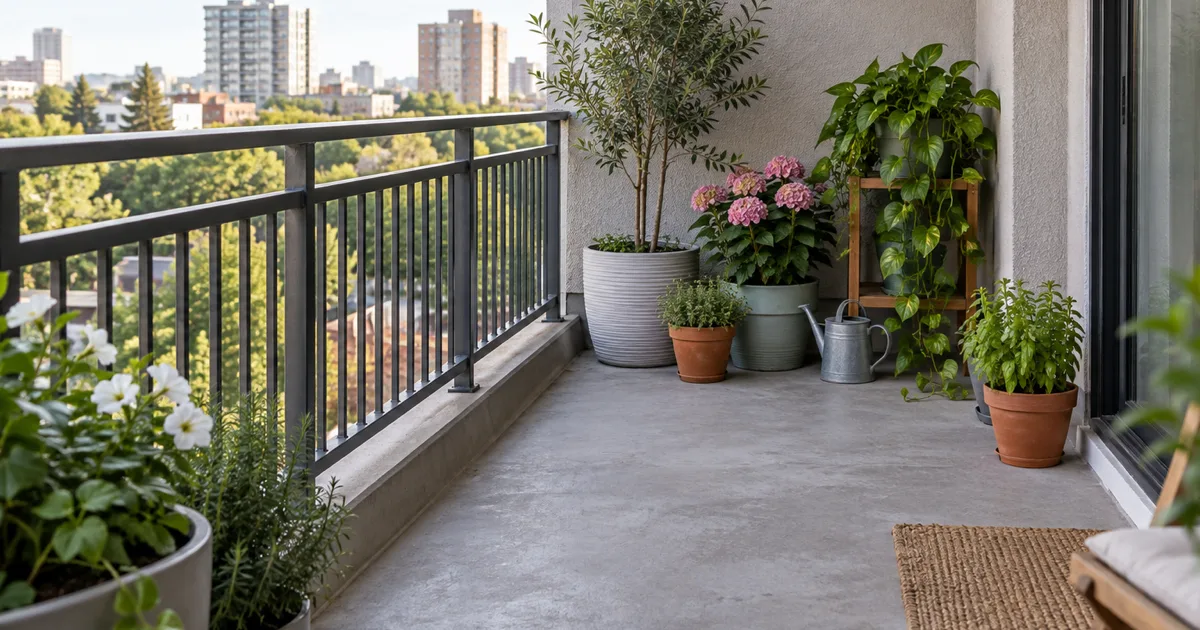
This is the one question worth answering honestly before a balcony garden grows past a few small pots, and it’s also the one this site can’t answer for you with a single number. Every other guide on BalconySprout eventually points back here, container size, DIY planters, the potato and tomato guides, the spring checklist, because weight is the constraint that applies no matter what you’re growing or how you’re growing it, and getting it wrong has real consequences.
This guide won’t tell you a safe number for your balcony, because no gardening site honestly can. What it will do is explain why that number varies so much, how to actually find out what yours is, roughly how much common balcony setups weigh so you have real reference points, and practical ways to reduce risk even before you know your exact limit.
Why there’s no universal safe number
Balcony load capacity depends on when and where the building was built, and building codes themselves haven’t held still. In the United States, the 2006 International Residential Code required balconies to be designed for a minimum live load of 60 pounds per square foot; the 2009 update lowered that minimum to 40 pounds per square foot for both decks and balconies. A balcony built to an older code, a newer one, a local amendment, or a jurisdiction with different rules entirely can all have genuinely different design capacities, and that’s before accounting for a structure’s actual current condition, which may not match its original design on paper if there’s been water damage, corrosion, or deferred maintenance over the years.
On top of that, a code minimum describes load distributed evenly across the whole floor, not one heavy planter sitting in a single spot. A balcony rated for a certain total weight when that weight is spread out can behave differently when the same total weight is concentrated in one corner. None of this is meant to be alarming; it’s meant to explain honestly why “how much weight can a balcony hold” doesn’t have one answer that applies to your specific balcony, and why the next section matters more than any number a blog post could print.
How do I find out my balcony’s actual limit?
Start with whatever documentation exists for your specific building. Condo and co-op buildings often have structural or engineering documents on file with the property management company or the building’s board, sometimes including a stated load capacity for balconies specifically. Renters can ask a property manager or landlord the same question directly; it’s a reasonable thing to ask, not an unusual one, and a property manager who doesn’t know off-hand should be able to find out or connect you with whoever does.
If no documentation exists or the building is older, a structural engineer can assess a specific balcony directly, which is the only way to get a real answer for a building with no paperwork or one where you have any doubt about current condition. That’s a genuine cost for what might feel like a small gardening decision, but it’s the honest answer for anyone planning a genuinely heavy setup, several large containers, a raised bed, water reservoirs, on an older or unverified structure.
Roughly how much do common balcony setups weigh?
Even without a confirmed limit, real reference numbers help make the decision concrete instead of abstract. Our container size guide has a fuller breakdown, but as a starting point: an 8 inch pot filled and watered runs roughly 9 to 15 lb, a 12 inch pot 22 to 35 lb, an 18 inch pot 55 to 90 lb, and a large trough or half-barrel planter 110 to 200-plus lb. A 15 to 20 gallon potato or tomato container lands in that same upper range once it’s fully watered.
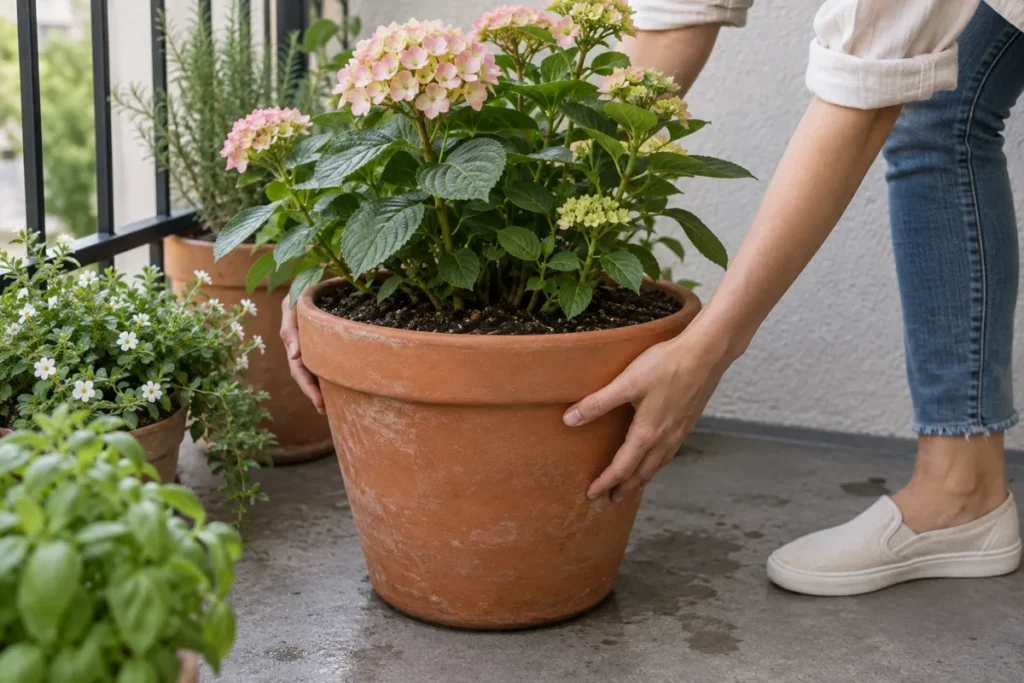
Wet potting mix is the reason those numbers run as high as they do; dry mix is light, and a thorough watering can roughly double what a container weighs. A balcony holding four or five mid-sized containers, a small table and chairs, and a person standing among them adds up faster than it looks like it should, and that’s the real number worth picturing, not any single pot’s weight on its own.
Reducing risk before you know your exact number
- Place heavy containers near a load-bearing wall or in a corner near the building’s structure, not out on the open middle of the balcony or at the outer edge, where a cantilevered structure typically has less reserve capacity.
- Spread weight out instead of concentrating it. Several medium containers distributed across the floor put less stress on any single point than the same total weight in one or two large ones.
- Choose lighter materials when the container size itself has to be large. Fabric grow bags and resin containers weigh a fraction of what concrete, stone, or thick ceramic do at the same volume, and that difference is pure savings with no downside to the plant.
- Skip water reservoirs and self-watering inserts on an already heavy setup. A built-in reservoir is stored water sitting permanently in the container, adding weight even when the potting mix itself isn’t fully saturated.
- Add containers gradually rather than filling the whole balcony in one weekend, and reassess as the collection grows instead of assuming the plan you had in January still applies once every pot is full-grown and watered in July.
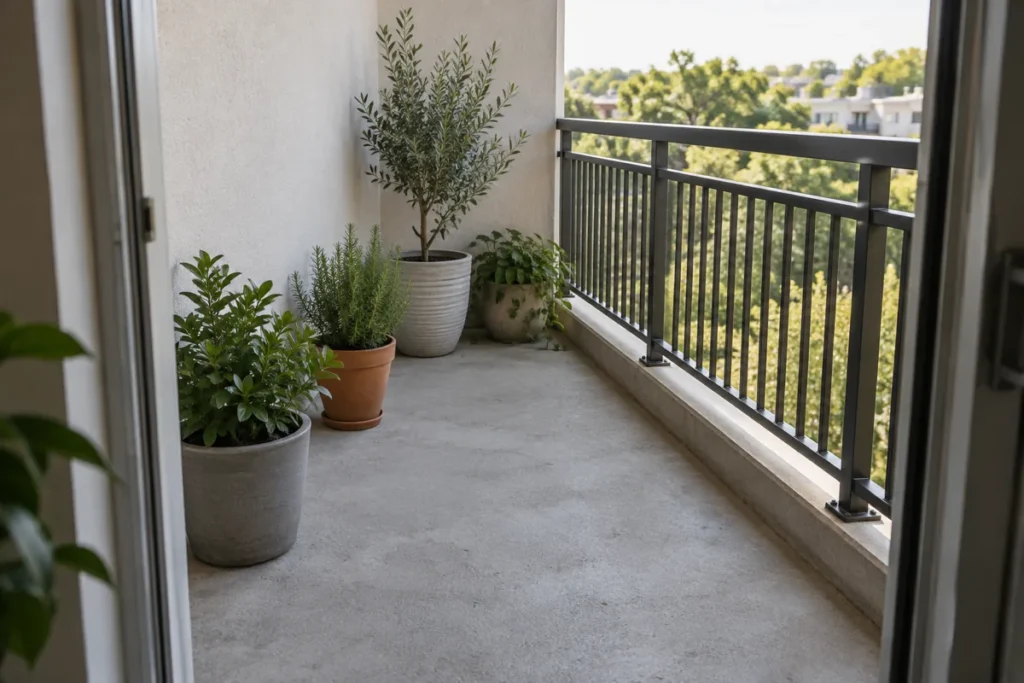
Railing planters are a different problem
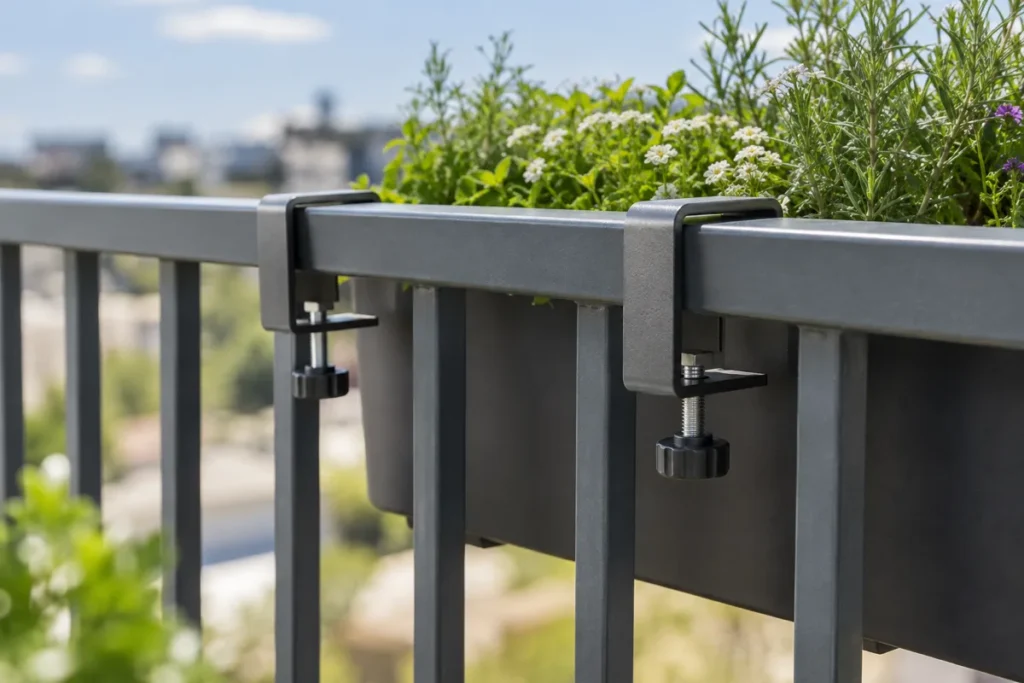
Everything above concerns the balcony floor’s structural load. A planter that hooks or clamps onto the railing itself is a separate question entirely: the weight isn’t distributed across the floor at all, it’s concentrated on whatever hardware is holding the planter to the rail, and that hardware has its own weight rating that has nothing to do with the balcony’s floor capacity. Confirm a railing planter’s mounting hardware is rated for its full watered weight before hanging it, and never assume a railing that feels sturdy to lean on is automatically rated to carry additional hanging weight; those are two different engineering questions with two different answers.
The same logic applies to anything hung from an overhead structure, a ceiling hook, a pergola beam, or a bracket, rather than sitting on the floor: check what that specific point of attachment is rated for, not what the balcony as a whole can hold.