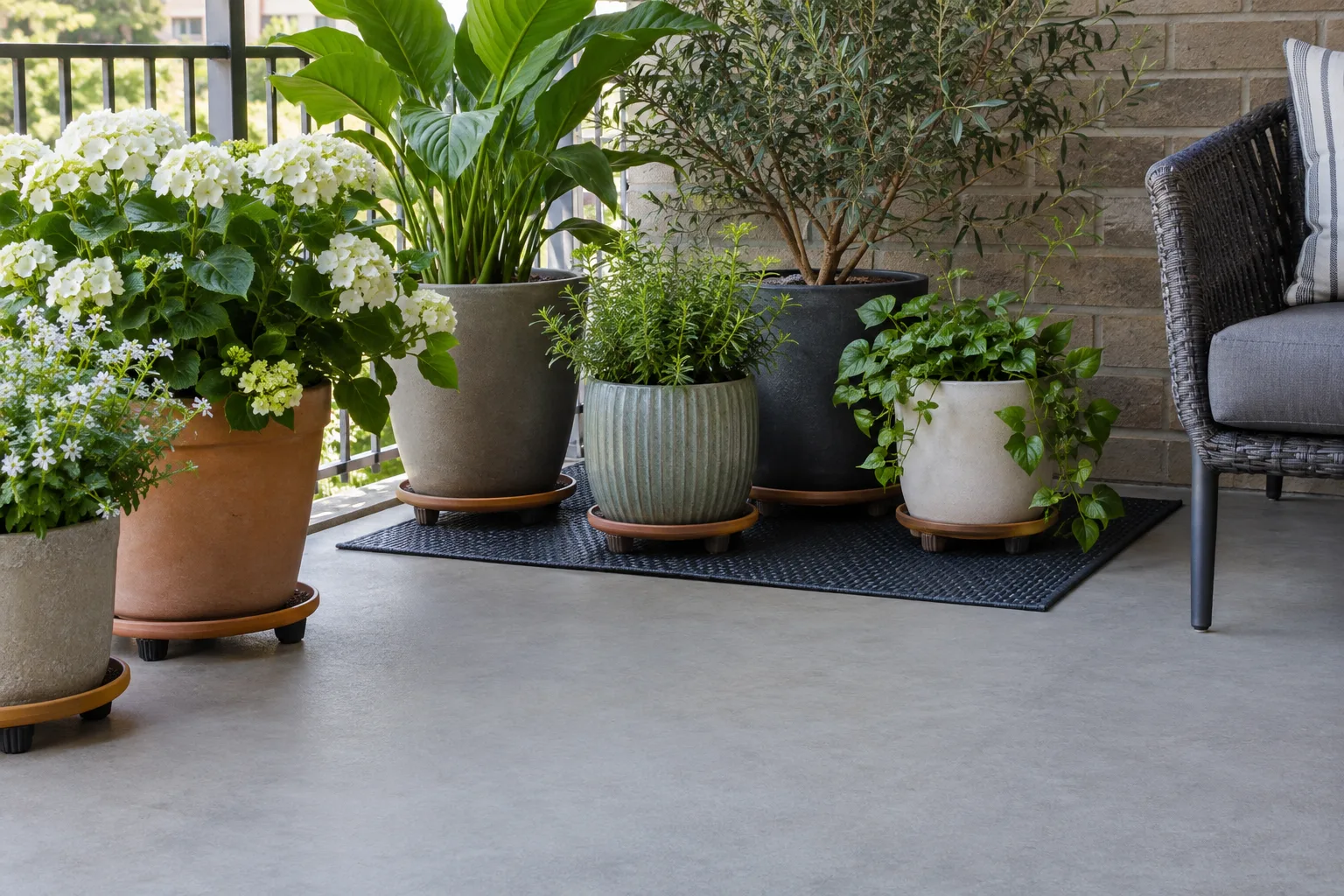
A balcony full of plants is one of the fastest ways to lose part of a security deposit. Terracotta pots leave permanent rings on concrete, metal furniture legs rust and stain, and a saucer that overflows once a week for a season can leave a mark that outlasts the plant that caused it. None of this is hard to prevent, but it has to be dealt with before the damage shows up, not after.
What’s causing the damage
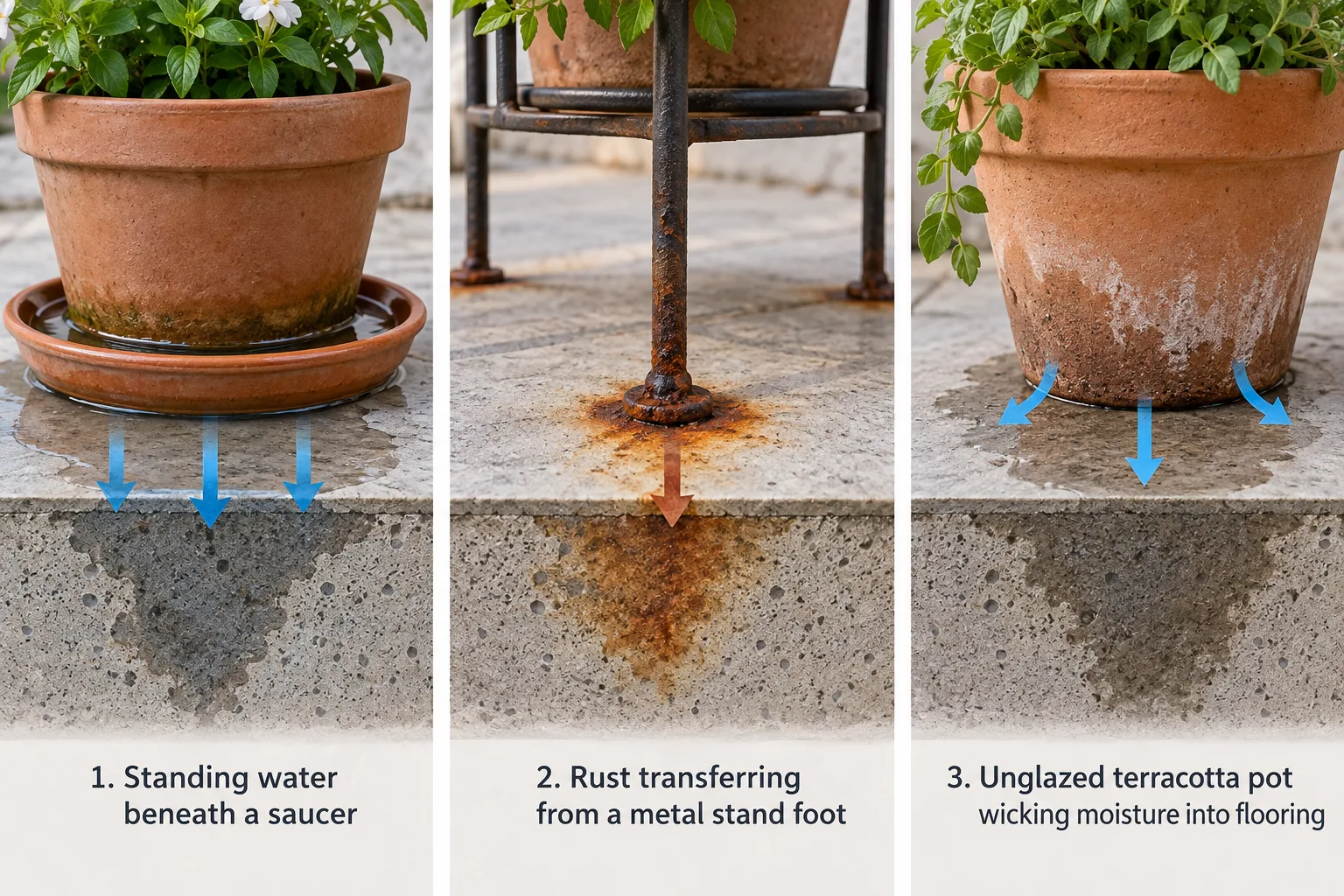
Three things do almost all of the damage on a container balcony: standing water, direct metal-to-surface contact, and unglazed pots sitting flush on porous flooring.
- Standing water from overflow or drainage holes seeps into concrete, wood sealant, or composite decking and leaves a stain long after it dries, especially if it sat there for days.
- Metal furniture and plant stands rust where their feet touch a damp surface, and that rust transfers to concrete and wood as a stain that doesn’t wash off.
- Unglazed terracotta and concrete pots wick moisture out through their base, which keeps a small ring of the floor beneath them damp far longer than the surrounding area, creating a mineral or mold ring over time.
Know what floor you’re protecting
The right approach depends on what’s underfoot, and balconies vary more than people expect. Bare or painted concrete is the most common and the most forgiving, since it can handle most cleaners and doesn’t rot. Sealed wood decking is more sensitive to standing water, which can break down the sealant and let moisture into the wood itself over a season. Composite decking resists water damage well but can still discolor from certain cleaners or from rust and tannin stains sitting on the surface too long. Tile, less common but not rare on newer balconies, handles water fine on the surface but the grout between tiles stains easily and is harder to fully clean once discolored.
If you’re not sure which you have, check your lease or building documents, or ask the property manager before using anything acidic to clean an existing stain. The wrong cleaner on the wrong surface can do more visible damage than the stain it was meant to remove.
Lift every pot off the surface
The single most effective fix is also the cheapest: get air moving under every container. Pot feet, small terracotta or plastic risers that sit under the rim of a pot, lift it just enough that water drains and evaporates instead of pooling underneath. They cost very little, come in sets, and work on nearly any pot shape.
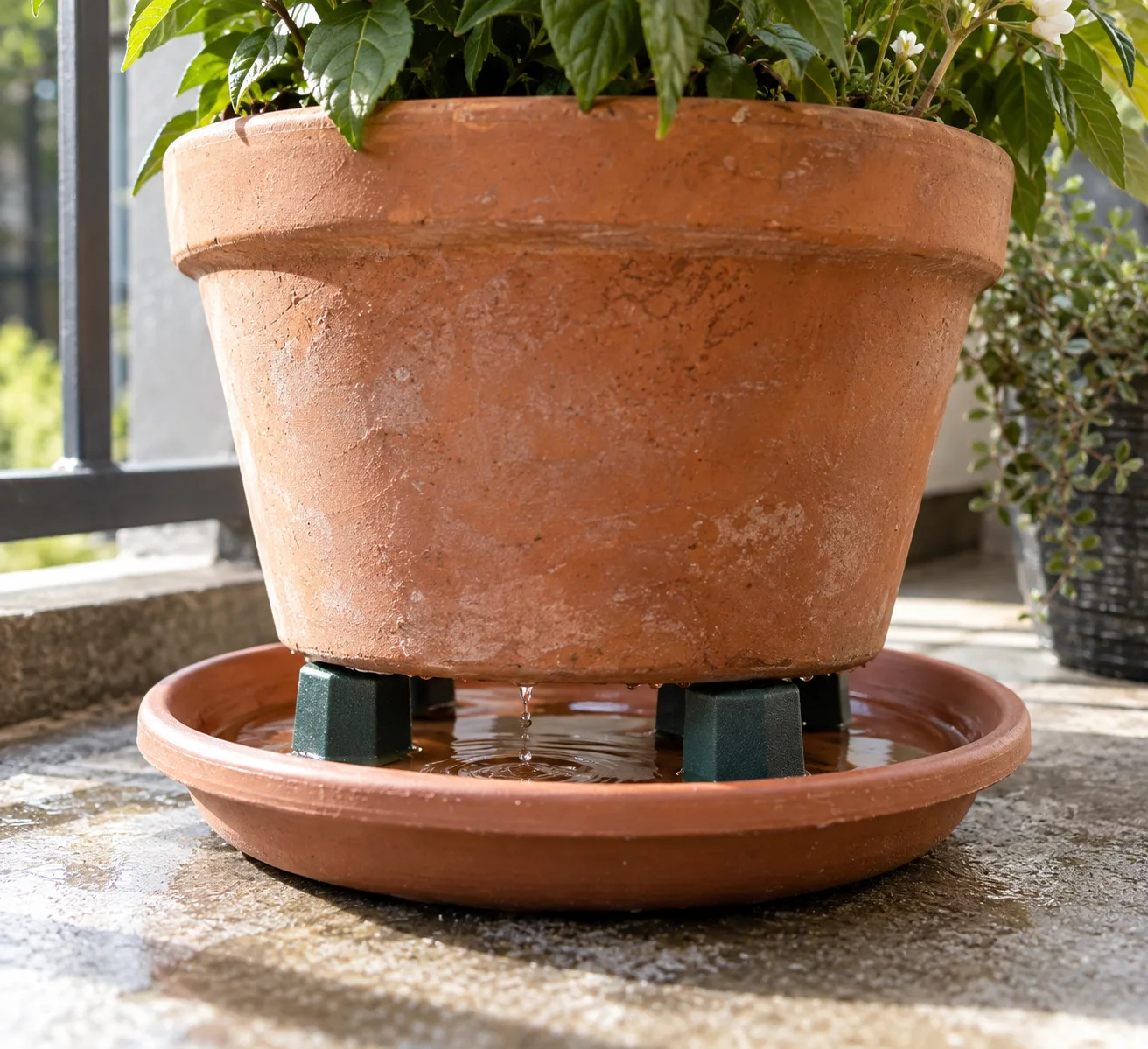
If a pot already has a built-in saucer, check that the saucer itself has feet or a raised lip on the bottom. A flat saucer sitting directly on concrete or decking causes the same problem as a flat pot, just with the water more contained.
Give every pot a real saucer, and empty it
A saucer only works if it’s sized to catch the runoff and if someone empties it. A saucer that’s too small overflows the first time you water thoroughly, and standing water left in a saucer for days does close to the same damage as water on the bare floor, just contained to a smaller ring.
- Size the saucer to the pot, not to what happened to be in the shed. A saucer roughly 1 to 2 inches wider than the pot’s base catches a normal watering without overflowing.
- Empty saucers within an hour or two of watering when you can. Standing water invites fungus gnats in addition to floor damage.
- For pots you water heavily or often, a saucer with a built-in reservoir gap keeps the pot’s base out of the water even if you can’t empty it right away.
Put a protective layer under the whole setup
Pot feet and saucers handle individual containers, but a layer under the entire planting area protects against spills, overflow, and the slow, cumulative moisture that comes with a balcony full of plants.
- Interlocking deck tiles (wood or composite) sit on top of concrete or an existing deck and let water drain between the slats instead of pooling. They also cover existing stains without any repair work.
- Outdoor-rated rubber or PVC mats are cheaper and easier to reposition, and work well under a single cluster of pots instead of the whole floor.
- A plastic or rubber tray under a full plant stand or shelf catches runoff from multiple pots at once and is far easier to wipe out than treating each container separately.
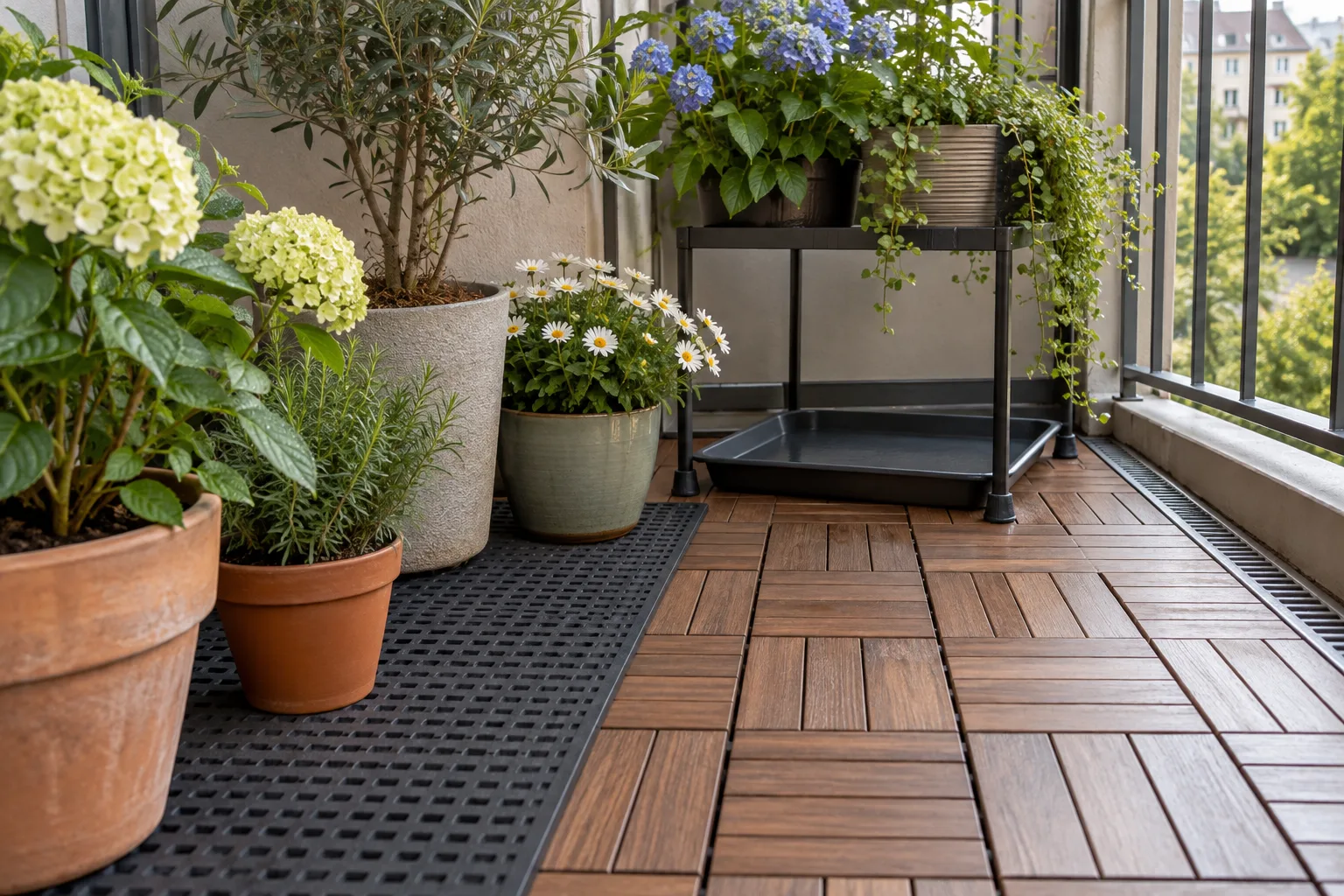
Whatever you choose, make sure it doesn’t trap water underneath itself. A solid mat with no drainage can hold moisture against the floor worse than having no mat at all.
Check your balcony’s own drain, not just your pots
Most balconies, especially anything above the ground floor, have a small floor drain or scupper built into a corner or along the railing edge, and it’s easy to forget it’s there until it stops working. Potting soil that washes out of a saucer, fallen leaves, and general grit all settle toward the lowest point of the floor, which is exactly where that drain sits, so a container balcony clogs its own drain faster than a bare one. A clogged drain does more damage in one afternoon than a season of individually overflowing saucers, since a hard rain with nowhere to go can pool across the entire floor instead of staying contained to the area around your pots.
Check it every month or two, more often right after repotting or during fall leaf drop: clear any visible debris by hand, and run a little water from a watering can or hose directly over the drain to confirm it flows through instead of pooling. If water backs up or drains noticeably slower than it should, a plumber’s or drain-clearing tool made for small floor drains can usually clear the blockage without needing to call maintenance, though a drain that stays slow after clearing visible debris is worth reporting, since the clog may be further down than you can reach.
Keep metal away from direct contact
Metal plant stands, wire shelving, and folding furniture are the most common source of rust stains on a balcony, because their feet are small, they hold moisture against the surface, and the rust that forms is nearly impossible to fully clean off concrete once it sets in.
- Add rubber or felt caps to the feet of any metal stand or chair, the same kind sold for indoor furniture.
- Choose stands with a powder-coated or galvanized finish over bare or painted steel, since bare metal rusts fastest where the coating has already worn or chipped.
- Wipe metal feet dry after rain when you can, rather than leaving them to air-dry against the floor.
Choosing pots that create less of this problem
Some of this comes down to what you buy in the first place. Glazed ceramic and most plastic or resin pots hold moisture inside instead of wicking it out through the walls, so they leave far less of a damp ring underneath than raw terracotta or unsealed concrete planters. That doesn’t mean skip terracotta, plenty of plants do better in it, but pair it with pot feet from day one instead of waiting to see if it becomes a problem.
A built-in drainage reservoir, the kind self-watering planters use, is another way to cut down on floor risk, since it holds excess water inside the pot rather than letting it run straight through onto the surface below. It’s worth checking that any reservoir has an overflow hole, though; a sealed reservoir with nowhere for extra water to go just backs up and floods the pot instead.
Don’t forget what blows in, not just what drips down
Floor damage on a balcony isn’t only about watering. Wind-blown leaves and flower debris that collect against a railing or in a corner hold moisture against the floor the same way an unemptied saucer does, especially through fall. A quick sweep after a windy day, particularly around the edges and corners where debris tends to pile up, prevents a second source of the same staining and mold problems pots cause on their own.
Freezing water does more damage than standing water
Everything above assumes the water stays liquid. Anywhere winters drop below freezing, the same standing water that causes stains during the growing season does something worse once temperatures fall: it expands as it freezes, and that expansion is what actually cracks concrete, not the cold by itself. Water that’s worked its way into a hairline crack, into the joint between deck tiles, or into a rough patch of unsealed concrete freezes there, forces the gap wider, and thaws again the next warm day, a cycle called freeze-thaw that repeats every cold snap all winter and turns a small crack into a real one by spring.
The fix is the same prevention already covered, it just matters more once freezing weather arrives: an unemptied saucer or a mat holding water against the floor is a minor stain risk in July and a crack risk in January. Before the first hard freeze, empty and store saucers you’re not actively using, lift any mats or deck tiles to check nothing’s pooling underneath, and confirm the floor drain covered above is clear, since a clogged drain backing up water right before a freeze is one of the more avoidable ways a balcony floor gets damaged over winter. Our guide to prepping a balcony garden for winter covers the plant and pot side of the same season, including why unglazed terracotta pots specifically need to come inside or get emptied before a freeze.
Dealing with a stain that’s already there
If the damage already happened, the fix depends on what caused it and what the surface is made of.
- Rust on concrete: a paste of oxalic acid-based rust remover (sold specifically for concrete) or a commercial rust stain remover, worked in and rinsed, lifts most rust rings. Test an inconspicuous spot first.
- Mineral or water rings on concrete: a stiff brush with a mild dish soap and water solution handles most of these; a diluted white vinegar solution helps with harder mineral deposits.
- Stains on sealed wood decking: light sanding followed by a matching sealant often blends the spot back in, since the stain is usually only in the top layer of sealant, not the wood itself.
- Stains on composite decking: check the manufacturer’s cleaning guidance before using anything acidic, since some composite materials discolor with harsh cleaners.
Before you move in a heavy setup
If your balcony came with existing damage or specific flooring rules, check your lease before adding anything permanent like adhesive tiles or a fixed mat system. Renters carry more of this risk than owners, since floor damage is one of the more common move-out deductions.
If you only do three things
- Put pot feet or a raised saucer under every container, before you notice a problem, not after.
- Add rubber or felt caps to any metal furniture or stand touching the floor.
- Lay interlocking tiles or a rubber mat under your main cluster of plants, especially anywhere water is likely to overflow.
None of it is expensive, and all of it is cheaper than what a resurfacing charge or a lost deposit costs at move-out.