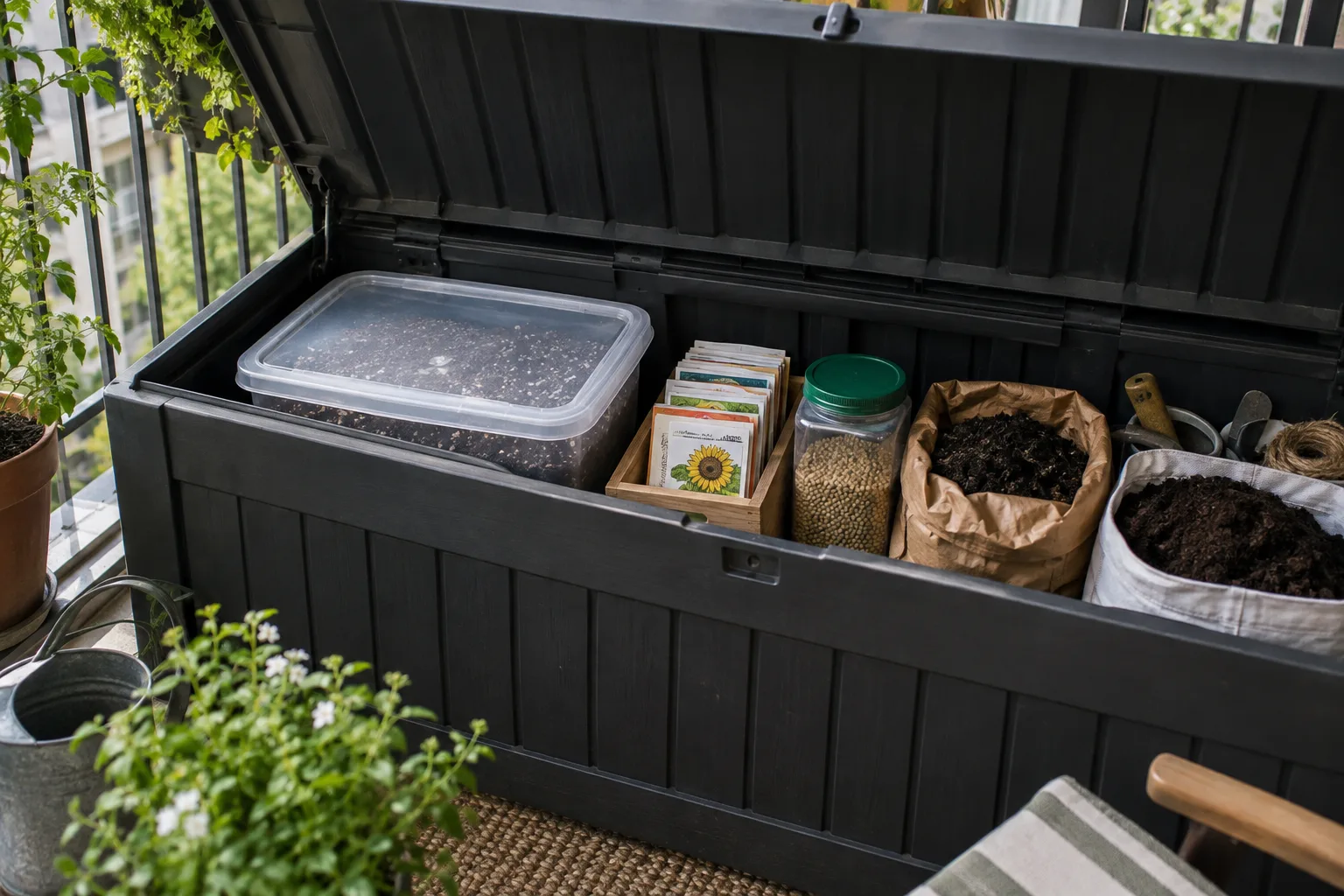
A balcony garden generates leftovers every season: half a bag of potting mix, seed packets with a pinch used out of a hundred, fertilizer with most of the box still full, a batch of compost or worm castings with nowhere urgent to go. None of it needs to be thrown out or left open to the weather until next spring. The pots and tools themselves get their own winterizing routine in our guide to prepping a balcony garden for winter; this one covers what goes in those pots instead.
Potting soil: dry it out before it goes anywhere
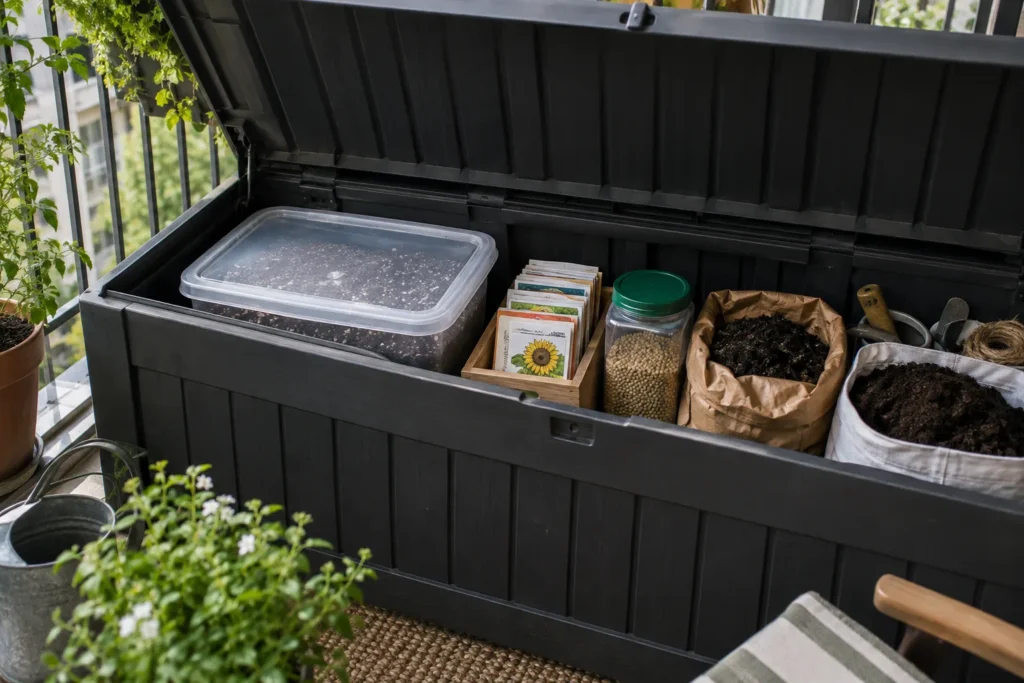
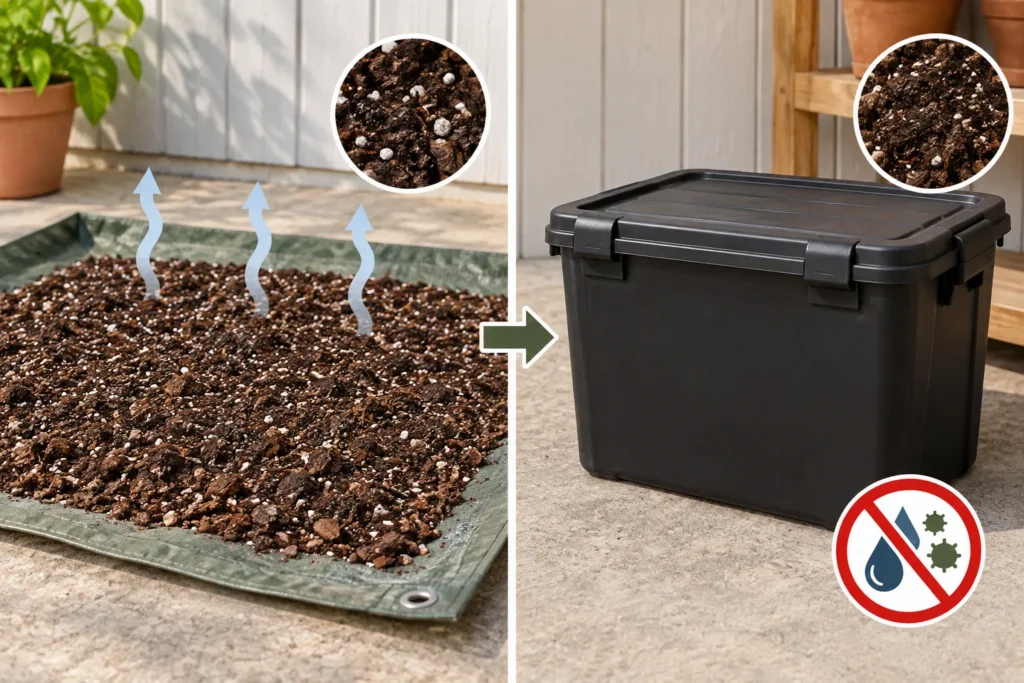
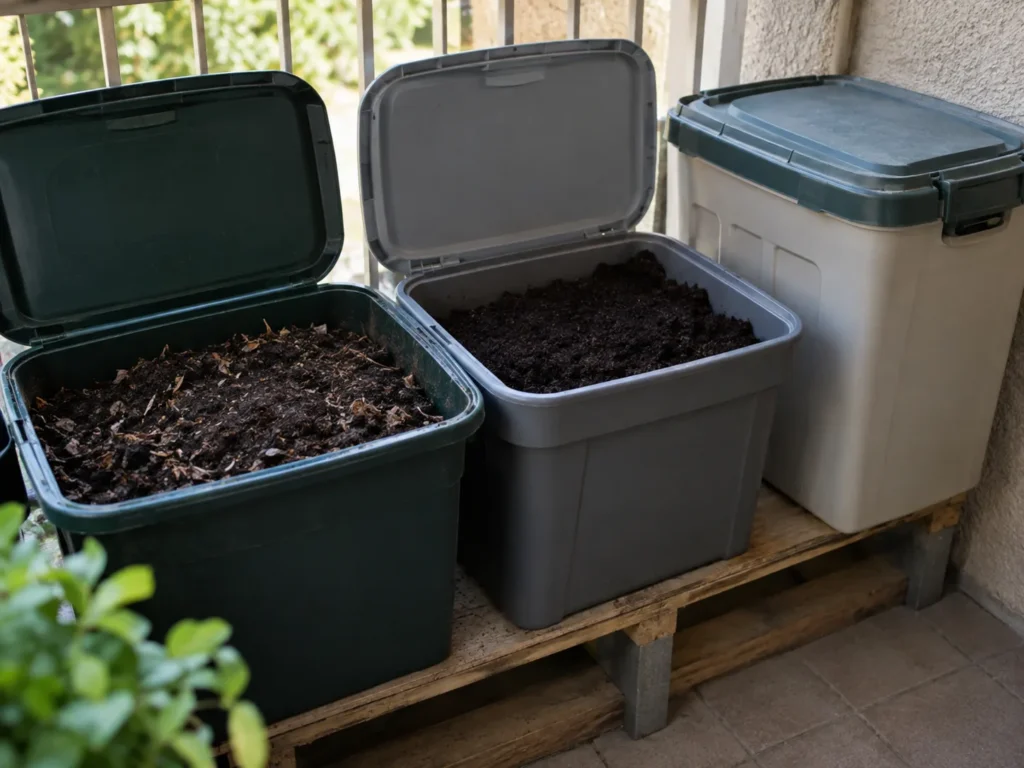
Leftover potting mix is worth keeping, but only if it goes into storage dry. Damp mix sealed into a container is exactly the environment mold and mildew need, so spread it out and let it air-dry for a few days first, stirring occasionally, before it goes anywhere airtight. Once it’s dry, a 20- to 30-gallon plastic storage tub with a tight lid handles a real quantity, and if the lid doesn’t seal well on its own, a wrap of tape around the rim keeps out both moisture and the insects that find their way into an imperfectly closed bin. Smaller leftover amounts from several half-used bags can be consolidated into one container instead of kept in a handful of half-empty ones.
Reusing old potting mix instead of storing it as-is
Mix that already grew a plant this season can go around again, with two caveats. Skip reusing mix from a plant that had a serious pest infestation or a disease problem; whatever caused that trouble can persist in the soil and affect the next plant that goes into it. For everything else, ScottsMiracle-Gro recommends solarizing used mix before reuse: seal it in a heavy-duty plastic bag, double the plastic if you want it to heat faster, and leave it somewhere sunny for a stretch, which raises the temperature enough to knock back most lingering pathogens and pest eggs without chemicals.
Solarizing kills the beneficial soil life along with everything else, so reused mix needs its nutrients built back up before a new plant goes in. Blending roughly one part fresh compost into three parts reused mix restores fertility without over-diluting the structure the potting mix provides; straight compost alone compacts too readily in a container to use as the whole growing medium, a point covered in more detail in our guide to homemade fertilizer for balcony plants. If a plant looked seriously unhealthy in that mix for reasons you couldn’t pin down, buying fresh mix for the next attempt is the simpler and safer call.
Seeds: cool, dry, and dark beats almost anything else
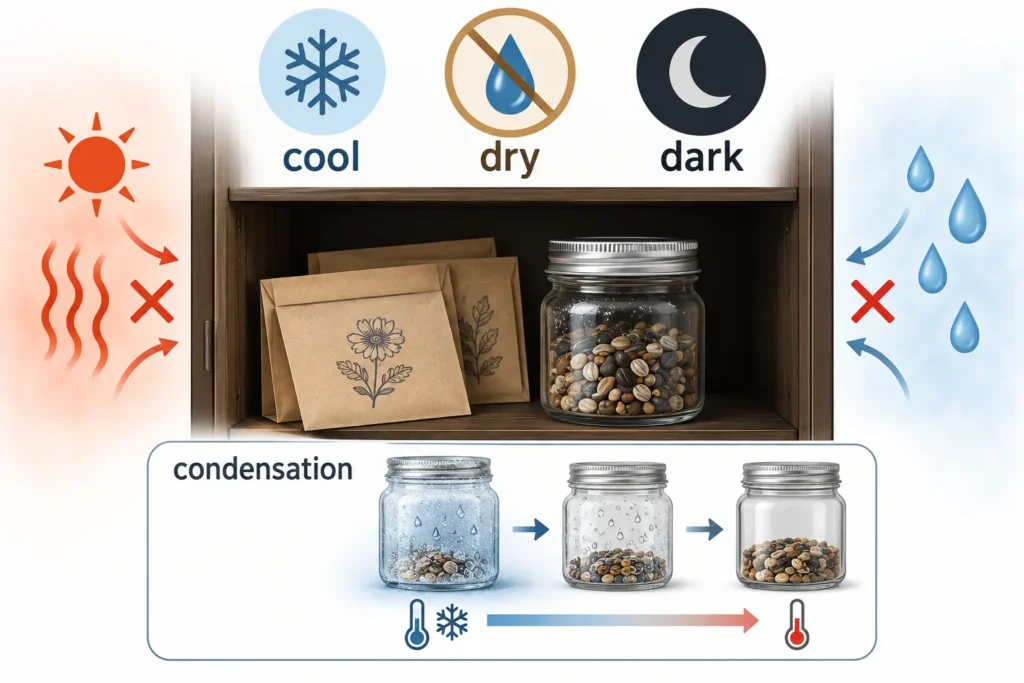
Leftover seeds keep for years if you get the storage conditions right, and lose viability fast if you don’t. South Dakota State University Extension identifies humidity as the single most important factor: keep relative humidity below 60 percent, store in a cool spot away from direct sunlight, and avoid letting the temperature climb above about 90°F even briefly. A sealed envelope or a small jar with a tight lid handles most home quantities, and tucking in a small silica packet or a bit of powdered milk wrapped in cloth helps absorb any residual moisture in an especially humid climate.
A refrigerator extends seed life further if you have the space, though the seeds need to warm back up to room temperature before you open a sealed container, otherwise condensation forms on the cold seeds the moment they hit warmer air, undoing the whole point of dry storage. How long different seeds actually stay viable varies by crop: corn, lettuce, onion, and pepper seeds hold for roughly two years, beans, broccoli, and peas for about three, tomatoes, squash, and cucumbers for around four, and radishes and Brussels sprouts often five or more. Seeds past their prime don’t necessarily fail outright; they tend to germinate more slowly and less completely, so sowing a few extra from an older packet compensates for the drop-off.
Fertilizer: airtight and out of temperature swings
Granular fertilizer stores well for a long time as long as moisture stays out. An expert response through the Cooperative Extension System’s Ask Extension service notes that a properly sealed granular fertilizer, kept airtight in a cool, dry spot, has a very long shelf life; the main enemy is humidity finding its way in and causing the granules to clump, which changes how evenly the product spreads and dissolves even if the nutrients themselves are still largely intact. If the original bag doesn’t reseal well, transfer what’s left into a container with a real airtight lid rather than trusting a folded-over bag top.
Liquid fertilizer keeps for years too when it’s kept sealed, but it’s more sensitive to temperature extremes than granular product: freezing can cause a liquid concentrate to separate or crystallize, and repeated hot-cold swings through an uninsulated storage spot degrade it faster than a stable, moderate temperature would. A closet or an indoor cupboard beats a balcony storage box that bakes in summer sun and freezes solid in winter for either type, and either one is safer stored somewhere pets and children can’t easily reach, out of a bag that could be mistaken for something else entirely.
Compost and worm castings: keep them from drying out or drowning
Finished compost stores reasonably well in a sealed, opaque container kept out of direct light, ready to work into a container whenever you need it next. Worm castings need slightly more care: keep them moist but not wet going into storage, since castings that dry out completely lose some of their microbial activity, and keep them away from a lot of light and big temperature swings. Utah State University Extension notes that properly stored castings hold their value for roughly six months or more, which is plenty of time to use them across a normal balcony growing season without needing a fresh batch every time you want to top-dress a container.
Where to actually put it on a small balcony
Balcony space rarely includes a garage or shed, so storage containers for soil, seeds, fertilizer, and amendments usually compete with the same limited floor space as everything else. A storage bench doubles as seating and hides several sealed containers underneath in one tidy footprint. A tall, narrow cabinet against the building wall keeps everything upright and out of the walking path without eating much floor area. For renters who can’t drill or mount anything, a lidded tote pushed under a bench or table works fine; it just needs to stay out of direct sun and off a surface that puddles after rain.
Whatever the setup, keep supply storage separate from where you work with wet soil and dripping watering cans. A sealed bin of dry potting mix sitting directly beside where you fill pots is one splash away from the exact damp conditions you dried it out to avoid in the first place.
A simple end-of-season storage checklist
- Dry leftover potting mix for several days before sealing it into an airtight container.
- Solarize and amend reused mix with compost rather than storing spent soil as-is and expecting full fertility next season.
- Store seeds cool, dry, and dark, labeled with variety and year, grouped by roughly how long each stays viable.
- Keep fertilizer sealed and out of temperature swings, granular in an airtight container, liquid away from freezing.
- Store compost dark and covered; keep worm castings lightly moist, sealed against both drying out and getting rained on.
None of this takes much space or effort, and it means next season starts with usable supplies instead of a soggy bag of clumped mix and a fertilizer box that spent the winter freezing and thawing on an exposed shelf. Pair it with the container and tool side of the routine in our guide to prepping a balcony garden for winter for the complete end-of-season picture.
Sources
- South Dakota State University Extension: How to store leftover garden seeds
- Ask Extension (Cooperative Extension System): Granular fertilizer shelf life
- Utah State University Extension: Vermicomposting
- ScottsMiracle-Gro: How to store and reuse potting soil
Seed and fertilizer shelf life vary by product and manufacturer. When a stored product looks, smells, or performs differently than expected, replace it rather than risk a full season on an uncertain batch.