
Every fall, the same thing happens on balconies everywhere: someone decides their rosemary or basil is too good to let the frost take, carries it inside, sets it on the kitchen windowsill, and a week later finds tiny white flies lifting off the leaves every time the pot gets bumped. The plant made it. So did whatever was living on it.
Bringing a balcony herb indoors for winter is really two separate problems wearing one trench coat: keeping the plant alive through a season it wasn’t built for, and not turning your kitchen into a second home for whatever insects were already living in that pot outdoors. Most guides only deal with the first problem. This one deals with both, plus the question nobody wants to ask out loud: is this particular plant even worth saving, or would you be better off with a cutting and a fresh start?
Quick answer: Rosemary, thyme, oregano, sage, mint, chives, and parsley are worth potting up whole and bringing inside. Basil is an annual that’s already on borrowed time by fall, so take cuttings to root instead of hauling the whole plant in. Before anything crosses your threshold, inspect it closely and isolate it from other houseplants for two to four weeks, since fungus gnats and scale insects take that long to reveal themselves. Once inside, most herbs need four to six hours of direct sun or 12 to 16 hours under a grow light, and far less water than they got outdoors.
Why Herbs Need a Different Plan Than Ornamentals
If you’ve already read our guide to prepping a balcony garden for winter, you’ve seen the general version of this advice: bring tender plants in, cut back perennials, protect what’s left outside. That checklist is built for the whole balcony, decorative plants included, and it treats “bring it indoors” as a single step.
Herbs complicate that step in two ways an ornamental fern doesn’t. First, several common balcony herbs, basil above all, are annuals that were never going to survive the winter regardless of where you put them, which changes the goal from “keep this plant alive” to “get a head start on next year’s plant.” Second, you’re growing these to eat. That doesn’t change how you treat pests, but it’s worth knowing before you reach for anything stronger than neem oil or isopropyl alcohol on a plant you’re planning to cook with later.
Decide Before You Move Anything: Save the Plant, or Just Take Cuttings?
This is the decision most guides skip, and skipping it is how people end up nursing a leggy, half-dead basil plant on a windowsill in February for no real reason.
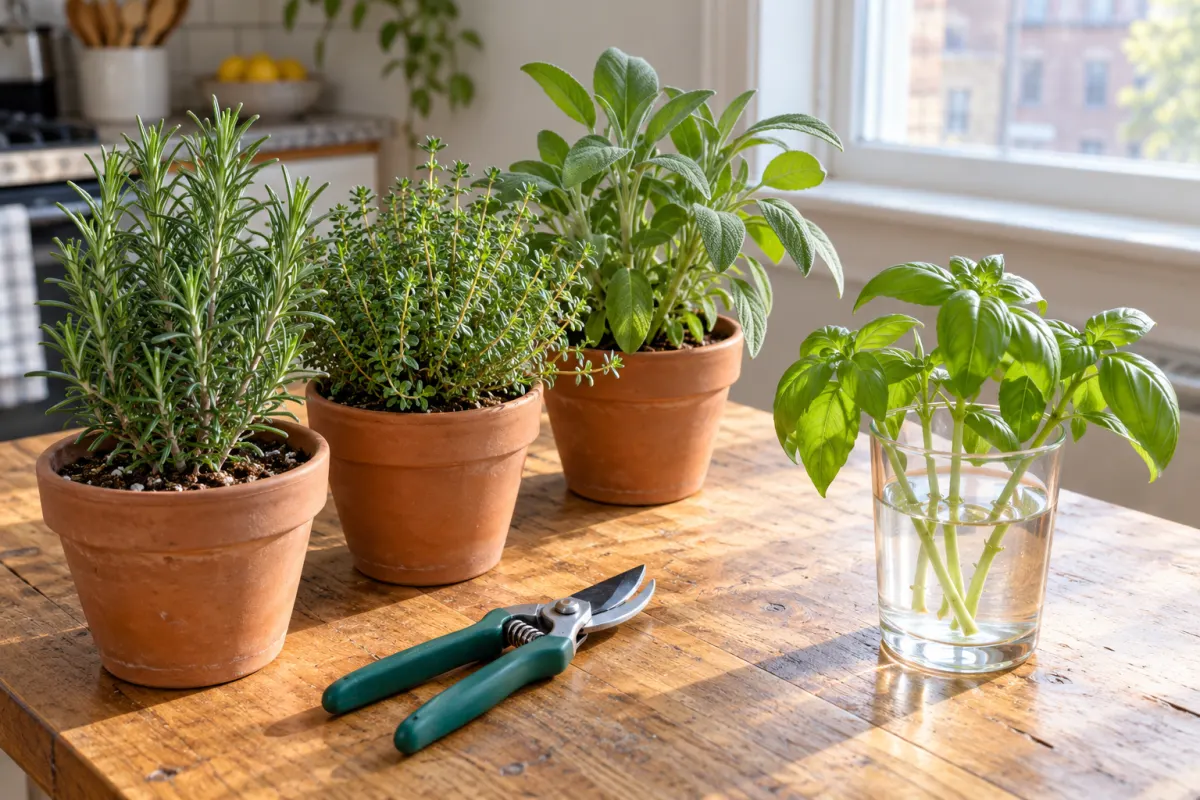
Worth potting up whole
Rosemary, thyme, oregano, sage, mint, chives, and parsley are perennial or biennial, and they’re the herbs most likely to reward the effort of a full repot and move indoors. Mint, chives, and parsley tolerate lower indoor light better than the others, so they’re the forgiving choice if your sunniest window still isn’t very sunny. Rosemary, thyme, and sage want more light than that and do best with supplemental grow lights through the darkest months.
Better as cuttings
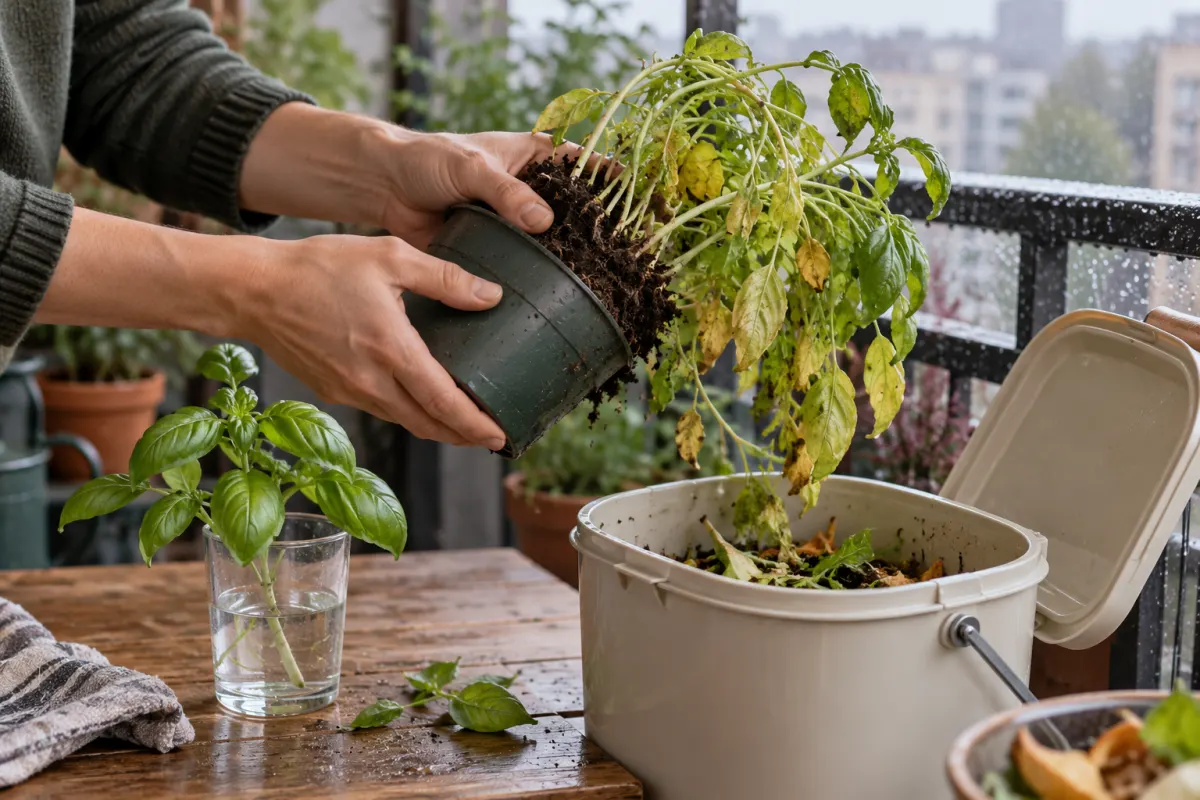
Basil is an annual. It was going to die at the first hard frost no matter what you did, and even brought inside ahead of that, it tends to tire out after a few weeks under indoor light and decline anyway. Rather than committing a pot and a quarantine period to a plant that’s already past its best days, take four-to-six-inch cuttings from healthy stems, strip the lower leaves, and root them in water on a bright windowsill. You’ll have usable rooted cuttings in two to three weeks, which is faster than nursing the parent plant through an indoor decline it probably won’t recover from.
Cilantro behaves similarly: it’s fast to bolt and short-lived even in ideal conditions, so cuttings or a fresh indoor sowing usually beat trying to keep an outdoor plant going.
For help telling which of your other balcony plants fall into which camp, see our guide to annuals vs. perennials for a balcony garden.
The Pest Quarantine Step Most Guides Skip
An aphid population that was being kept in check outdoors by wind, rain, and the occasional predator insect can expand fast in the still, warm air of a living room. Fungus gnats and scale are worse, because they’re often already in the soil or on the stems and invisible until weeks after the plant has settled in next to your other houseplants.
Inspect before it crosses the threshold
Check the undersides of leaves and every stem joint for aphids, spider mites, whiteflies, and mealybugs before the plant comes inside at all. If you’ve had any of these before, see our guides to removing aphids from balcony plants and common balcony pests beyond aphids for what each one looks like up close.
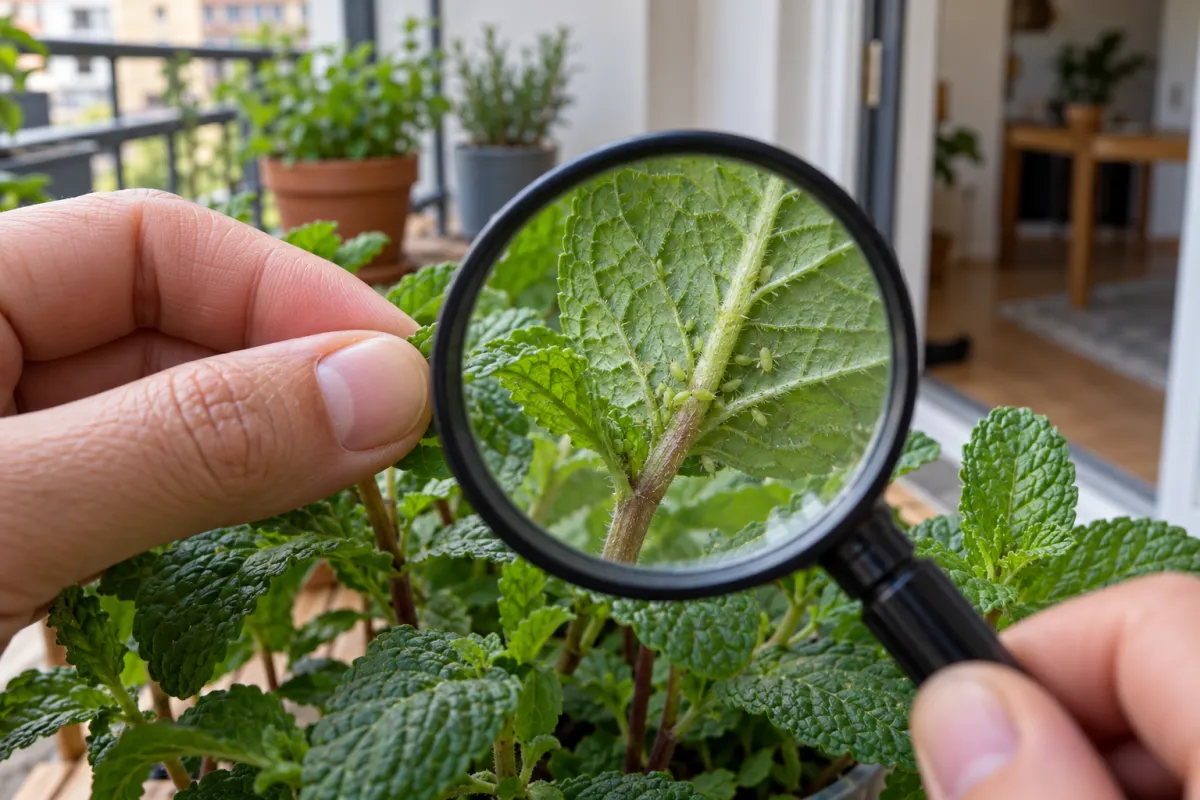
- Aphids, spider mites, and whiteflies: treat with neem oil, then wipe leaves down with a soft cloth or paper towel afterward to physically remove eggs and larvae the oil didn’t reach.
- Mealybugs: dab directly with a cotton swab soaked in isopropyl alcohol, since neem oil alone often doesn’t penetrate their waxy coating.
- Fungus gnats and other soil pests: repotting into fresh, sterile potting mix removes most of what’s hiding in the soil. A thin layer of aquarium sand or fine gravel on top of the new soil makes it harder for any larvae that remain to complete their life cycle.
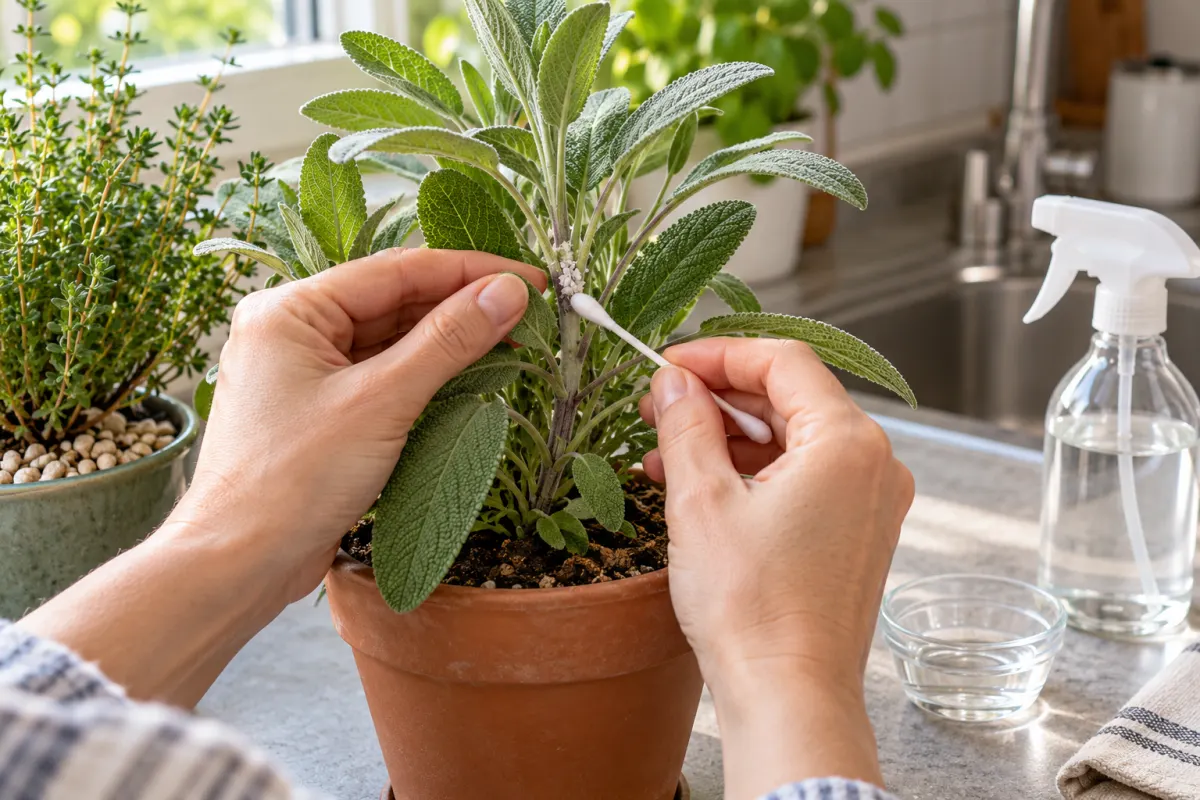
Isolate for two to four weeks
Treating a plant once isn’t the same as clearing it. Fungus gnats and scale insects are both slow to show themselves, which is why a plant that looked clean on day one can turn out not to be on day twenty. Keep newly moved herbs in a separate room from any other houseplants, check them every few days under good light, and don’t move them in with the rest of your collection until the full quarantine period has passed without a new sighting.
A two-week quarantine is a reasonable minimum. Four weeks is the safer call if the plant came from a spot that had any pest pressure over the summer, since that covers even the slower-developing pests.

Test Your Indoor Light Before You Commit a Spot
Light, not temperature, is what actually kills most herbs indoors over the winter. A south-facing window is the baseline worth testing first: watch it for a day and see how many hours it gets direct, unobstructed sun, not just bright daylight. Herbs generally need four to six hours of direct sun to keep producing usable growth rather than just surviving.
If your best window doesn’t clear that bar, a full-spectrum LED or fluorescent grow light on a timer for 12 to 16 hours a day closes the gap. Put mint, chives, and parsley in whatever light is left over after the hungrier plants are placed, since they’re the most tolerant of the three. Reserve the best light, natural or supplemental, for rosemary, thyme, and sage.
Expect some leaf drop in the first couple of weeks regardless of placement. That’s the plant adjusting to a lower-light, lower-humidity environment than it had outdoors, not a sign the move failed. If growth starts coming in long, pale, and stretched out past that initial adjustment period, that’s the plant telling you it needs more light than it’s currently getting.

Watering Changes Once Herbs Come Inside
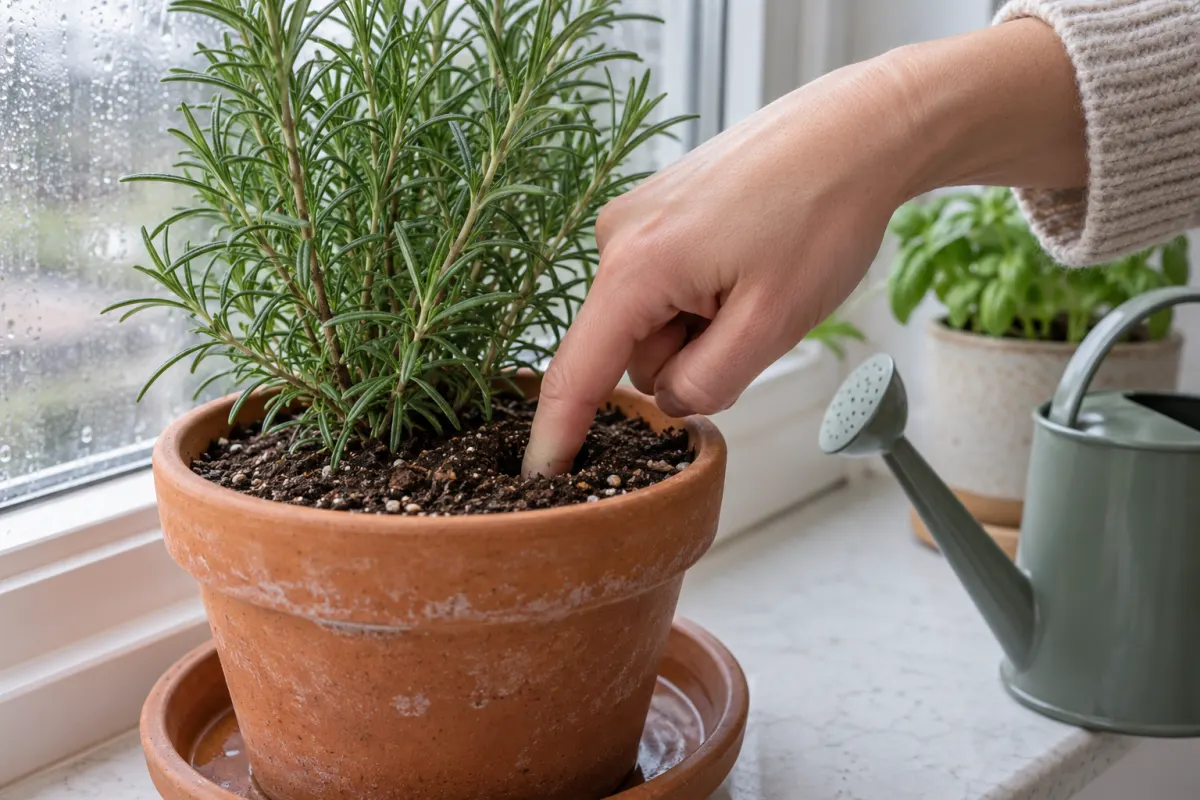
The watering habit that worked on a sunny, windy balcony will overwater an herb sitting in a dim corner of a heated apartment. Lower light means slower growth, and slower growth means the plant is pulling up far less water than it did outdoors. Water when the top inch or two of soil is dry to the touch rather than on the schedule you used outside, and skip fertilizing entirely while the plant is adjusting; feeding a plant that’s barely growing just builds up salts in soil that isn’t being flushed by rain anymore.
Containers with drainage holes matter more indoors than outdoors, since there’s no wind or sun to help excess moisture evaporate. A terracotta or other unglazed pot, which breathes and dries faster than glazed ceramic or plastic, is a reasonable hedge against the overwatering that kills more indoor herbs than cold ever does.
A Simple First-Two-Weeks Timeline
- Before moving day: inspect closely, treat anything you find, and decide whole-plant versus cuttings for each herb.
- Days 1–3: place in an isolated room, away from other houseplants, in the best light available. Water only if the top inch of soil is already dry.
- Days 4–14: re-check every few days for pests. Expect some leaf drop as a normal part of adjustment, not a problem to fix.
- Day 14 and beyond: if nothing new has turned up, you can move the plant in with the rest of your collection, but keep watching through the full two-to-four-week window before you stop checking altogether.
When to Just Let It Go
Not every plant is worth the windowsill space. A basil plant that’s already yellowing and leggy by the time frost threatens, a pest infestation that’s come back twice despite treatment, or a pot so root-bound it would need repotting anyway are all reasonable places to stop. Compost the plant, take what cuttings you can first if it’s salvageable stock, and put the energy into a clean start next spring instead. Keeping a struggling plant alive through winter out of guilt usually costs more water, light, and attention than it gives back in late-winter sprigs of oregano.
For the plants you do bring in, our guide on repotting a balcony plant without killing it covers the mechanics of the fresh-soil repot this whole process depends on.