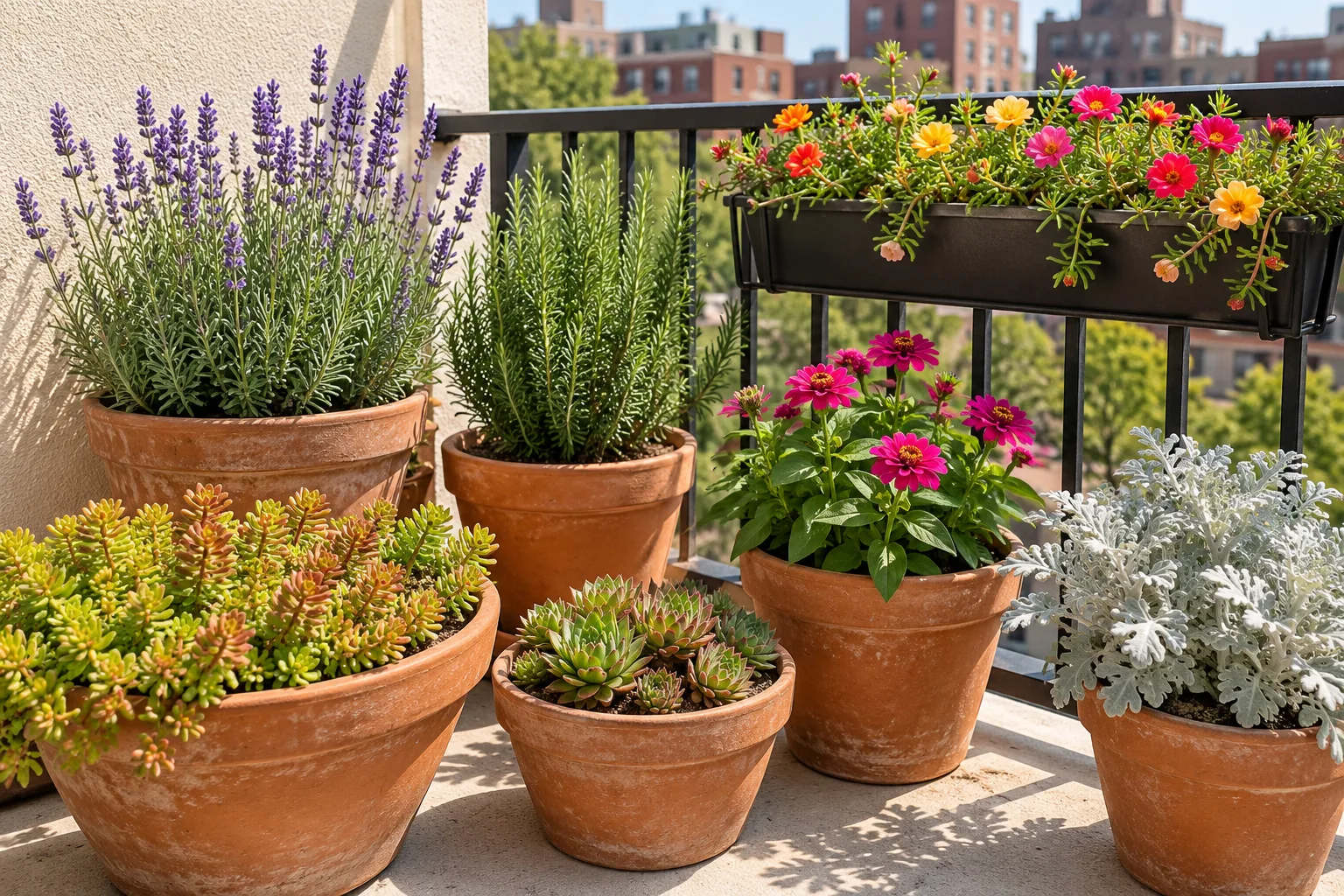
Some balconies get fifteen minutes of attention a week, and that’s not a failure of discipline, it’s a realistic amount of time for most people juggling a job, a commute, and a life that doesn’t revolve around a watering can. The good news is that a short list of plants is built to handle exactly that pace. This guide separates the plants that tolerate real neglect from the ones that merely look easy on a nursery tag, and gives you pot sizes, watering rhythms, and placement so the busy version of your balcony garden still looks like someone planned it.
Low-maintenance doesn’t mean no-maintenance. Every plant here still needs the right light and a decent container to start with, and a few still ask for an annual trim. What changes is how much they punish you for a missed week or a forgotten weekend, and that forgiveness is what this guide is built around.
What makes a plant low-maintenance, beyond the label
Nurseries print “easy care” on almost everything, so it helps to know what you’re really screening for before you load up a cart. Three traits matter more than any tag.
- Drought tolerance. A plant that stores water in thick leaves, roots, or stems (succulents, many Mediterranean herbs) can skip a watering or two without visible damage. A plant with thin, fast-wilting leaves cannot, no matter what the tag promises.
- Slow, steady growth. Fast growers need more frequent feeding, pruning, and repotting to stay in bounds. A plant that grows at a modest pace needs far less input to stay presentable through a full season.
- A good match to the problem your balcony has. If your balcony is windy, a plant’s ability to stay upright matters more than its drought tolerance. If it’s hot and reflective off glass or concrete, drought tolerance outranks almost everything else. Matching the plant to your specific conditions, not just a generic “easy” label, is what keeps a low-maintenance plan low-maintenance.
Keep those three filters in mind while you shop, and you’ll sidestep plants that look tough on a tag but fall apart after two weeks of real neglect.
Perennials you plant once and mostly ignore
Perennials are the backbone of a low-maintenance setup because you’re not restarting from seed or seedling every spring. A handful come back reliably in a container year after year with almost no attention beyond an occasional trim.
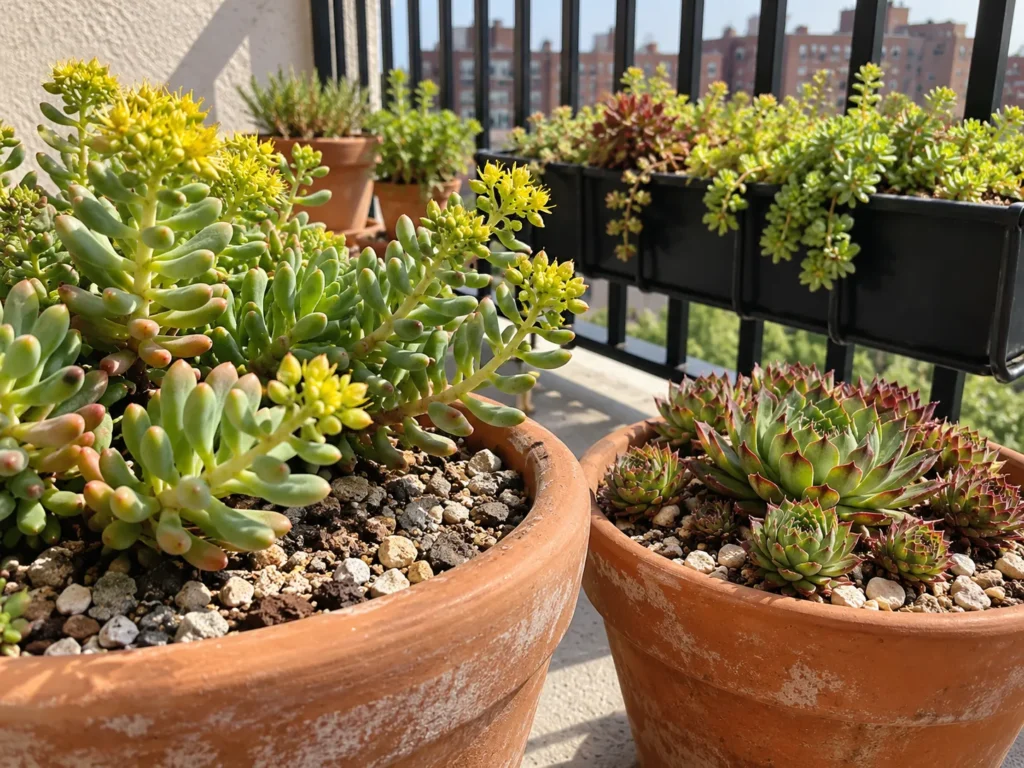
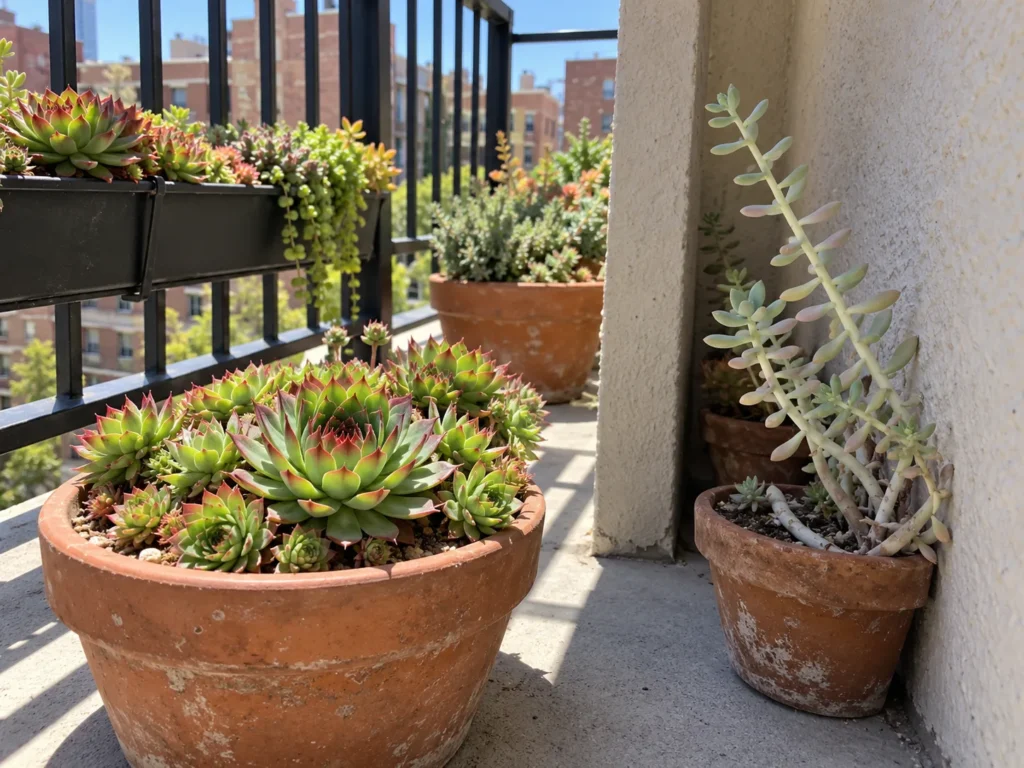
- Sedum, especially ‘Autumn Joy.’ A succulent perennial that stores water in thick, fleshy leaves, so a missed watering barely registers. It wants full sun and a pot with real drainage holes; an 8 to 10 inch (20 to 25 cm) container is plenty for a few years before it needs dividing. It blooms rust-pink from late summer into fall, right when most other container plants are fading, and the Clemson Cooperative Extension lists sedum among the perennials best suited to hot, dry conditions with minimal upkeep.
- Hens-and-chicks (Sempervivum tectorum). Tiny rosettes that spread into a mat over a season or two. They’re content in a shallow dish as small as 6 inches (15 cm) across, need a gritty, fast-draining mix, and essentially never need fertilizer. Full sun keeps the rosettes tight and colorful; too much shade makes them stretch and lose their shape.
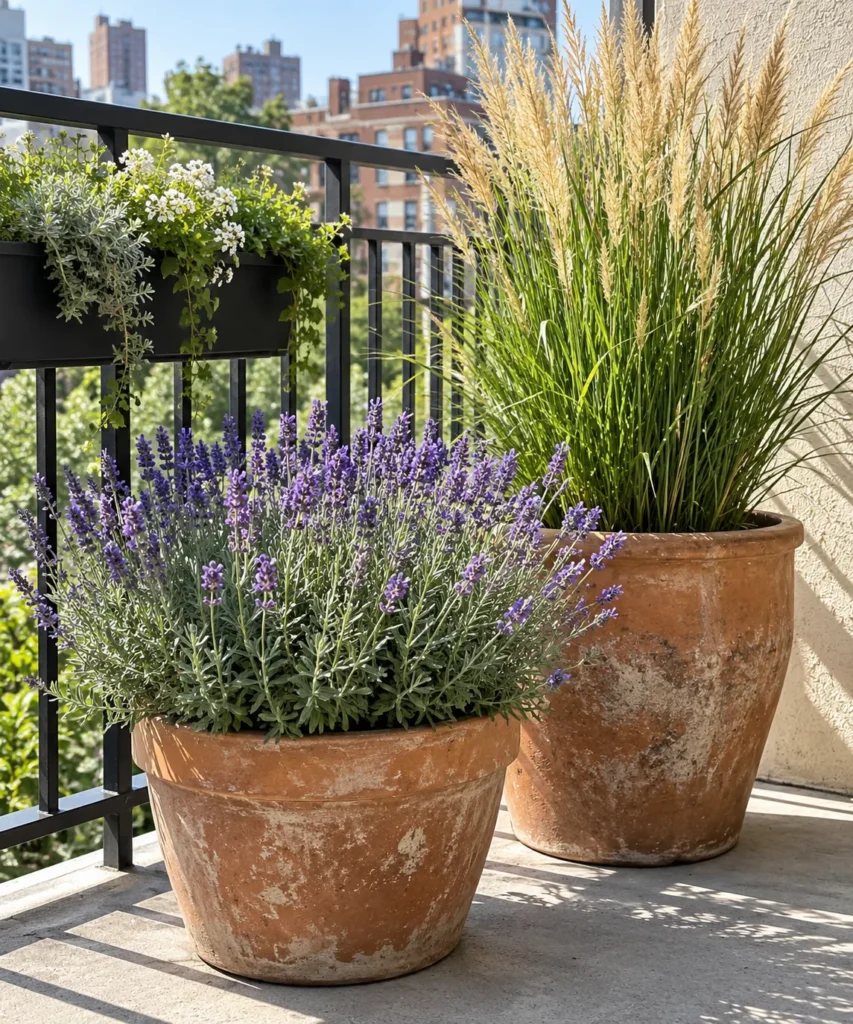
- Feather reed grass, ‘Karl Foerster.’ An upright ornamental grass that holds its vertical shape from early summer through winter, giving you structure without deadheading or staking. It needs a larger container than most of this list, 14 to 16 inches (35 to 40 cm), because of its root mass, but once established it’s a reliably drought-tolerant plant according to Clemson’s ornamental grass guidance. The only yearly task is cutting the old growth back to a few inches in late winter before new shoots emerge.
- Daylily, ‘Stella de Oro.’ A compact, reblooming daylily that tolerates missed waterings, average soil, and the kind of neglect that kills fussier flowering perennials. A 12 to 14 inch (30 to 35 cm) pot suits it well, and it only needs dividing every three or four years when the clump gets crowded.
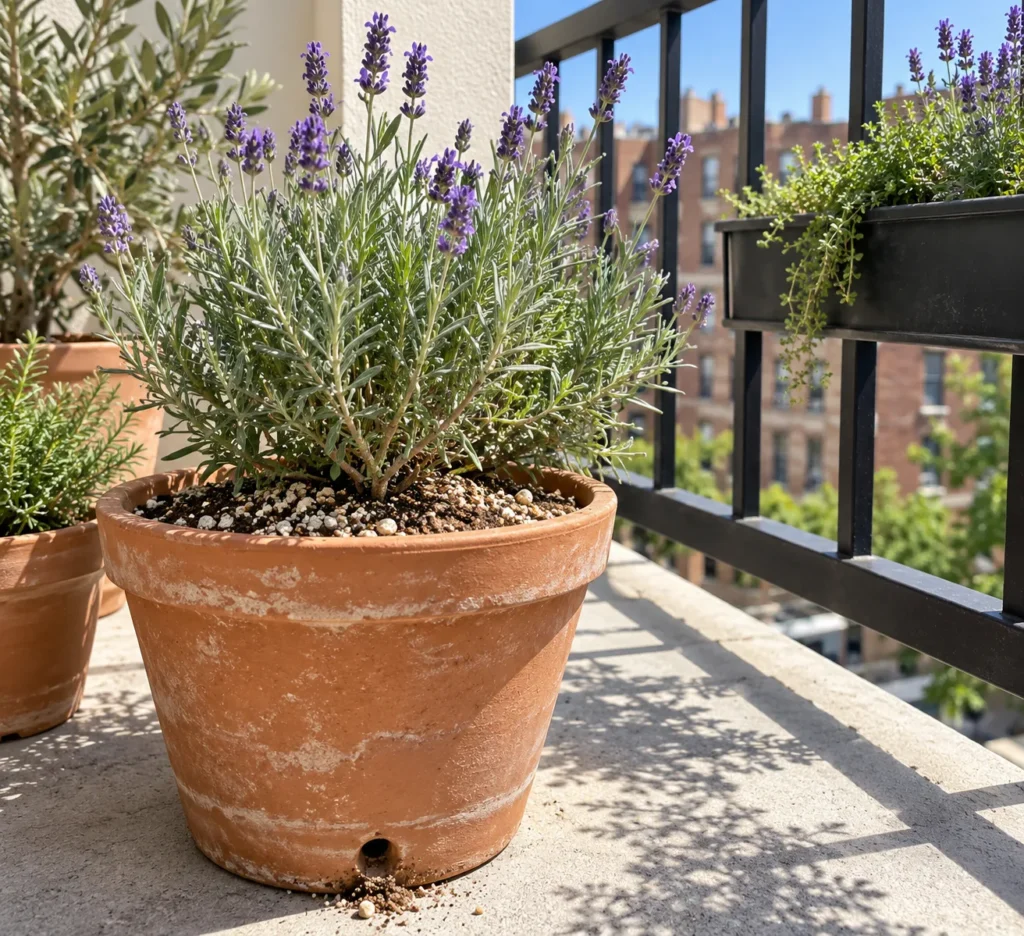
- Lavender, ‘Hidcote’ or ‘Munstead.’ Full sun and a container with sharp drainage are non-negotiable; lavender sitting in soggy soil rots quickly, while lavender in a gritty mix in full sun shrugs off a week of dry heat. A 10 to 12 inch (25 to 30 cm) pot works for several seasons. Prune lightly after the summer bloom to keep it compact, and that’s the entire yearly task list.
- Russian sage, dwarf cultivars like ‘Little Spire.’ Silvery, finely cut foliage on a woody base that tolerates heat, wind, and dry soil without complaint. A 12 inch (30 cm) pot is enough for the compact types, and the only real job is cutting the previous year’s stems back hard in early spring before new growth starts.
Annuals that forgive a missed week
Perennials handle neglect over years; these annuals handle it over a single stretch of bad timing, which matters if you travel for work or simply lose a week here and there during a busy season.
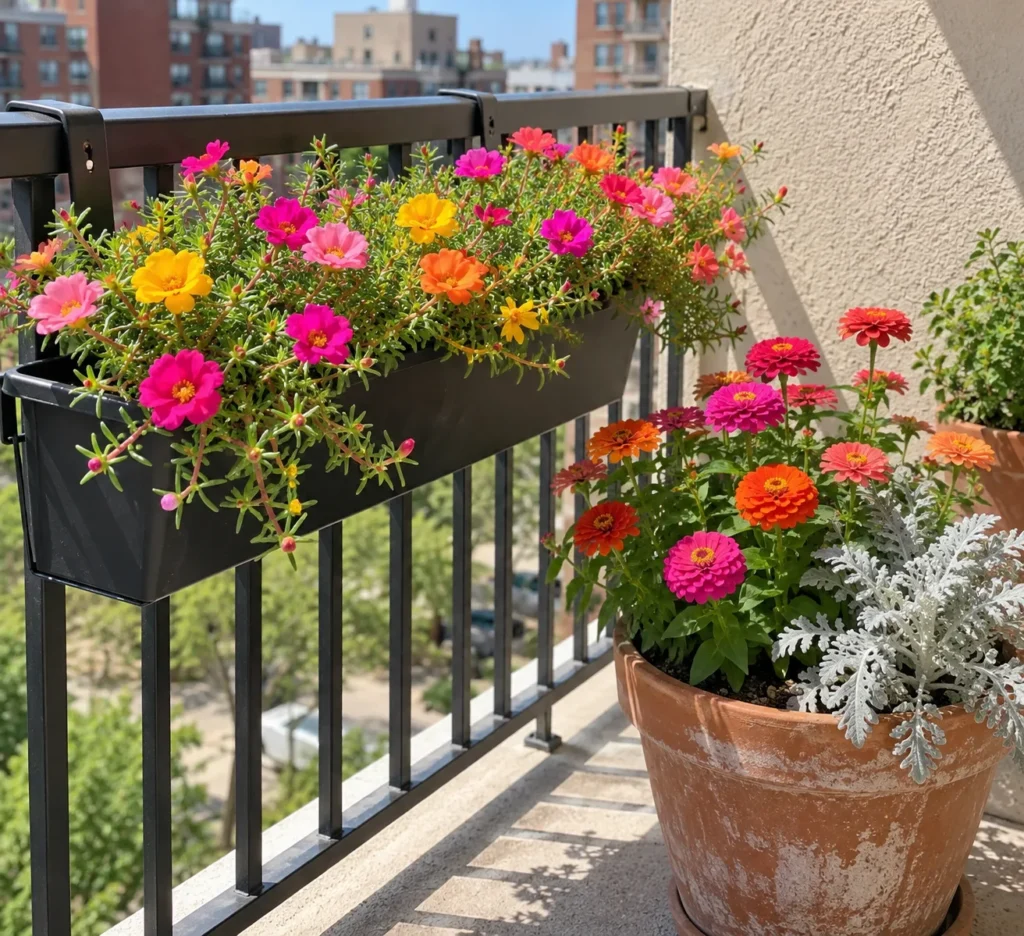
- Zinnia, Profusion series. Bred to keep blooming without deadheading, which removes the one chore that usually makes flowering annuals feel like work. Full sun, a 10 to 12 inch (25 to 30 cm) pot, and they’ll flower from early summer to frost on fairly average watering.
- Moss rose (Portulaca grandiflora). About as drought tolerant as a flowering annual gets; its thick, succulent-like leaves hold water much the way sedum’s do. It thrives in full sun, spreads to fill a pot or hanging basket, and often self-seeds for a volunteer crop the following year.
- Annual vinca (Catharanthus roseus). Heat tolerant and steady through the hottest weeks of summer, with no deadheading needed to keep it blooming. It wants more consistent moisture than moss rose, so it’s a step down in drought tolerance, but still well ahead of most flowering annuals.
- Marigold (Tagetes). Full sun, tolerant of irregular watering, and one of the easiest annuals to start from seed directly in the pot if you’d rather skip a nursery run.
- Dusty miller (Senecio cineraria). Grown for silvery, felted foliage instead of flowers, which means there’s no deadheading at all. It’s extremely drought tolerant and holds its color and shape through heat that wilts softer-leaved annuals nearby.
Herbs that take neglect in stride
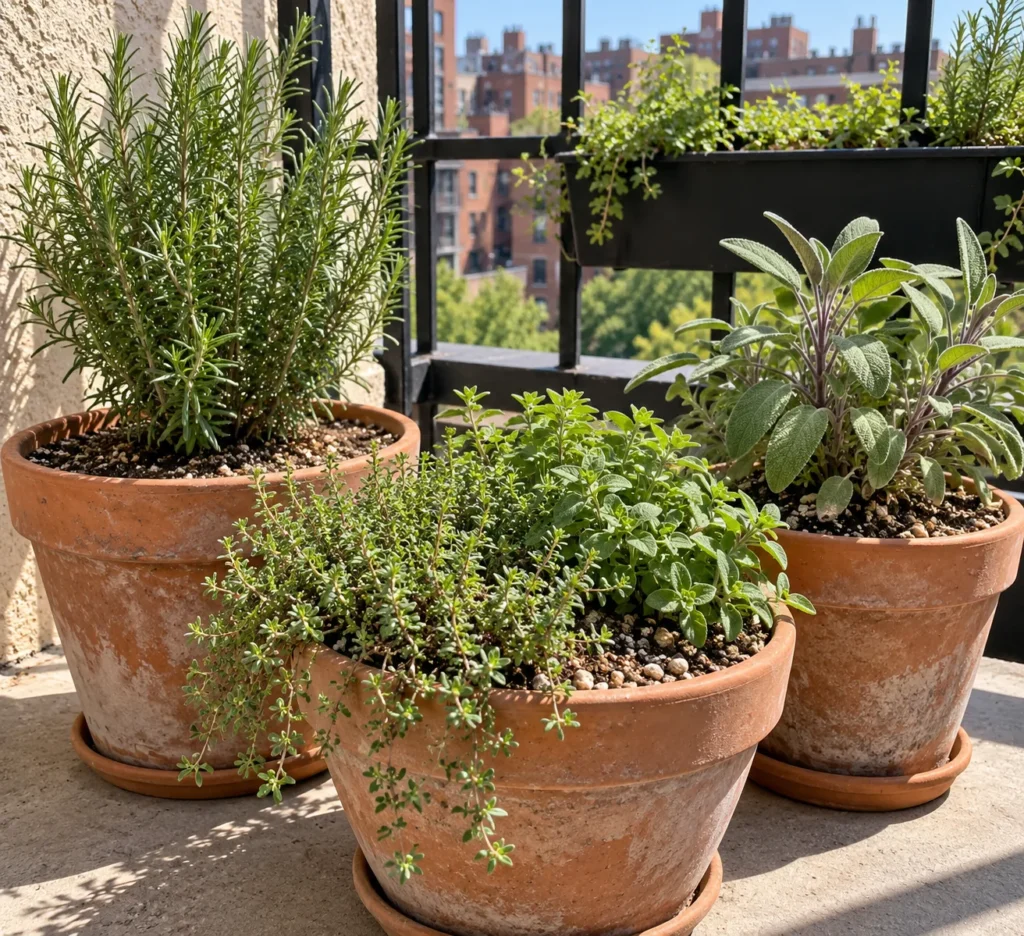
Several culinary herbs come from dry Mediterranean hillsides, which means a sunny balcony with imperfect watering is closer to their native conditions than a carefully tended garden bed.
- Rosemary. Drought tolerant once established, and it prefers to dry out between waterings instead of sitting damp. An 8 to 10 inch (20 to 25 cm) pot with a well-draining mix is all it needs; overwatering, not underwatering, is what kills most container rosemary.
- Thyme and oregano. Low, spreading herbs that handle dry soil far better than wet roots. Both work in shallow pots as small as 6 inches (15 cm) and rarely need feeding.
- Sage. Woody and shrubby like rosemary, with similar drought tolerance. A 10 inch (25 cm) pot gives the roots enough room to go a season or two between repotting.
- Chives. More tolerant of inconsistent watering than most leafy herbs, and a clump keeps producing for years in the same pot with an occasional trim back to a few inches.
Trailing and ground-cover options for rail planters
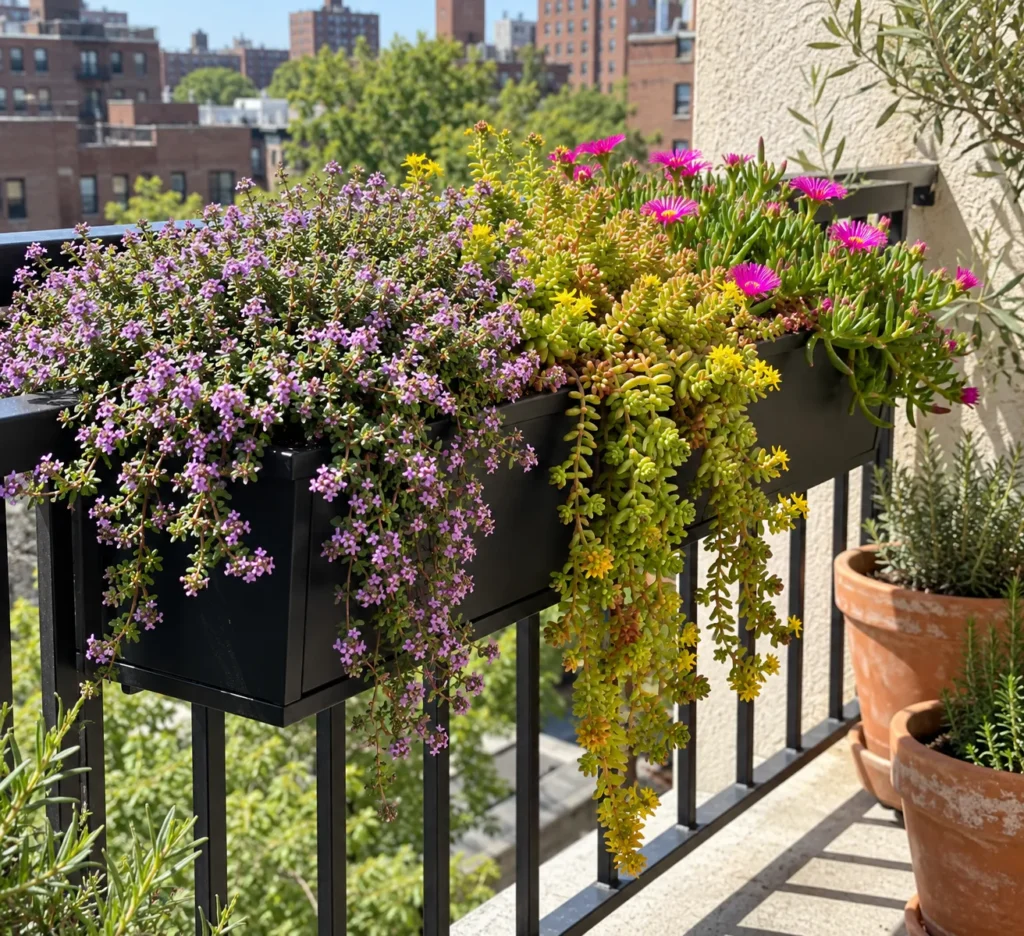
Rail planters and window boxes have their own low-maintenance shortlist, since anything trailing over the edge is also exposed to more wind and faster drying than a pot sitting on the floor.
- Creeping thyme. A flat, spreading mat that tolerates foot traffic, poor soil, and long dry stretches. It works as well draping over a rail planter’s edge as it does filling gaps between paving stones, and it needs essentially no feeding.
- Trailing sedum, such as ‘Dragon’s Blood’ (Sedum spurium). Spreads sideways rather than up, so it fills a rail planter’s length over a season or two and tolerates the same neglect as its upright cousins.
- Ice plant (Delosperma). A succulent ground cover with bright, daisy-like flowers that opens fully only in sun, which makes it an easy signal for whether it’s getting enough light. Extremely drought tolerant once rooted in.
All three spread readily, so a single small pot or a few plugs along a rail planter will fill in without needing to be replaced each season, unlike many trailing annuals.
Matching plants to how often you’re really home
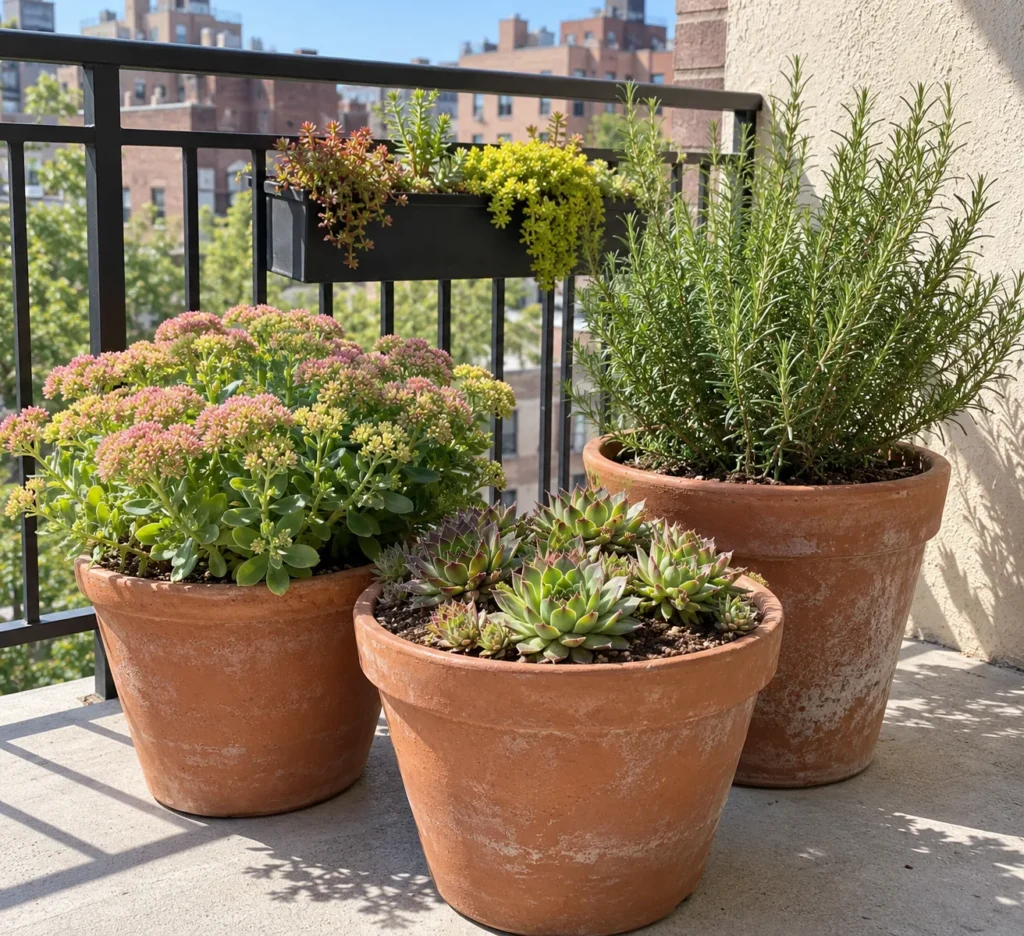
Instead of guessing, be honest about your real schedule and shop from the matching tier below instead of buying on impulse.
- Home most days: any plant on this list works, plus more water-sensitive options like zinnia or vinca if you want extra color without much downside.
- Home a few times a week: lean on sedum, lavender, rosemary, thyme, and hens-and-chicks; skip plants that wilt visibly within two or three dry days.
- Away most weekdays, home weekends: sedum, hens-and-chicks, feather reed grass, and moss rose are built for exactly this rhythm. A deep weekend watering carries most of them through the week ahead.
- Traveling for a week or more at a stretch: stick to sedum, hens-and-chicks, and established lavender or rosemary, and pair them with a self-watering container so the gap isn’t left to chance.
Setup choices that cut your workload further
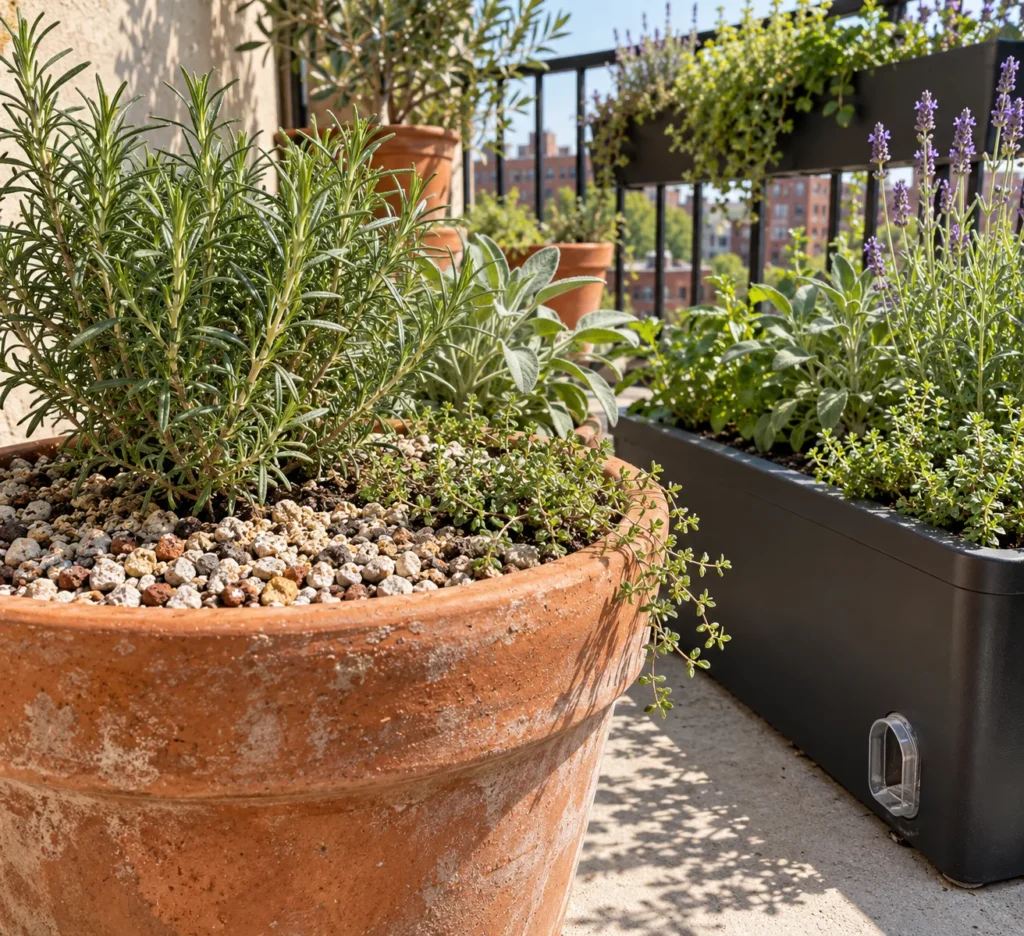
The plant list matters, but the container and the small habits around it matter almost as much for how little time the garden ends up costing you.
- Go up a pot size. A larger volume of soil holds more water and swings less between soaked and bone-dry, which directly reduces how often anything needs checking.
- Use the right soil mix, not just any potting mix. Succulents and Mediterranean herbs want a gritty, fast-draining blend (a cactus or succulent mix, or regular potting soil cut with coarse sand or perlite); a moisture-retentive mix meant for leafy annuals will keep their roots wetter than they want.
- Add a self-watering reservoir for anything less drought tolerant. A built-in reservoir smooths out the gap between your visits without extra effort on your part; choose one with an overflow hole so a rainy week doesn’t waterlog the roots.
- Mulch the soil surface. An inch or two (a few centimeters) of bark or gravel mulch slows evaporation noticeably, stretching the time between waterings for every plant above.
- Group pots together. Clustered containers shade each other’s soil and dry out more slowly than the same pots scattered across a hot, exposed railing.
- Feed lightly, once or twice a season. A slow-release fertilizer worked into the soil at planting time removes a recurring task from your calendar entirely; none of the plants above need frequent liquid feeding to perform well.
Common mistakes with “easy” plants
- Overwatering out of habit. Most of the plants on this list die from too much water, not too little. If the soil is still damp an inch down, wait, even if it’s been a few days since your last check.
- Using the wrong soil for succulents and herbs. Planting sedum or rosemary in a rich, water-holding potting mix sets them up to rot. Match the soil to the plant, not the other way around.
- Underestimating pot size for the light. A small pot in full, hot sun dries out fast enough to undo most of a plant’s natural drought tolerance. Size up before you blame the plant.
- Choosing by looks alone. A plant that photographs well on a nursery shelf isn’t automatically suited to your balcony’s actual sun and wind. Check the tag for light needs before it goes in the cart.
Signs you’ve got the wrong match
- Leaves going soft, yellow, or mushy at the base. Almost always overwatering or poor drainage, especially on sedum, lavender, hens-and-chicks, and the Mediterranean herbs. Let the soil dry out fully and confirm the pot has working drainage holes.
- Stretching, pale growth reaching to one side. Not enough direct sun. Every plant on this list wants a truly bright spot; move the pot or accept a leggier, less tidy shape.
- Flowering slows or stops on an otherwise healthy plant. Often a sign of too much shade creeping in as a nearby plant or structure grows, not a care mistake on your part at all. Reassess the light each season, not just at planting time.
- A perennial that looked fine all summer collapses in a wet fall. Drainage, not cold, is usually the culprit for sedum, lavender, and hens-and-chicks going into winter. Raise pots on feet so they’re never sitting in standing water.
A short season-start checklist
- Pick your tier from the schedule section above, based honestly on how often you’re home.
- Size containers up, not down, and choose light-colored pots if your balcony runs hot.
- Use a gritty, fast-draining mix for succulents and Mediterranean herbs, and a standard potting mix for the rest.
- Plant perennials once; they’re the part of this plan you won’t have to repeat next year.
- Mulch the surface of every pot before the first heatwave.
- Set a single recurring reminder for the rare light feeding, since nothing above needs more than that.
Once the setup is in place, the ongoing time commitment shrinks to a quick walk-through with a watering can, maybe twice a week for the sturdier tiers and even less for the succulents. If you want to push further into drought-proofing the whole setup, our guides on self-watering planter setup and choosing the right container size cover the mechanics in more depth. And if you’re deciding how much of your space to give to perennials that return each year versus annuals you replant, annuals versus perennials for a balcony garden walks through that trade-off directly.