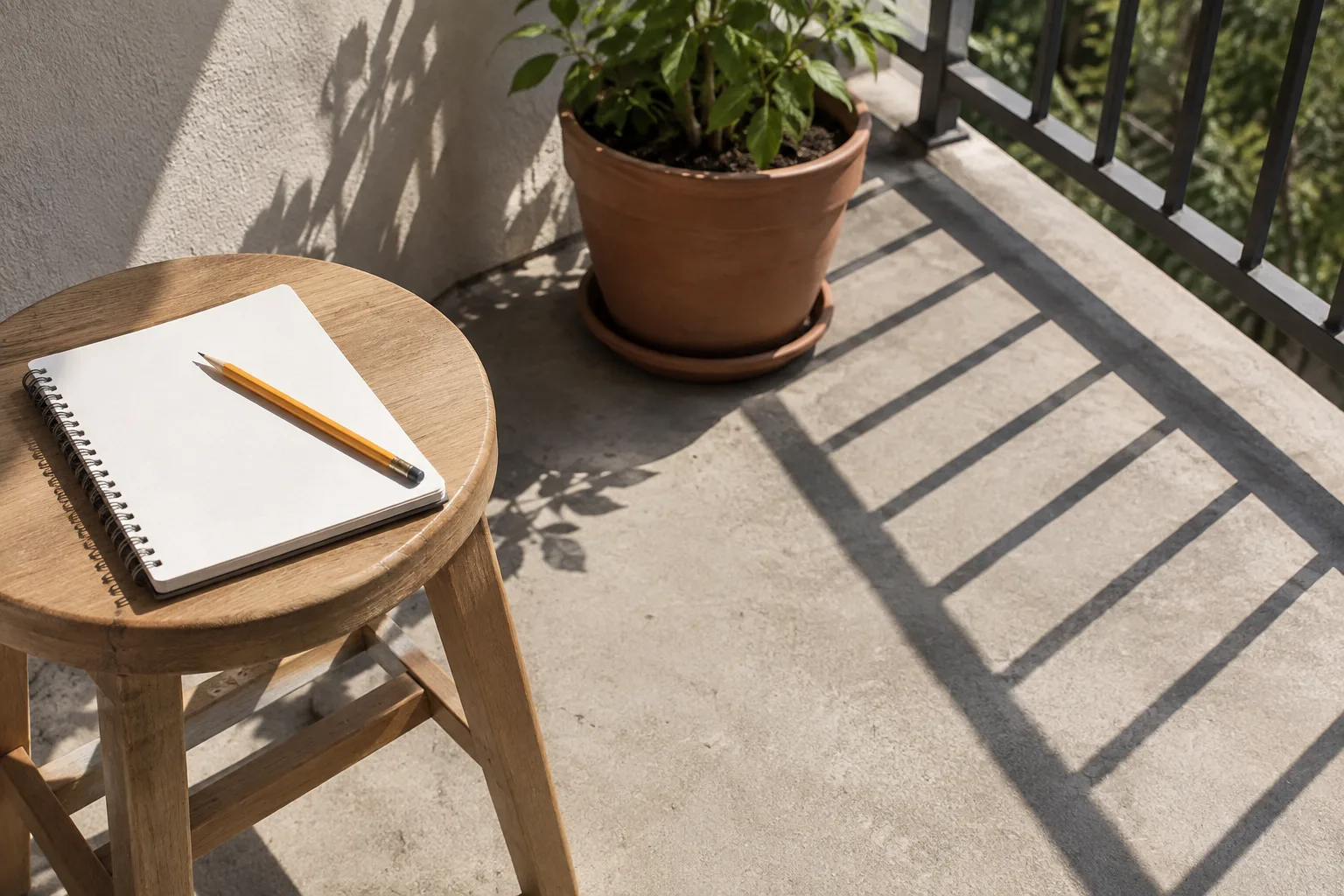
Plant labels use phrases like “full sun” and “part shade,” but the balcony needs a number. On one clear day, check each possible pot location about once an hour and record when direct light casts a distinct shadow. Add the hours at the end of the day.
The fix is simple. Pick one clear day, glance at each spot where a pot could go about once an hour, and write down when it sits in direct sun. Add up the hours. That one day of notes tells you more than the direction your balcony faces.
How to read the total: Count only direct sun; the kind that casts a sharp shadow. 6 or more hours a day supports full-sun plants like tomatoes. 3 to 6 hours suits leafy greens and some herbs. Under 3 hours means choosing shade-tolerant plants.
You don’t need a light meter. Measuring sunlight on a balcony takes a notepad, a clear day, and a look outside once an hour. Here’s how to do it, and how to use the number you get.
Before you start: pick the right day and spots
Two things make the test worth doing. Get them right and one day of notes will hold up all season.
Choose a mostly clear day in the season when you plan to grow. A reading taken under cloud tells you little, and a winter reading misleads you about summer. The sun climbs higher and travels a wider arc in summer, so a late-spring or summer check matches the season most balcony plants care about.
Measure at the height the plant will grow, not at floor level. A solid railing can shade a pot on the floor while a plant sitting on a stand or railing rail stays in full sun. Check each spot where a container might sit: the floor, a table, a shelf, the railing top.
What counts as direct sun?
Only count sun when an object in the pot’s spot casts a distinct shadow. Bright sky, reflected light, and daylight under an overhang all help plants, but they’re not direct sun.
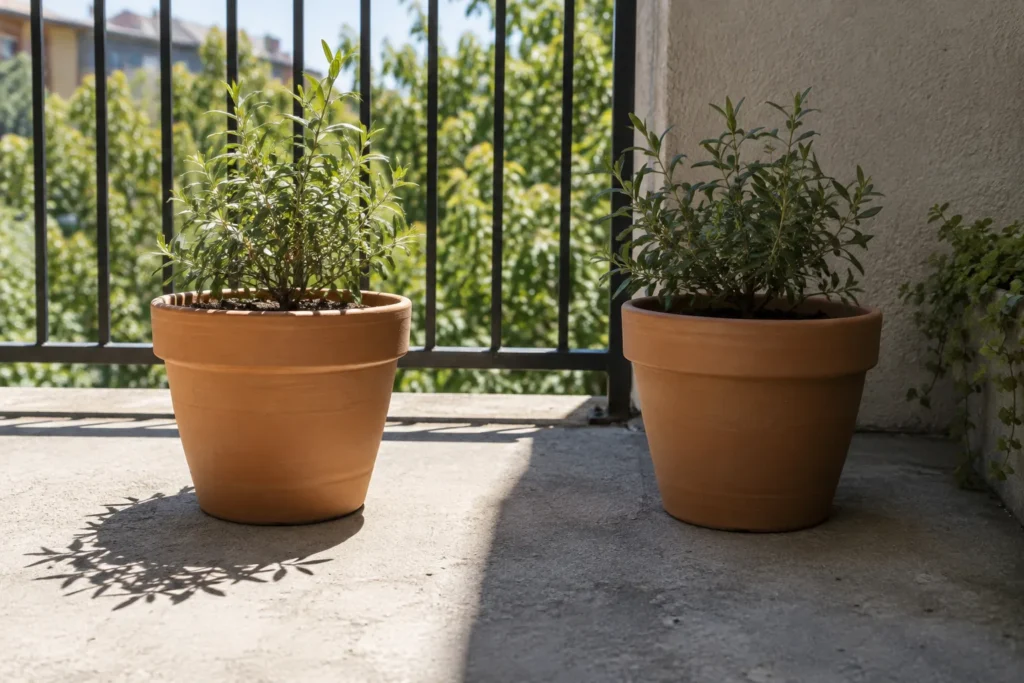
Labels aren’t perfectly standardized. As a working rule:
- Full sun: at least 6 hours of direct sun.
- Part sun or part shade: roughly 3 to 6 hours.
- Full shade: less than about 3 hours of direct sun.
Treat those ranges as rough guides. Penn State Extension uses 6 or more hours for full sun, and the University of Minnesota puts part shade at about 3 to 6 hours.
Timing matters too. Several hours of hot western afternoon sun can stress a plant more than the same number of hours of gentle morning light. When you record your hours, note whether they land before or after midday; it changes what will be happy there.
The one-day balcony sunlight test
Start in the morning and check back through the day. The whole thing costs about ten minutes of attention spread across the hours you’re home anyway.
- Mark every spot a pot could go. The floor, a table, and a railing planter can each get different light. Check at the height where the leaves will grow.
- Start in the morning. Note whether each spot is in direct sun or shade.
- Check about once an hour. Jot down when direct sun starts and stops. A note like “left corner: 9:00 to 11:30; railing: 9:00 to 1:00” is plenty.
- Add up the sunny periods. If a building blocks the sun for an hour and it comes back, count both stretches.
- Note heat and wind separately. A sheltered morning spot and a hot, windy western one behave differently, even with the same sun hours.
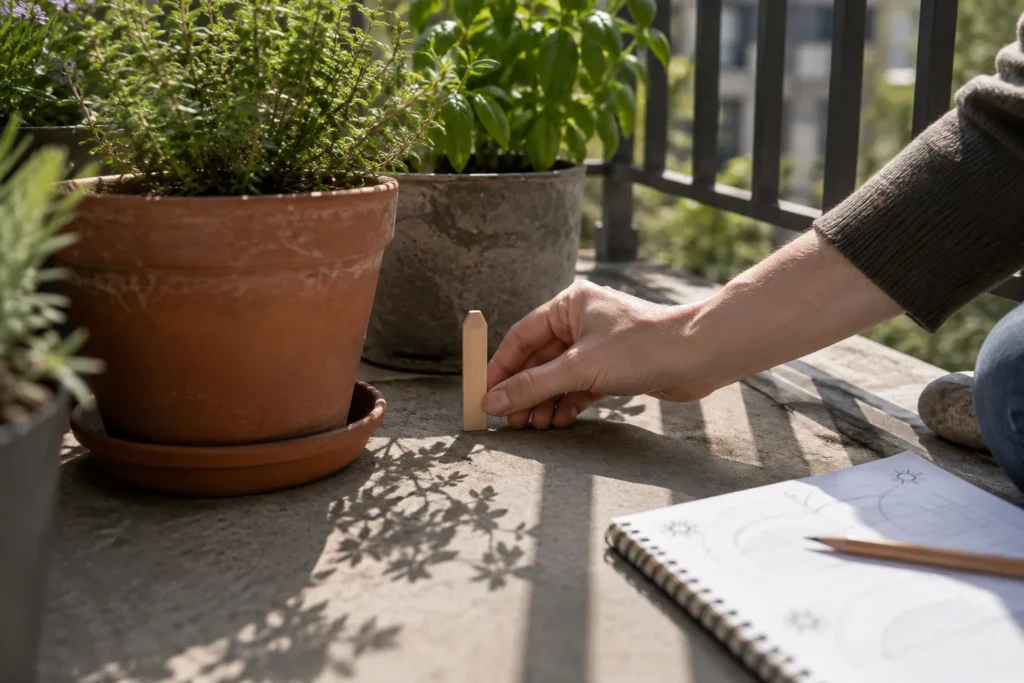
One safety rule while you do this: don’t lean over the railing, and don’t perch a phone or camera anywhere it could fall. Observe from inside the balcony, and follow your lease and any HOA, strata, or building rules.
Keep a simple record
A few lines are enough. Here’s what one day of notes might look like:
| Location | Direct-sun period | Total | Other conditions |
|---|---|---|---|
| Railing planter | 8:30 a.m.-1:30 p.m. | 5 hours | Windy after noon |
| Floor by the wall | 10:00 a.m.-12:00 p.m. | 2 hours | Warm reflected heat |
| Small table | 8:30 a.m.-2:30 p.m. | 6 hours | Brightest location |
Keep the note somewhere you’ll find it at the garden center. The most common shopping mistake is standing in front of the tomatoes, forgetting that your best spot only gets four hours, and buying them anyway.
Measurement errors to avoid
Common mistake: picking plants by compass direction alone. “South-facing” sounds sunny, but one neighboring tower or a solid railing can erase hours of light. Trust what you observed, not the compass.
Direction still tells you something. In the Northern Hemisphere, a south-facing balcony often has the longest potential sun, an east-facing one gets morning light, and a west-facing one gets stronger afternoon sun. A north-facing balcony often gets less direct sun than the others.
But all of that assumes an open view. The balcony above you can block high summer sun. A solid railing can shade pots on the floor while railing-height plants stay sunny. Pale walls and glass can bounce heat around without adding a single countable hour.
Measuring once and never again. The sun rides higher in summer and lower in winter. Trees leaf out, neighbors add screens, and construction changes the view. Repeat the test in a new season if you grow year-round, or whenever the light stops matching your notes.
Trusting an app over your eyes. A sun-path app can predict where the sun will appear later in the year, but it can’t see your overhang, railing, or the tree next door. Use it to plan, then confirm by watching.
Signs the reading was off
Sometimes you plant first and measure later. Plants show you when the light is wrong, and the fix is usually to move the pot rather than to feed or water it.
- Long, floppy stems reaching sideways. This is a plant stretching toward a light source, a sign it’s getting too little sun. Move it to your brightest spot, or switch to a plant that suits the hours you have.
- Lots of leaves but no flowers or fruit. Many fruiting crops need strong light to set flowers. A tomato that grows tall and leafy but never fruits is usually short on sun, not fertilizer.
- Pale, washed-out leaves in a shady spot. Weak, spindly growth often means the plant wants more light than the corner provides.
- Scorched, bleached, or crispy patches in a hot spot. The opposite problem; too much harsh afternoon sun and heat for a shade-loving plant. Move it out of the strongest afternoon light or add light shade in summer.
Because pots are portable, most light problems are fixable in an afternoon. Shuffle plants around for a week or two and watch which corner each one prefers.
Match plants to your hours
Fruiting vegetables want the brightest spot you have. Oregon State University Extension recommends 6 to 8 hours of sun for crops like tomatoes and peppers, while leafy vegetables stay productive with less.
- 6 or more hours: sun-loving herbs, many flowering annuals, and compact fruiting vegetables that suit your climate and container size.
- 3 to 6 hours: leafy greens, parsley, cilantro, mint in its own pot, and anything labeled part sun or part shade.
- Less than 3 hours: shade-tolerant ornamentals and foliage plants that handle outdoor containers in your climate. Expect fewer edible options.
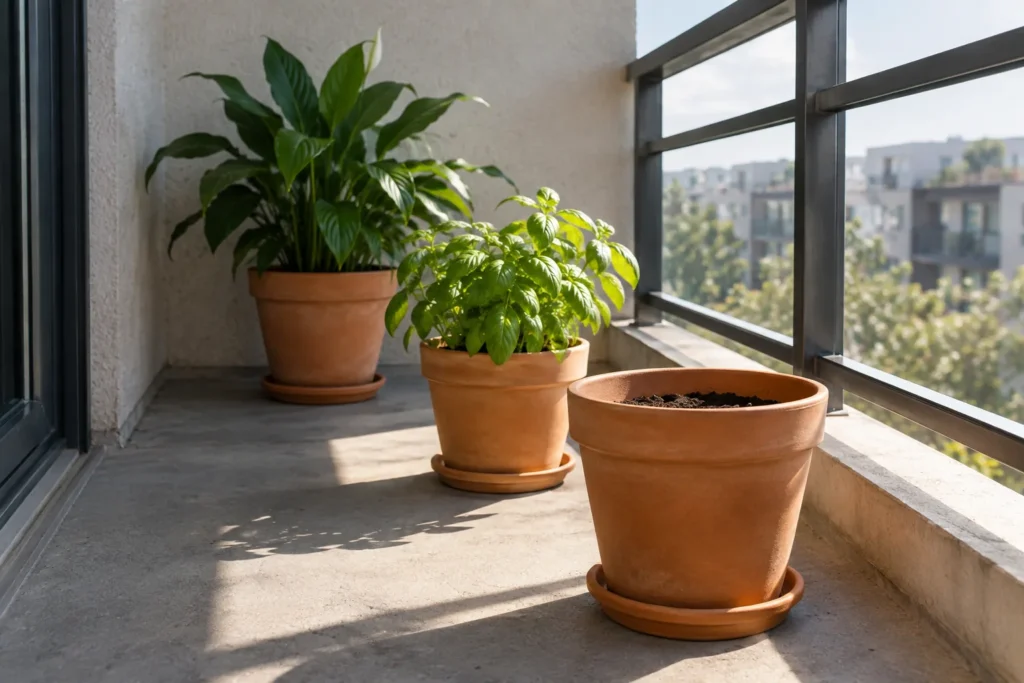
Light is the first filter, not the only one. Container size, drainage, wind, reflected heat, summer temperatures, and how often you can water all shape what thrives. Check each plant’s needs before you buy.
What if you don’t have enough sun?
Plenty of balconies come in under three hours, and that’s not a dead end. It just points you toward a different garden. A few practical moves help you make the most of a low-light spot.
- Grow what likes shade. Leafy greens, mint, parsley, and chives all produce with modest light, and many foliage plants are happy out of direct sun. A shady balcony full of healthy greens beats a sunny plan that never worked.
- Chase the sun. Pots are portable. If one corner gets the day’s best two or three hours, keep your sun-hungriest plant there and move it as the bright patch shifts through the season.
- Use reflected light. A pale wall or light-colored floor bounces extra brightness onto nearby plants. It won’t turn shade into full sun, but it lifts a dim corner a little.
- Be realistic about grow lights. An indoor grow light can raise seedlings or keep herbs going on a kitchen windowsill, but rigging lights outdoors on a balcony runs into weather, power, and building-rule problems. For most people, matching plants to the real light is simpler than fighting it.
Whatever your number, the goal is the same: stop guessing. A balcony that gets three measured hours and grows thriving greens is a bigger success than one chasing tomatoes it can’t support.
Use the sunlight total
Once you know your hours, you can shop with confidence instead of hope. If your balcony came in low; three or four hours, or a north-facing wall of shade; that’s still a real garden; our guide to shade and north-facing balconies covers what grows well there. If your spot bakes in afternoon sun, the hot-and-sunny plant guide covers what handles the heat. And if you’re just getting started, the beginner guide to setting up a balcony garden walks through containers, soil, and a first-week plan built around the light you just measured.
Put the number to work
Use a low total with the shade plant list; use a high total with the hot, sunny balcony guide.
For a practical example of putting measured sunlight to use, see our guide to setting up a kitchen herb garden on your balcony.