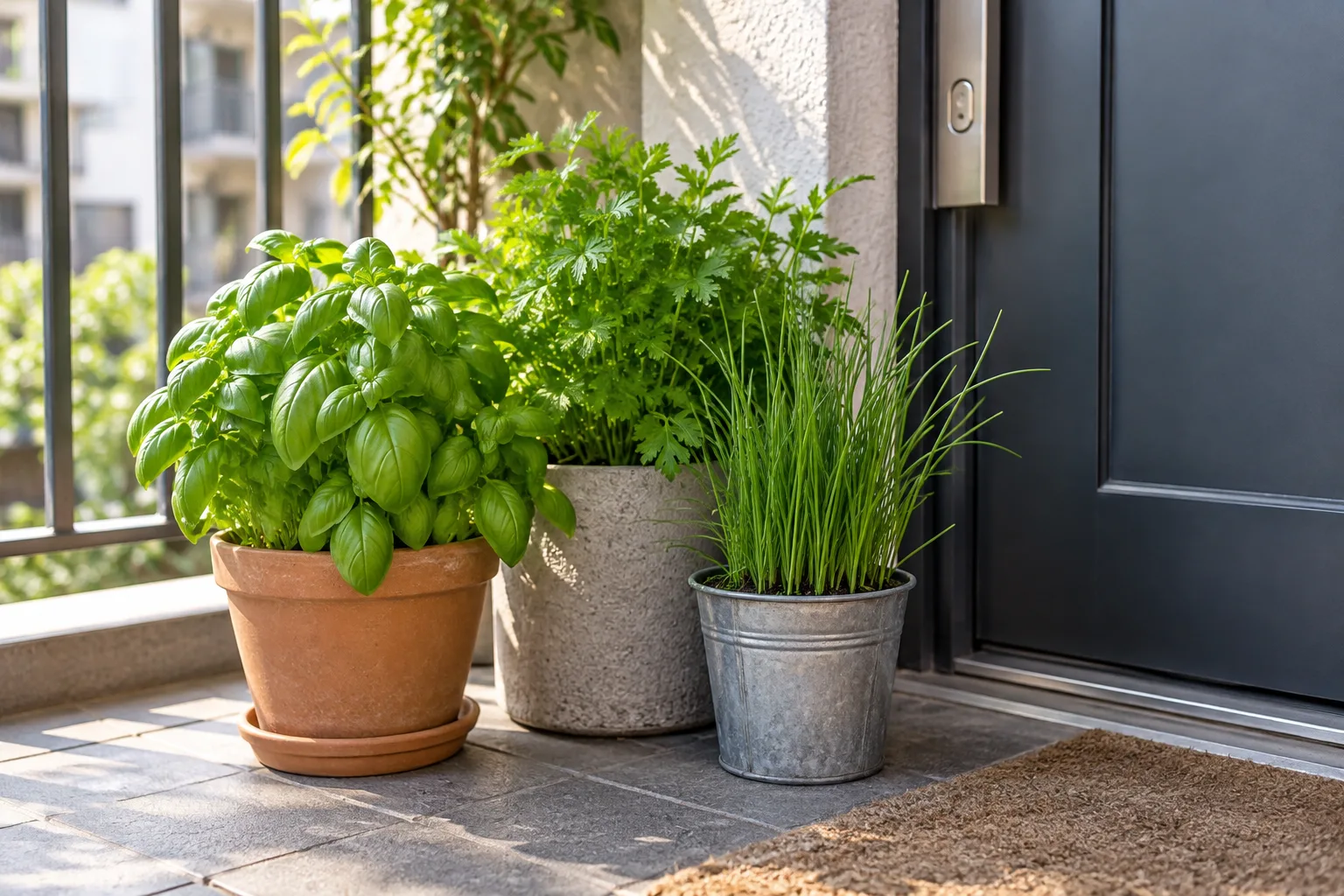
You’re two steps into a recipe and reach for the basil, except your basil is potted at the far end of the balcony, behind the tomatoes, in a pot too small to spare more than a couple of leaves anyway. That’s the gap between a herb collection and a real kitchen herb garden: the second one is deliberately set up to get used mid-recipe, not just watered on a schedule and admired from across the room.
For which specific herbs grow best on a balcony in the first place, see our guide to herbs that grow well on a balcony. This guide picks up from there: where to put them, how big a pot they really need, and the harvesting habits that keep a kitchen garden productive all season instead of picked bare by midsummer.
Placement: closest to the kitchen wins
The single biggest factor in whether a kitchen herb garden gets used at all, day to day, is distance. Herbs positioned right next to the door you use to step onto the balcony get picked mid-recipe; herbs tucked into a far corner get watered on a schedule and otherwise ignored. If your balcony has both a sunny far end and a slightly less ideal spot near the door, it’s usually worth compromising on light a little to keep your most-used herbs within arm’s reach, since most common kitchen herbs tolerate a bit less than perfect sun far better than they tolerate sitting forgotten and unharvested at the far end of a balcony.
Group herbs by how often you actually reach for them, not by plant family. Basil, parsley, and chives, if those are your daily-use herbs, belong in the closest, most convenient spot, while something you reach for a few times a month can sit further out.
- Closest to the door: your one or two most-used herbs, basil and parsley for most cooking styles, sized into 8-inch-plus pots for repeat harvests.
- Mid-distance: secondary herbs used a few times a week, chives, cilantro, or thyme, in 6 to 8 inch pots.
- Furthest or least convenient spot: herbs used occasionally or grown more for a specific dish or season, dill, sage, or tarragon.
- One dedicated pot for mint, kept away from everything else, since its spreading roots will take over a shared container.
Sizing pots for repeat harvests
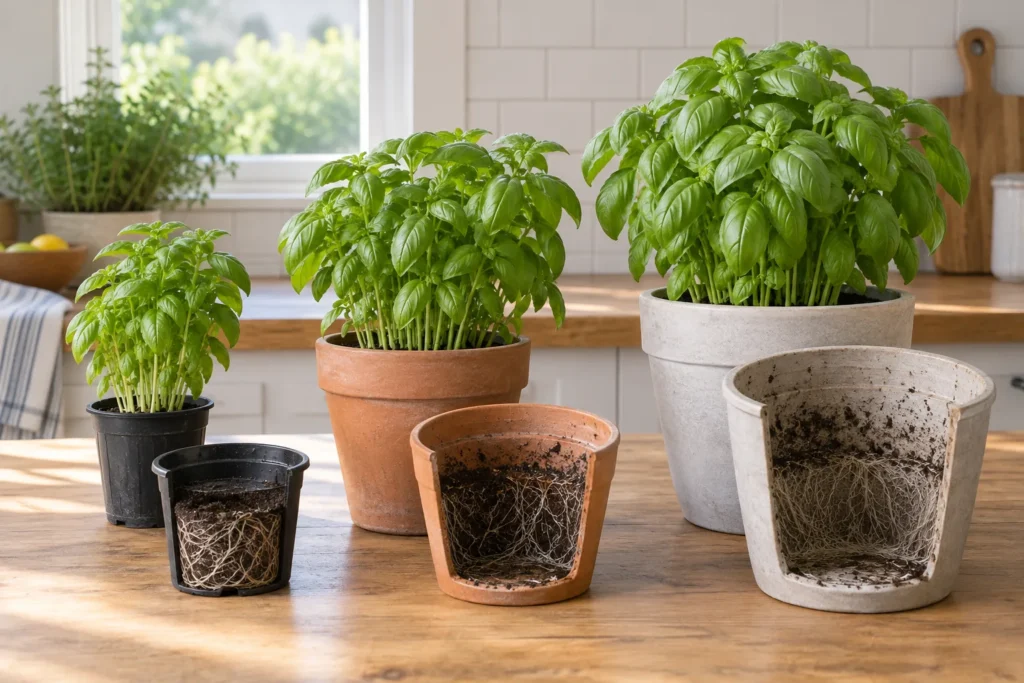
A kitchen herb garden lives or dies on whether plants can regrow between cuttings, and that comes down to root room as much as sun. A cramped 4-inch nursery pot might look fine on a windowsill display, but it simply doesn’t hold enough root volume to support the repeated harvesting a working kitchen garden needs. Most common kitchen herbs do better moved into something in the 6 to 8 inch (15 to 20 cm) range at minimum, and heavier producers like basil benefit from the larger end of that range or bigger. For exact depth and diameter by herb, our balcony container size guide has the specifics; the short version for a kitchen setup is to size up from whatever the herb arrived in at the store, since nursery pots are sized for shipping and shelf display, not for months of repeat cutting and regrowth.
How to harvest for a longer season
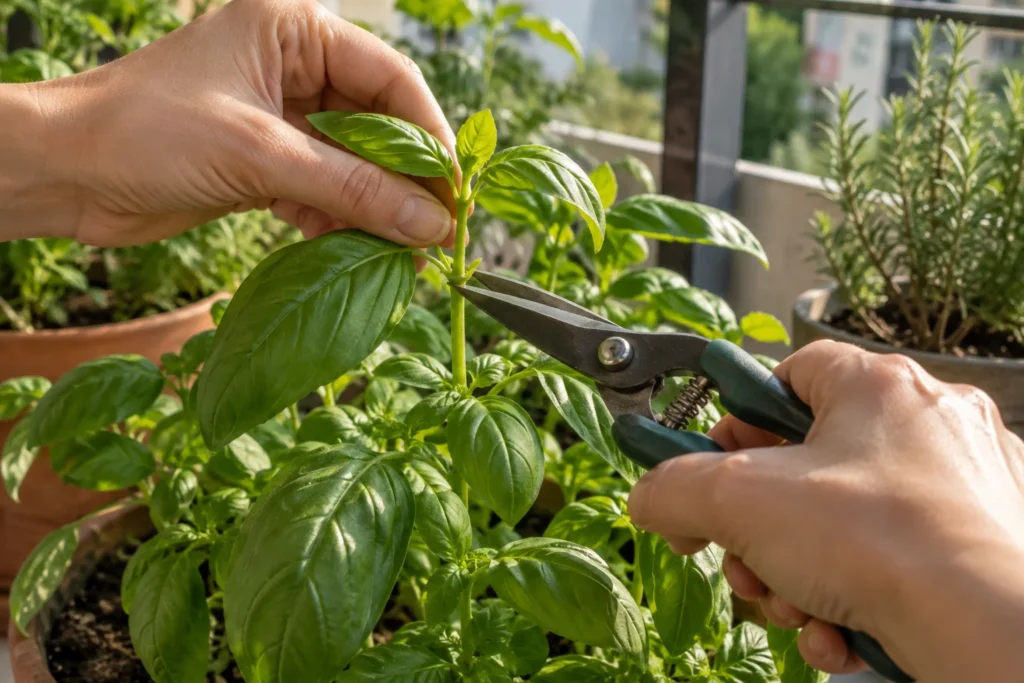
How you cut matters more than most people expect. Pinch or snip stems just above a leaf node, the small point where a pair of leaves meets the stem, instead of stripping individual leaves off here and there. Cutting at a node signals the plant to branch out from that point, producing two stems where there was one, while leaf-stripping just leaves a bare, leggy, unproductive stem behind. Use clean scissors or garden snips instead of pulling by hand, which can tear the stem, damage the surrounding growth, and open the wound to disease.
As a general rule, avoid taking more than about a quarter to a third of a plant’s total growth in one harvest. Taking more than that at once, especially from a smaller container-grown plant with limited root reserves, can set the plant back further than it can recover from before your next harvest. Spread heavy cutting across a few plants instead of hitting the same one hard over and over.
Timing affects flavor more than most home cooks realize. Herbs picked in the morning, after dew has dried but before the day heats up, generally carry more of the aromatic oils responsible for their flavor than herbs picked in the heat of the afternoon, when some of those oils evaporate off. If you only harvest once a day, morning is the better default, even if it means prepping part of a dinner recipe hours before you’ll even turn on the stove.
Keeping herbs from bolting too early
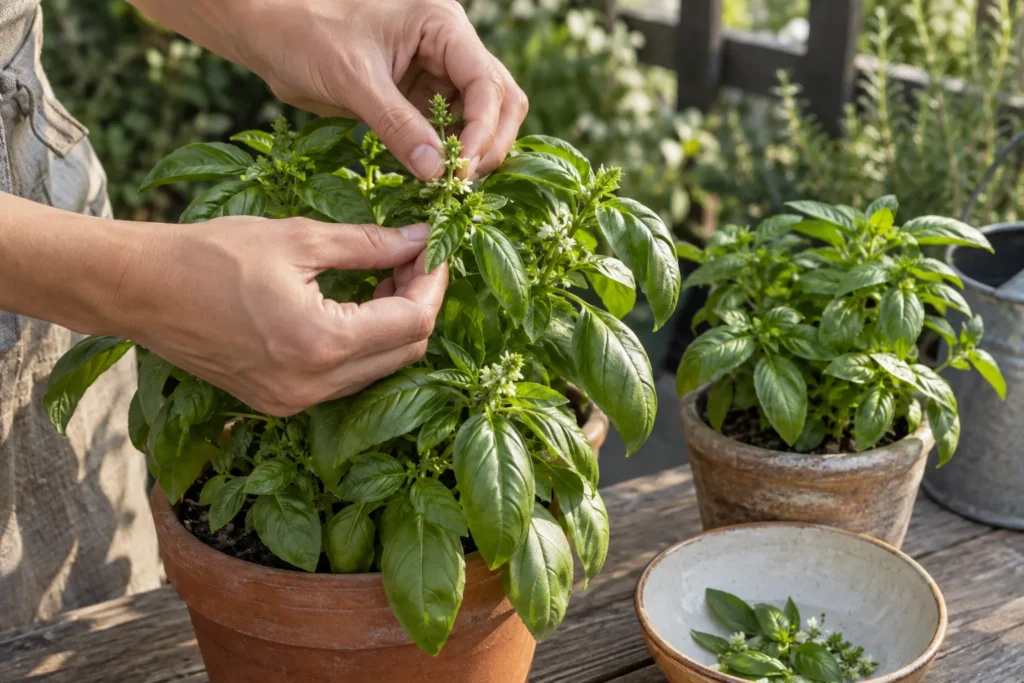
Herbs that flower and go to seed, bolting, redirect their energy away from the leafy growth you’re growing them for in the first place, and flavor often turns bitter once that happens. Regular harvesting is itself one of the best defenses against bolting, since cutting back growth regularly delays the plant’s shift into flowering. Pinch off any flower buds you spot forming as soon as you notice them, on basil especially, which bolts readily in the heat of summer and can go from leafy to flowering within a matter of days once temperatures climb. Herbs you’re deliberately growing for their flowers or seed, dill for seed, or chamomile, are the exception to all of this.
Watering and feeding for repeat harvests
A herb you’re cutting from every few days is working harder than one left to grow undisturbed, and it needs care to match. Drainage matters most: soggy, poorly drained soil is one of the most common reasons a working herb pot declines over a season, since constantly wet roots can’t support the regrowth a regular harvest demands. Check that every kitchen herb pot has a real drainage hole and a mix that dries out somewhat between waterings instead of staying saturated day after day.
Feeding needs are modest for most herbs, over-fertilizing tends to produce fast, watery growth with less concentrated flavor, which works against the whole point of a kitchen garden. A light, balanced feed every few weeks is usually enough; treat any feeding schedule as a starting point and back off if a heavily fed herb starts tasting noticeably blander or more watery than the same herb tasted before you started feeding it.
Staggering plantings for a steady supply
Perennial herbs like rosemary, thyme, and chives keep producing from the same plant for years with the harvest approach described above. Annual herbs that bolt readily, basil and cilantro especially, have a shorter productive window no matter how carefully you harvest and pinch flowers. For those, starting a second, smaller pot two to three weeks after the first gives you a backup plant coming into peak production right as the first one starts to decline or bolt, instead of facing a gap in your cooking with nothing ready to cut. This staggered approach matters more for a real working kitchen garden than it does for an ornamental one, since a kitchen garden’s whole purpose is a steady supply, not just one good-looking display.
Preserving what you can’t use fresh
A productive kitchen herb garden often outpaces what you can use fresh in a given week, especially with a plant like basil in full summer growth. Hardy, low-moisture herbs like rosemary and thyme dry well simply hung in a bunch out of direct sun; more delicate, high-moisture herbs like basil and cilantro hold their flavor better frozen, either whole in a bag or chopped into oil in an ice cube tray, than they do air-dried, which tends to leave them tasteless and dusty-looking. Preserving the surplus, instead of letting it flower and go to waste on the plant, is part of what keeps a harvest-and-regrow cycle going, versus one big cutting followed by a long recovery period and a stretch with nothing to pick.
Common kitchen herb garden mistakes
- Leaving herbs in their nursery pots. A pot sized for a store shelf can’t support months of repeated harvesting.
- Stripping leaves instead of cutting at a node. This leaves bare, leggy stems and slows regrowth compared to a clean node cut.
- Harvesting too much at once. Taking more than a third of a plant’s growth in one cutting can set it back further than expected.
- Letting basil flower unchecked. Once it bolts, flavor drops off, and the plant shifts energy away from leaf production.
- Planting mint in a shared pot. It will out-compete anything else in the container within a season.
Once that harvest rhythm is working, it extends naturally past summer: our guide to fall vegetables and herbs for balcony containers covers which kitchen herbs keep producing, or even improve, once the weather cools. And if you’d rather pair a herb with a vegetable in one shared pot than grow it separately, companion planting for balcony containers covers which combinations genuinely earn the shared space.
Herbs in regular use benefit from a light, consistent feeding routine; see our guide to fertilizing balcony container plants.