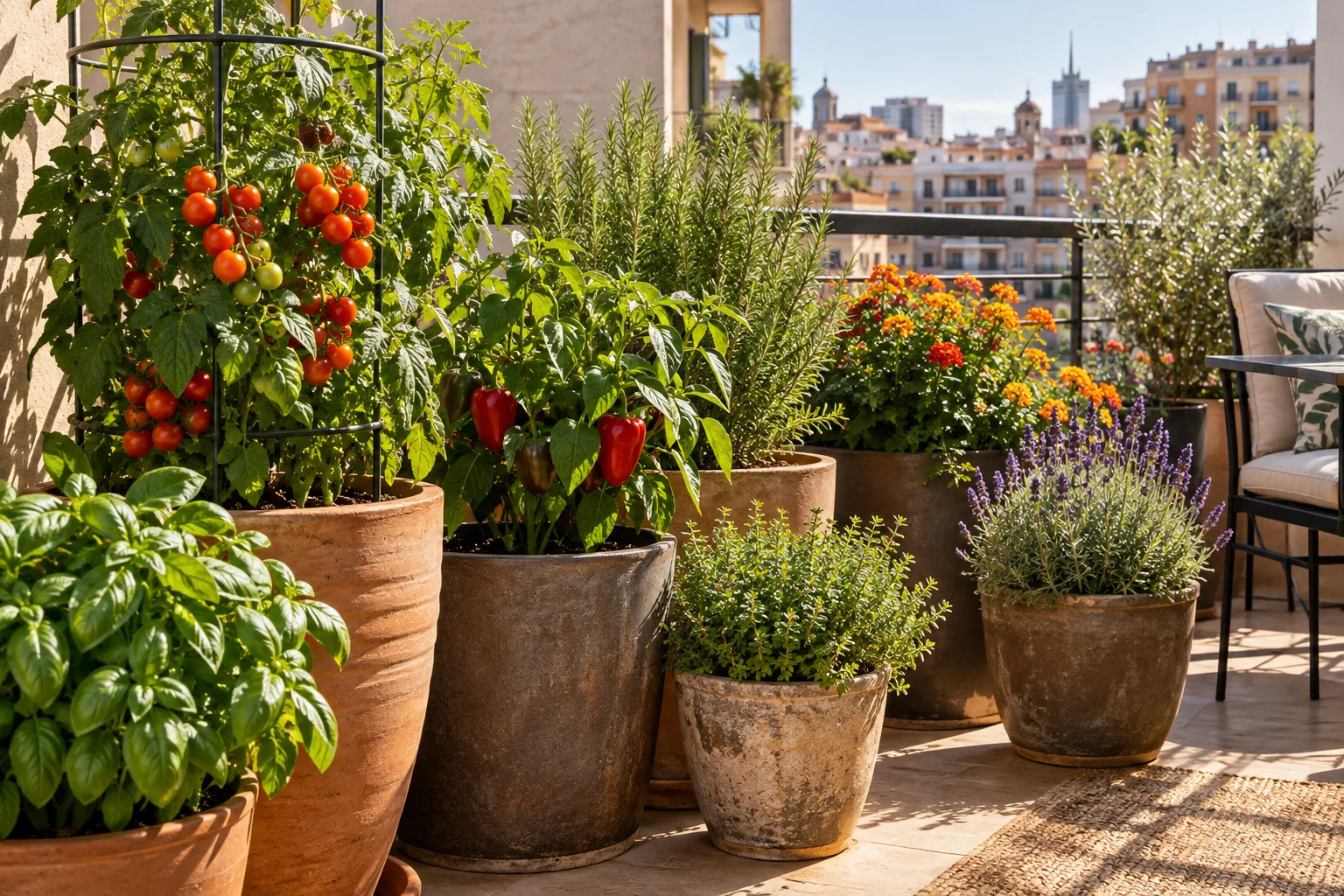
A sunny balcony offers enough light for tomatoes, peppers, basil, and many drought-tolerant flowers, but pots can dry quickly beside hot walls or glass. Success depends on pairing heat-tolerant plants with larger containers and a watering plan that can handle the hottest afternoons.
Sun and reflected heat from walls and glass make a bright balcony hotter than an open garden. This guide covers the plants that love those conditions, plus how to water, shade, and pot them so they don’t fry in a July heatwave.
A heat-ready shortlist: For a hot, sunny balcony, grow tomatoes, peppers, basil, and Mediterranean herbs like rosemary and thyme, plus drought-tough flowers. Use large pots that hold water, water deeply and often, and give tender plants a little afternoon shade in the worst heat.
Why a sunny balcony runs hot
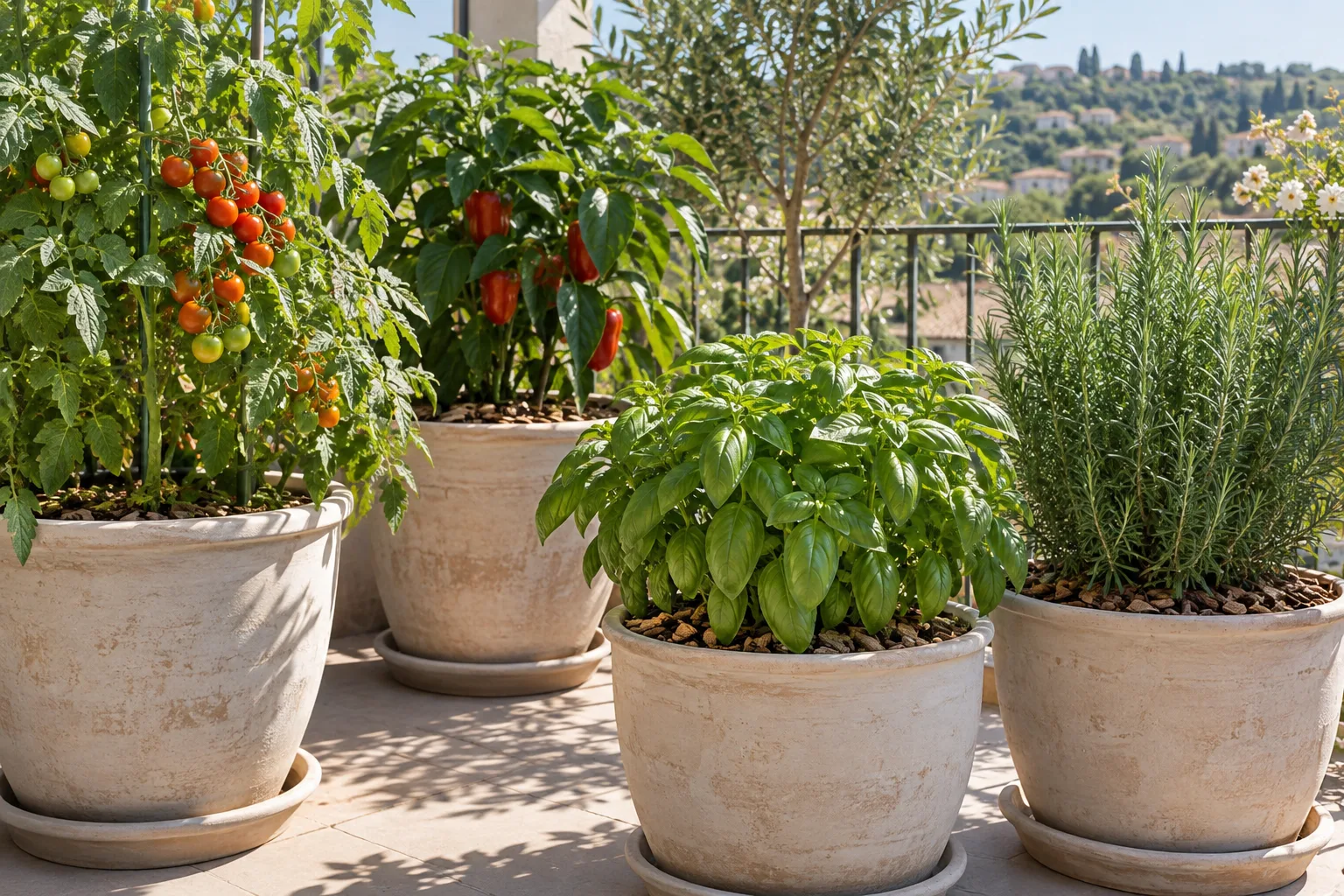
A balcony with 6 or more hours of direct sun is a gift for sun-loving plants, but it comes with heat that the plants; and their pots; have to handle. Walls, floors, glass, and metal railings all soak up sun and radiate it back, so the air around your plants can be noticeably hotter than the shaded street.
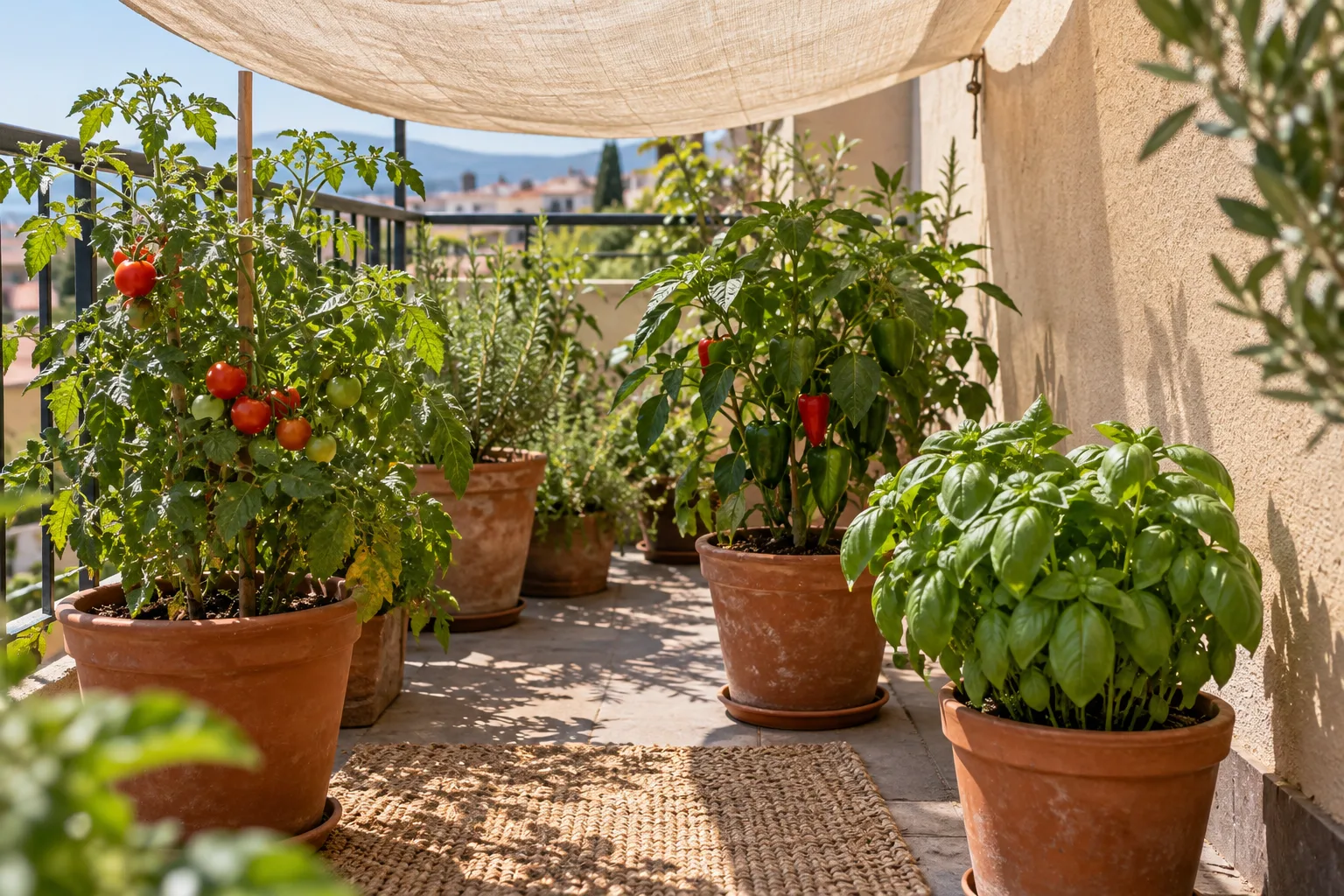
This reflected heat has two effects. It dries pots out fast, sometimes more than once a day in a heatwave, and it can push tender plants past the point they enjoy. West-facing balconies feel it most, because the strongest afternoon sun arrives when the day is already warm. The plants below are chosen to handle that, and the care tips that follow keep them comfortable.
Plants that love sun and heat
Sun-loving vegetables
The classic fruiting crops finally have the light they need. Oregon State University Extension recommends 6 to 8 hours of sun for tomatoes and peppers, which a hot balcony delivers easily.
- Tomatoes. Choose compact cherry or “patio” varieties for pots, and give them a large container; around 14 to 18 inches (35 to 45 cm) across. The big pot is what gets them through a hot afternoon without wilting.
- Peppers. Sweet and chilli peppers love heat and stay smaller than tomatoes, so a 10 to 12 inch (25 to 30 cm) pot suits them. They’re one of the best returns on a baking balcony.
- Eggplant. Another heat-lover for a large pot if you have room and a long warm season.
Heat-tolerant herbs
The Mediterranean herbs evolved in hot, dry places, so a sunny balcony suits them perfectly. They also forgive the occasional missed watering better than most plants.
- Rosemary, thyme, oregano, and sage. Drought-tolerant, sun-loving, and happy in the heat. They prefer soil on the drier side, so they pair well with the fast-draining conditions of a hot balcony.
- Basil. A warm-season herb that thrives in sun and heat, as long as its pot doesn’t dry out completely. It’s a natural companion to potted tomatoes.
Tough flowers and foliage
If you’re planting for color, choose flowers described as heat- or drought-tolerant and suited to full sun. Many popular container annuals are bred exactly for hot, bright spots, and ornamental grasses handle sun and wind well. Check the plant label for “full sun” and, where relevant, drought tolerance, and pick types suited to your climate.
Hot-balcony picks at a glance
| Plant | Pot size | Thirst level |
|---|---|---|
| Cherry / patio tomato | 14 to 18 in (35 to 45 cm) | High |
| Peppers, eggplant | 10 to 12 in (25 to 30 cm) | Medium-high |
| Basil | 6 to 8 in (15 to 20 cm) | Medium |
| Rosemary, thyme, oregano, sage | 6 to 10 in (15 to 25 cm) | Low (drought-tolerant) |
| Full-sun flowers / grasses | Varies (check label) | Low-medium |
Watering a hot balcony
Watering is where hot balconies are won or lost. Containers in full sun and wind can dry out daily, and a small pot can go from moist to bone-dry in a single afternoon. A few habits keep plants ahead of the heat.
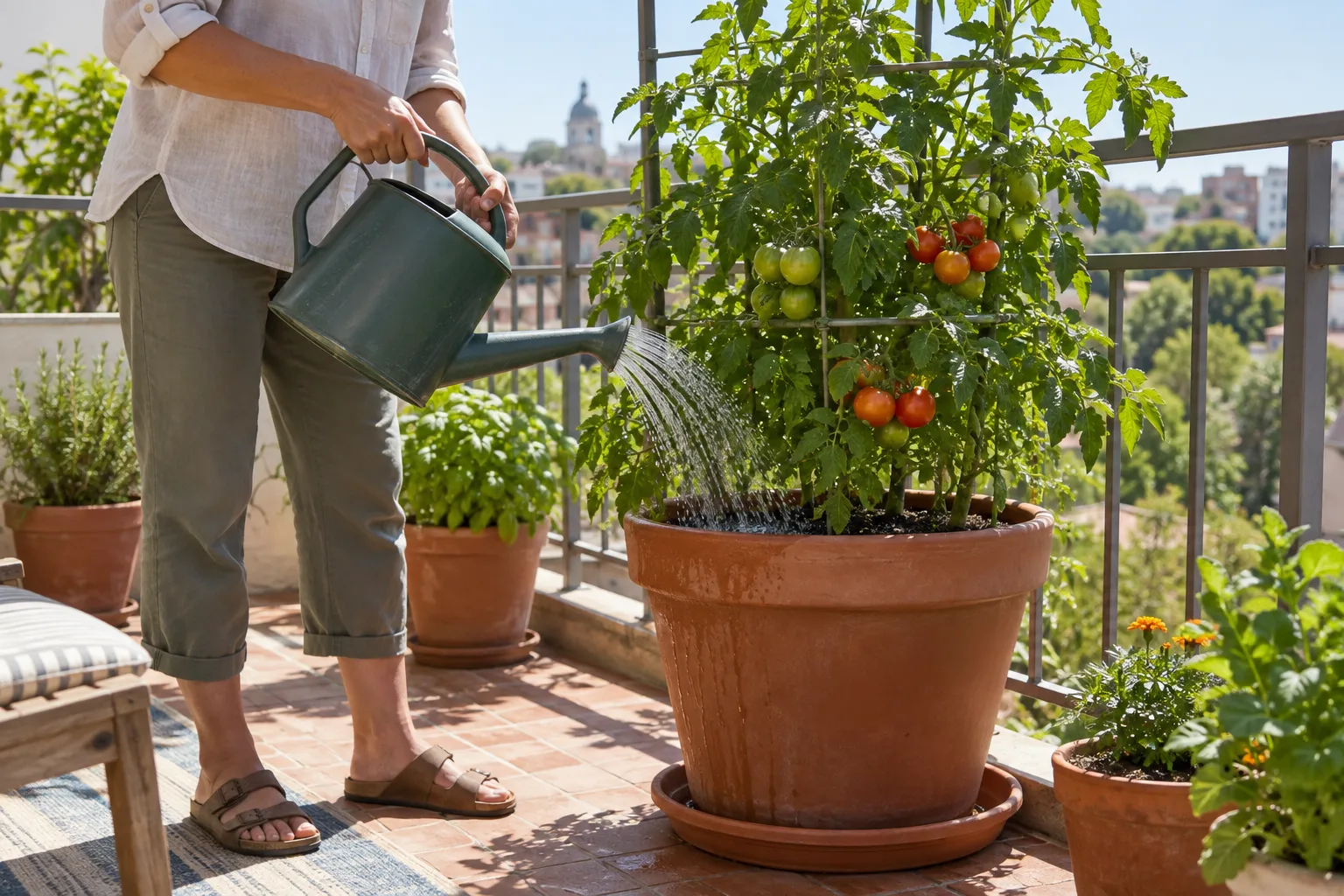
- Water deeply, not just often. Water slowly until it runs from the drainage holes, so the whole root ball drinks. A quick splash only wets the surface and encourages shallow roots.
- Water in the morning. Plants go into the hot afternoon fully charged, and less water evaporates than in midday sun. A second check in the evening helps during heatwaves.
- Use bigger pots. More soil holds more water and swings less between soaked and parched. On a hot balcony, a large pot is easier to keep alive than a small one.
- Consider self-watering containers. A built-in reservoir lets plants drink between waterings, which smooths out hot weekends away. They suit thirsty crops like tomatoes especially well; just choose one with an overflow hole so rain can’t waterlog the roots.
A layer of mulch; even an inch or two (a few centimeters) of bark or straw on the soil surface; slows evaporation and keeps roots cooler. It’s a small step that noticeably cuts how often you refill the watering can.
Shade for the worst of the afternoon
Common mistake: assuming more sun is always better. In extreme heat, even sun-lovers can scorch and stop setting fruit. A little afternoon shade during a heatwave protects the plant without costing it the light it needs.
Very high temperatures stress even heat-loving plants. Tomatoes, for example, can drop flowers and set fruit poorly during a prolonged hot spell. On the hottest days, light shade over the middle of the afternoon takes the edge off without starving plants of light.
- A piece of shade cloth, a light curtain, or a parasol angled to block the fiercest 2 to 3 p.m. sun is enough. Keep anything you rig up secured so wind can’t lift it; a loose cover on a high balcony is a hazard to people below.
- Group pots so taller plants shade shorter, more tender ones during peak heat.
- Move pots on wheels or a trolley into partial shade during a heatwave, then back out afterwards.
Pots and colors that handle heat
The container matters more on a hot balcony than anywhere else. Small pots and thin, dark ones heat up fast and cook roots; larger, lighter ones stay steadier.
- Go bigger. A large soil volume resists heat and drought far better than a small one.
- Prefer light colors. Pale pots reflect sun and stay cooler than dark ones, which absorb heat and can warm the roots uncomfortably.
- Mind terracotta in heat. It looks lovely and breathes, but it wicks moisture out of the soil, so terracotta plants need watering more often on a hot balcony.
- Raise pots off a hot floor. Pot feet or a stand let air move underneath and keep the base off scorching concrete or metal.
Keeping plants alive over a hot weekend away
The fastest way to lose a hot-balcony garden is a two-day trip in a heatwave. Thirsty pots that need daily water don’t survive being forgotten, so plan ahead if you’ll be away.
- Group pots together in the shadiest corner before you leave. Clustered, shaded pots dry out more slowly than scattered ones in full sun.
- Water deeply the morning you go and add mulch to hold that moisture longer.
- Lean on self-watering containers for the thirstiest plants, since their reservoir buys a day or two.
- Ask a neighbor for the longest trips. A five-minute watering visit saves the whole balcony, and it’s easier to arrange than replacing dead plants.
Avoid makeshift rigs that could overflow or drip onto the balcony below while you’re gone. On a hot balcony, a well-watered cluster in the shade is more reliable than a complicated setup you can’t check.
Heat-exposure mistakes
- Pots too small for the sun. Small containers dry out and overheat fastest. On a hot balcony, size up.
- Watering lightly and often. Shallow splashes encourage shallow roots that suffer in heat. Water deeply, less frequently.
- Dark pots in full sun. They bake the roots. Choose pale containers where you can.
- No plan for a heatwave. The hottest days do the most damage. Have shade and extra water ready before the forecast turns.
When leaves scorch or wilt
- Wilting every afternoon, perking up by evening. The pot can’t hold enough water for the heat. Move up a pot size, mulch the surface, or add a self-watering container.
- Scorched, bleached, or crispy leaf edges. Sun and heat stress. Provide afternoon shade in the worst weather and keep water steady.
- Tomatoes flowering but not fruiting. Prolonged high heat can stop fruit from setting. It usually resumes when temperatures ease; keep the plant healthy and watered in the meantime.
- Soil pulling away from the pot edge. The mix has dried out hard. Water slowly in stages so it can re-absorb, and don’t let it get that dry again.
- Blossom-end rot on tomatoes (dark, sunken base). Often linked to uneven watering in heat. Aim for steady moisture rather than a dry-then-flood cycle.
- Pot too hot to touch in the afternoon. A dark or thin container is baking the roots. Shade the pot itself, move it onto a stand for airflow, or switch to a larger, pale container that stays cooler.
Prepare for the hottest week
Put your hottest, brightest spot to work with a compact tomato or a couple of peppers in large, pale pots, add rosemary and basil for easy wins, and set up a morning watering habit before the first heatwave. A hot balcony rewards plants that most gardens struggle to grow.
Getting the containers right is the other half of surviving the heat. Our guides on choosing balcony containers and measuring your sunlight help you match pots and plants to a sun-baked balcony.
Help exposed pots hold up
Reduce drying with the reservoir-planter checklist, and account for gusts with the wind-resistant setup. Curious whether all that greenery does anything for your indoor temperature? See can balcony gardens cool your apartment?
Heat is only one filter. For a wider comparison that also accounts for wind, pot size, and the time you have for care, see our condition-based balcony plant guide.