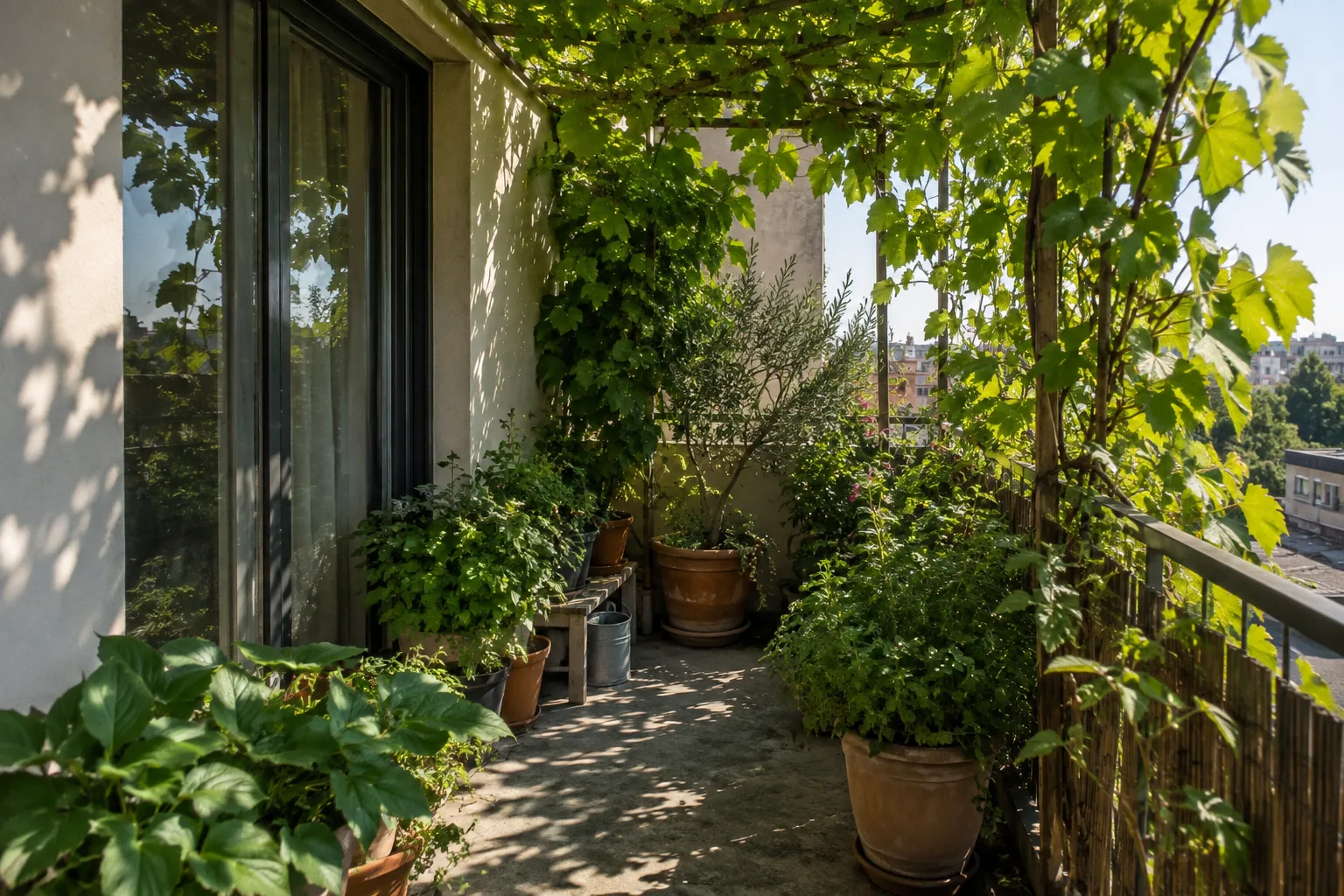
“Plants cool the air” gets repeated so often it’s easy to assume it’s marketing more than science, somewhere between a real effect and wishful thinking about a few pots of basil. The mechanism is real and well studied at larger scales, green roofs, green walls, urban tree canopy, but a realistic answer for a single apartment balcony depends heavily on how much of it you cover in plants, and that’s the part most claims skip over.
The mechanism: evapotranspiration, not just shade
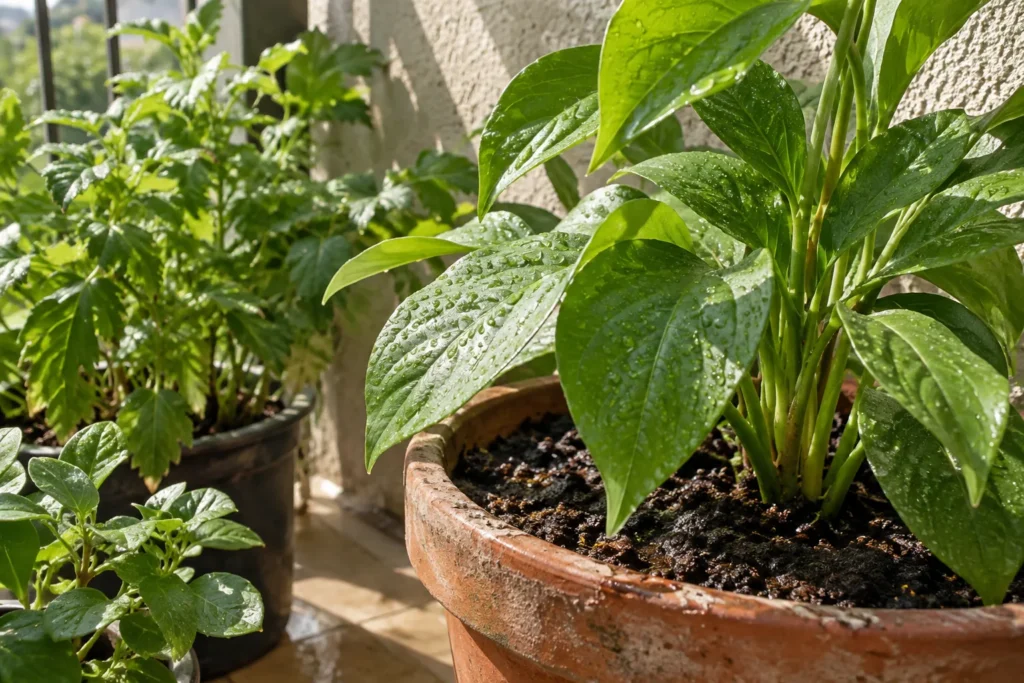
Plants cool their surroundings two separate ways. Shading is the simple one: leaves intercept solar radiation before it hits a wall, window, or concrete surface, so less heat gets absorbed and re-radiated into the space behind it. Evapotranspiration is the less obvious one, and it’s the larger effect in most studies: as a plant releases water vapor through its leaves and as water evaporates from moist soil, that phase change from liquid to vapor absorbs heat energy from the surrounding air, the same physical principle that makes you feel cooler standing in front of a wet towel with a fan on it. A balcony full of actively transpiring plants is, in a small way, running a passive evaporative cooler.
What the research actually measured
A 2024 field study published in Scientific Reports monitored a rooftop terrace garden at a shelter in Chennai, India, comparing indoor temperatures below a garden-covered section against an identical exposed section over three months. Rooms below the garden ran 4 to 11°C cooler than rooms below bare roof, with the biggest gap during peak midday heat. Simulations in the same study suggested that with deeper soil beds and denser foliage, the reduction could reach 14 to 15°C under ideal conditions.
The detail that matters for a balcony is what “garden” meant in that study: 184 grow bags of vegetables, planted 10 to 15 months prior, covering a substantial share of the roof. That’s a working farm-scale planting, not four pots of tomatoes and a railing planter. The same research found that partial coverage performed noticeably worse than complete coverage, since heat transferred sideways from the exposed sections into the shaded ones. The cooling effect scales with how much of the surface is covered and transpiring, not with the presence of plants in general.
Scaling the effect down to an actual balcony
A smaller balcony-specific study modeling combined shading and evapotranspiration from balcony greenery found more modest, though still real, numbers: roughly 2.5°C lower indoor air temperature and 5.5°C lower balcony air temperature under a denser planted setup. That’s a meaningfully smaller effect than the rooftop-farm study, and it still assumed a fairly substantial planted footprint relative to the balcony’s size, not a couple of decorative pots by the railing.
Scale the mechanism down honestly and the realistic expectation for a typical balcony with a modest collection of container plants is a localized, noticeable cooling effect right at the balcony and near the door or window it faces, not a whole-apartment temperature drop that would meaningfully substitute for air conditioning. The physics doesn’t change with quantity, but the magnitude absolutely does, and most of the dramatic numbers circulating online trace back to studies with far more plant coverage than a typical balcony holds.
Shade alone still does real work
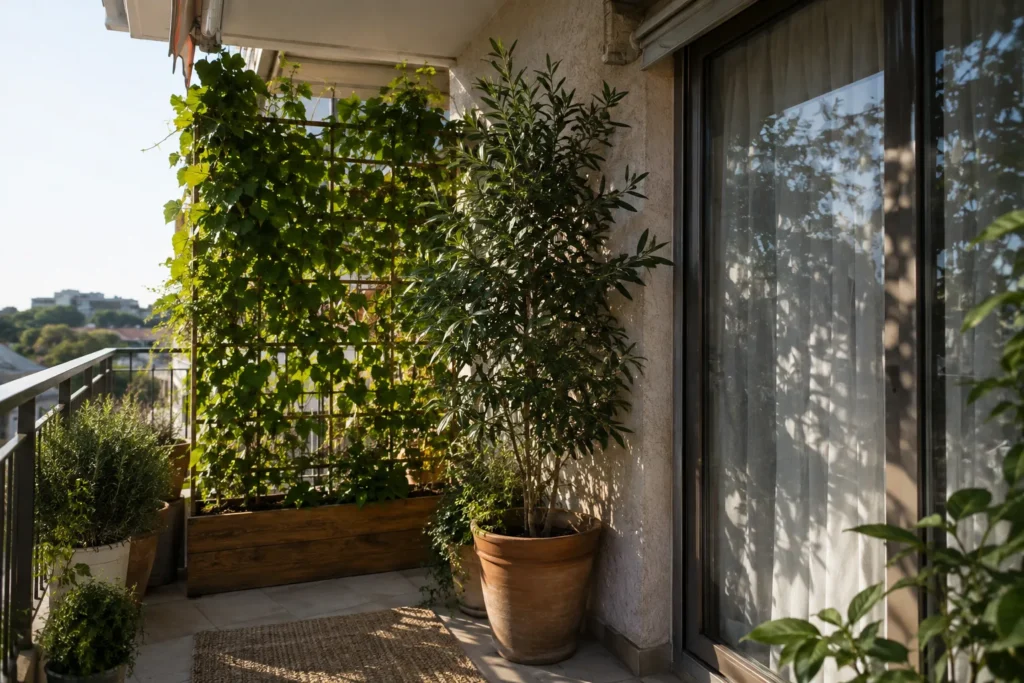
Even without counting evapotranspiration, positioning plants to shade a window or a sun-facing wall reduces the direct solar radiation reaching that surface, and less absorbed radiation means less re-radiated heat working its way indoors later in the day. A tall, leafy plant or a trellised vine positioned to intercept afternoon sun on a west-facing balcony does this job regardless of how much it’s actively transpiring at any given moment, which makes shading a more reliable, less variable contributor to comfort than evapotranspiration, whose strength depends on humidity, wind, and how well-watered the plants are on a given day.
Which plants actually cool best?
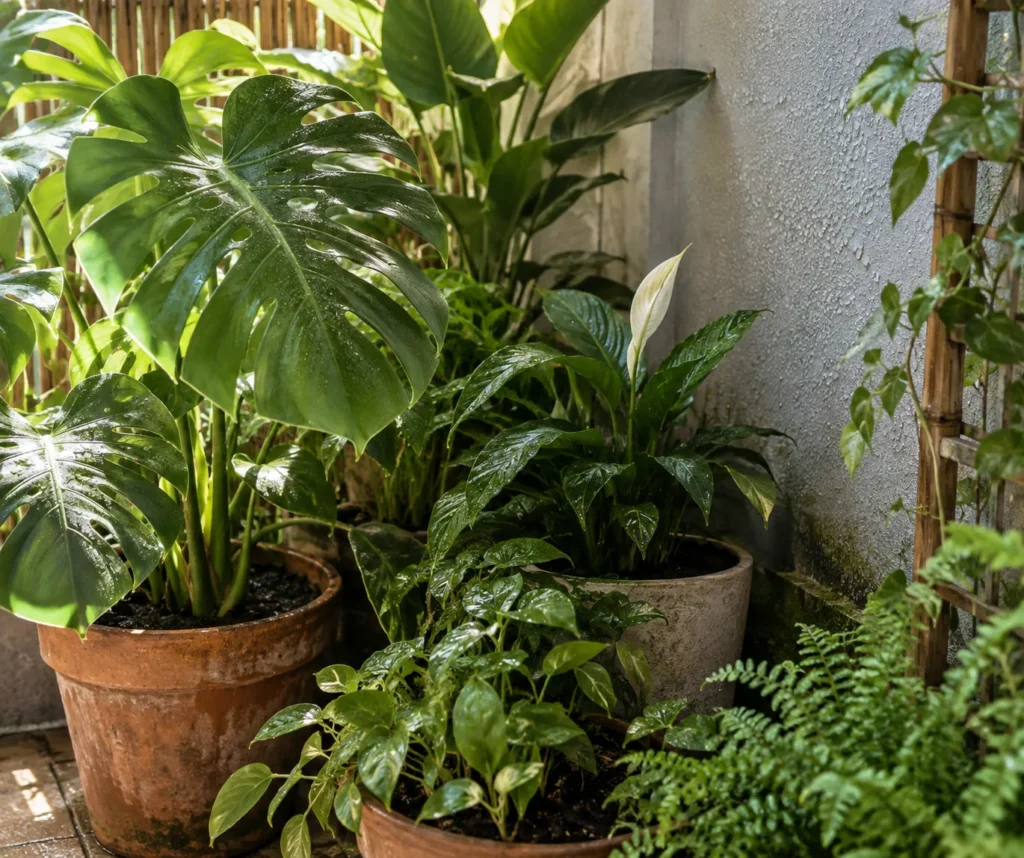
Leaf traits matter as much as plant count. A 2017 study in Functional Ecology comparing transpiration-driven leaf cooling across species found the cooling effect ranged from roughly 0.61°C to 2.12°C per unit of transpiration, and that broadleaf species with larger surface area cool more per plant than narrow or needle-like foliage, since more leaf surface means more area releasing water vapor at once. The study also found that when water wasn’t limited, the transpiration rate itself drove the cooling, more than any other physical leaf trait.
That creates a real tension with a lot of general “easy balcony plant” advice. Succulents, cacti, and other drought-tolerant species are popular precisely because they’ve evolved to conserve water and transpire as little as possible, which makes them low-maintenance but means they contribute almost nothing to this specific effect. A balcony planted for cooling looks different from one planted for low water needs: broad-leaved, consistently watered plants, not the drought-tolerant choices that dominate most “low-maintenance balcony plant” lists. If cooling is the actual goal, it’s worth choosing from our guide to plants for hot, sunny balconies with that specific trade-off in mind rather than defaulting to whatever needs the least water.
What actually maximizes the effect on a small balcony
Given that magnitude scales with coverage, the practical version of this research points toward a few real levers rather than a vague “add more plants.” Denser planting, especially anything that shades the door or the largest window, contributes more than the same number of plants scattered thinly across the railing. Plants that are well-watered transpire more and cool more; a stressed, underwatered plant closes its stomata and evapotranspires far less, quietly undercutting the exact effect you’re going for. Taller plants and climbing vines that shade a vertical surface, not just the floor, address the wall and window heat gain that mostly determines how hot a room actually feels.
None of this replaces good ventilation, blinds, or an air conditioner on a genuinely hot day, but as one part of managing a hot balcony, it’s a real, measurable, physically grounded effect, not pure marketing. For the watering side of keeping plants actively transpiring through a heatwave, see our guide to plants for hot, sunny balconies.
The cooling effect follows the sun, not the clock
Stomata, the pores on a leaf’s surface that release water vapor, open mainly in response to light so the plant can take in carbon dioxide for photosynthesis, and largely close after dark to conserve water once photosynthesis stops. Research on nighttime transpiration puts it at roughly 5 to 15 percent of the daytime rate for most species, a real but much smaller flow. The practical result: the evaporative cooling effect covered above is predominantly a daytime phenomenon, strongest during the exact hours a balcony is taking on the most solar heat, and largely absent once the sun goes down.
That’s good timing for the effect that matters most, peak-heat cooling, but it also sets a real limit worth knowing: a dense balcony planting won’t meaningfully cool an already-hot room overnight the way it helps during the afternoon. Evening comfort depends much more on ventilation, released thermal mass from sun-warmed concrete and walls, and how much heat built up in the apartment during the day, factors evapotranspiration barely touches once stomata close for the night.
Humidity: the side effect worth knowing about
Evapotranspiration cools the air by moving water into it as vapor, which means the same mechanism that lowers temperature also raises humidity in the immediate area around the plants. In most climates that’s a minor, unnoticeable side effect. In an already humid climate, or on a balcony with poor airflow, a dense planting can make the space feel muggier even as the thermometer reads a degree or two lower, since perceived comfort depends on both temperature and humidity together, not temperature alone. Good airflow across the balcony offsets this; a sheltered, still corner with heavy planting is where it’s most likely to show up.
A realistic summary
- The mechanism is real: shading plus evapotranspiration measurably cools the air around plants and the surfaces near them.
- The magnitude depends heavily on coverage. Farm-density rooftop studies show double-digit temperature drops; typical balcony-scale setups show a few degrees, localized near the plants.
- Leaf traits matter: broad-leaved, well-watered plants transpire and cool more than drought-tolerant succulents, the opposite of what most low-maintenance plant advice recommends.
- The effect is mostly a daytime one. Stomata largely close after dark, dropping nighttime transpiration to roughly 5 to 15 percent of the daytime rate, so don’t expect the same cooling overnight.
- Well-watered plants cool more than stressed ones, since evapotranspiration slows when a plant closes its stomata to conserve water.
- Shading a window or wall, not just the floor, targets the surfaces that actually drive indoor heat gain.
- Treat it as one contributor among several, not a substitute for ventilation or cooling on a genuinely hot day.
For the design side of a green, shaded balcony, see our guide to styling a small balcony with plants.
Sources
- Scientific Reports, 2024: Mitigating urban heat island and enhancing indoor thermal comfort using terrace garden
- Energy and Buildings: Influence of balcony greenery on indoor temperature reduction in tropical urban residential buildings
- Functional Ecology, 2017: Stronger cooling effects of transpiration and leaf physical traits of plants from a hot dry habitat than from a hot wet habitat
- University of Nebraska–Lincoln PASSEL: Factors affecting rates of transpiration
- PMC: Disentangling the mechanisms regulating nighttime transpiration during drought across plant life forms
Cooling figures cited here come from studies with substantially more plant coverage than a typical apartment balcony holds. Treat the specific numbers as evidence the mechanism works, not as a prediction for any particular small setup.