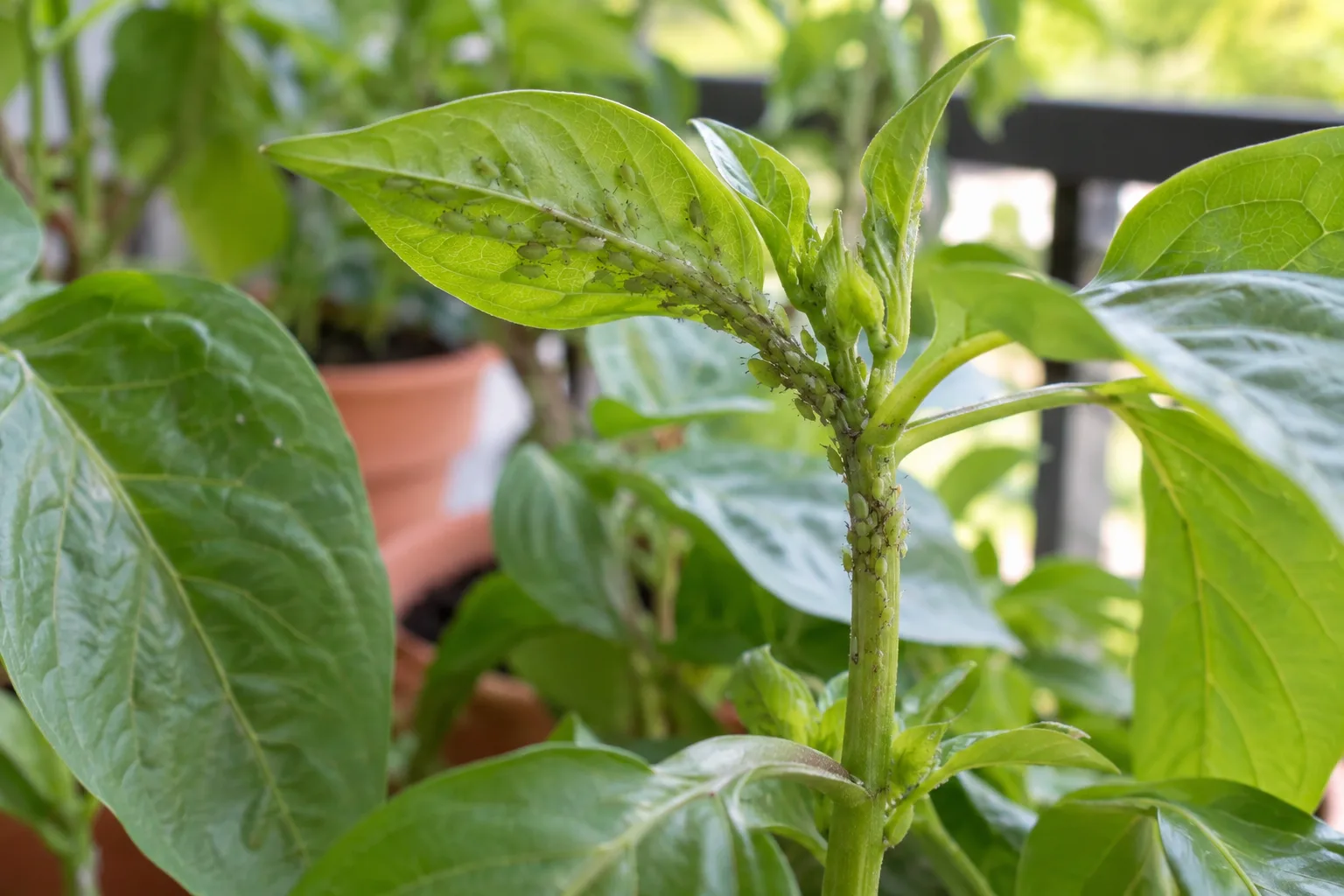
Aphids can turn up quickly on balcony peppers, herbs, nasturtiums and flowers. They gather on soft new growth, drink plant sap and leave a sticky residue called honeydew. A small colony looks alarming at close range, but it rarely requires the strongest treatment on the shelf.
Start with identification and a simple physical cleanup. Established plants often tolerate a light aphid population, while water, careful pruning and regular inspection can bring a larger colony under control. If those steps are not enough, use a labeled insecticidal soap or horticultural oil correctly rather than improvising a kitchen mixture.
Confirm that the insects are aphids
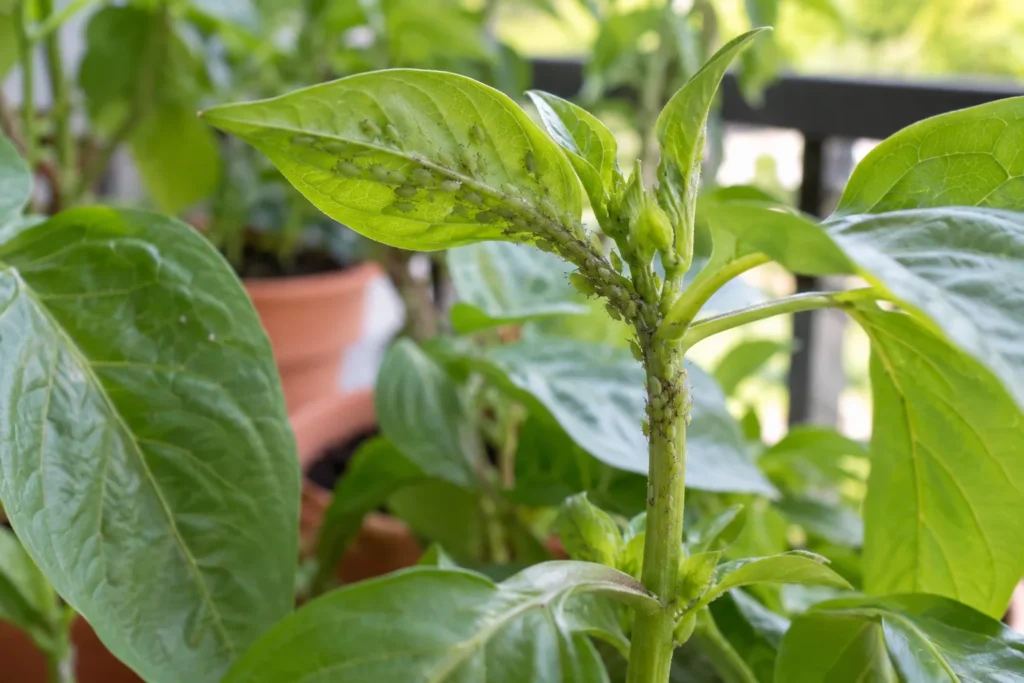
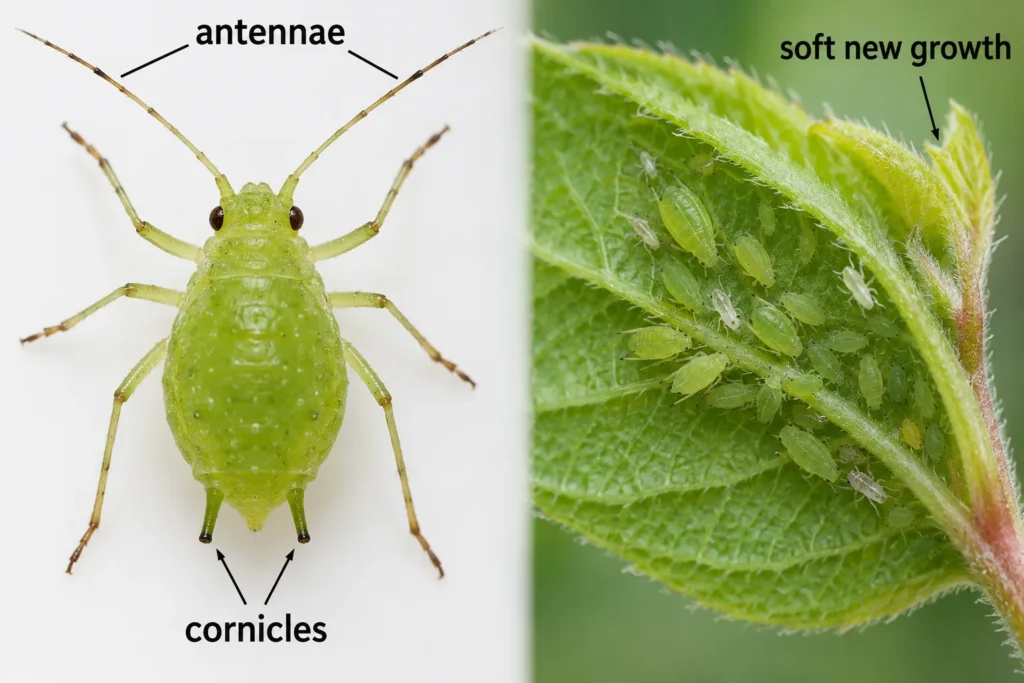
Aphids are small, soft-bodied insects that may be green, black, gray, yellow, pink or brown. Most are pear-shaped, with long antennae and two small tube-like structures called cornicles near the rear of the body. Look for groups on shoot tips, flower buds, stems and leaf undersides.
- Sticky leaves or floor: honeydew can make foliage and the area below a plant feel tacky.
- White flakes: pale cast skins remain after aphids molt and can be easier to see than the insects.
- Distorted growth: young leaves may curl, pucker or grow unevenly.
- Ant activity: ants sometimes collect honeydew and protect aphid colonies.
- Sooty coating: dark sooty mold may grow on accumulated honeydew.
Use a hand lens and check several leaves before treating. Whiteflies fly up when disturbed, spider mites are much smaller and may make fine webbing, and mealybugs have a cottony wax covering. Correct identification prevents unnecessary spraying.
Decide whether the plant needs treatment
A few aphids on a sturdy mature plant are often tolerable. Lady beetles, lacewing larvae, hoverfly larvae and tiny parasitic wasps may reduce the colony naturally. Watch the newest leaves for several days and look for predators or swollen, tan aphid “mummies” before intervening.
Act sooner on seedlings, stressed plants, rapidly expanding colonies or shoots that are becoming badly curled. Edible crops also deserve close monitoring because aphids can transmit some plant viruses. Once growth is tightly curled, contact treatments cannot easily reach the insects hidden inside.
Move the pot without spreading the problem
If space allows, separate the affected pot from touching plants while you work. Keep it on the balcony in suitable light rather than moving outdoor pests through the apartment. Do not place it in a hallway, block the door or balance it on the railing.
Inspect the plants that were beside it, especially tender basil, peppers and tomatoes. The balcony salsa garden guide explains how to space edible containers so leaves are reachable for routine checks.
Step 1: prune only the worst tips
Clip off a few heavily curled shoot tips when most aphids are concentrated there. Use clean pruners, preserve enough healthy foliage for the plant to recover and seal the cut material in a bag before carrying it through the home. Do not compost an active colony in a small balcony bin.
Pruning is selective, not a reason to strip the plant. Removing too much foliage can stress a container plant and stimulate vulnerable new growth.
Step 2: rinse aphids off with water
For a sturdy plant, a directed stream of plain water can knock off aphids and wash away honeydew. On a balcony, place the pot in a wide basin or tub so runoff cannot reach the neighbor below. Support the leaf, spray its underside and work early enough for the foliage to dry before night.
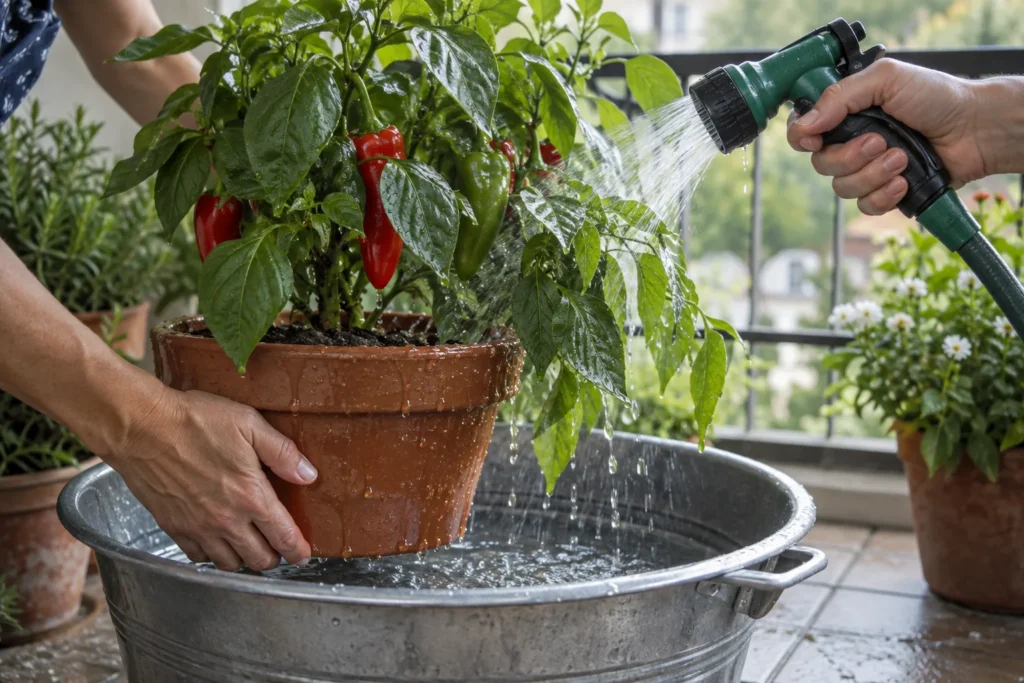
Use enough pressure to dislodge insects without tearing leaves or eroding potting mix. A gentle mister may not move them; a harsh jet can damage seedlings. Empty the captured water into an indoor drain where permitted, clean the basin and return the pot only after it has stopped dripping. Repeat the inspection and rinse every few days as needed.
Step 3: use a labeled contact product only if needed
If water and pruning do not reduce a damaging colony, consider a commercially formulated insecticidal soap or horticultural oil labeled for aphids and for the specific plant. On edible plants, the label must also permit use on that crop. Follow the mixing rate, protective measures, application interval and harvest instructions exactly.
- Water a dry or wilted plant and let it recover before treatment.
- Test the product on a small section and wait the label-specified time.
- Avoid hot, bright conditions and any temperature limit stated on the label.
- Cover aphids directly, including leaf undersides; soaps and oils act by contact.
- Keep spray inside the balcony and away from people, pets and neighboring property.
- Recheck the plant instead of applying repeatedly without evidence.
Do not substitute dishwashing liquid. Household detergents vary in concentration and may contain degreasers, fragrances or other ingredients that injure leaves. A recipe shared online is not the same as a product tested and labeled for plants.
Protect beneficial insects
Broad-spectrum insecticides can kill the predators and parasitoids that provide longer-term aphid control. Even soap and oil can harm a beneficial insect that is directly sprayed, so inspect first and treat only the affected plant parts. Avoid spraying open flowers and never apply a pesticide while bees are visiting.
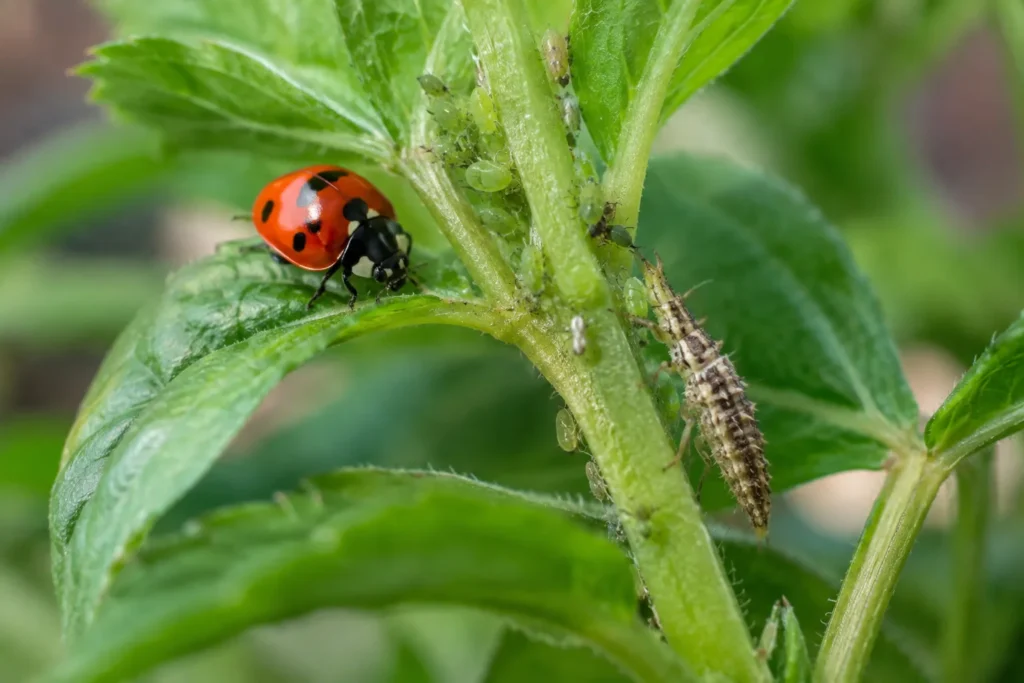
Buying and releasing lady beetles is rarely necessary for a few balcony pots; many disperse soon after release. A better long-term approach is to avoid disruptive sprays and grow a modest mix of flowers and herbs suited to the available light. The guide to balcony herbs can help with realistic choices.
What to do when ants are present
Some ant species protect aphids while feeding on their honeydew, although ants are not responsible for every outbreak. First wash sticky residue from the pot, shelf and floor, then remove plant stems that bridge to adjacent pots or touch the wall. That makes the route easier to observe and helps separate a plant problem from a building-wide ant issue.
Do not scatter insecticide granules, powders or homemade bait where children, pets, birds or drainage water can reach them. Never spray into building cracks or shared property without permission. If ants repeatedly emerge from the structure, report the location to the property manager. Continue reducing aphids on the plant; removing the honeydew source often makes the balcony less attractive to ants.
Correct the conditions that favor aphids
Excess nitrogen encourages lush, tender growth that aphids prefer. Feed container plants according to their needs instead of adding fertilizer whenever growth slows. Confirm light, watering, root space and temperature first. Crowded pots also make leaf undersides difficult to inspect and reduce airflow.
- Check new plants before placing them beside the collection.
- Inspect shoot tips and leaf undersides once a week.
- Remove weeds or volunteer seedlings growing in pots.
- Clean sticky honeydew from shelves and the balcony floor.
- Keep enough space to reach every pot safely.
How to know the treatment worked
Old curled leaves may not flatten, so judge recovery by the newest growth. You should see fewer live clusters, less fresh honeydew and healthy expanding leaves. Continue weekly checks for several weeks because survivors or newly arrived winged aphids can restart a colony.
If the plant continues to decline after aphids are controlled, review drainage, root condition, temperature and light. More pesticide will not correct a watering problem or a pot that has become too small.
Discarding the plant is a reasonable last option when a weak annual is heavily infested, recovery is unlikely and the colony threatens several healthier pots. Bag it before carrying it indoors, clean the saucer and inspect nearby plants. Keep a reusable container only after washing it thoroughly; replace contaminated potting mix instead of moving it into another planter.
A safe balcony aphid routine
- Confirm aphids with a close inspection.
- Monitor a light colony on a healthy established plant.
- Separate the pot from touching foliage.
- Prune only badly curled, heavily infested tips.
- Rinse sturdy leaves over a basin and repeat as needed.
- Use a correctly labeled soap or oil only if physical controls are insufficient.
- Watch healthy new growth rather than expecting old damage to disappear.
This measured approach is effective for most small container collections and keeps the treatment proportionate to the problem. It also protects the balcony, neighbors and helpful insects from unnecessary exposure.
After the cleanup
Recheck light, water, and airflow with the plant-condition framework. For another common insect claim, read what potted repellent plants can and cannot do.
Know when a small problem needs a different response
Aphids are often manageable when the first few clusters appear, especially on new growth. If repeated rinsing and hand removal are not reducing the population, pause before adding stronger products. Check the undersides of leaves, tight growing tips, and nearby plants; the apparent return may be a missed colony rather than a failed treatment. Prune only the most heavily infested tips if the plant can spare them, and dispose of that material rather than leaving it in the pot.
Keep stress from making the plant an easy target. A badly under-watered or over-fertilized container can push out soft growth that aphids favor. Give the plant enough light and airflow, avoid crowding leaves against a wall, and follow label directions exactly for any product you choose. Never use a treatment simply because it is described online as “natural”; it still needs to be appropriate for the plant, the edible parts you may harvest, and the pollinators that visit the balcony.
If a crop is repeatedly overwhelmed, it can be more useful to remove it, clean the container, and start a new planting than to keep escalating treatments. For a persistent issue on a valued perennial or an edible plant you are unsure how to treat, take clear photos and ask a local Extension service or qualified nursery professional for guidance that fits your region and the product labels available there.
Sources
- University of California Statewide IPM Program: Aphids
- University of Minnesota Extension: Aphids in home yards and gardens
- Utah State University Extension: Aphids on vegetables
Pesticide registrations and directions vary by location and can change. The product label is the legal instruction for use; local extension or provincial guidance takes priority over general advice.