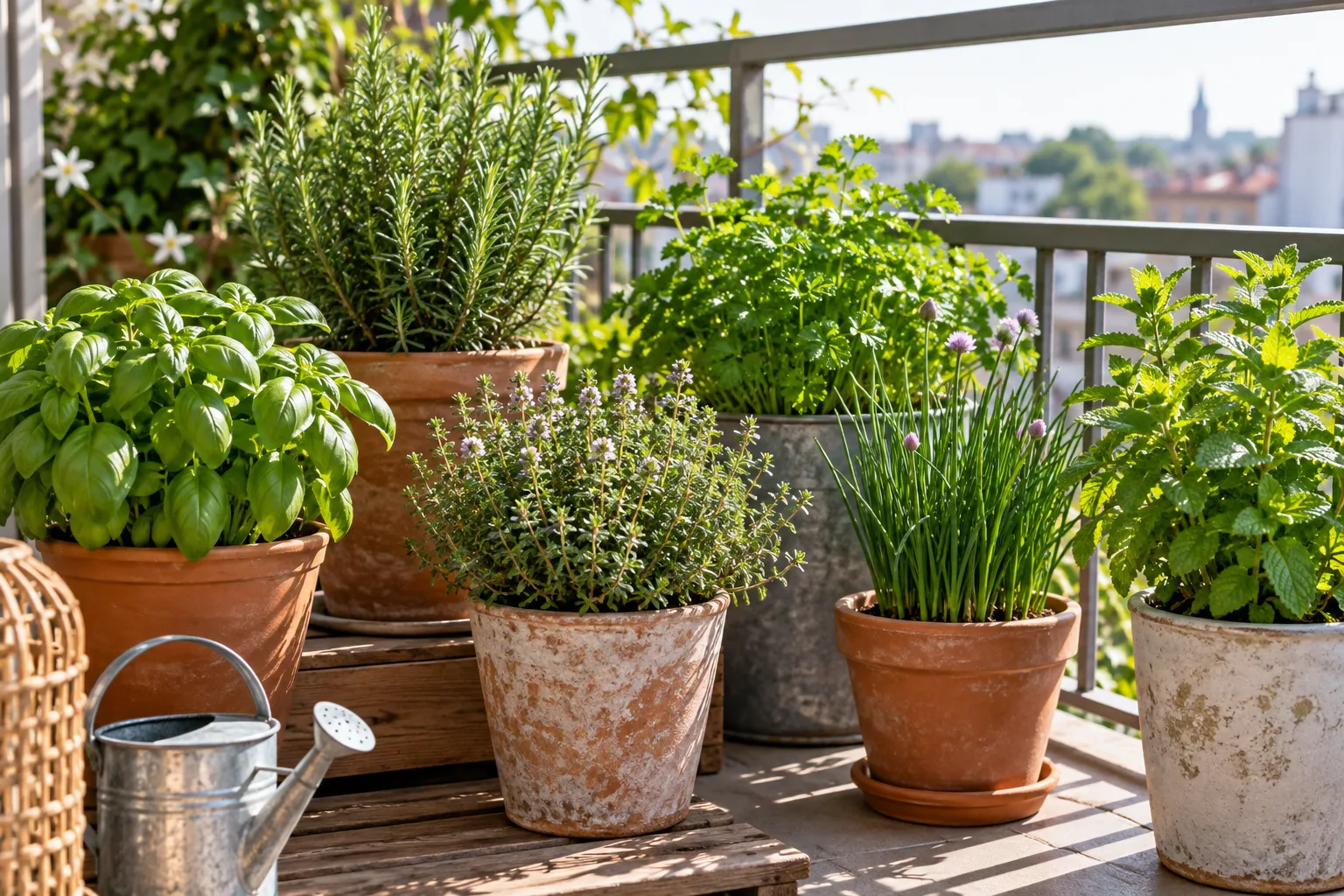
Herbs suit balconies because a small harvest is still useful in the kitchen. Light is the main divider: basil, rosemary, thyme, oregano, and sage want strong sun, while mint, parsley, chives, and cilantro tolerate less. Give mint its own pot and group the others only when their watering needs agree.
Most balconies can grow herbs even when they can’t grow much else. This guide sorts the popular kitchen herbs by how much sun they need, then covers pots, watering, and the one herb you should never plant with others.
Match herbs to the light: For a sunny balcony (6+ hours), grow basil, rosemary, thyme, oregano, and sage. For a shadier spot (3 to 5 hours), grow mint, parsley, chives, and cilantro. Give each herb its own pot with drainage, and keep mint separate; it takes over anything it shares.
Check your light first
Light decides which herbs will thrive, so it’s worth knowing your number before you shop. Count only direct sun; the kind that casts a sharp shadow; and note roughly how many hours the herb’s spot gets on a clear day.
As a rule of thumb, the woody Mediterranean herbs (rosemary, thyme, oregano, sage) and basil want a bright, warm spot. The leafy, softer herbs (mint, parsley, chives, cilantro) put up with less. If your balcony is shady, you can still have a genuinely useful herb garden; you’ll just lean toward the second group.
Sun-loving herbs (6 or more hours)
These herbs earn a place in your brightest spot. Most of the Mediterranean ones are drought-tolerant, which suits a warm, windy balcony where pots dry quickly.
- Basil. A warm-season annual that wants sun and heat. It rewards a bright balcony all summer but dislikes cold, so wait until nights are reliably warm before putting it out. Pinch off the growing tips regularly to keep it bushy and delay flowering.
- Rosemary. Woody, drought-tolerant, and happy in wind. It’s a perennial in mild climates, but in cold-winter regions it usually won’t survive outdoors; move it to a bright indoor windowsill before hard frost.
- Thyme. Low, tough, and forgiving if you forget to water. A good edge plant for a sunny pot and hardy through winter in many regions.
- Oregano and sage. Both are sun-lovers that tolerate dry soil and come back year after year in moderate climates. Give them room and don’t overwater.
The common thread: these herbs prefer soil on the drier side. More herbs die from constantly soggy roots than from a missed watering, so let the top inch of soil dry before watering again.
Shade-tolerant herbs (3 to 5 hours)
These handle a north-facing balcony or a spot boxed in by nearby buildings. They generally like steadier moisture than the Mediterranean herbs, so they suit a shadier, cooler corner well.
- Mint. Nearly indestructible and happy in partial shade; but vigorous to the point of being a bully. Always grow it in its own pot (more on that below).
- Parsley. A steady producer that handles cool weather and part shade. It’s technically a biennial, usually grown fresh each year for the best leaves.
- Chives. Cold-tolerant, perennial, and fine with about 4 hours of sun. Snip them like grass and they regrow all season.
- Cilantro. A cool-season herb that bolts (runs to seed) quickly in heat. A little afternoon shade keeps it leafy longer, and successive small sowings give you a steady supply.
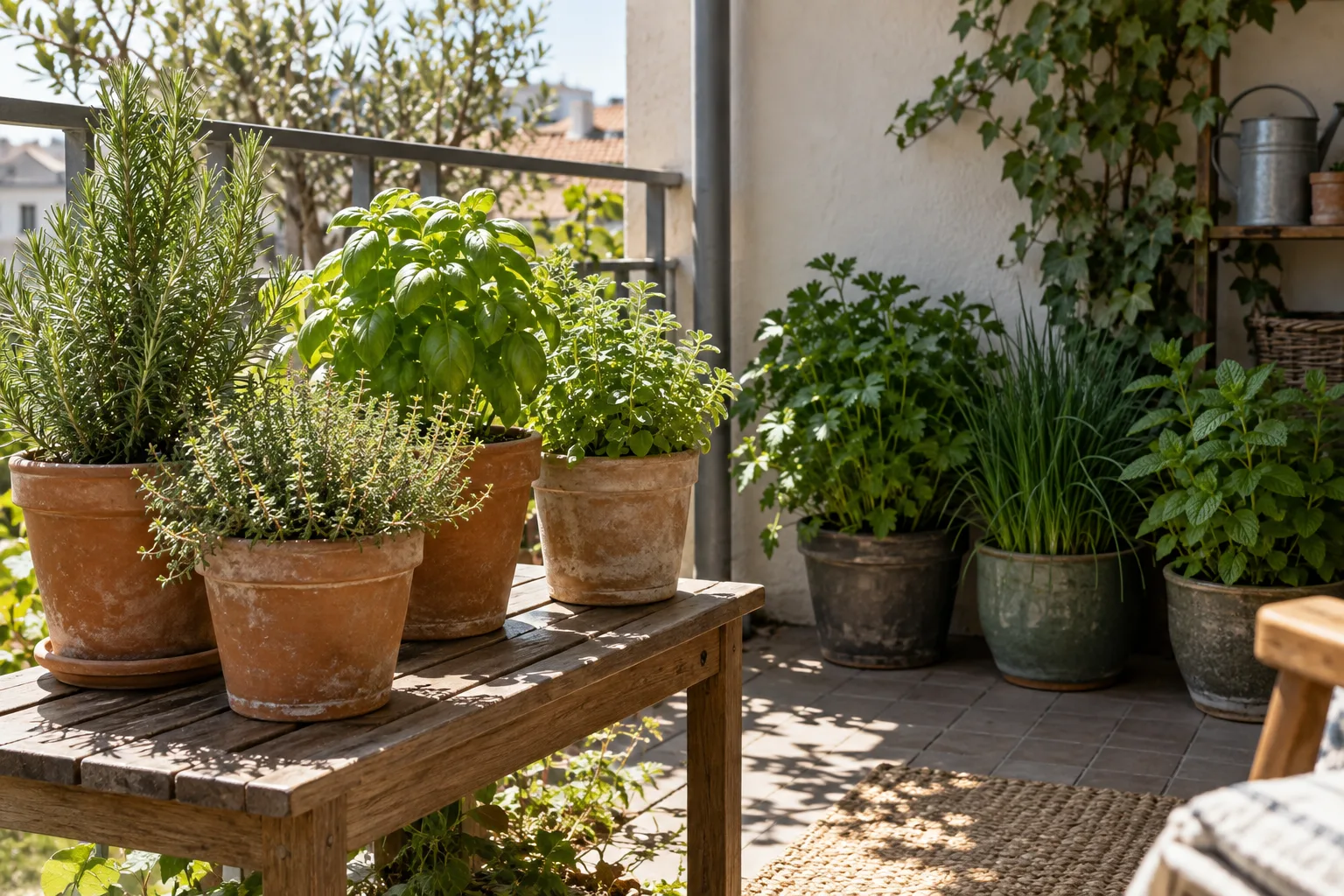
Annual or perennial? What comes back next year
Whether an herb survives winter on your balcony depends on your climate and how exposed your pots are. Containers offer far less protection than the ground, so a herb that’s hardy in a garden bed may still struggle in an exposed pot through a cold winter.
- Grown fresh each year (annuals or treated as such): basil, cilantro, and usually parsley.
- Often come back year after year in mild climates: thyme, oregano, sage, chives, and mint.
- Perennial but cold-sensitive: rosemary, which frequently needs to overwinter indoors in cold regions.
If your winters are harsh, treat most herbs as a one-season crop and plan to bring the tender perennials indoors. Check a plant hardiness zone map for your area and remember that a pot runs colder than the ground.
Pots, soil, and watering
Most herbs are happy in a pot 6 to 8 inches (15 to 20 cm) across, though vigorous growers like mint and larger plants like rosemary appreciate more room. Every pot needs drainage holes and a saucer to catch runoff before it drips onto the balcony below.
Use a bagged potting mix, not garden soil, which compacts and drains poorly in containers. Water when the top inch of soil feels dry rather than on a fixed schedule; herbs on a hot, windy balcony may need daily water, while a shady corner stays moist much longer. The Mediterranean herbs in particular prefer to dry out a little between drinks.
Keep mint in its own pot
Common mistake: planting mint in a shared pot with other herbs. Mint spreads by runners and will crowd out its neighbors within a season. Always give it a container of its own.
This is the single most useful herb-growing rule for beginners. Mint’s roots spread aggressively, and in a mixed pot it will smother basil, parsley, or anything else sharing the soil. A pot of its own keeps it productive and keeps the peace with the rest of your herbs.
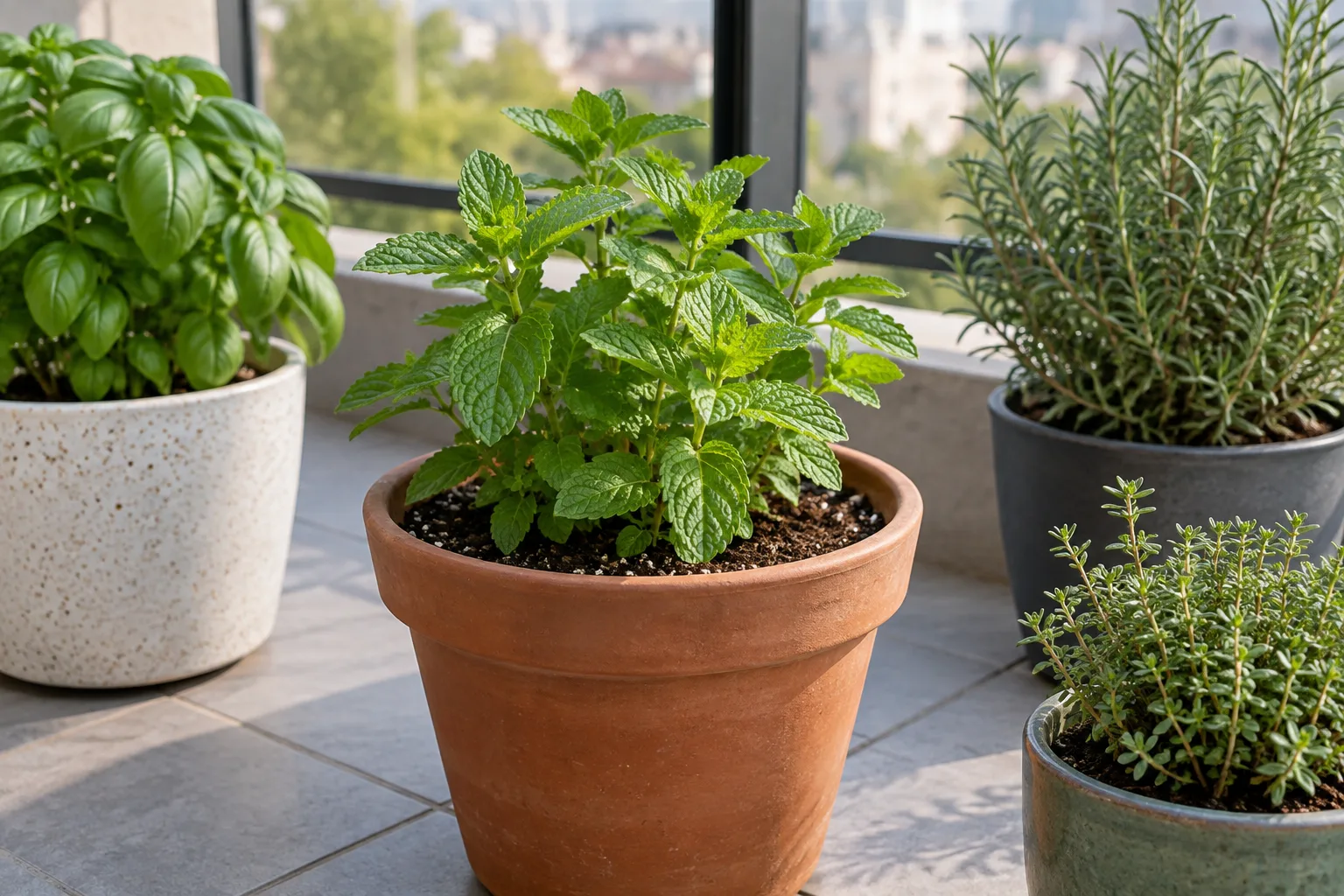
Harvesting so plants keep producing
Herbs give more when you pick them often. Regular harvesting signals the plant to grow new leaves, so a well-used herb pot stays bushier than a neglected one.
- Leafy herbs (basil, mint, parsley): pinch or snip from the top and outer stems, taking no more than about a third at once.
- Chives: cut the leaves about an inch (a couple of centimeters) above the soil and they regrow.
- Woody herbs (rosemary, thyme, oregano): trim sprig tips rather than cutting into the old, bare wood, which is slow to regrow.
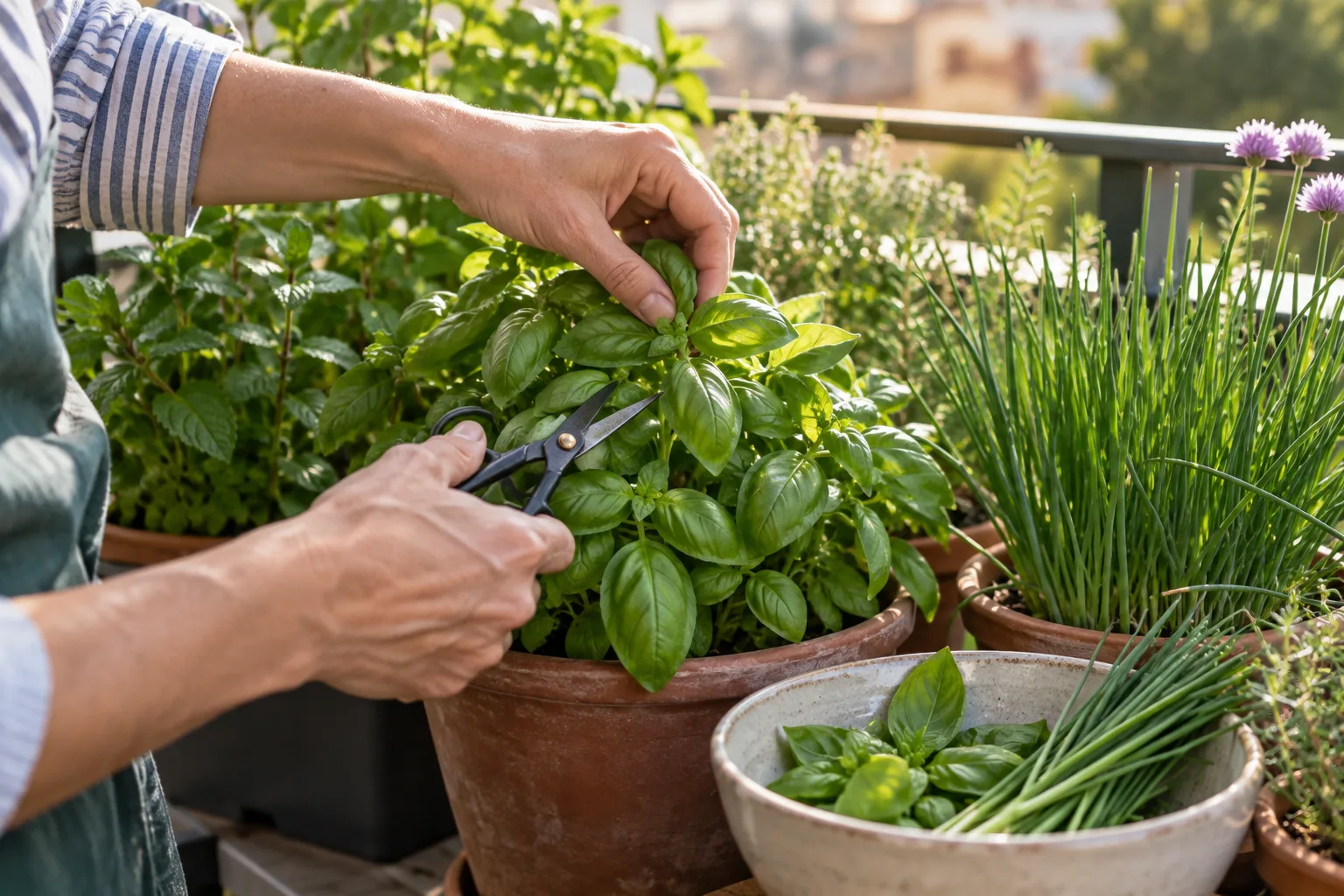
With basil especially, pinching out the tips before it flowers keeps the leaves tender and extends the harvest. Once any herb flowers, the leaf flavor often fades.
Which herbs can share a pot?
To save space, you can group herbs in one larger container; but only if they want the same conditions. The rule is to match by water needs.
The Mediterranean herbs; rosemary, thyme, oregano, and sage; all like sun and drier soil, so they share a pot happily. The moisture-lovers, like parsley and chives, do better together in a separate pot you water more often. Basil sits in between; it likes warmth and steady moisture, so it pairs better with the softer herbs than with drought-tolerant rosemary. And mint stays on its own, always. Give a shared pot at least 12 inches (30 cm) of width so each plant has real root room.
Bringing herbs through winter
In cold regions, a few herbs can carry on indoors once the balcony turns too cold. Rosemary, chives, parsley, and small pots of mint often do well on a bright windowsill that gets several hours of sun.
Move them in before the first hard frost rather than after, so the plant isn’t already stressed. Expect slower growth indoors through the darkest months, water less than you did outside, and check for pests before the pot comes in; a small infestation spreads fast among indoor plants. Basil rarely lasts long indoors in winter, so it’s usually simpler to start fresh in spring.
Where herb pots go wrong
- Overwatering. Soggy roots kill more herbs than dry ones. Let the top inch dry, and make sure every pot drains freely.
- Sun-loving herbs in a shady corner. Basil and rosemary sulk and grow leggy without enough light. Save your brightest spot for them.
- One giant mixed herb planter. It looks tidy at the garden center, but herbs with different water and light needs; plus the mint problem; make separate pots the easier choice.
- Never harvesting. An unpicked herb gets leggy and flowers early. Use it often to keep it productive.
Read the symptoms in an herb pot
- Leggy, stretched stems. Too little light. Move the pot to a brighter spot or switch to a shade-tolerant herb.
- Wilting despite moist soil. Often overwatering and poor drainage, which suffocates roots. Check that the pot’s holes are clear and empty the saucer.
- Basil leaves turning dark or spotted after a cold snap. Basil hates cold; keep it in your warmest spot and don’t set it out too early.
- Cilantro bolting to seed. Heat triggers it. Give afternoon shade and sow small batches every few weeks.
- Woody, sparse rosemary or thyme. Usually too much water or too little sun. Ease off watering and move to a brighter, airier spot.
Plan a small herb collection
Pick two or three herbs you cook with and match them to your light; a pot of chives and parsley for a shady balcony, or basil and thyme for a sunny one. Give each its own container and you’ll have fresh flavor within weeks.
Herbs pair naturally with a few easy vegetables in the same corner. Our guides to the best balcony vegetables and measuring your sunlight help you round out a small, productive edible balcony.
Set the herbs up for success
If the light is uncertain, measure it for one clear day. For a larger edible setup, see vegetables that suit containers.
If you are still deciding whether herbs are the right fit, compare them against your full set of conditions in our balcony plant-selection guide.