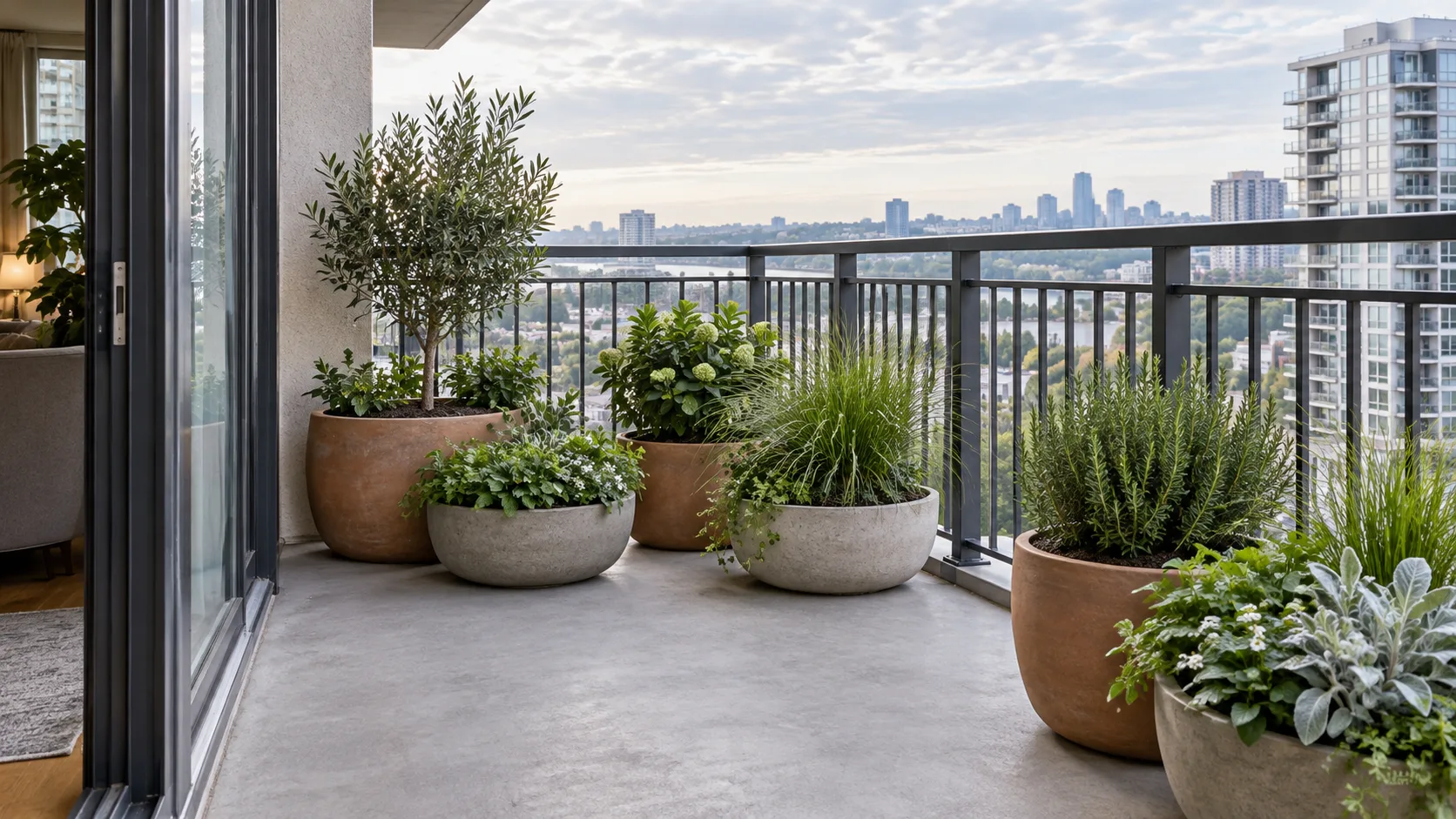
Wind changes the whole container setup. Moving air pulls moisture from leaves and potting mix, rocks tall plants at the roots, and can turn loose saucers or lightweight pots into hazards. A safer plan stays low, uses broad-based containers, and keeps the most vulnerable plants in the balcony’s sheltered zone.
Start here: keep plants below the railing, choose broad-based containers that cannot tip easily, group pots in the most sheltered part of the balcony, and check moisture with a finger instead of watering by the calendar.
Find the wind path before buying plants
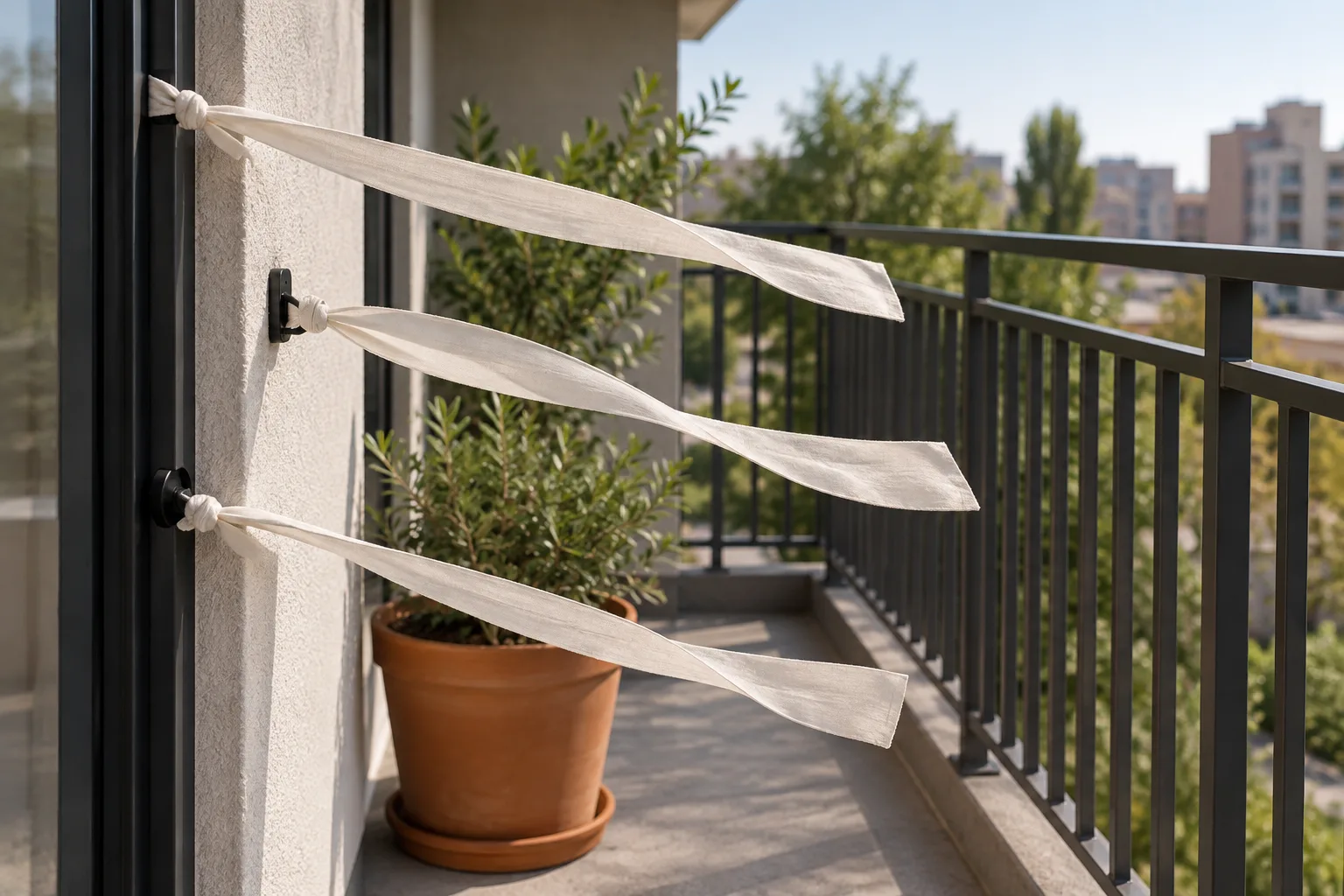
Wind rarely reaches every part of a balcony equally. A solid side wall can create a calm pocket while an open corner funnels air hard enough to bend stems. Watch the space on two ordinary breezy days and once during stronger weather. Tie short pieces of cotton ribbon to safe, fixed points inside the railing; their movement will reveal the exposed edge, the turbulent corner, and the quiet zone near the wall.
Do not attach anything where it can come loose or hang beyond the railing. The point is observation, not a permanent wind gauge. Record which pots dry first and where leaves show torn edges. That small map is more useful than the floor number: a protected tenth-floor loggia can be calmer than a third-floor corner between two buildings.
Build from the floor upward
- Use a wide footprint. A squat planter is harder to tip than a narrow pot carrying the same volume of mix.
- Use a heavy container material instead of loose rubble. A heavier pot can improve stability. Stones in the bottom reduce usable root space and do not improve drainage. Use a properly sized pot with drainage holes and quality potting mix.
- Keep the center of gravity low. Low mounds, compact herbs, and trailing plants expose less leverage to gusts than top-heavy standards.
- Group containers. Pots shelter one another and are less likely to shuffle across the floor when placed together against an internal wall.
- Respect the load limit. Wet mix is heavy. Before adding large masonry or concrete containers, check the lease, strata rules, and building guidance. If the safe load is unknown, ask rather than guess.
Plants with the right shape
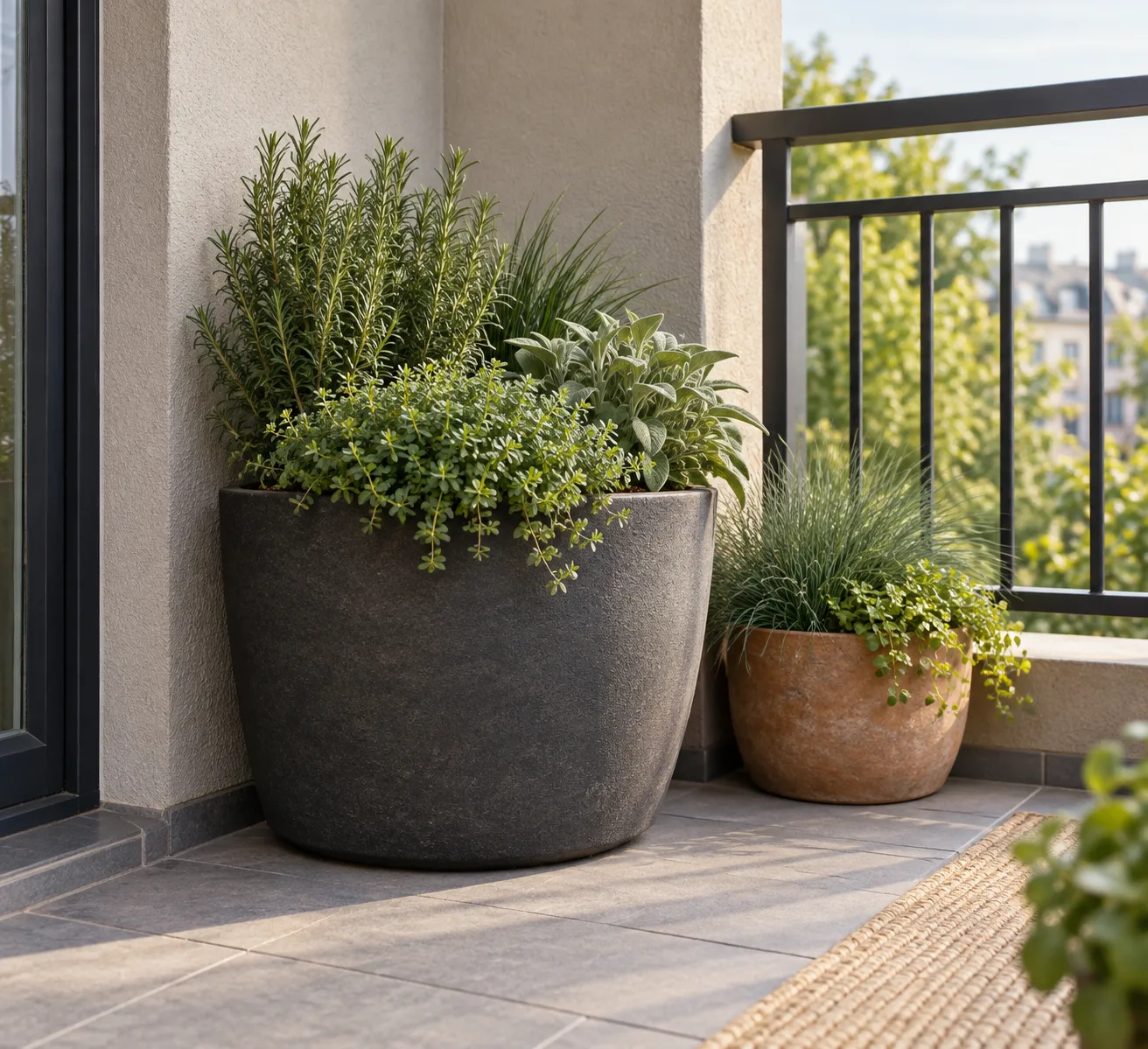
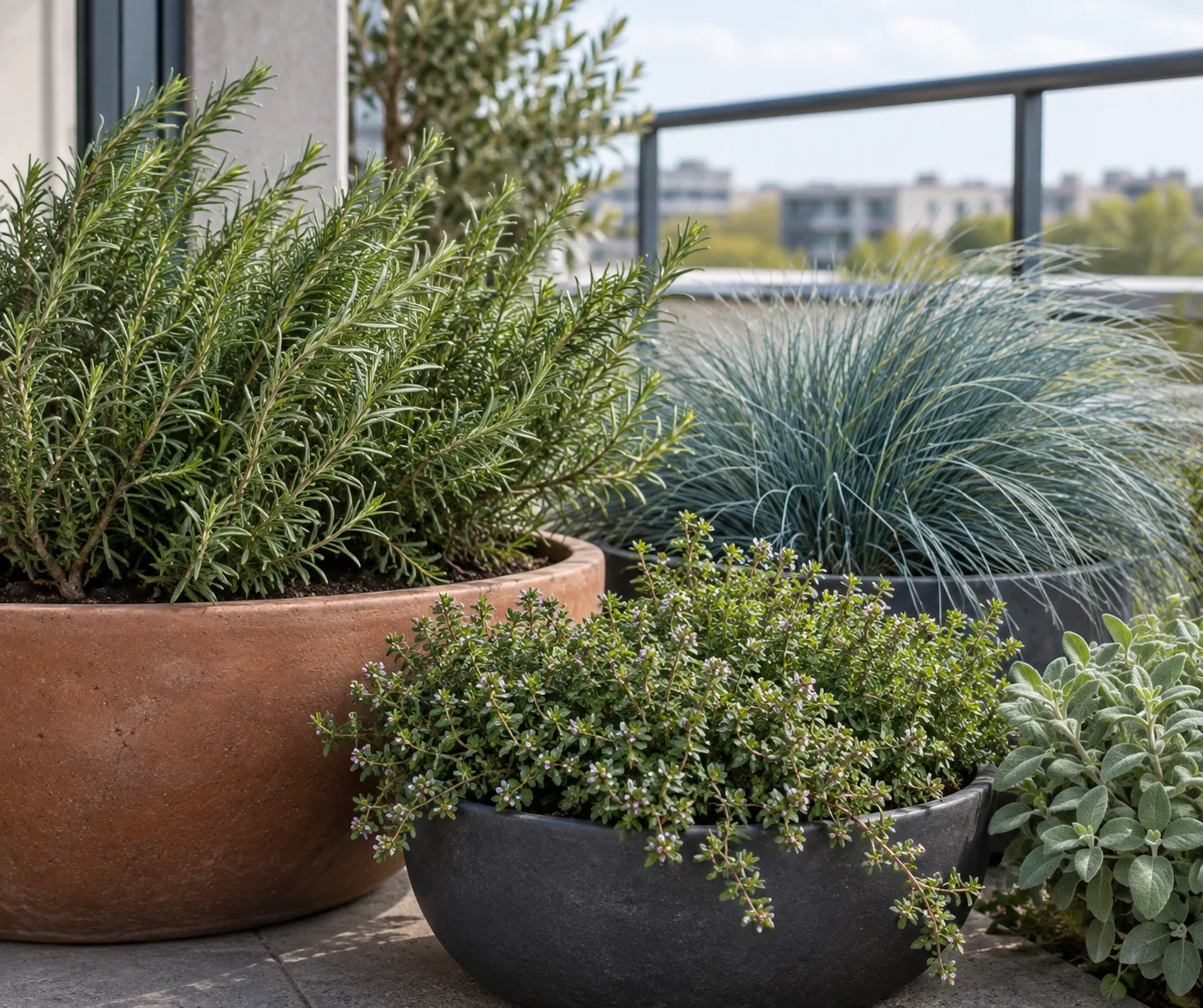
Wind tolerance depends on climate, exposure, and watering, so no short list works everywhere. Shop by structure first. Compact plants with flexible stems, small or narrow leaves, and a naturally mounded habit usually fare better than plants with broad soft leaves or a tall flower head on one rigid stem.
- Woody Mediterranean herbs such as thyme and compact rosemary cultivars suit bright, warm balconies where local winters allow them. Their small leaves lose less water than broad, tender foliage.
- Low ornamental grasses and sedges bend instead of presenting a solid sail. Choose a non-invasive type suited to your region and pot size.
- Compact flowering annuals are easier to shelter and replace than tall, brittle plants. Read the mature height on the label, not the height at the nursery.
- Low edible crops such as leaf lettuce, chives, and compact bush beans are more manageable than an indeterminate tomato climbing above the railing.
Avoid making a generic “windproof” promise. A plant that tolerates coastal wind in mild weather may fail in a hot, dry continental gust or a cold spring wind. Match the label’s light and temperature requirements first, then favor the lower, flexible form.
A wind screen should slow air, not become a sail
A fully solid screen can create strong turbulence around its edges and may carry a large wind load. A partly permeable screen can soften the flow, but it must be allowed by the building and secured exactly as the manufacturer specifies. Never improvise a railing cover with loose fabric, reed rolls, or zip ties and assume it is safe at height.
The lowest-risk shelter is often the building itself: move pots back from the exposed edge, use the inside corner, and keep every object within the balcony envelope. If a permanent screen requires drilling or changes the exterior appearance, get written permission first.
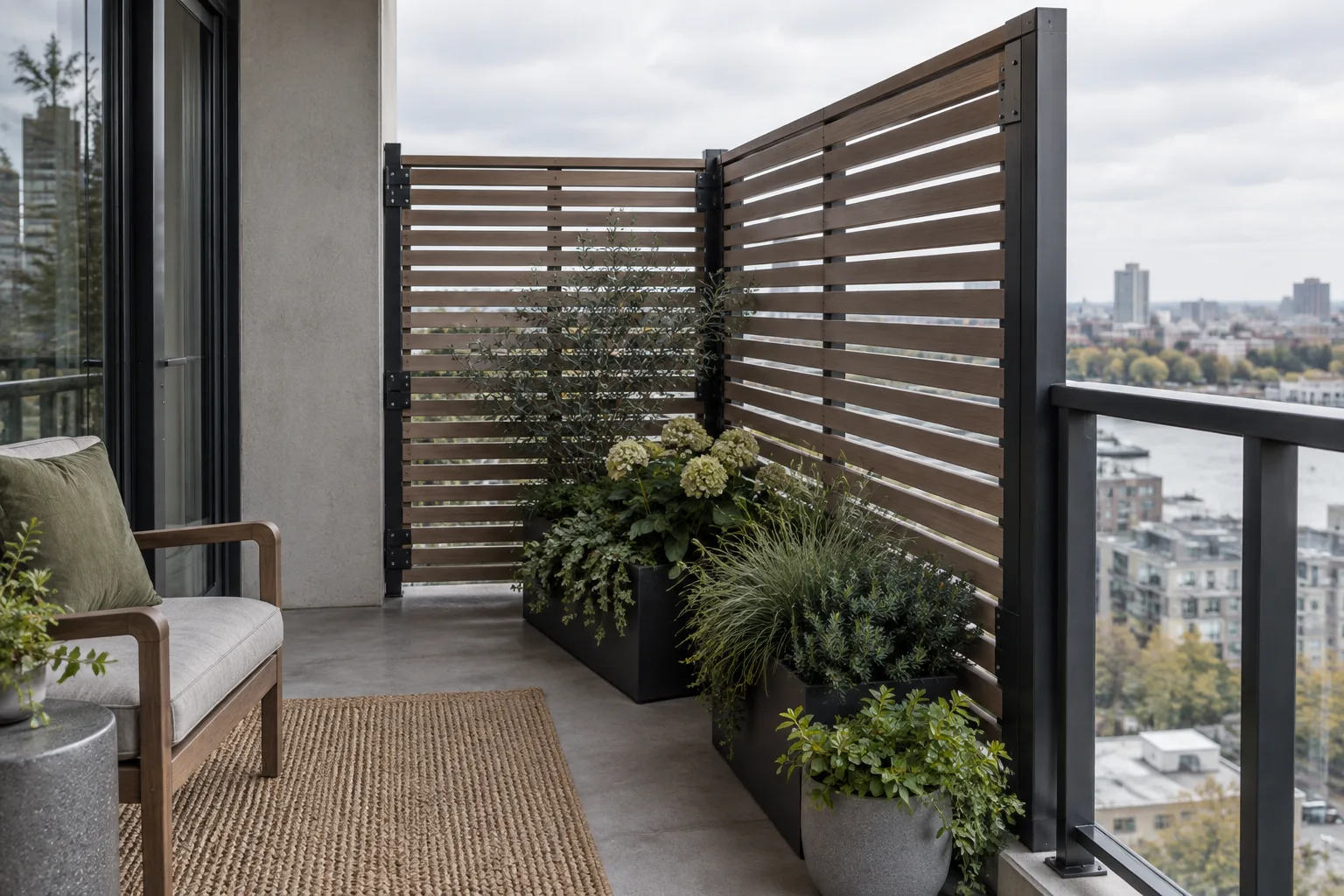
Water for moving air
Wind can dry a container even when the temperature is modest. Check the mix at root depth each morning during a windy spell. If the top few centimeters are dry, water slowly until excess drains, then empty any saucer once drainage is complete. A larger soil volume stays evenly moist longer than several tiny pots.
- Add a thin organic mulch, leaving a little space around stems.
- Prefer plastic, glazed ceramic, or another less porous container when fast drying is the main problem.
- Use a self-watering planter only after learning how its overflow and reservoir behave in heavy rain.
- Do not respond to torn leaves with extra fertilizer. Wind damage is physical; excess feeding produces softer growth that may be more vulnerable.
Before a forecast storm
Move small pots onto the floor in the sheltered corner. Remove watering cans, tools, clips, empty planters, and anything else that can travel. Take hanging baskets down if you can do so safely. Do not lean over a railing or try to rescue an object once strong wind has arrived.
Afterward, check stems where they meet the soil, supports, drainage holes, and attachments. Prune only broken tissue. A plant with wind-burned leaf edges may recover once conditions settle; replacing it immediately can be less useful than adjusting the site.
A practical first setup
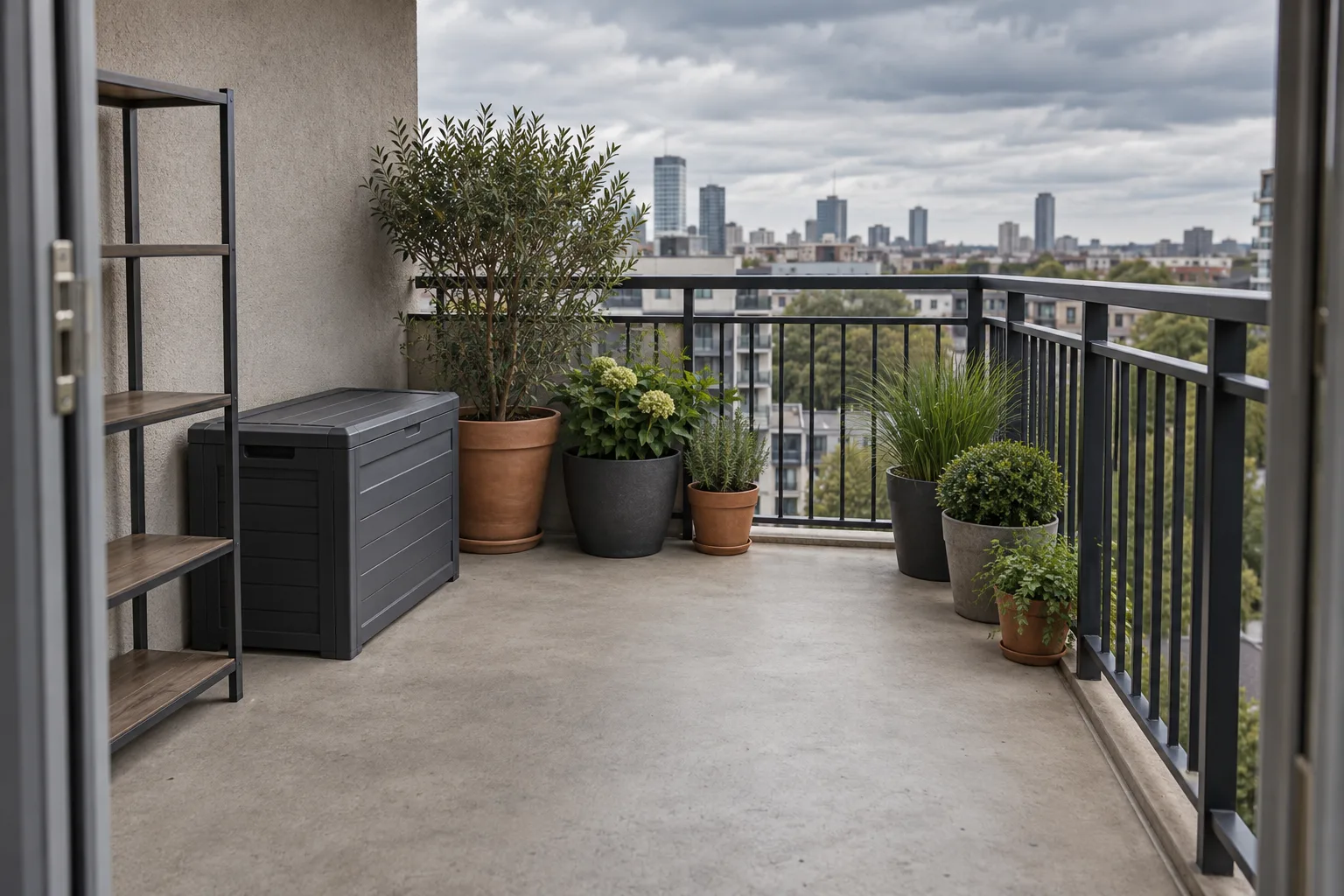
Begin with two broad containers in the calmest floor-level corner. Plant one with a low herb suited to your climate and the other with a compact flowering plant whose label matches your light. Watch how quickly each dries for two weeks. Add height only after the containers remain stable and the watering routine works.
If sunlight is still uncertain, use the balcony sunlight test. For weight and root volume, check the container size guide. Those two measurements narrow the plant list more reliably than a “high-rise plants” shopping list.
Complete the exposed-balcony plan
Choose a stable base with the container-size guide, then adapt tall planting ideas from the privacy guide.
Build a wind plan before choosing plants
Wind is easier to manage when you separate it into three questions: what can tip, what can dry out, and what can tear. Start with containers. Choose broad, stable bases and keep the heaviest pots near the building wall rather than at the exposed edge. Do not depend on a light container becoming safe only after it is watered. If your building has rules about railing planters, screens, or attachments, make those rules part of the plan before buying anything.
Then use plant shape as a filter. Low, flexible plants with small or tough leaves generally cope better than tall, broad-leaved, or top-heavy plants. Compact herbs, sedums, chives, and many ornamental grasses can suit an exposed area where a staked tomato would need constant attention. That does not make a tomato impossible; it means it belongs in the most sheltered position, in a suitably heavy container, with support designed for the mature plant rather than for the seedling.
Water for the weather you actually have
Wind can dry a container even when the day is not especially hot. Check below the surface instead of judging soil by its top crust. Water slowly enough for moisture to reach the root zone, then allow excess to drain as the container was designed to drain. A reservoir planter can help with a thirsty plant, but it still needs a clear overflow and a refill routine that changes when the weather changes. Mulch can slow surface evaporation, but keep it clear of stems so you can see whether the base is staying too wet.
Make a small weather routine. After a windy day, check whether a pot has shifted, whether a support has loosened, and whether leaves are repeatedly rubbing against a wall or railing. Correcting those small problems early is much easier than rescuing a snapped plant after a gust. If a pot dries much faster than neighboring containers, move it to a more sheltered position or reconsider whether that plant is a good match for the exposure.
Test protection without creating a new hazard
A solid panel can look like the obvious windbreak, but it may redirect gusts and create turbulence. A porous screen, a freestanding trellis permitted by your building, or a well-spaced group of plants often softens wind more gently. Test any new screen on an ordinary windy day before relying on it, and never add a structure that conflicts with building rules or needs to be tied unsafely to a railing.
The safest wind plan is usually modest: reduce exposure, lower the center of gravity, keep a clear walking path, and choose plants that do not require perfect shelter to survive. For a broader comparison of plants by light, heat, pot size, and maintenance, use the balcony plant-selection guide before you commit to a larger container or a more demanding crop. For the physics behind why wind dries containers so fast, see how wind affects balcony plants.