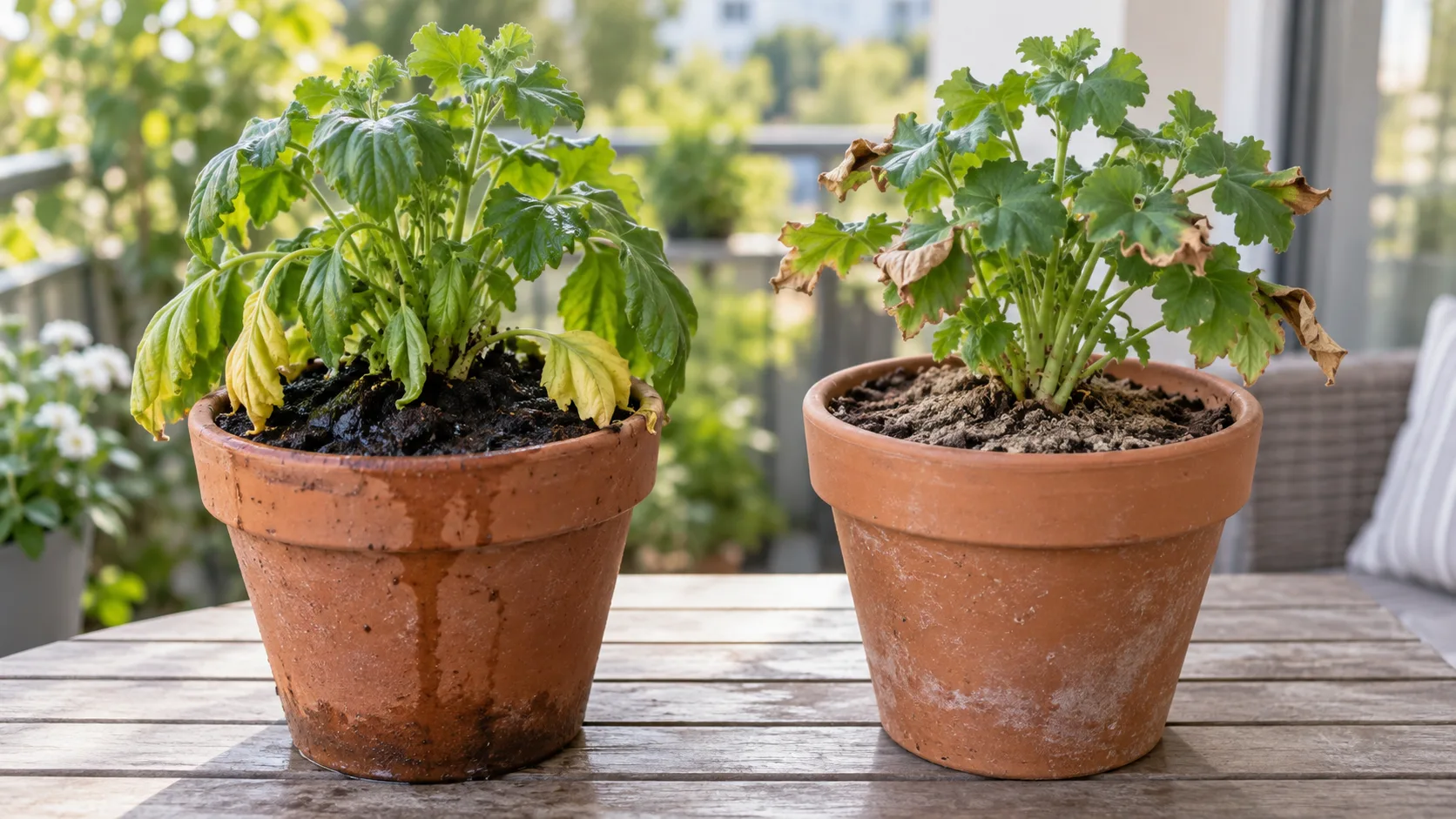
Few things are more disheartening than watching a favorite plant droop and not knowing which way to fix it. Both overwatering and underwatering can make a plant wilt, which is exactly what makes this comparison worth spelling out: the same visible symptom, a droopy, sad-looking plant, has two opposite causes and two opposite fixes. Water more in response to a wilt that’s really caused by overwatering and the plant only gets worse, not better, even though adding water feels like the obviously helpful thing to do. Getting this distinction right before you act is worth the extra thirty seconds it takes to check properly, every single time, instead of guessing from how the plant looks alone. For the physics behind why containers dry out at such different rates in the first place, see our guide to the science of watering container plants.
The soil check that settles it
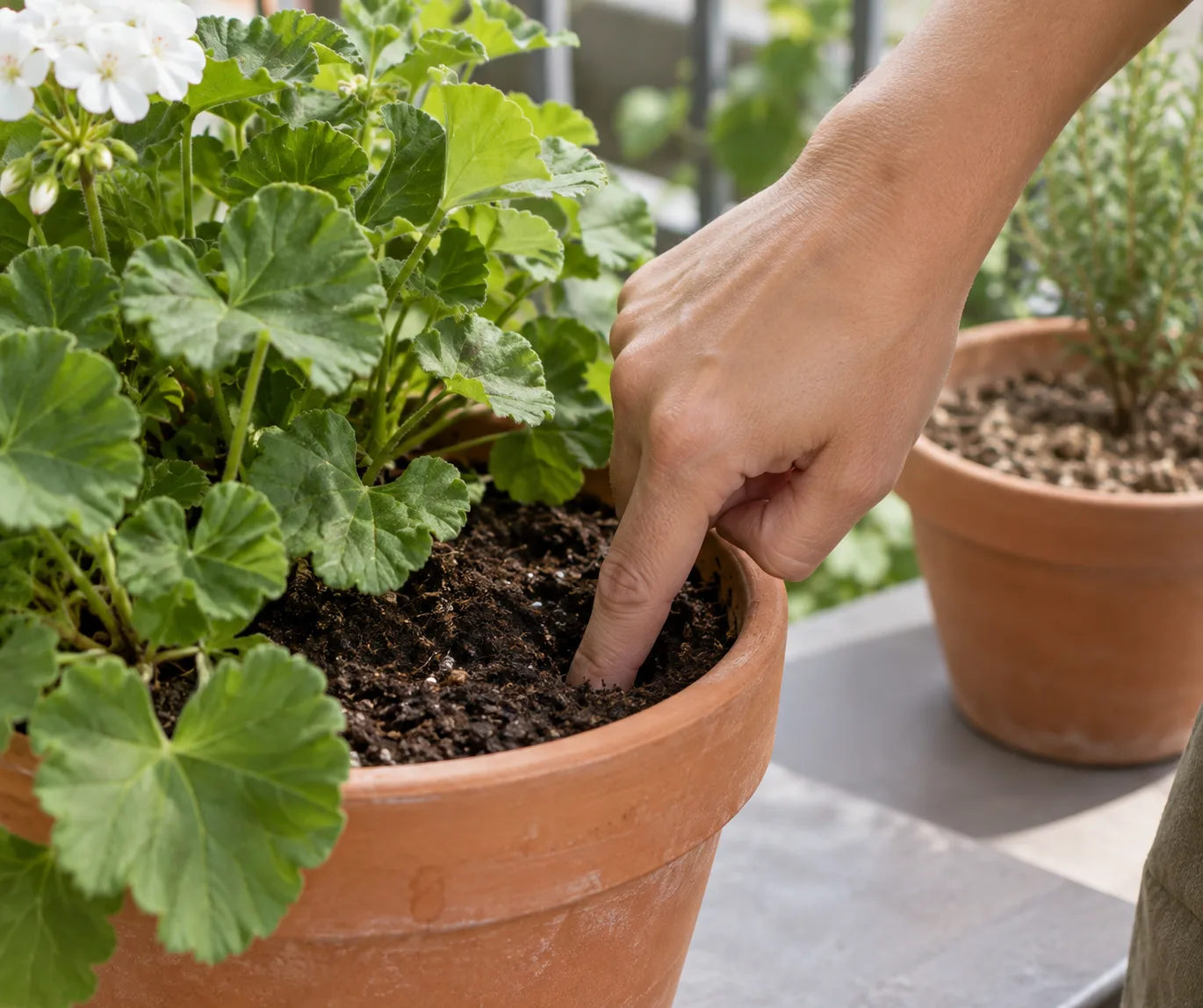
Before anything else, push a finger about two inches into the soil. This one check resolves the ambiguity faster than reading leaf symptoms alone, since leaves can lag behind or mimic each other’s damage.
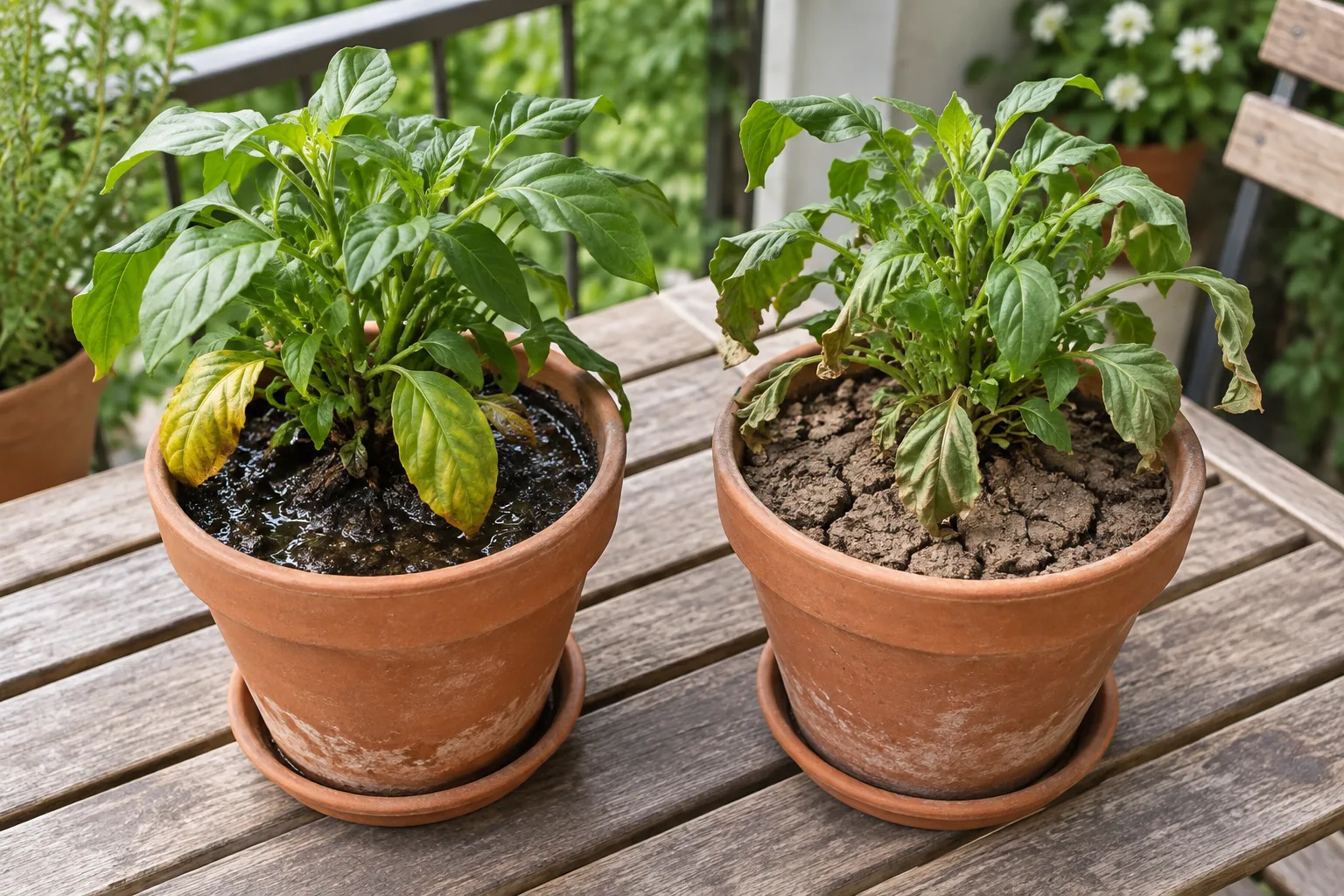
- Wet, cool, heavy soil at that depth: overwatering. The plant has more water than it can use, and the wilting you’re seeing is from damaged, oxygen-starved roots, not thirst.
- Dry, crumbly, pulling-away-from-the-pot soil at that depth: underwatering. The roots simply don’t have access to enough water, and the plant is wilting from real dehydration.
Does a moisture meter beat the finger test?
For most single-pot balcony setups, no, and it’s not close. A finger reads temperature, texture, and stickiness at once, cues a cheap meter can’t pick up, and extension guidance on indoor plant watering notes that meter readings vary with mineral buildup in the soil and can drift inaccurate over time as salts coat the probe. The finger test is also free and never needs a battery.
Where a meter actually earns its place is a container too deep to reach the bottom of with a finger, a planter box or a large floor pot well past the two-inch check this guide is built around. In a deep container, the surface can read dry while the root zone several inches down is still thoroughly wet, or the reverse, and that mismatch is exactly where overwatering and underwatering mistakes happen on a balcony with a handful of large statement pots. If that describes your setup, a probe long enough to reach well past the root zone is worth the small cost; for anything you can comfortably reach the bottom of with a finger, save the money.
Overwatering symptoms in detail
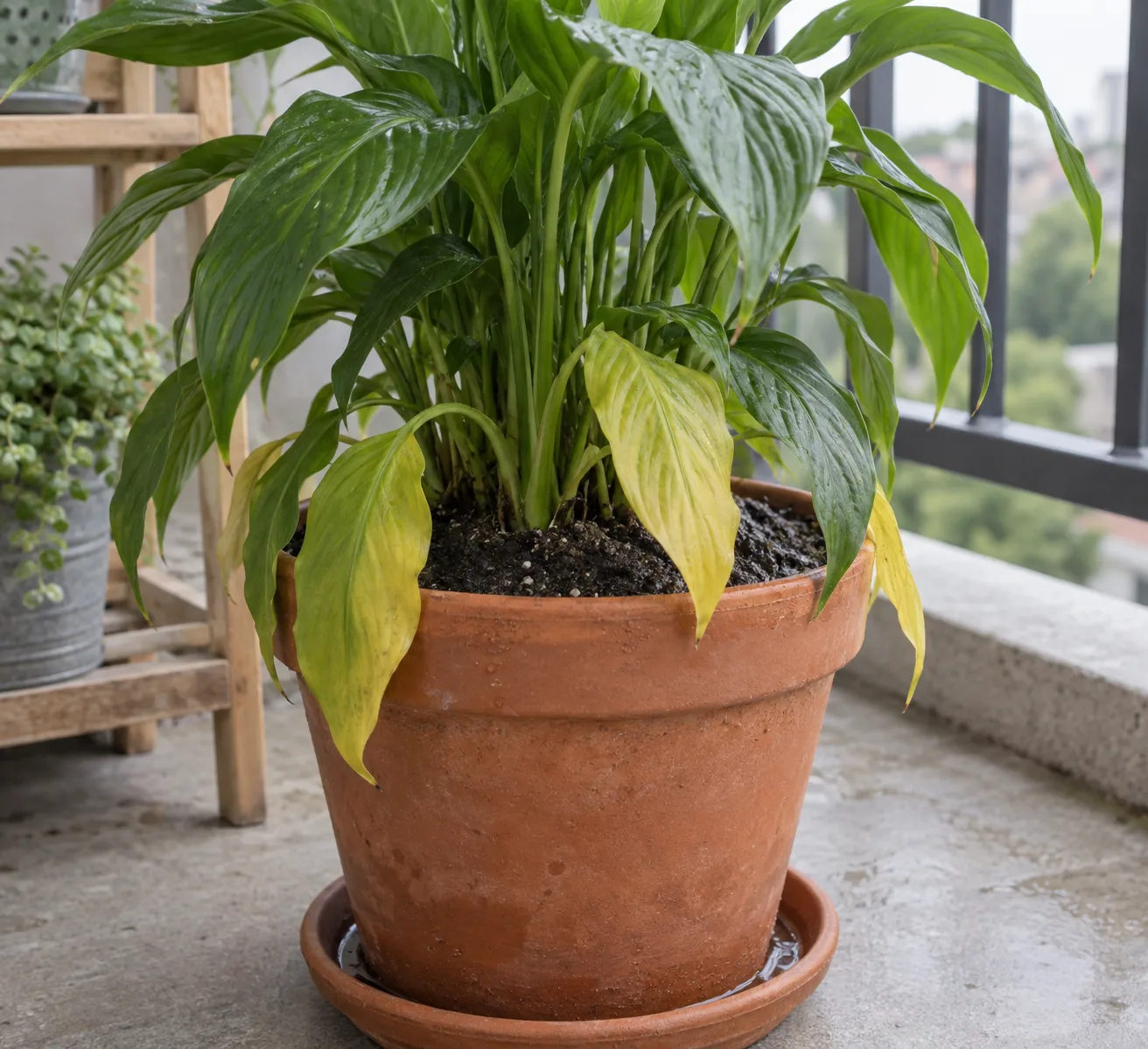
- Yellowing that starts on lower and inner leaves and works outward, instead of starting at leaf tips or edges.
- Leaves that feel soft, swollen, or almost jelly-like instead of dry and papery when they eventually die.
- A distinctly heavy pot even when the plant looks like it needs water, since the soil is already saturated underneath.
- A sour, musty, or rotten smell coming from the soil, a strong indicator of root rot already underway beneath the surface.
- Mold or algae on the soil surface, which thrives specifically in consistently moist, poorly drained conditions.
The sign most guides skip: edema
Yellowing and soft leaves are the overwatering signs most people know to look for, but there’s a third, less obvious one: edema, small water-soaked blisters that form on the undersides of leaves when a plant takes up more water through its roots than it can release through its leaves. University extension plant pathology resources describe it as a physiological disorder, not a disease or pest, and it shows up most on plants with thick, fleshy leaves, peperomias, geraniums, and ivies among them, popular choices for a shaded balcony corner.
Left alone, those blisters can burst and turn into brown, corky, scab-like patches, which is often misread as a disease or pest problem precisely because it looks nothing like simple yellowing. Cool, overcast, poor-air-circulation stretches make it worse, since the plant’s roots keep taking up water while evaporation from the leaves slows down. The fix is the same as for ordinary overwatering, let the top two inches of soil dry out between waterings, but if you’ve been treating a plant for pests or disease and getting nowhere, corky bumps on the undersides of the leaves are worth checking for before anything else.
Underwatering symptoms in detail
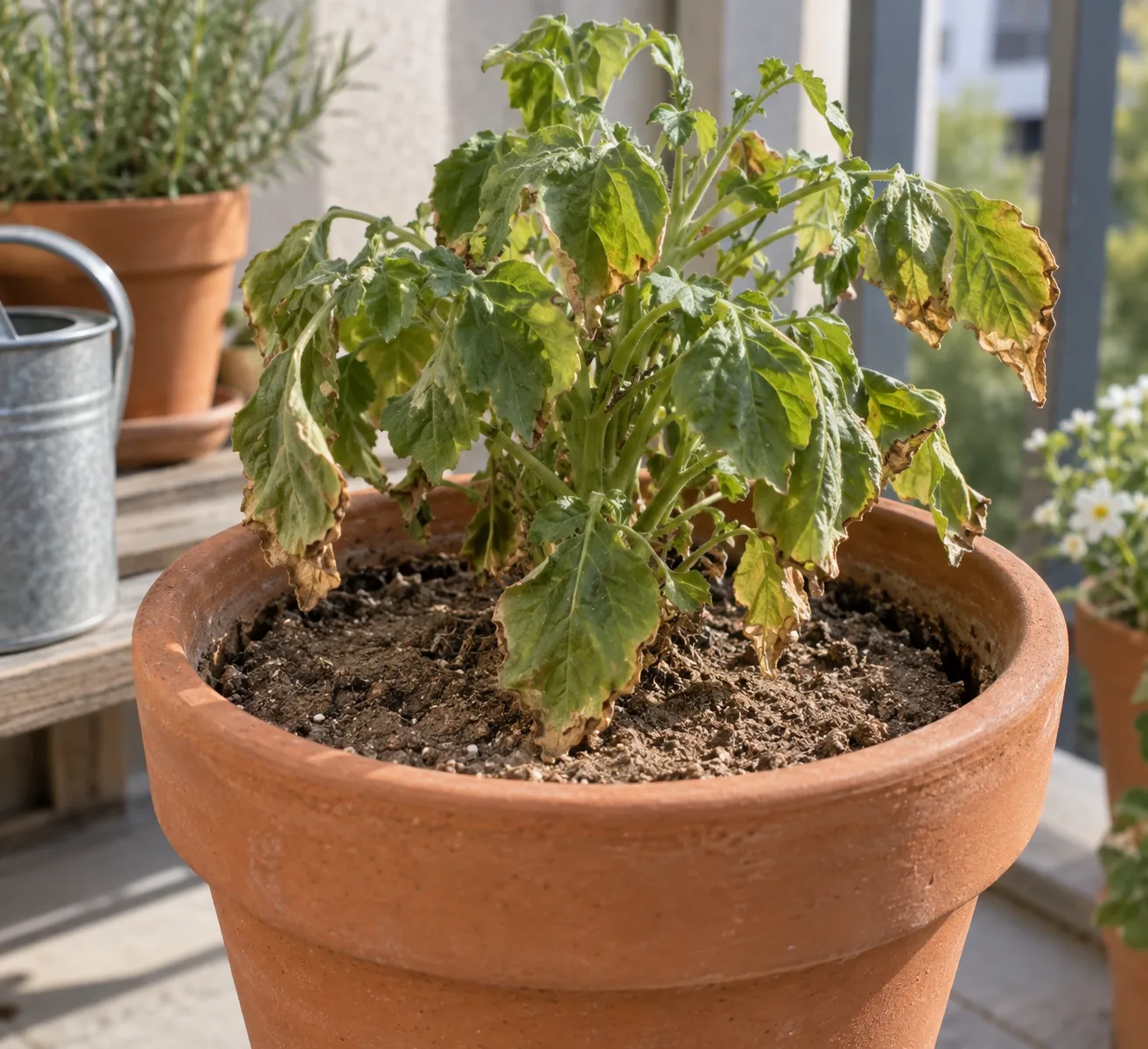
- Leaves that feel dry, crisp, and papery, often with brown, crunchy edges or tips instead of soft yellowing.
- Wilting that visibly improves within an hour or two of watering, a strong sign the cause really was simple thirst, not root damage.
- A distinctly light pot, noticeably lighter than it feels when properly watered.
- Soil that has pulled away from the sides of the pot, leaving a visible gap between the dry, shrunken soil and the container wall.
- Lower leaves dropping while remaining relatively dry and intact, not the soft, mushy leaf drop associated with overwatering.
Side by side
| Overwatering | Underwatering | |
|---|---|---|
| Soil at 2 inches deep | Wet, heavy | Dry, crumbly |
| Leaf texture | Soft, swollen | Crisp, papery |
| Yellowing pattern | Lower leaves first | Leaf tips and edges first |
| Pot weight | Heavy | Light |
| Response to watering | No improvement, or worse | Improves within hours |
| Smell | Sour, musty, rotten | None distinctive |
Why they’re so easy to confuse
Both problems ultimately damage the same thing: the roots’ ability to move water into the rest of the plant. Underwatered roots simply don’t have water available to take up. Overwatered roots are sitting in oxygen-starved, waterlogged soil, and damaged or rotting roots can’t take up water either, even though there’s plenty right there in the soil around them. The visible result above ground, a wilting, unhappy plant, ends up looking similar from a distance even though the mechanism is exactly the opposite underneath.
Fixing overwatering
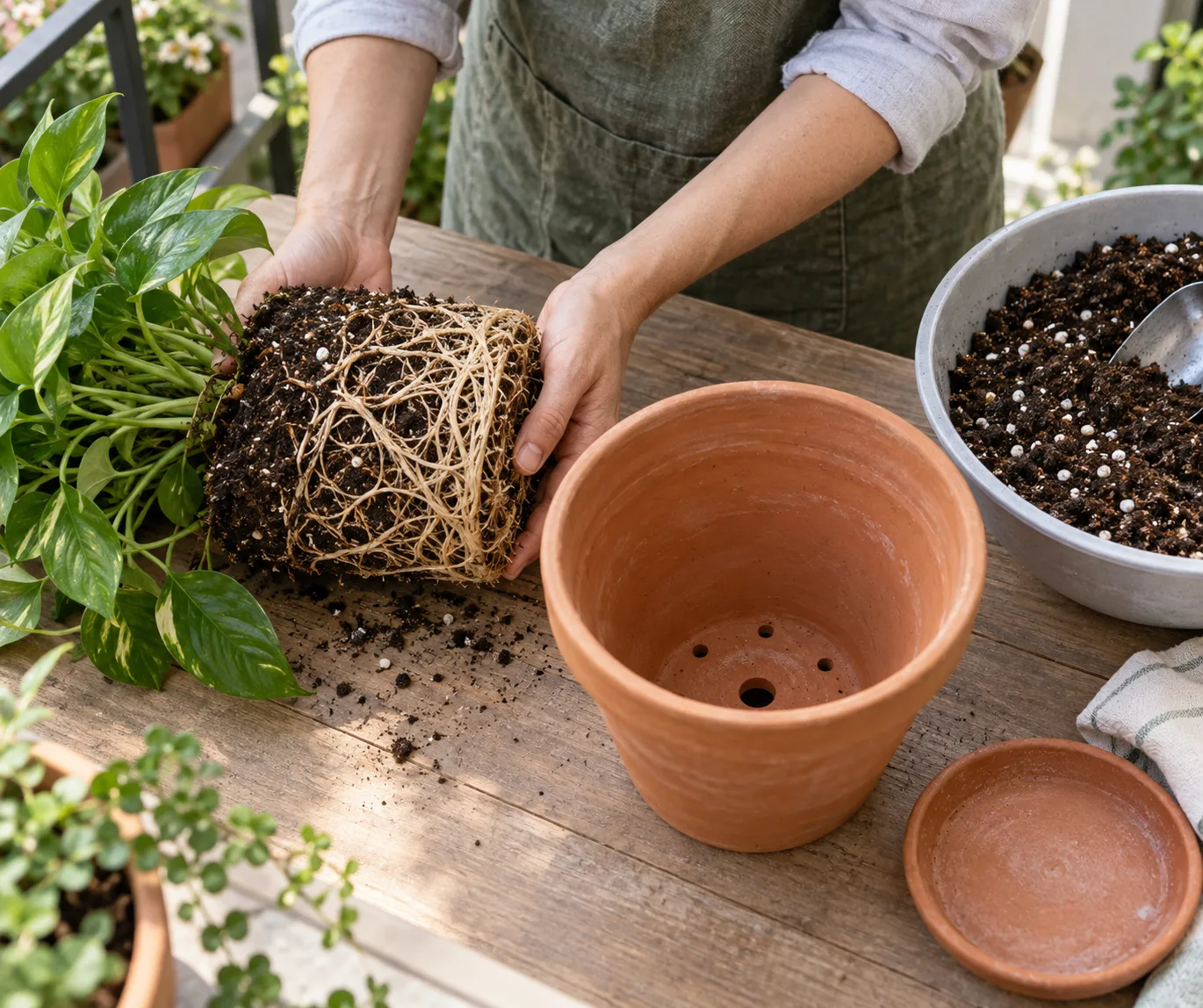
Stop watering immediately and let the soil dry out properly before adding any more. If the pot has no drainage hole, that’s the underlying problem and needs fixing before anything else helps. For a plant that’s clearly waterlogged, gently sliding it out of the pot to let excess water drain from the root ball faster than it would sitting in soil can help in a truly severe case. Check the roots while you’re at it; if a significant portion is dark, mushy, and rotted, trim away the dead sections with clean scissors before repotting into fresh, dry potting mix instead of returning the plant to the same waterlogged soil.
Fixing underwatering
Water thoroughly and slowly instead of all at once; badly dried-out soil can initially repel water and let it run straight through and out the drainage holes without properly rehydrating the root zone, a phenomenon worth watching for specifically. Watering in stages, a little, a short pause, then more, gives dry soil time to genuinely absorb instead of shed the water. For a severely dried-out pot, submerging the whole container in a basin of water for fifteen to twenty minutes lets the soil rehydrate evenly from every direction instead of relying on water traveling down from the top alone.
Which mistake is more forgiving depends on the plant
Not every plant treats these two mistakes equally. Mediterranean herbs like rosemary, thyme, and lavender, along with most succulents, evolved to handle drought and actively dislike consistently moist soil; for these, occasional underwatering is a minor, quickly corrected inconvenience, while overwatering can kill them within days through root rot. Leafy vegetables, ferns, and many tropical plants sit at the other end: they want consistent moisture and show underwatering stress fast, wilting hard within a single hot afternoon, but tolerate a slightly damp period better than a drought-adapted plant would. Knowing which category a given plant falls into changes which mistake is really the safer one to lean toward if you’re ever truly unsure, since “when in doubt, water less” is good general advice for a succulent and bad advice for a thirsty leafy green.
How the seasons shift the risk
The same watering routine that’s correct in July can tip into overwatering by October, and this seasonal shift catches a lot of gardeners off guard specifically because nothing about their watering habits changed at all, only the conditions around it did. Shorter days and cooler air both slow evaporation significantly, so soil that dried out in a day during summer might stay damp for three or four days in fall on an identical watering schedule. This is the single most common reason overwatering symptoms suddenly appear on a plant that was doing fine all summer: the calendar changed, but the watering routine didn’t follow it. Checking soil moisture directly, instead of watering on a fixed schedule carried over from a different season, sidesteps this seasonal trap entirely.
Preventing both going forward
The two-inch finger check described above works as prevention just as well as diagnosis; checking before watering, instead of watering on a fixed calendar schedule, is the single habit that prevents both problems most reliably. Beyond that habit, confirm every pot has real drainage holes, use a potting mix suited to containers instead of dense garden soil, which holds water very differently, and size containers appropriately for the plant, since an oversized pot with a small plant in it holds excess unused soil that stays wet far longer than the roots can use it.
When both have happened at once
It’s possible, and more common than you’d think, for a plant to cycle between both problems: dried out for a stretch, then flooded with an overcorrection once the wilting is noticed, then dried out again once that overcorrection is itself over-corrected for. This swinging pattern is often more damaging than steady underwatering or steady overwatering alone, since the plant never really gets a stable baseline to recover from between one extreme and the other. If this describes your watering pattern, the fix isn’t a bigger single watering or a stricter schedule, it’s switching to checking the soil directly before every single watering instead of watering reactively based on how the plant happens to look on any given day.
If a container setup makes this harder to judge
Some setups make the finger-check habit harder to maintain consistently. A self-watering planter, for instance, hides the soil surface behind a wicking system, which is exactly why our guide to self-watering planters versus traditional pots stresses reservoir and overflow maintenance specifically, since those planters can develop a slow overwatering problem without ever showing the visible dry-versus-wet soil surface you’d otherwise be checking by eye or by finger. A hanging basket or a small pot in a hot, windy spot swings the other direction, drying out fast enough that a once-a-day check may not even be frequent enough during a genuine heat wave.
If you’ve ruled both out and the plant is still struggling
Watering problems cause the majority of balcony plant trouble, but not all of it. If the soil moisture truly looks correct, neither soggy nor dried out, and the plant is still declining, the cause is more likely light, pests, disease, or a container that’s become root-bound. Our fuller guide to diagnosing why a balcony plant is dying walks through that broader checklist once watering has been confirmed as not the real problem.