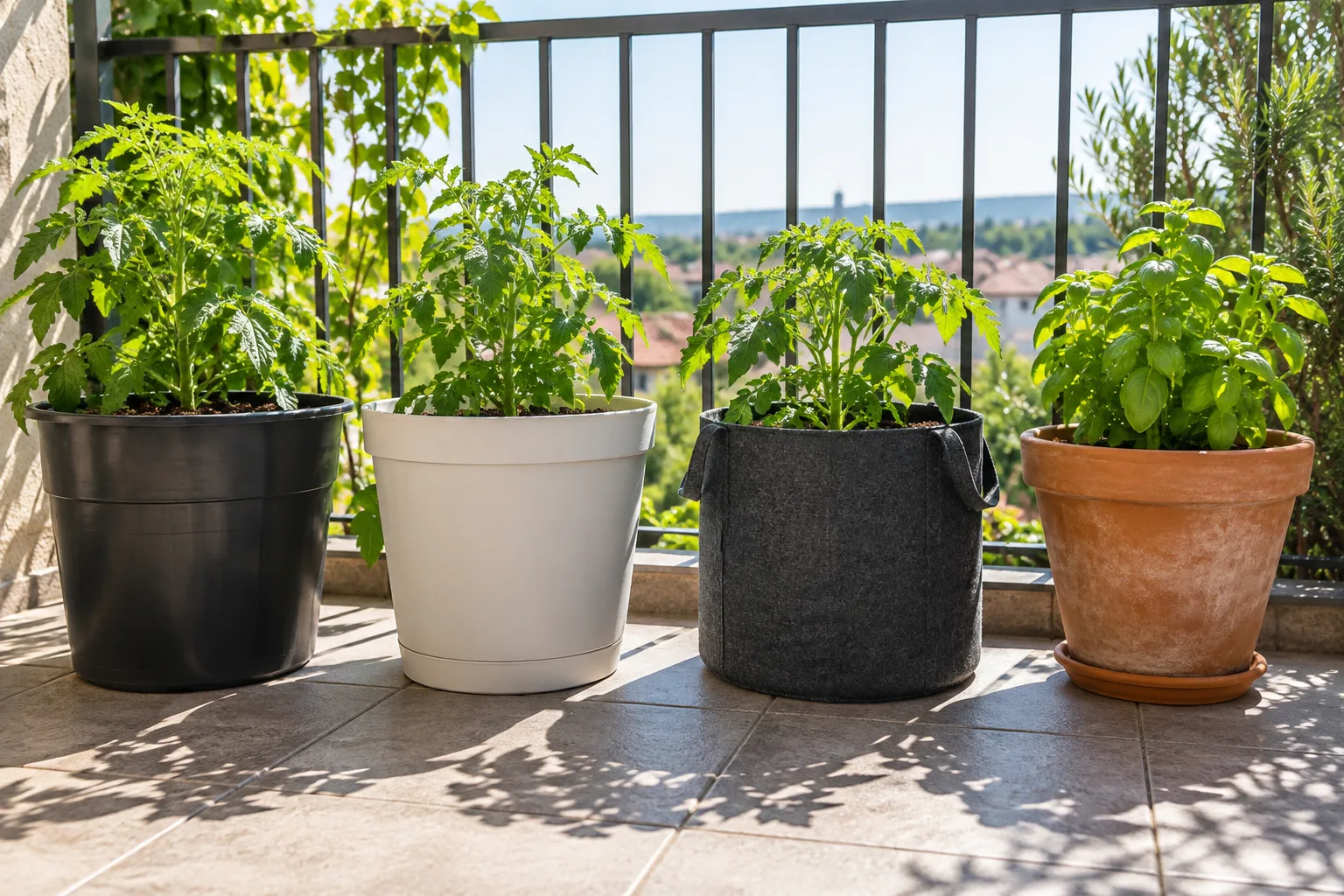
A black plastic pot left in full sun gets hot enough to be genuinely uncomfortable to touch, and that’s not just a surface-level annoyance; the soil directly inside it is running close to the same temperature, right where the roots are. Nursery and horticultural research has measured exactly how hot, how much it varies by material and color, and what it costs the plant in real growth, and the numbers are larger than the informal “dark pots run hotter” advice usually implies.
How hot a container actually gets
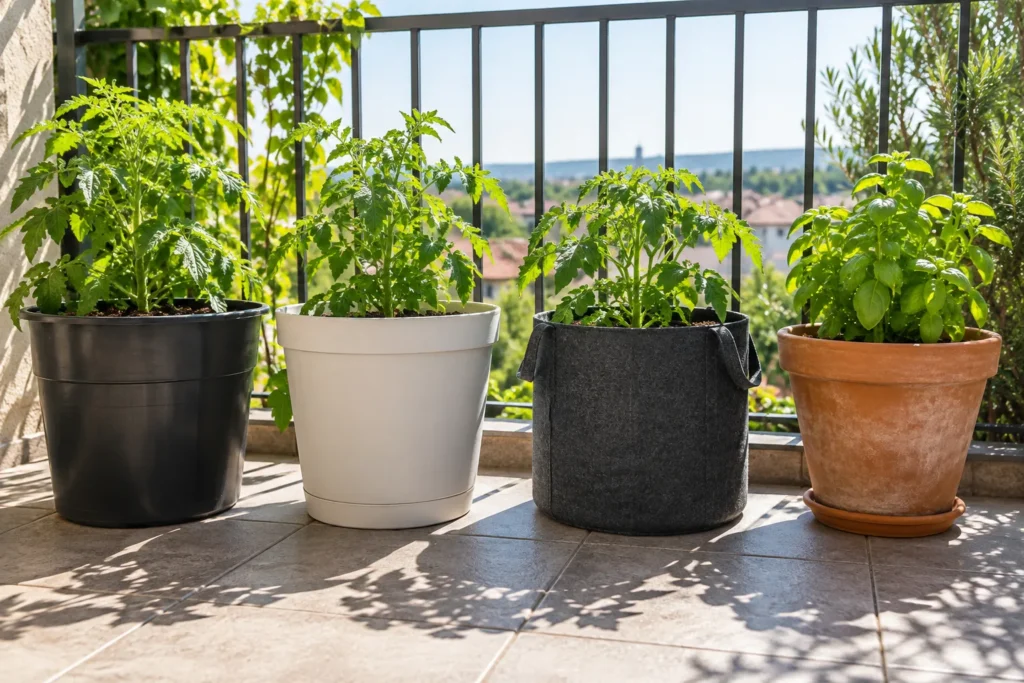
Research out of Tennessee measured substrate temperature in black plastic nursery containers running as much as 30°F above ambient air temperature on a hot, sunny day, with peaks reaching 133°F. A separate comparison on the same kind of hot day found black plastic pots averaging 130.8°F on their sun-facing side, compared with 97.4°F in fabric pots under identical conditions, a difference of more than 30 degrees between two containers sitting in the same spot, holding the same soil, differing only in material and color.
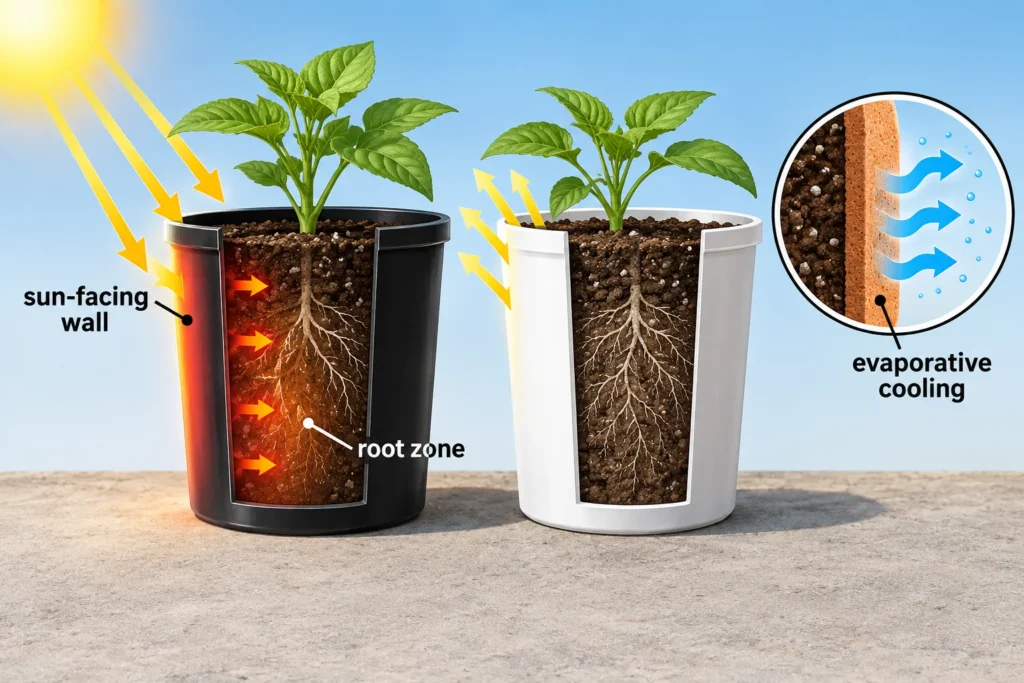
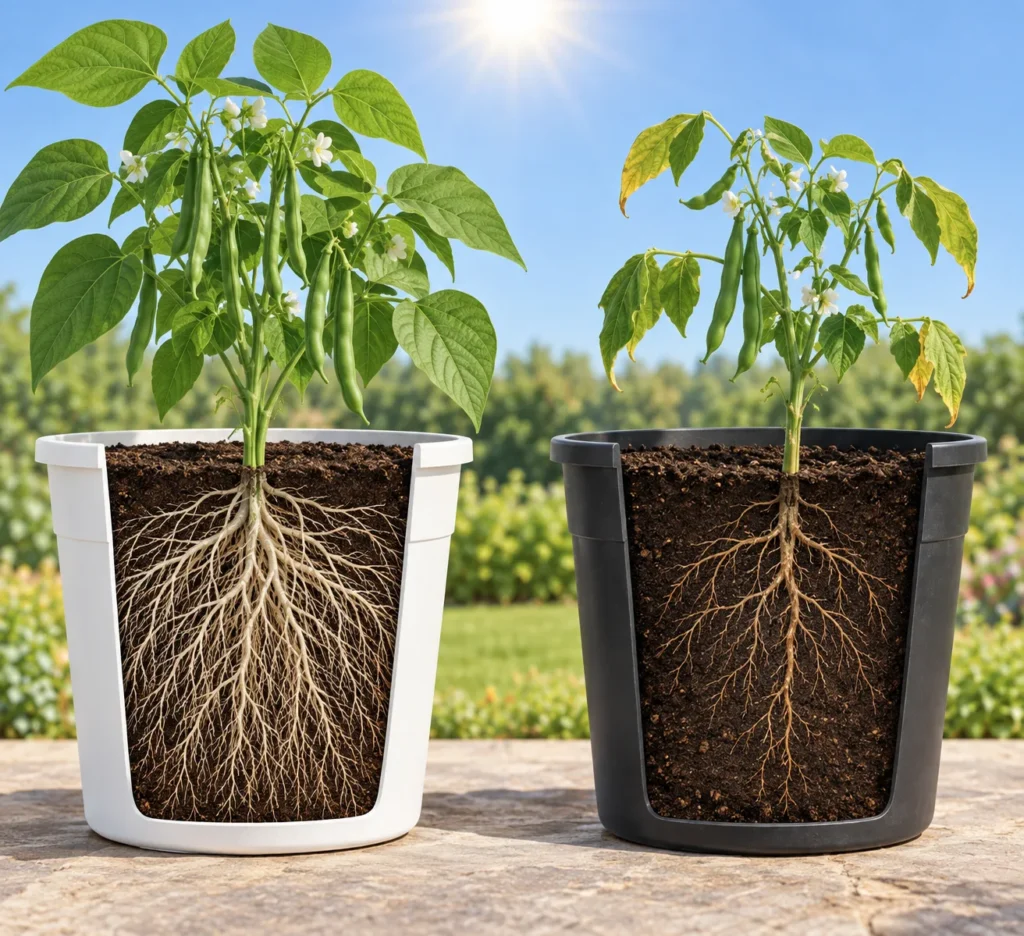
A Kansas State University study comparing container colors directly on bean plants found sun-facing substrate temperatures averaging about 36°C (97°F) in white containers versus 50.3°C (123°F) in black ones under the same conditions, a gap of roughly 14°C from color alone, with everything else about the setup identical.
Where root damage actually starts
Root-zone temperature research generally identifies sustained temperatures above roughly 38°C (100°F) as the point where indirect damage begins: reduced shoot and root growth, increased water stress, disrupted photosynthesis and respiration, and greater vulnerability to root pathogens, even without any single moment hot enough to kill root tissue outright. Direct, immediate damage from membrane breakdown requires considerably higher temperatures sustained for tens of minutes, but the more common real-world problem is the indirect kind: a root zone that spends hours every sunny afternoon sitting above that 38°C threshold, week after week, quietly suppressing growth without ever producing an obvious, single dramatic symptom. University of Kentucky Cooperative Extension research on container-grown plants puts practical numbers on that distinction directly: growers should aim to keep root-zone temperatures below roughly 108 to 113°F even briefly, and below 100 to 104°F for the many hours a container sits in full sun on an ordinary day, since chronic exposure in that lower range is where most real-world growth loss actually happens.
That’s exactly the gap the Tennessee research quantified directly: white containers spent only 22 cumulative hours above the heat-stress threshold across the trial period, compared with 332 hours for black containers, a fifteen-fold difference in how much time the roots spent in damaging territory, not just in peak temperature reached.
The growth cost, measured directly
The Kansas State research didn’t stop at temperature; it measured what that temperature difference did to the plants. Bean root biomass was reduced by 63 to 71 percent on the sun-facing side of black containers compared with white ones. A companion study on a more heat-sensitive maple found flat and gloss white containers produced two and a half times the below-ground biomass and more than double the above-ground biomass of black containers under the same conditions. Not every species responded equally: a heat-tolerant redbud in the same research showed much less sensitivity to container color, which matters for how strictly you need to apply this to any given plant.
The Tennessee field trials found a similarly practical, plant-dependent pattern: many species in white containers grew up to twice the size of the same species in black containers under once-daily watering, while heat-tolerant crapemyrtle showed almost no difference between colors, but dogwood, hydrangea, and redbud responded dramatically. The takeaway isn’t that every plant needs a white pot; it’s that heat-sensitive species are measurably, substantially penalized by dark containers in full sun, and heat-tolerant ones mostly aren’t.
Why fabric and terracotta run cooler: evaporation, not just color
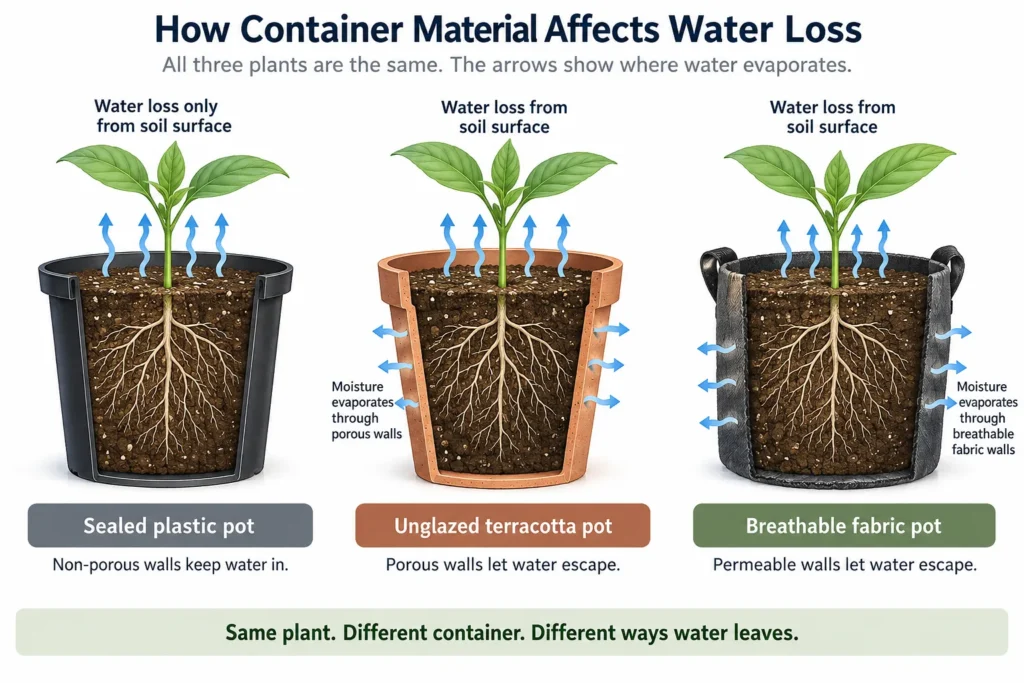
Color explains most of the difference between light and dark versions of the same sealed material, but porous materials add a second cooling mechanism entirely separate from color. Water moving through and evaporating from a porous wall, terracotta or breathable fabric, carries heat away with it as it changes from liquid to vapor, the same evaporative cooling effect that makes a wet towel feel cold. That’s a genuine part of why fabric pots ran nearly 33°F cooler than black plastic in the comparison above even though both can be found in dark colors: the fabric’s porosity is doing real thermal work that a sealed black surface, however light-colored, can’t replicate. It’s also the direct physical explanation behind the practical advice in our guide to the best pots and containers for a balcony garden, that terracotta and fabric dry faster but keep roots cooler; the mechanism covered in our guide to the science of watering container plants is the same evaporation working two directions at once.
Two more variables: which side of the pot, and how big it is
University of Kentucky Cooperative Extension research tracking temperature at each compass-facing side of a container found a clear, predictable pattern tied to the sun’s daily path rather than random variation. The east-facing wall heats fastest as the morning sun hits it; the south side peaks near solar noon; the west-facing wall reaches the highest temperatures of the entire day in the mid-to-late afternoon, since it takes the full brunt of low, direct afternoon sun. The north-facing side, and the substrate near the center of the container overall, stay measurably cooler through the whole day because they receive little to no direct solar radiation at any point. That means the exact direction a pot’s most exposed side faces changes how much heat its roots see over a full day, not just how sunny the spot looks in general; a container with its hottest-facing wall turned toward a building, or shaded by a neighboring plant specifically in the afternoon, gets a real break from the day’s worst hours without being moved anywhere.
Container size adds a separate buffer on top of whatever color and material already contribute. The same research found that while temperature swings right at the container wall look similar regardless of pot size, a larger container’s center substrate stays cooler than a smaller one’s, simply because heat has that much farther to conduct inward before it reaches the bulk of the root system. A small pot has proportionally more of its total soil volume sitting close to a hot wall; a larger one keeps more of its roots insulated toward the middle. That’s one more reason, beyond the room roots need to spread, that sizing a container generously for the plant it holds pays off specifically on a hot, exposed balcony.
What actually moves the needle on a balcony
The research points to a short list of levers that make a measurable difference, in roughly descending order of impact. Container color matters most for sun-facing, dark-colored, sealed containers; switching a black plastic pot to a light or white one is the single biggest change available without changing the material entirely. Material matters on top of color: a porous, breathable container adds evaporative cooling that a sealed pot, regardless of color, doesn’t get. Shading the pot itself, not just the plant’s foliage, helps directly, since the research measuring hours above the damage threshold specifically implicates direct solar exposure on the container walls, not just on the leaves above, and turning a container’s most exposed wall away from the afternoon west sun specifically targets the single hottest window of the day. Grouping containers so they shade each other’s sun-facing sides accomplishes something similar without buying new pots, and sizing up a container adds one more layer of buffering for whatever heat still reaches it. Species sensitivity varies enough that a heat-tolerant plant in a black pot may show little to no measurable cost, while a heat-sensitive one in the same spot is a poor match.
A middle option: paint or wrap, don’t necessarily replace
The Kansas State research behind the biomass numbers above didn’t only compare pots bought in different colors; its own recommendation was that heat-sensitive plants benefit from switching to white containers or simply painting the outer surface of an existing green or black pot white. That approach moves the needle in the same direction as buying a white pot outright, since the mechanism, reflecting incoming solar radiation instead of absorbing it, doesn’t care whether the reflective surface was manufactured that way or added afterward. For anyone with an existing collection of dark pots, a coat of light-colored, exterior-rated paint on the outer wall is a cheaper way to capture most of the benefit than replacing every container on the balcony.
Translating the research to what to actually buy
- Skip dark, sealed containers on a hot, sun-exposed balcony for anything known to be heat-sensitive; the growth penalty measured in research is large, not marginal.
- Light or white containers cut root-zone heat-stress hours dramatically, by a factor of roughly fifteen in the Tennessee field data, for a straightforward color swap alone.
- Fabric and terracotta add evaporative cooling on top of whatever color they’re made in, at the cost of faster drying that needs a matching watering routine.
- Position matters as much as color for a dark pot: a west-facing exposure sees the day’s highest wall temperatures, so turning that side away from direct afternoon sun helps even without switching containers.
- Size up when practical. A larger container keeps more of its root mass buffered away from the hot outer wall than a small one of the same color and material.
- Heat-tolerant species can reasonably ignore most of this; the growth penalty from dark containers is genuinely species-dependent, not universal.
Sources
- Markham, 2010, Kansas State University: Color and shading of containers affects root-zone temperatures and growth of nursery plants
- Nambuthiri et al.: Substrate temperature in plastic and alternative nursery containers
- Digger Magazine / Tennessee nursery trial data: Container color and heat-stress hours
- Ingram, Ruter & Martin, University of Kentucky Cooperative Extension (HO-119): Reducing Heat Stress to Container-Grown Plants
These figures come primarily from nursery production research on in-ground and above-ground container arrays, often in hot southern US climates. A balcony’s exact conditions, partial shade from a building, reflected heat off walls, will shift the numbers, though the underlying material and color effects hold.