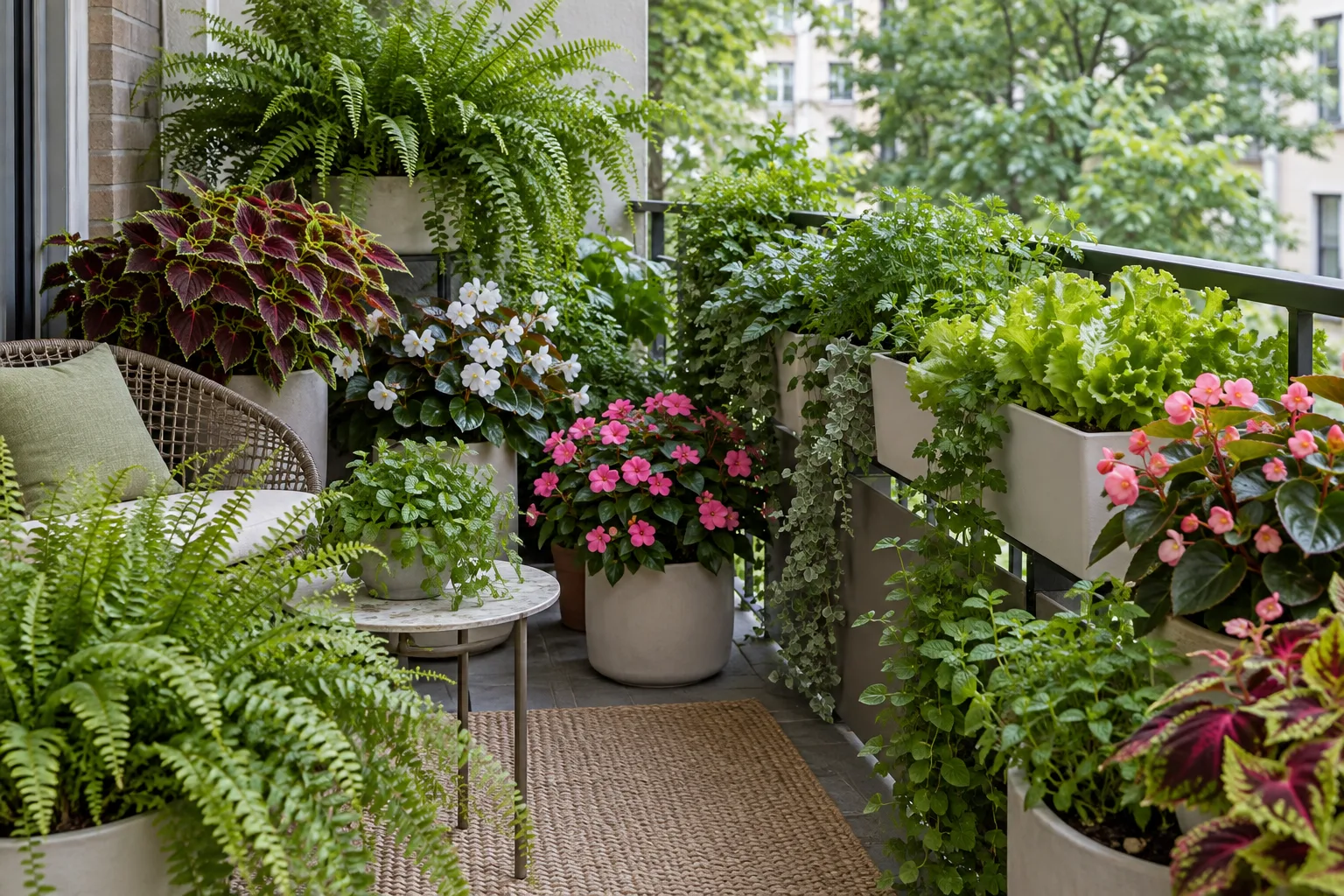
A north-facing balcony can be lush and useful when it is planted for open shade. Leafy greens, mint, parsley, ferns, begonias, and other foliage plants cope with limited direct sun much better than tomatoes or Mediterranean herbs. The first step is to measure how deep the shade is.
The plants that work in shade fall into two groups: leafy edibles like greens and soft herbs, and shade-loving foliage and flowers grown for looks. This guide covers both, plus a few tricks to make a dim balcony feel brighter and greener.
A useful shade shortlist: For edibles in shade, grow leaf lettuce, spinach, mint, parsley, and chives. For looks, try foliage plants and shade-tolerant flowers suited to your climate. Skip sun-hungry fruiting crops like tomatoes and peppers; they need far more light than a shady balcony provides.
What “shade” and “north-facing” really mean
In the Northern Hemisphere, a north-facing balcony gets the least direct sun, because the sun tracks across the southern sky. A north-facing balcony can still be bright with reflected daylight, although direct sun is limited. Nearby buildings, the balcony above, and solid railings can shade any balcony, whichever way it faces.
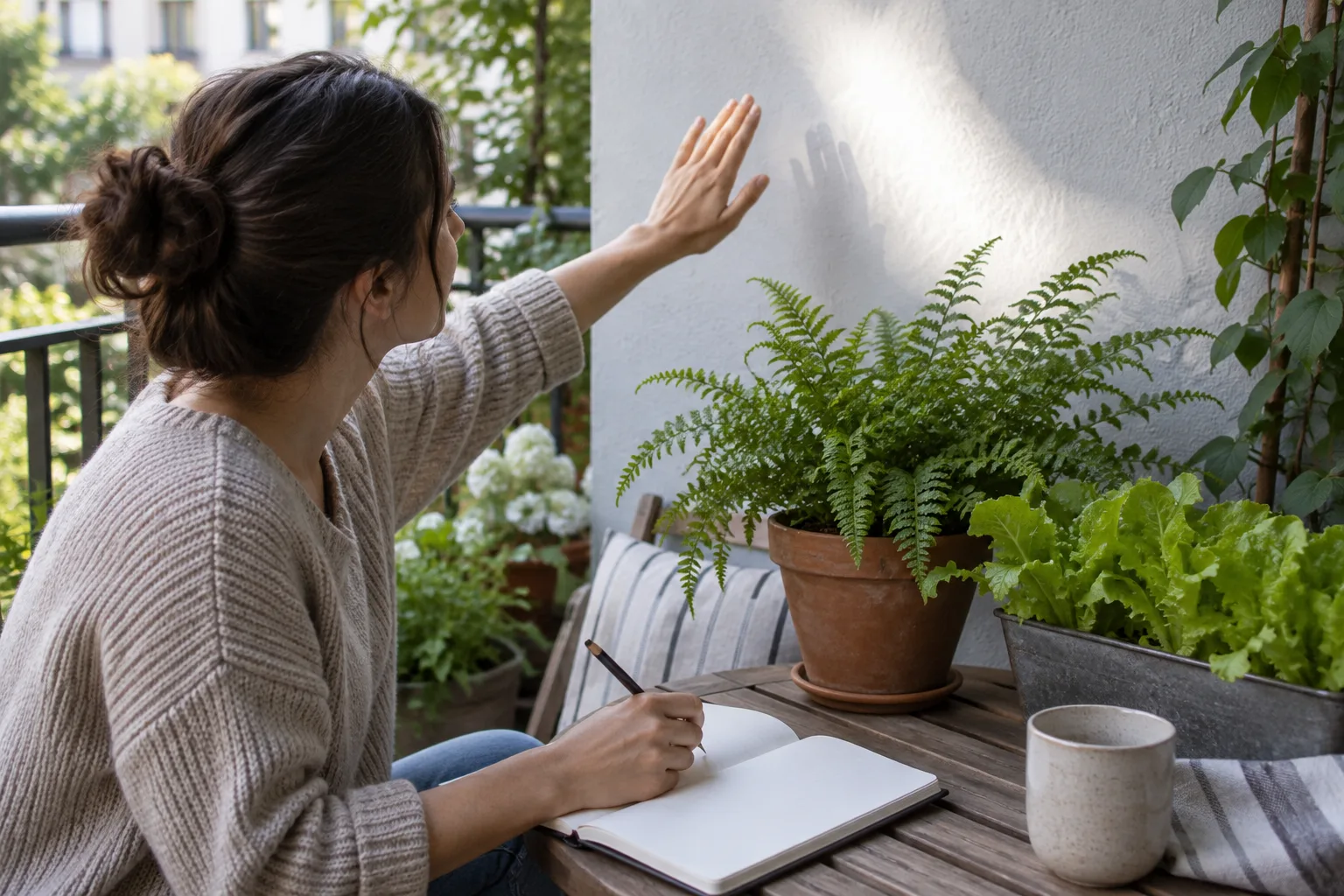
Before choosing plants, measure the light that reaches the pots. The University of Minnesota Extension describes part shade as roughly 3 to 6 hours of sun, and full shade as less than about 3 hours. Spend one clear day noting when direct sun; the kind that casts a sharp shadow; reaches the spot your pot will sit. That number tells you which group below to shop from.
How deep is your shade?
Not all shade is equal, and the difference decides what you can grow. Once you’ve measured your hours, place yourself in one of three groups.
- Part shade (about 3 to 6 hours of sun, often morning): your best case. Leafy greens, soft herbs, and many shade-tolerant flowers all do well. A morning-sun balcony is especially kind, giving light before the day’s heat.
- Light or dappled shade (bright, but little direct sun): foliage plants, mint, and lettuce still work, though growth is slower and flowering plants stay modest.
- Deep shade (less than about 2 hours, boxed in by buildings): the hardest case. Lean on tough foliage plants and shade-loving houseplants for the summer, and keep expectations for edibles low.
Reflected brightness helps at every level. A pale wall opposite your balcony bounces usable light back, so a “shady” balcony with a bright outlook often grows more than a darker one hemmed in by dark surfaces.
Edible plants that grow in shade
You can grow food in shade; just leafy crops rather than fruiting ones. As a rule, if you eat the leaves, roots, or stems, the plant needs less sun than one where you eat the fruit.
- Leaf lettuce and salad greens. Fast, shallow-rooted, and genuinely happy with 3 to 4 hours of sun. Shade even helps in summer by slowing the heat that makes lettuce turn bitter.
- Spinach and other cooking greens. Cool-weather leafy crops that tolerate modest light and don’t need a big pot.
- Mint. Nearly indestructible and one of the few herbs that thrives in shade. Keep it in its own pot; its roots crowd out anything they share with.
- Parsley and chives. Both cope with part shade and cool weather, and both regrow after harvesting.
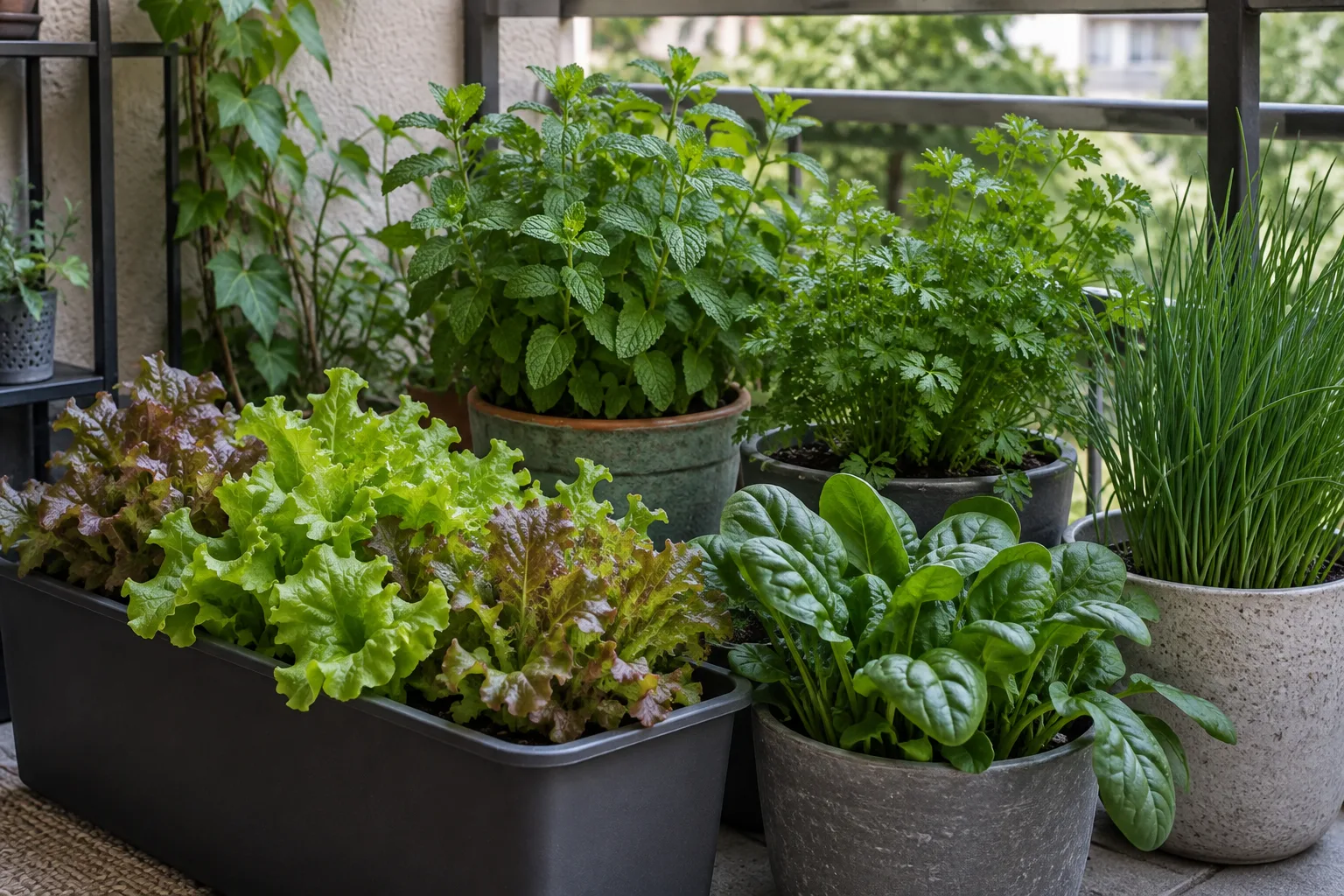
Sun-loving herbs like basil and rosemary won’t do well here; save those for a brighter balcony. What you can grow is a steady supply of salad and soft herbs, which is more than many shaded balconies expect.
Foliage and flowers for a shady balcony
If you’re gardening for looks rather than harvest, shade opens up plants that would scorch in full sun. Foliage plants carry a shaded balcony beautifully, and several flowering plants bloom happily with limited light.
Plants often recommended for shade containers include ferns, coleus, begonias, and impatiens, along with many houseplants that enjoy a summer outdoors in dappled light. Availability and hardiness vary by region, so check the plant label and choose types suited to your climate; some are grown as annuals, replaced each year, while others can be brought indoors over winter.
- Foliage plants bring color through leaf shape and pattern rather than flowers, which makes them reliable in low light.
- Shade-tolerant flowers add color where sun-loving bloomers would sulk; check the label for “part shade” or “shade.”
- Houseplants on a summer holiday often thrive on a shaded balcony from late spring to early autumn, then come back inside before cold weather.
Introduce any houseplant to the outdoors gradually. A sudden move from indoor light to even a shady balcony can shock it, so give it a few days of increasing time outside first.
Shade plant picks at a glance
| Plant | Grown for | Rough light need |
|---|---|---|
| Leaf lettuce | Salad leaves | 3 to 4+ hours |
| Spinach | Cooking greens | 3 to 4+ hours |
| Mint (own pot) | Herb | 3 to 5 hours |
| Parsley, chives | Herbs | 3 to 5 hours |
| Ferns, foliage plants | Leaves / looks | Low, indirect light |
| Shade-tolerant flowers | Color | Part shade (check label) |
Caring for a shade container garden
Shade changes the care routine in a few helpful ways. The biggest is water: shaded pots dry out much more slowly than sunny ones, so the fastest way to kill a shade plant is to water it on a sunny-balcony schedule. Check the top inch of soil and water only when it’s dry.
A few other habits keep shade plants healthy:
- Feed lightly. Frequent watering washes nutrients out of any pot. A gentle all-purpose fertilizer at half strength keeps leafy plants growing.
- Give airflow. Still, damp shade invites mold and fungus. Space pots so air moves between them rather than crowding them into a corner.
- Wipe dust from big leaves. A film of dust blocks the little light a foliage plant gets. An occasional wipe helps it make the most of what’s there.
- Rotate pots now and then. Plants lean toward the brightest side. A quarter turn every week or two keeps them even.
Make a dim balcony feel brighter
You can’t add sun, but you can make shade work harder. A few design choices lift a dark corner without any structural changes.
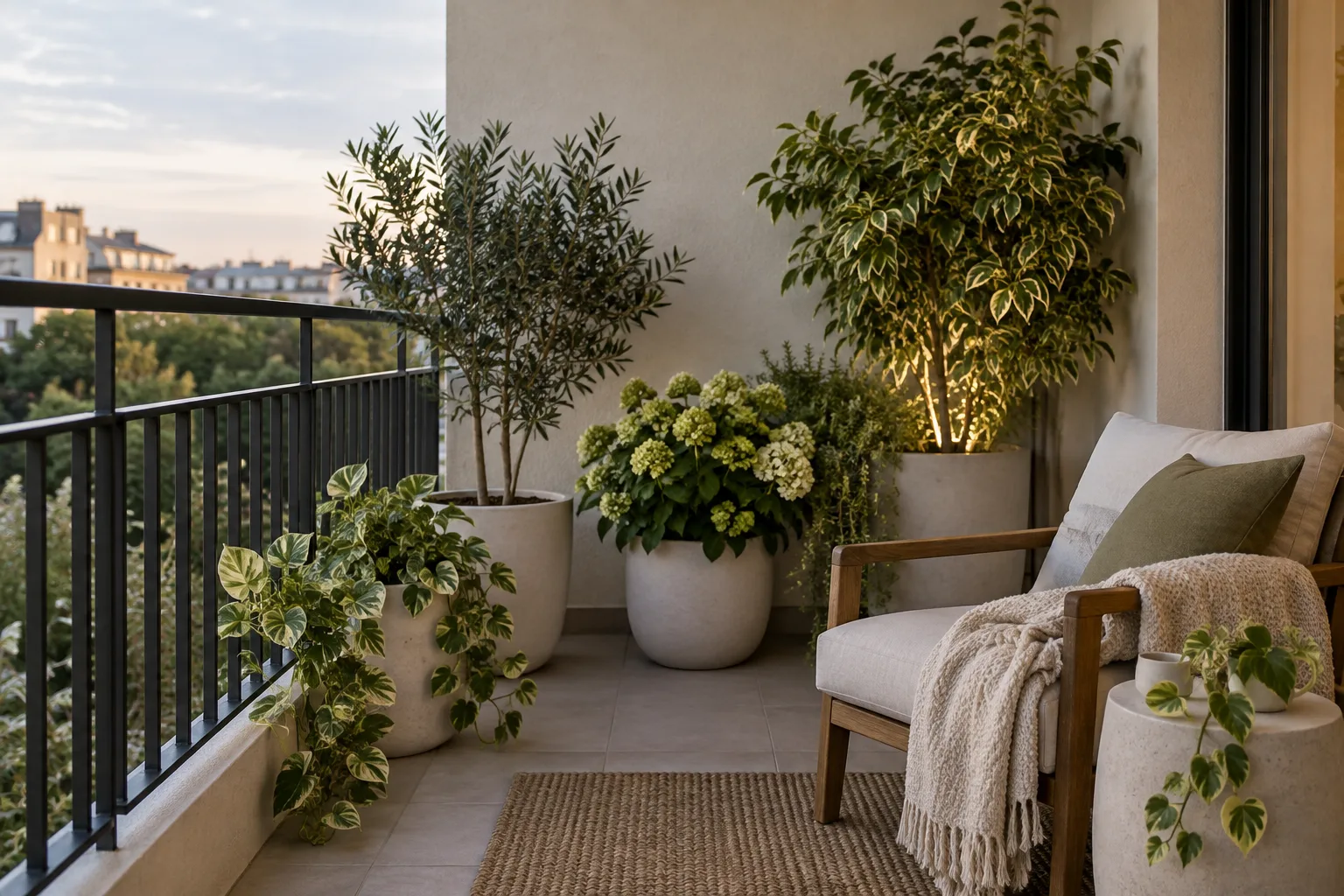
- Use pale pots and light-colored surfaces. Light tones reflect what daylight there is and make the space feel airier than dark containers against a dark wall.
- Lean on variegated and bright-green foliage. Leaves with cream or lime markings read as “light” and stand out in shade where deep-green plants can disappear.
- Add a mirror or reflective panel; if rules allow. A weatherproof mirror bounces light into a corner. Check building rules first, and never place anything that could fall.
- Keep it uncluttered. In low light, a few well-chosen plants look better than a crowd. Space lets each one catch what light there is.
What won’t work in shade
Common mistake: trying to grow tomatoes, peppers, or other fruiting crops in shade. They need 6 or more hours of direct sun to set fruit, and no amount of care replaces the missing light. A shaded balcony is for leaves and foliage, not fruit.
Fruiting vegetables and most sun-loving flowers simply can’t perform in low light. A tomato in shade grows tall, pale, and leggy, then produces little or nothing. Accepting that early saves a wasted season. If you badly want tomatoes, the workable fix is to find a sunnier spot; even a bright windowsill indoors; rather than fight the shade.
Low-light planting mistakes
- Buying sun-loving plants and hoping. Match plants to measured light instead of wishful thinking. It’s the difference between a thriving shade garden and a row of struggling pots.
- Overwatering because shade stays moist. Shaded pots dry out slowly, so they need less frequent watering than sunny ones. Check the soil before you water.
- Dark pots against a dark wall. The whole corner recedes into gloom. Pale containers and bright foliage make it feel alive.
- Assuming shade means no garden. A shaded balcony full of healthy greens and foliage beats a sunny plan that never worked out.
When a shade plant struggles
- Leggy, stretched plants reaching for light. Even shade plants have a minimum. Move the pot to the brightest part of the balcony, or switch to a more shade-tolerant type.
- Soil staying wet for days. Shade slows drying, and constant moisture rots roots. Water less often, and make sure pots drain freely.
- Mold or algae on the soil surface. A sign of too much water and too little air movement. Let the surface dry between waterings and space pots for airflow.
- Pale, weak new growth. The plant wants more light than the spot offers. Relocate it or choose something that suits deep shade.
- Slugs or fungus gnats appearing. Cool, damp shade suits pests that dislike sun. Ease off watering to dry the surface, clear fallen leaves, and check under pots and saucers where slugs shelter during the day.
Plan the rest of the shaded setup
Start with a pot of leaf lettuce and a pot of mint or parsley; both forgiving, both productive in shade; plus one foliage plant to prove how good low light can look. You’ll quickly see which corner of your balcony catches the most light and can build from there.
Knowing your exact hours makes every choice easier. Our guides on measuring balcony sunlight and the best balcony herbs help you get the most from a shaded space.
Plan the rest of a low-light setup
Check the reading with the one-day sunlight test, then choose a pot from the container-size guide.
Shade is only one part of the decision. For a wider comparison that also accounts for wind, pot size, and time available for care, see our condition-based balcony plant guide.