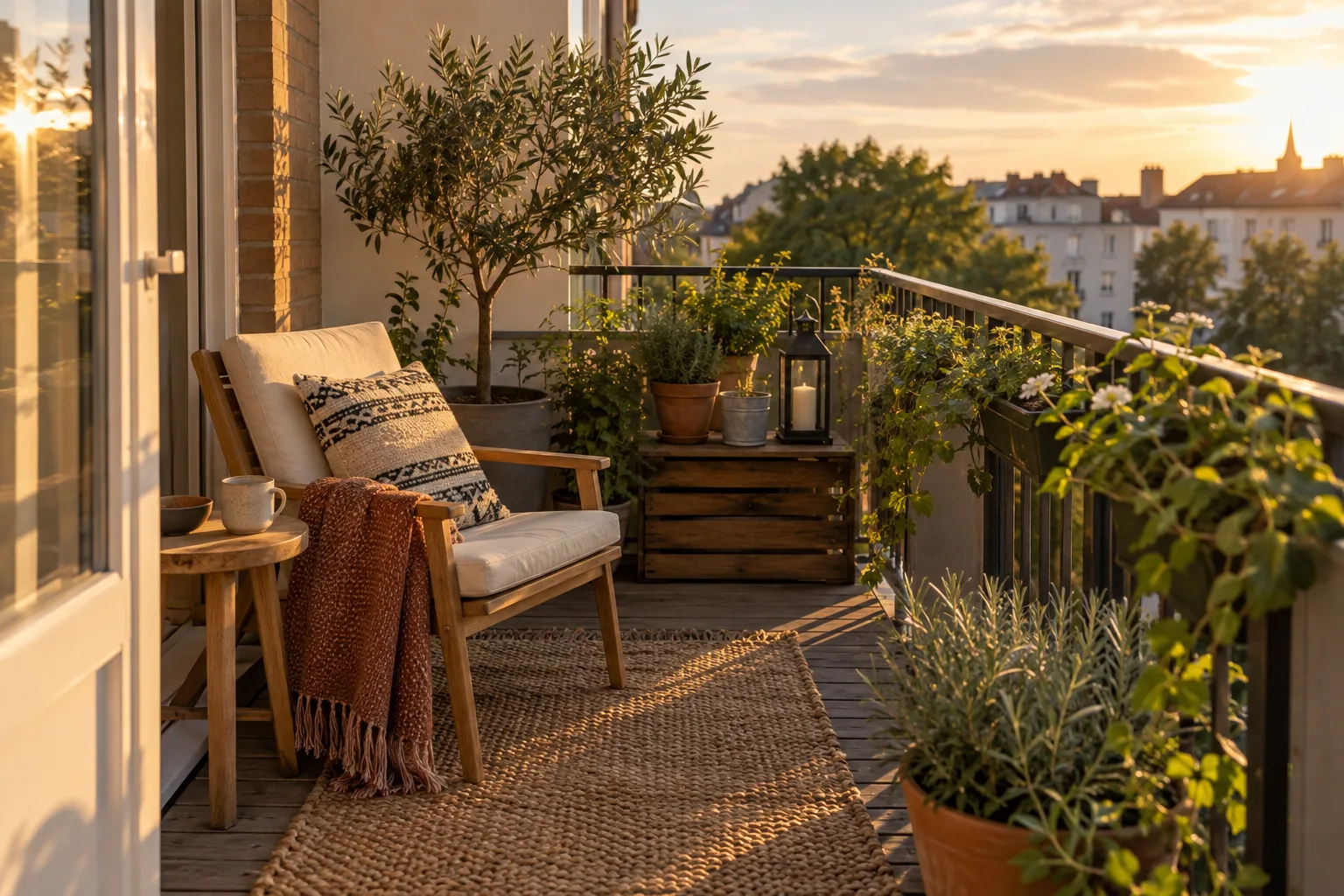
A “cozy balcony” isn’t really about any single object, it’s what happens when plants, seating, light, and a few textures all point the same direction. A balcony can hold beautiful plants and still feel bare and uninviting if nothing else supports them; it can also feel warm and finished with very little once the plants and the surrounding details are working together, the kind of spot you find yourself lingering in with a coffee for ten extra minutes before heading inside. This guide covers how to layer those pieces on a small footprint without turning the space into clutter or overspending on it.
None of this requires construction or a big budget. It’s mostly about sequencing: get the practical layout right first, then add plants, then layer in the small details that make a space feel lived-in, not staged.
- Map the footprint. Decide where seating and walking space go before anything else.
- Add plants at three heights. One low, one at table height, one elevated or hanging.
- Pick two materials and one accent color and repeat them across pots, furniture, and textiles.
- Add warm-white lighting for evening use, matched to how much direct sun the spot gets.
- Finish with one or two textiles in outdoor-rated fabric, and stop there.
The rest of this guide walks through each of those five in more detail, plus the plant choices, budget order, and rental-friendly hardware that make the sequence hold up on a balcony you don’t own and can’t permanently alter.
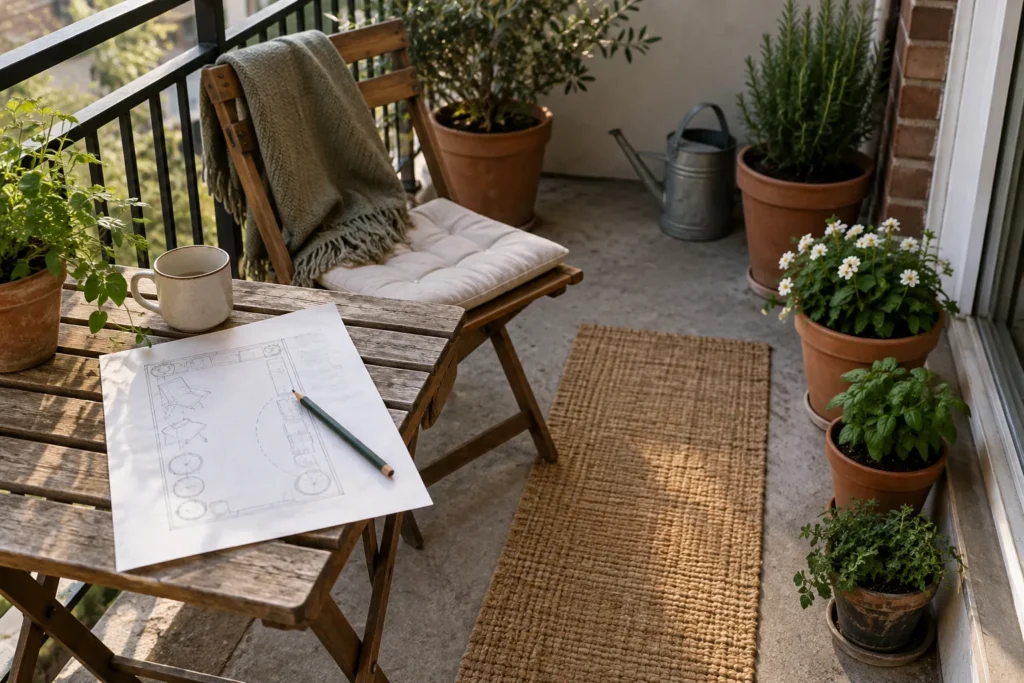
Start with the footprint, not the decor
Before adding a single pot, work out how you’ll really move and sit on the balcony. Measure the chair or small bistro set you’re considering, and mark out that footprint plus enough space to walk around it without brushing every pot on the way. A cozy balcony still needs to function; a beautiful layout you can’t comfortably sit in gets used less and feels more like a photo than a room you spend real evenings on. Once that walking and seating space is settled, everything else, plants, lighting, textiles, gets built around its edges instead of competing with it.
Layer plants at different heights
A single height of plant, all at floor level or all on one shelf, reads as flat no matter how healthy the plants are. Cozy balconies almost always mix at least three heights: something low near the floor, something at seating or table height, and something higher up, whether that’s a tall plant, a hanging basket, or a railing planter. That vertical variation is what makes a small space feel layered instead of lined up.
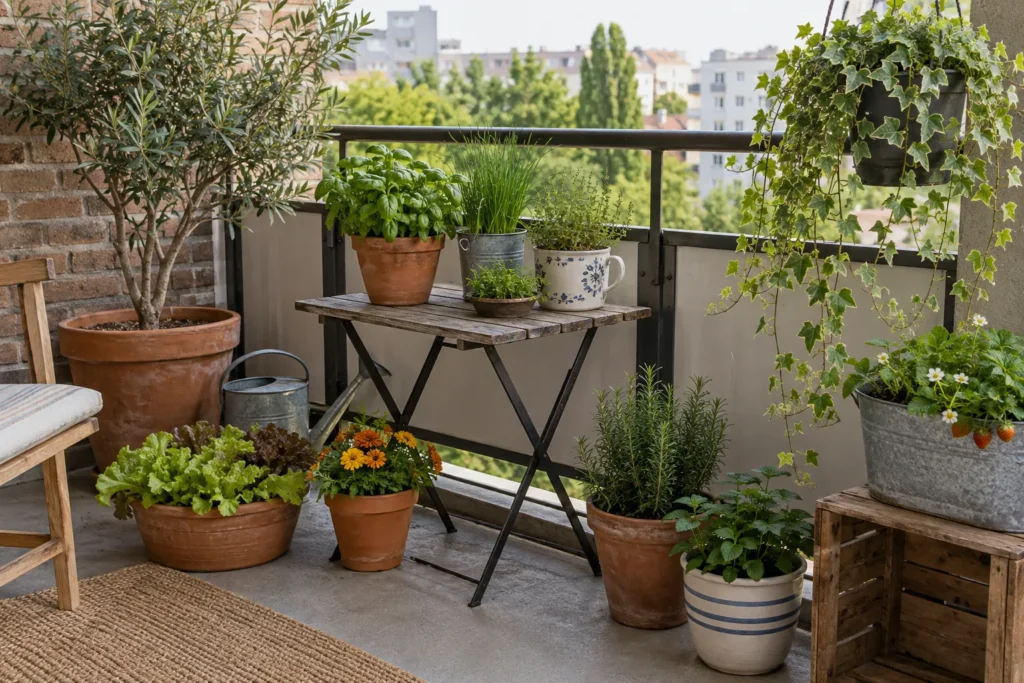
You don’t need many plants to get this effect, three or four well-placed pots at different heights usually outperform a dozen pots all crowded onto the floor at the same level. If you’re working with an already-tight footprint, our guide to small balcony garden layouts for renters covers arrangement patterns that leave walking space intact while still using the vertical layers described here.
Pick a small, repeating palette
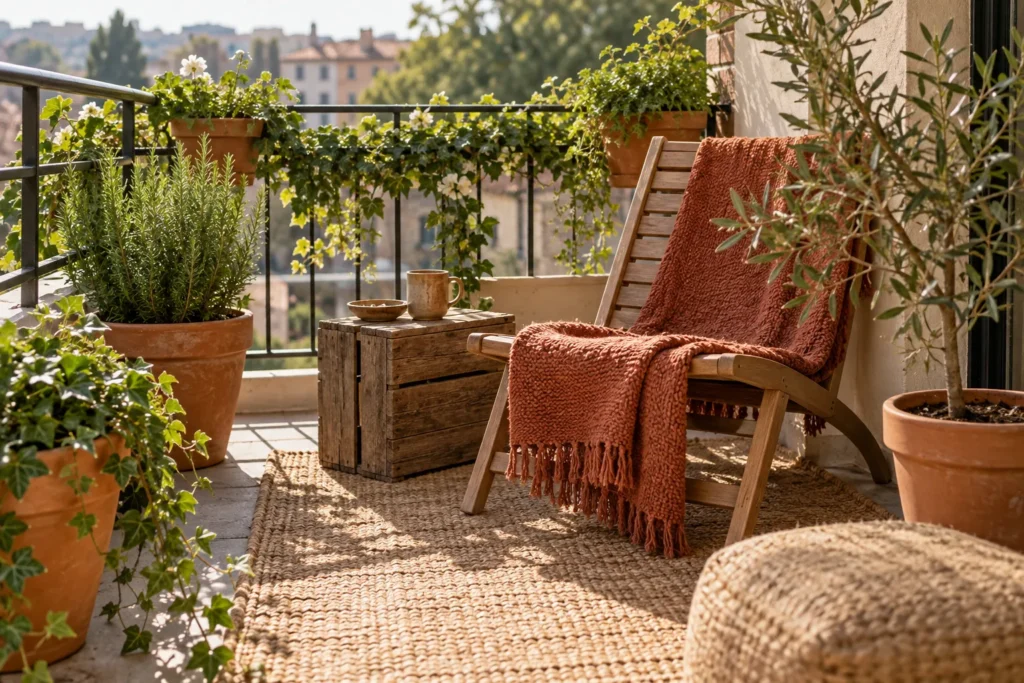
The fastest way to make a mixed collection of plants and furniture look intentional is to limit the materials and colors repeating through it. Choose one or two pot materials, terracotta and woven rattan, say, instead of a different material for every single container, and repeat a color, whether that’s the pot color, a cushion, or a string of lights, in at least two or three places around the space. A balcony with five unrelated pot styles, three different metal finishes, and no repeated color reads as cluttered and unplanned even if every individual piece is nice on its own. Our guide to keeping a balcony garden from looking overcrowded goes deeper on this kind of restraint if your space is already fairly full.
Add light for evening use
A balcony that only works in daylight only gets used half the time. Warm-white string lights, battery or solar lanterns, and small clip-on plant lights all extend a balcony’s usable hours without any wiring, which matters for a rented space. Warm white (usually labeled around 2700K to 3000K on the packaging) reads as cozy in the way a colder, bluer white doesn’t, so it’s worth checking that spec before buying string lights. Solar options need real, unobstructed sun during the day to charge properly; a balcony that’s mostly shaded won’t power them reliably, so battery-operated lights are the more dependable choice in a shadier spot. A cheap timer or a light with a built-in dusk sensor saves you from remembering to switch anything on manually each evening.
Textiles and small details
An outdoor cushion, a small rug rated for outdoor use, and a throw blanket for cooler evenings do more to make a balcony feel like a room than most people expect, and they’re some of the easiest things to swap seasonally without touching the plants at all. Look for fabrics labeled outdoor or performance fabric, since regular indoor textiles fade and mildew quickly outside, especially anywhere with real humidity or rain exposure. A single accent, one patterned cushion, one interesting planter, is usually enough; adding a pattern to every surface tends to undercut the calm, layered look you’re going for. Store softer textiles somewhere dry between uses if your balcony gets direct rain, since even outdoor-rated fabric lasts longer without sitting soaked for days at a time.
Choosing plants that support the look
Plant shape does as much for a cozy feel as any cushion. Soft, textured foliage, ferns, trailing pothos, ornamental grasses, ivy spilling over a rail, reads as relaxed and lived-in, while stiff, architectural plants like sword-leafed sansevieria or spiky agave tend to read as sleek and modern instead. Neither is wrong, but mixing mostly soft, rounded, trailing forms will get you to “cozy” faster than a collection of strong architectural shapes will, even at the same plant count and pot budget. A flowering plant or two adds color without needing a separate decor item; our guide to building a balcony that keeps flowering covers combinations that stay in bloom for most of the season, not just one short burst of color.
Doing all of this within rental rules
Almost everything in this guide can be done without drilling or permanently altering a rented balcony. String lights hang from adhesive hooks rated for outdoor use, or clip directly onto a railing with the same style of clip used for railing planters. Rugs and cushions are simply placed, never fixed down. Even plant height can come from freestanding stands and railing planters instead of wall-mounted shelving. If you’re not sure what your specific building allows, the same lease and HOA check described in our guide to starting a balcony garden applies here too, and it’s worth doing before buying anything that assumes you can drill or permanently attach hardware you’d then have to remove and patch when you move out.
Refreshing the look through the seasons
The footprint, lighting, and repeated palette from this guide don’t need to change much from season to season, which is exactly what makes them worth setting up properly once. What does change is easy to swap: a lighter cushion cover and pastel blooms in spring, a heavier throw and warmer-toned pots as the weather cools. Updating the plants themselves for the season is the other half of that refresh, and our guide to fall container gardening on a balcony covers swapping summer annuals for cold-tolerant color without touching the furniture, lighting, or layout you’ve already dialed in and don’t need to redo from scratch every few months.
Common mistakes that undercut a cozy look
- Filling the walking space with pots. A balcony you can’t move around comfortably stops feeling cozy and starts feeling cramped, regardless of how nice the plants look.
- Buying lights before checking their color temperature. Cool white string lights can make an outdoor space feel closer to a parking lot than a living room.
- Mixing too many pot materials and colors. Variety without repetition reads as visual noise, not a curated collection.
- Using indoor textiles outside. A cushion or rug not rated for outdoor use will fade or mildew within a season, undoing the effort that went into choosing it.
Getting the look without a big budget
None of the four layers in this guide requires spending a lot at once. Secondhand furniture, a single strand of solar lights, and one or two new plants added over a few weekends will get you most of the way there, and it’s arguably a better approach anyway: buying everything in one trip tends to produce a space that looks assembled instead of gathered over time, and gathered is usually the more convincing, less showroom-like result. If budget is the main constraint, prioritize in this order: the seating and walking footprint first, since that’s what makes the space usable at all, then one or two plants at different heights, then lighting, and treat textiles as the last, most optional layer to add once the rest is working. Haven’t settled on plants yet? Our guide to starting a balcony garden and choosing balcony pots and containers cover the basics this styling layer builds on top of.