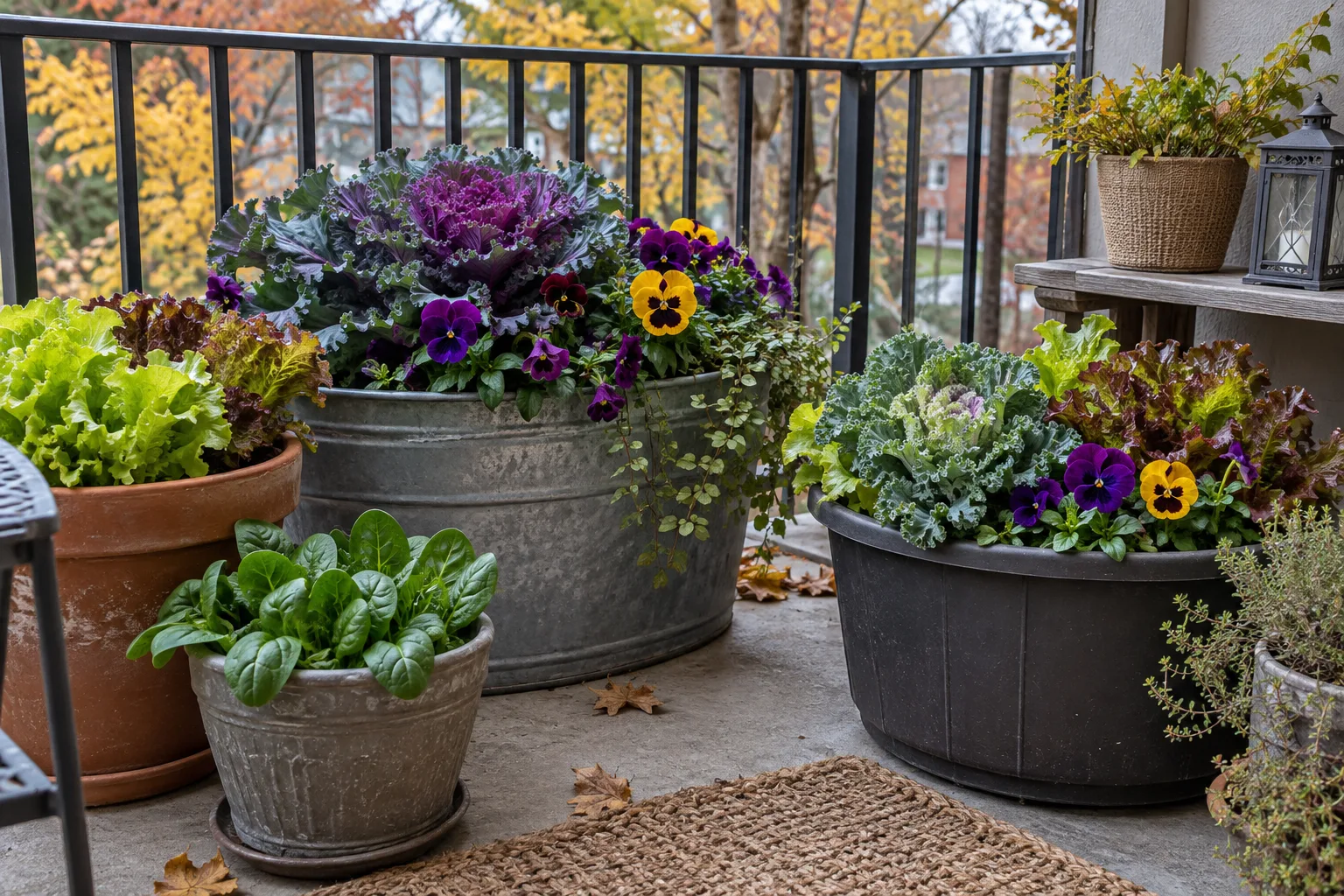
Summer’s tomatoes and petunias won’t last through the first cold snap, but that doesn’t mean your balcony containers have to sit empty until spring. Fall is its own planting season, with cooler air, gentler sun, and a short list of plants that flat-out prefer these conditions to July’s heat.
This guide covers what to plant in balcony containers right now, how to clear out summer growth to make room, and how to time it against your first expected frost.
Part of our complete guide to fall balcony gardening.
Quick answer: Once summer crops slow down, refresh containers with cold-tolerant plants: mums, ornamental kale, pansies, and violas for color, or lettuce, spinach, radishes, and kale if you want something to eat. Most of these handle a light frost, so you can plant through early fall in most climates and keep containers full right up until a hard freeze.
Know your first frost date
Fall container planting is really planning backward from your area’s average first frost date. Cool-season vegetables like lettuce and radishes are quick, often ready in 25 to 45 days, so they can still be planted several weeks after summer crops finish as long as you have that much time before a hard freeze. Cold-tolerant ornamentals like pansies and ornamental kale get more colorful once nights turn cool, not less, and many will survive a light frost outright. If you’re not sure of your local frost timing, your county’s cooperative extension office publishes average dates for your area and is worth a quick search.
A balcony also tends to run slightly warmer than an open yard at the same address, especially on a higher floor or a wall that holds heat from the building behind it. That microclimate can push your effective first frost a few days to a couple of weeks later than the official date for your area, so treat the published date as a starting estimate and pay attention to how your own balcony has behaved in past falls if you’ve gardened there before.
Clearing out summer containers
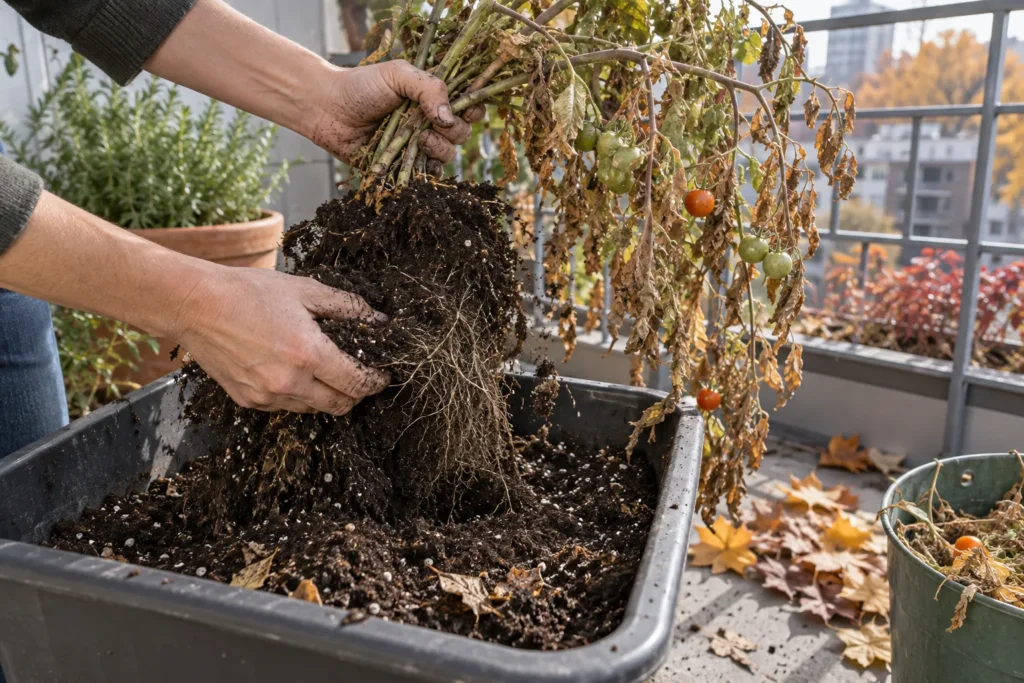
Before replanting, pull any summer annuals or vegetables that have stopped producing or gone leggy from heat stress. Shake loose soil off the roots and compost the plant if your building allows it, or bag it with household waste if not. Fall is also a sensible time to refresh the potting mix itself: a summer of watering compacts soil and depletes nutrients, so mix in a couple of inches of fresh potting mix or a light application of compost before planting anything new. You don’t need to replace the whole pot’s soil unless it’s been more than two to three seasons since the last full refresh.
Revive before you replace
Not every summer container needs a full teardown right away. A leggy petunia or a coleus that’s stretched and faded can often be cut back by a third to encourage fresh, fuller growth in the milder fall weather, buying you a few more weeks of color before a true replant. Deadhead anything still setting spent blooms, since removing them redirects the plant’s energy into new flowers instead of seed production. Reserve the full clear-out for plants that have well and truly stopped producing or gone visibly woody at the base; everything else is often worth one more push before it comes out.
What to plant now: for color
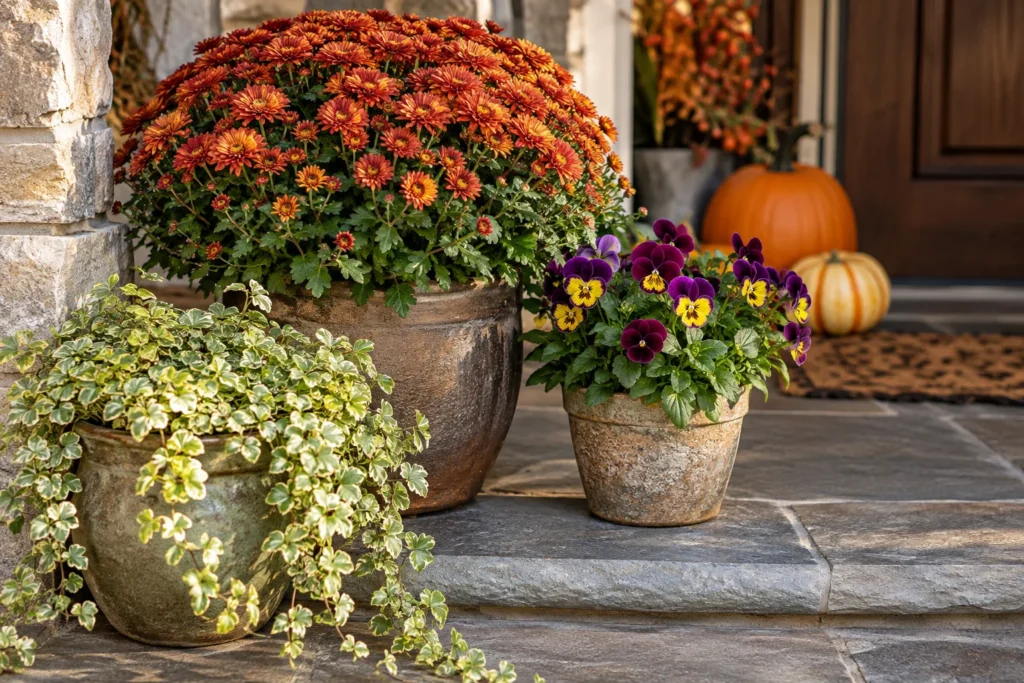
- Mums (chrysanthemums). The classic fall container plant, sold already budded or blooming at most garden centers in early autumn. They handle cool nights well and give an instant splash of color.
- Ornamental kale and cabbage. Grown for their ruffled, colorful foliage, not for the table, these get more vivid as temperatures drop and can hang on well into winter in milder climates. There’s something wonderfully theatrical about them holding color while everything else fades.
- Pansies and violas. Reliably cold-tolerant and often the last flowering color left on a balcony once frost arrives; many varieties bloom again in early spring from the same planting.
- Ornamental grasses. Low-maintenance texture that holds up through wind and cooler weather, useful for filling out a container alongside shorter flowering plants.
Building a fall container combination
The classic container recipe, a tall “thriller” in the center, mounding “filler” plants around it, and a trailing “spiller” over the edge, works just as well with fall plants as it does with summer annuals. A single mum or a spike of ornamental grass makes a natural thriller, mounded pansies or violas fill in around the base, and trailing ivy or a sprawling ornamental sweet potato vine left over from summer can spill over the rim. Grouping a few of these single-species pots together, instead of mixing everything into one container, is often easier to manage in a small space and lets you swap out one pot at a time as each plant fades.
What to plant now: to eat
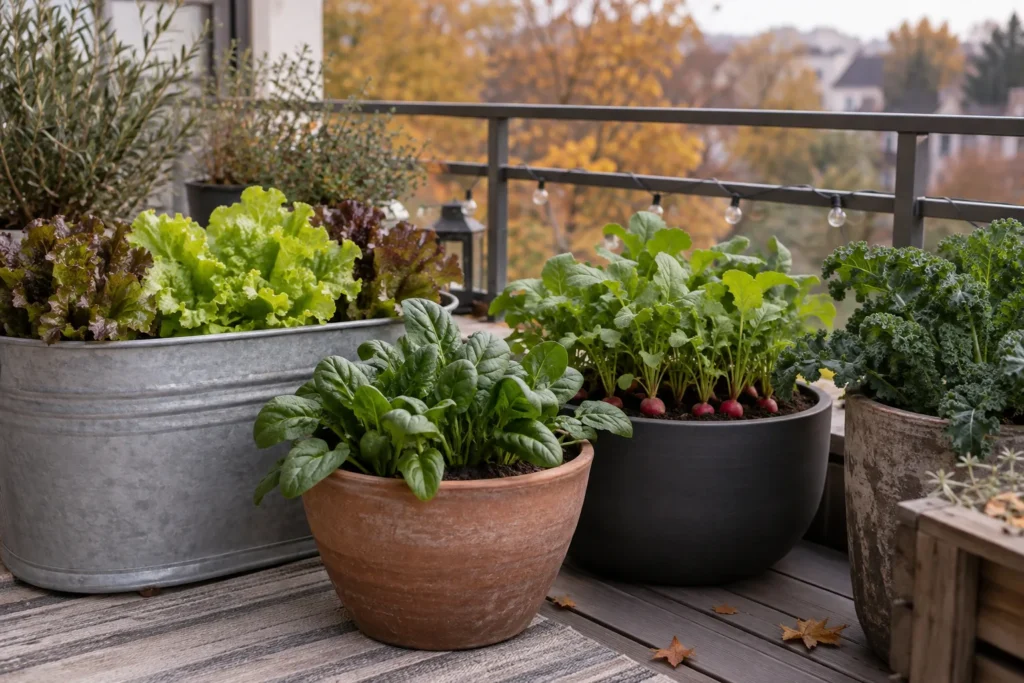
Beyond fall color, this is also prime time for a second round of quick vegetables and cool-season herbs, lettuce, spinach, kale, radishes, and more, sown in the same containers your summer tomatoes and peppers just vacated. For pot depths, days-to-harvest, and a full timing plan against your first frost, see our guide to fall vegetables and herbs for balcony containers.
Adjusting care for fall conditions
Shorter days and cooler air mean containers dry out much more slowly than they did in July, so cut back watering frequency and check soil moisture with a finger before adding more. Overwatering is a bigger risk in fall than underwatering. Fertilizing needs also drop as growth slows with the shorter daylight; a light monthly feed is usually enough for cool-season plants, well down from whatever weekly schedule a summer tomato might have needed.
Sun angle changes too. A spot that got direct afternoon sun in summer may now be partly shaded by a lower autumn sun and nearby buildings, so it’s worth reassessing which containers get the most light before choosing where to place fall plantings.
A simple fall transition timeline
Fall container planting works best as a staged process spread over a few weeks, not one big changeover weekend. A rough timeline, adjusted for your own first frost date, keeps it manageable:
- 6 to 8 weeks before first frost: sow the longest-season cool-weather crops you want, and start cutting back or removing summer plants that have clearly finished.
- 4 to 6 weeks before first frost: plant quicker vegetables like lettuce and radishes, and bring in mums, pansies, or ornamental kale for color as garden centers stock them.
- 2 to 3 weeks before first frost: do a last round of quick greens if you have container space, and start watching the forecast for your first real cold night.
- At first frost: harvest anything tender that’s ready, and move to protecting or bringing in whatever isn’t cold-hardy enough to stay out.
Frost tolerance at a glance
| Plant | Light frost (32°F / 0°C) | Hard freeze (28°F / -2°C or below) |
|---|---|---|
| Pansies, violas | Handles it well | Often survives, may need cover |
| Ornamental kale, cabbage | Handles it well | Often survives, colors intensify |
| Mums | Handles it well | Foliage damaged, roots often survive |
| Lettuce, spinach | Handles it well | Damaged or killed |
| Ornamental grasses | Handles it well | Goes dormant, usually fine |
| Leftover summer annuals | Usually damaged | Killed |
Fall container mistakes to avoid
- Planting too late for the crop. A vegetable that needs 60 days to mature won’t finish if you plant it 30 days before your first frost; check days-to-harvest before committing a container to a longer-season crop this late.
- Keeping a summer watering schedule. Cooler air and shorter days slow evaporation, and a pot watered on a July schedule in October is likely to end up waterlogged.
- Skipping the soil refresh. Reusing depleted summer soil without any fresh mix or compost gives fall plantings a weak start right when light levels are already dropping.
- Assuming every fall plant tolerates frost equally. Mums, pansies, and ornamental kale handle a light frost fine; many summer holdovers and tender herbs don’t, so know which containers still need to come in before a cold night.
- Forgetting new containers still need sizing right. A fall vegetable or flower crammed into an undersized leftover pot struggles the same way a summer plant would; if you’re adding new containers instead of reusing summer ones, size them the same way you would for any other season.
Planning past frost
Cold-tolerant ornamentals like pansies and ornamental kale can often stay in place through a light frost and into winter in milder climates, but a hard freeze will still damage or kill most of what’s listed here eventually. Once night temperatures are consistently dropping below what your plantings can handle, it’s time to shift from “what to plant” to “how to protect what’s left.” Our guide to prepping a balcony garden for winter covers that transition, including which containers to bring in and how to protect the ones that stay outside. If this is your first fall managing a balcony garden through a full season change, our guide to starting a balcony garden is also worth a re-read for the building rules and container basics that apply regardless of season.
Moving plants into fall containers often means sizing up; see our guide to repotting a balcony plant without killing it.