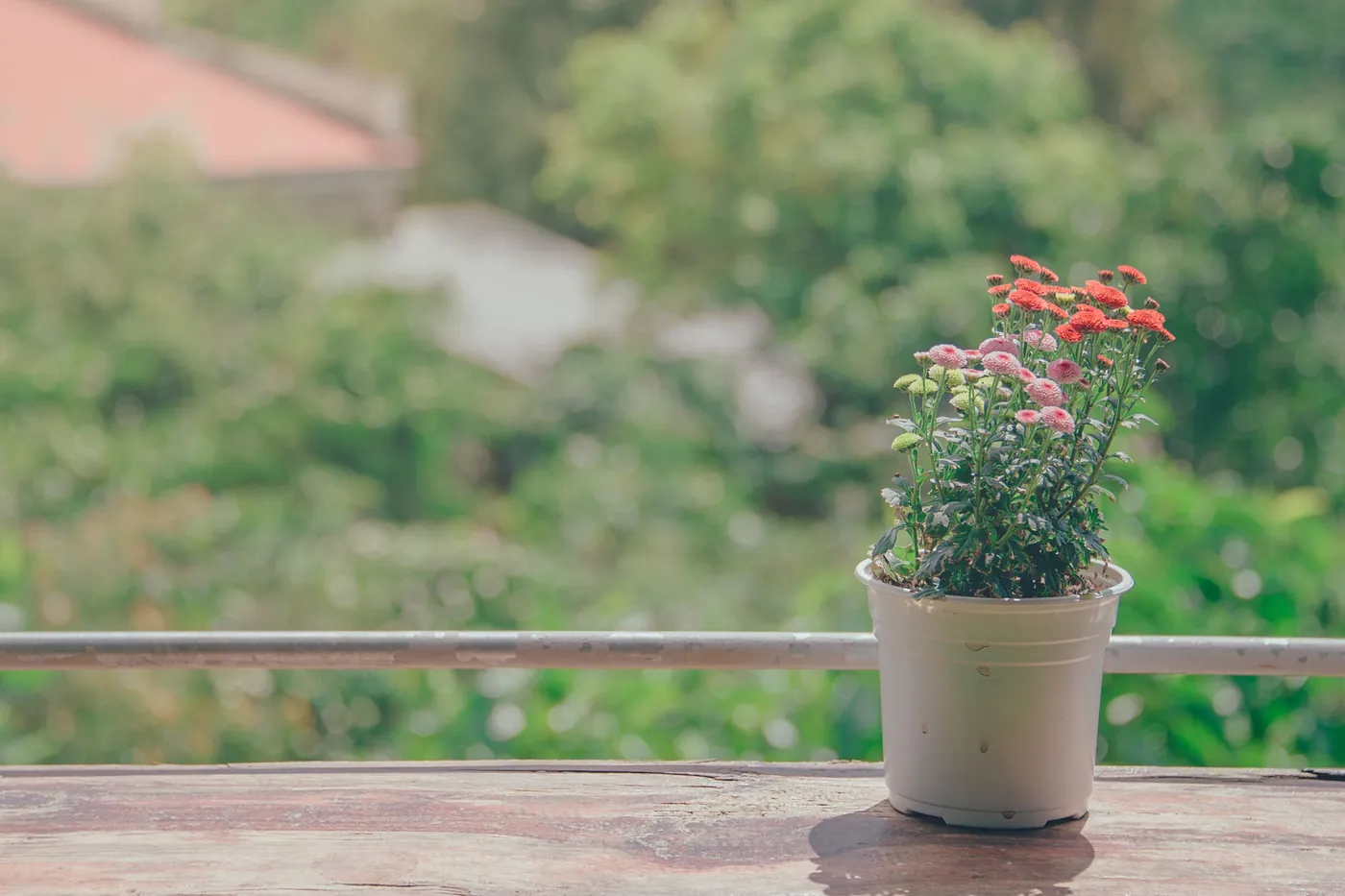
A long-flowering balcony starts with compatible plants rather than the fullest nursery basket. Group flowers that want the same light, watering, and feeding routine; give the roots room; and decide how spent blooms will be handled. Repeating two or three colors usually looks fuller than packing many unrelated plants into one container.
The reliable formula: measure direct sun, choose one light requirement per container, repeat two or three colors, and leave enough room for each plant’s mature spread. A smaller compatible planting will outlast an overstuffed basket.
Choose flowers from hours of direct sun
Direction is only a clue. The balcony above, a nearby tower, or a solid wall may block direct light. Observe the exact spot for a clear day and count the hours when the sun casts a sharp shadow.
- Six or more hours: look among sun-loving container flowers such as compact petunias, calibrachoa, pelargoniums, dwarf zinnias, marigolds, and many salvias. Heat reflected from glass or concrete may still call for afternoon protection and closer watering.
- Three to six hours: part-sun choices include many begonias, lobelia in mild weather, bacopa, and some compact salvias. Morning sun is gentler than late-afternoon exposure.
- Bright shade with little direct sun: use flowers bred for shade, including suitable begonias, impatiens, and fuchsia where the climate is appropriate. Foliage plants can carry the display between flowers.
These are starting groups, not universal guarantees. Cultivars differ, and climate changes how much sun a plant can take. The label on the exact plant should agree with your measured light.
One pot, one care routine
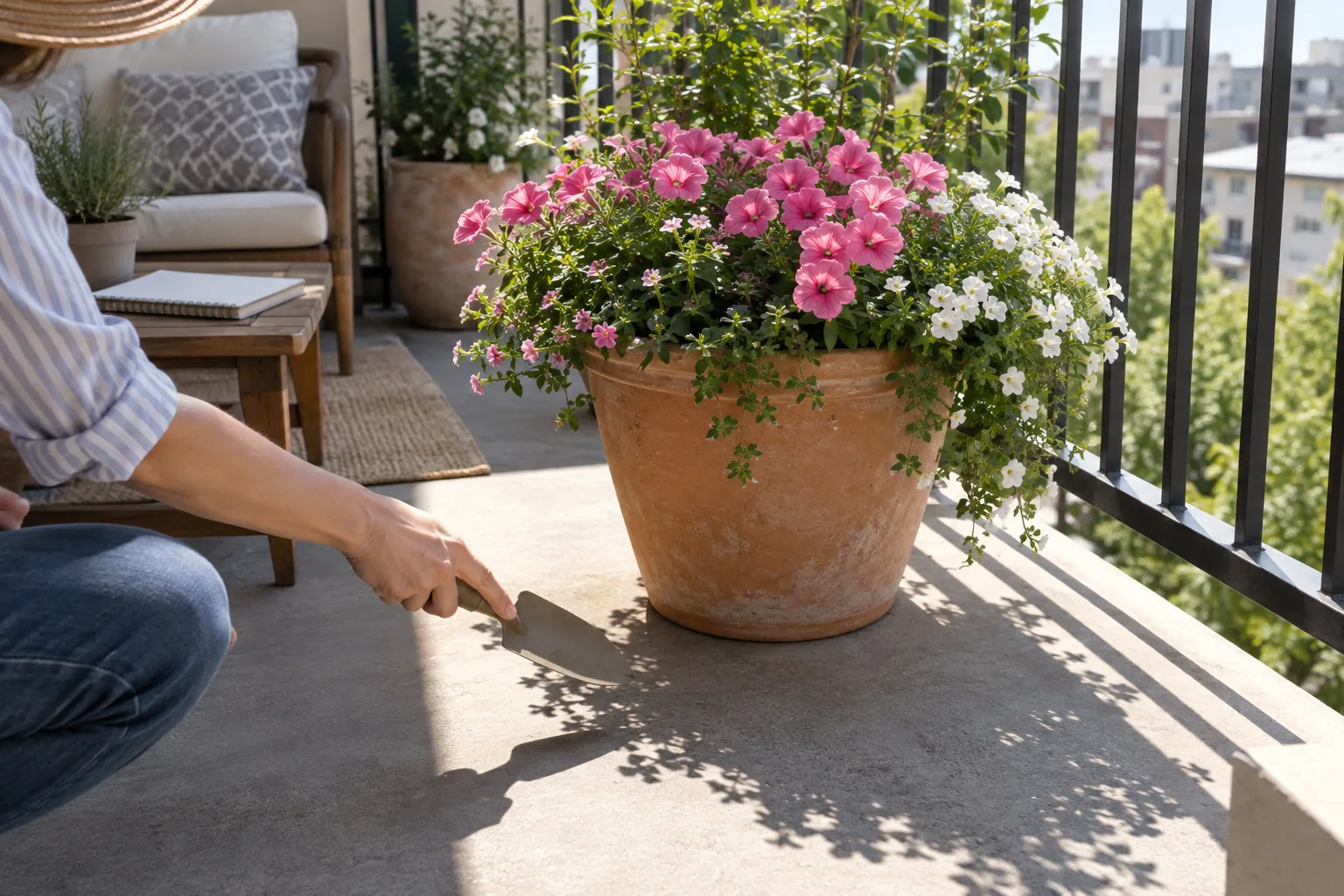
Mixed containers fail when their plants merely look good together. A drought-tolerant flower and a moisture-loving flower in the same pot force you to overwater one or stress the other. Combine plants only when their light, moisture, and mature size match.
The familiar “thriller, filler, spiller” arrangement is optional, not a rule. On an exposed balcony, a tall centerpiece may catch too much wind. A low mound of one flower repeated across three pots can look more intentional and be easier to keep alive.
Use repetition instead of crowding
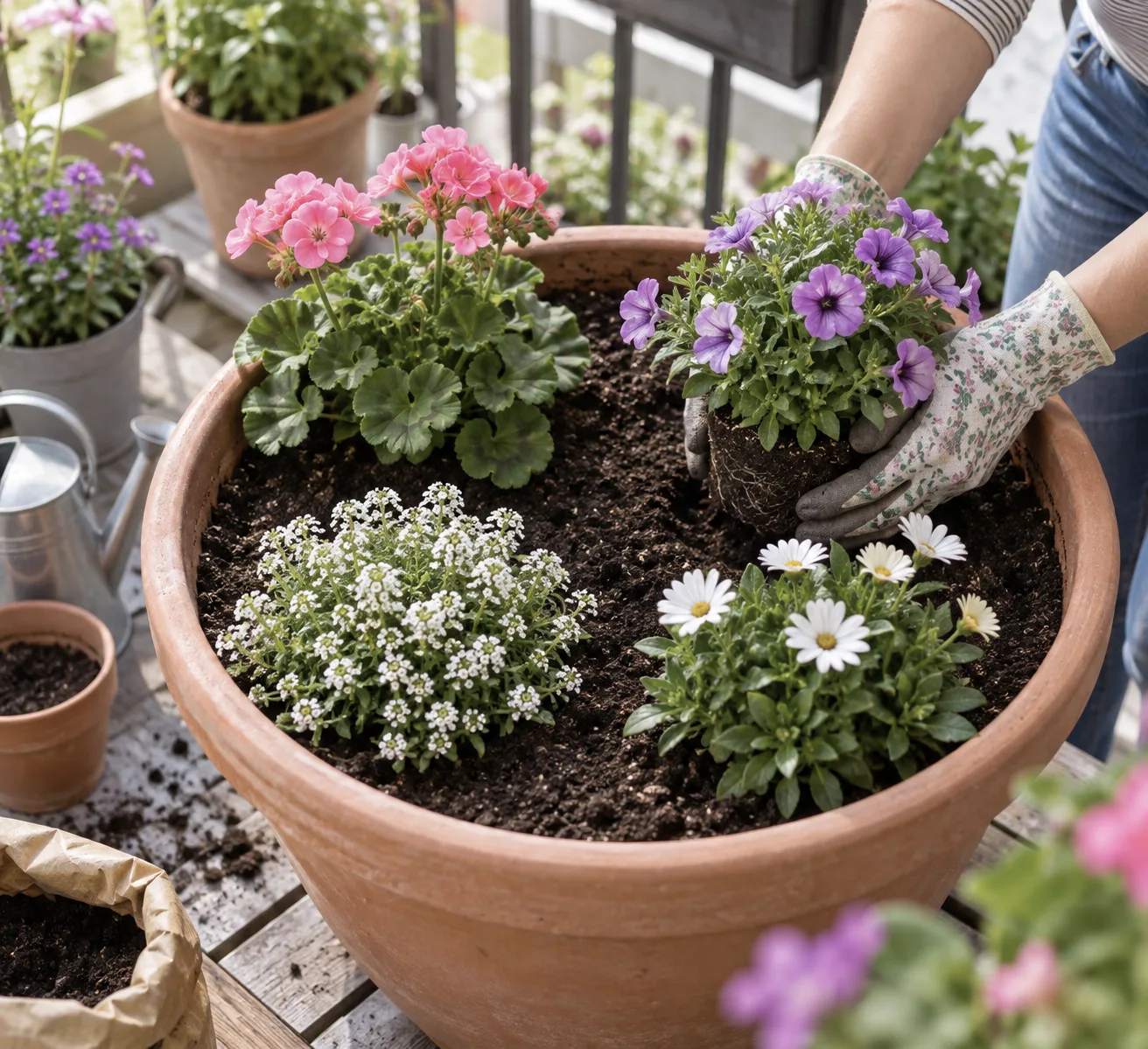
Pick a limited palette, perhaps violet with white, or coral with soft yellow, and repeat it. Repetition makes separate containers read as one garden without packing every pot. Colorado State University Extension notes that repeating a flower color through the different layers of a container creates a stronger, more unified composition.
- Use foliage as a pause between bright blooms.
- Keep the walkway and door swing completely clear.
- Place trailing plants inside the railing, never where growth or containers can fall outside it.
- Check mature width before planting; nursery pots show the plant’s current size, not its finished one.
Plan for a long flowering season
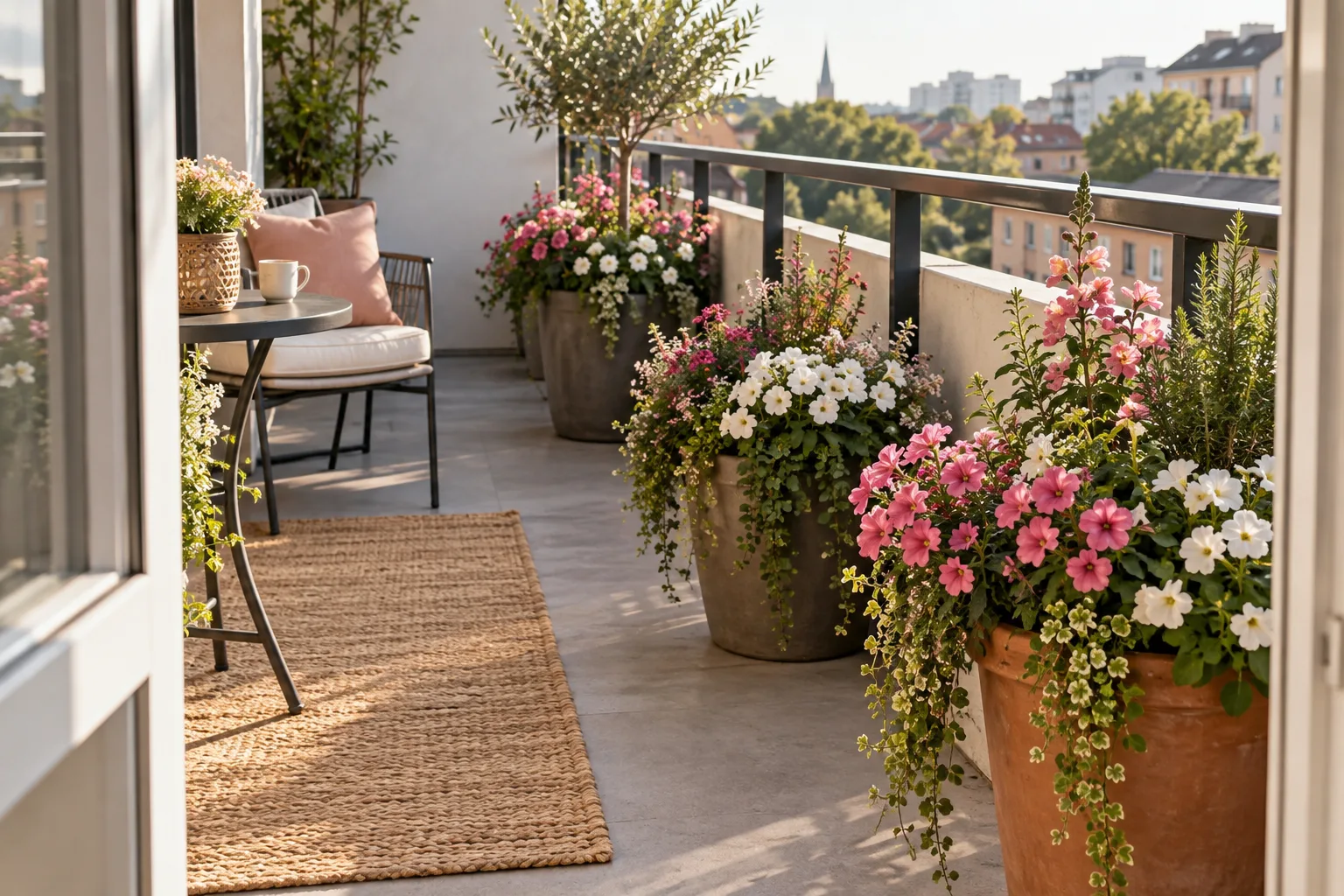
A balcony need not peak all at once. Combine plants with overlapping bloom periods, or replace one small seasonal pot while the structural containers remain. If supporting pollinators matters, aim for flowers from early to late season and include more than one flower shape. Avoid pesticide use on open flowers, and choose plants appropriate to your region rather than assuming every marketed “pollinator plant” is locally suitable.
Herbs can contribute flowers too. Chives, thyme, oregano, mint, and basil attract insects when allowed to bloom, although flowering changes the harvest and flavor. Keep spreading herbs such as mint in their own containers.
Pot size, drainage, and feeding
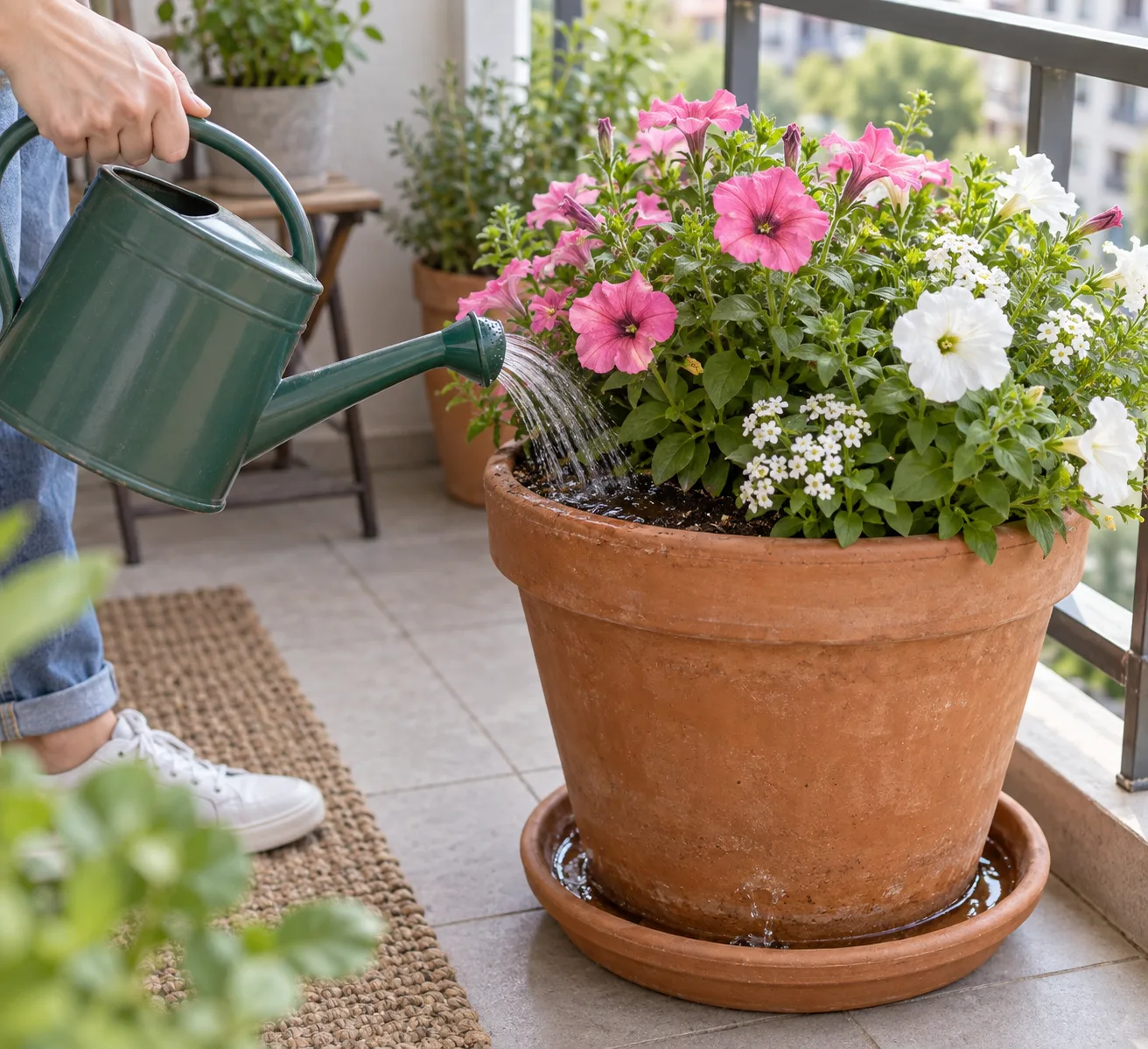
Flowering takes energy, and cramped roots make the water supply swing from wet to dry. Use a container with drainage holes and fresh potting mix. Larger containers buffer moisture better than a cluster of tiny ones, but wet weight must stay within the balcony’s safe limit.
- Water the mix, not the flowers. Check moisture with a finger and water thoroughly when needed.
- Follow the fertilizer label. More is not better; excess salts can damage roots, and lush soft growth may flower poorly.
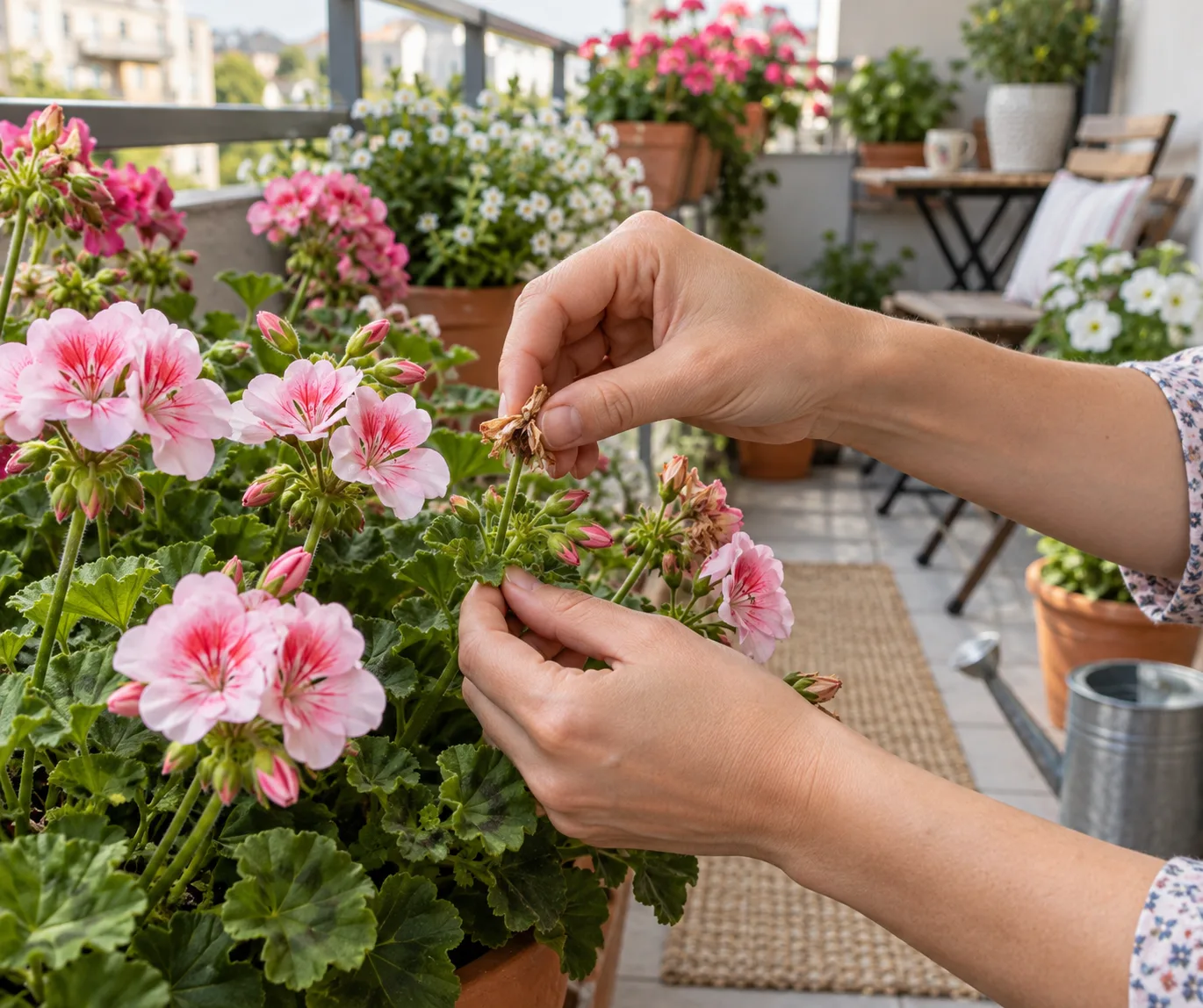
- Deadhead when the plant benefits from it. Some modern annuals clean themselves, while others bloom longer when spent flowers are removed.
- Turn movable pots. A quarter-turn can keep growth balanced when light comes strongly from one side.
Three combinations that make practical sense
Hot, sunny, and regularly watered: one compact salvia with low calibrachoa in a generous planter. Both need strong light; confirm the exact cultivars’ mature sizes.
Morning sun or bright part shade: a repeating group of begonias with a foliage plant that wants the same moisture. This gives color without relying on full-day sun.
Edible and flowering: chives with compact nasturtiums in separate adjacent pots. Keeping them separate prevents one root system from overwhelming the other and lets you adjust watering independently.
What usually goes wrong
- Flowers stop after purchase. The plant may have been forced into bloom, be short of light, or need spent flowers removed. Check the label and new growth before feeding.
- Edges turn brown every afternoon. Reflected heat and wind may be drying the root ball faster than expected. Move the pot back, increase soil volume, and check moisture earlier.
- The center collapses while the edge thrives. The planting is overcrowded or the center plant is receiving a different amount of water. Thin or separate the incompatible plant.
- Leaves grow but flowers do not. Too little light or excessive nitrogen is common. Measure sun before changing fertilizer.
- Hanging baskets wilt repeatedly. Small suspended root volumes dry very quickly. A larger floor-level planter is often the more manageable balcony choice.
A good first weekend
Measure the sun, choose one large container rather than five small ones, and buy two compatible plant types with the same care label. Photograph the planting on day one and again after a month. The comparison will show whether the spacing is sufficient.
Use the sunlight guide before shopping and the container size guide before filling a large planter. If your balcony is exposed, read the windy-balcony setup before adding height or hanging baskets.
Match blooms to the balcony
Use the shade list for limited direct light or the sun-and-heat list for a bright, exposed space.
Build the bloom around a sequence of conditions
A flowering balcony stays interesting longer when you choose for the space first and color second. Begin by measuring direct sun and noticing whether the balcony has reflected heat, wind, or a cool shaded corner. A plant that blooms constantly in a sunny garden may disappoint in a north-facing container, while shade-tolerant foliage can make the same balcony look intentional without demanding flowers it cannot produce.
Use three roles instead of buying every flower that catches your eye. Choose one reliable anchor plant for the largest container, a few repeat plants for color or texture, and one seasonal accent you can replace when it fades. Repeating a color or leaf shape in two places helps the balcony read as one composition. Keep the tallest and heaviest containers near the wall, then step the height down toward the open, usable edge.
Keep flowering plants flowering
Most flowering annuals need more consistent water and feeding than low-maintenance herbs or succulents, especially in small containers. Check the root zone instead of watering by calendar, remove spent blooms where the plant benefits from deadheading, and follow the fertilizer label rather than adding feed after every watering. If a plant is not flowering, return to the basics: enough light, enough root room, and a season that suits that species.
Give each container a simple purpose. A sunny pot might hold one warm-season flowering plant with a trailing companion. A shadier pot might depend on foliage and one cool-season accent instead. Avoid putting thirsty, heavy-feeding flowers beside drought-tolerant plants simply because they look good together; differing water needs create a maintenance problem that color cannot solve.
Plan for the handoff between seasons
Cool-season flowers such as pansies and violas can be strong in spring or autumn but often fade in heat. Warm-season options need warmth and light before they perform. Replacing a tired seasonal pot is normal maintenance, not a failed garden. The useful goal is not constant bloom from every container; it is a balcony that keeps its structure and color as individual plants move through their seasons.
Before choosing plants, compare your sunlight, wind, heat, available pot size, and maintenance time in the balcony plant-selection guide. It will help you avoid building a beautiful combination that cannot thrive in the conditions you actually have.
A five-minute flowering check
Before buying another plant, check the balcony at the time you are most likely to enjoy it. Notice where the sun actually lands, which containers dry first, and whether flowers can be seen from inside as well as from the chair or doorway. A single container that is easy to water and clearly visible often adds more than several small pots hidden in a crowded corner.
Take one photo from the doorway every two weeks. It makes it easier to spot a plant that is outgrowing its space, a color that disappears against the wall, or a gap that needs one purposeful replacement. The photo is not about making the balcony perfect; it is a simple way to adjust the planting before small issues become a season-long disappointment.