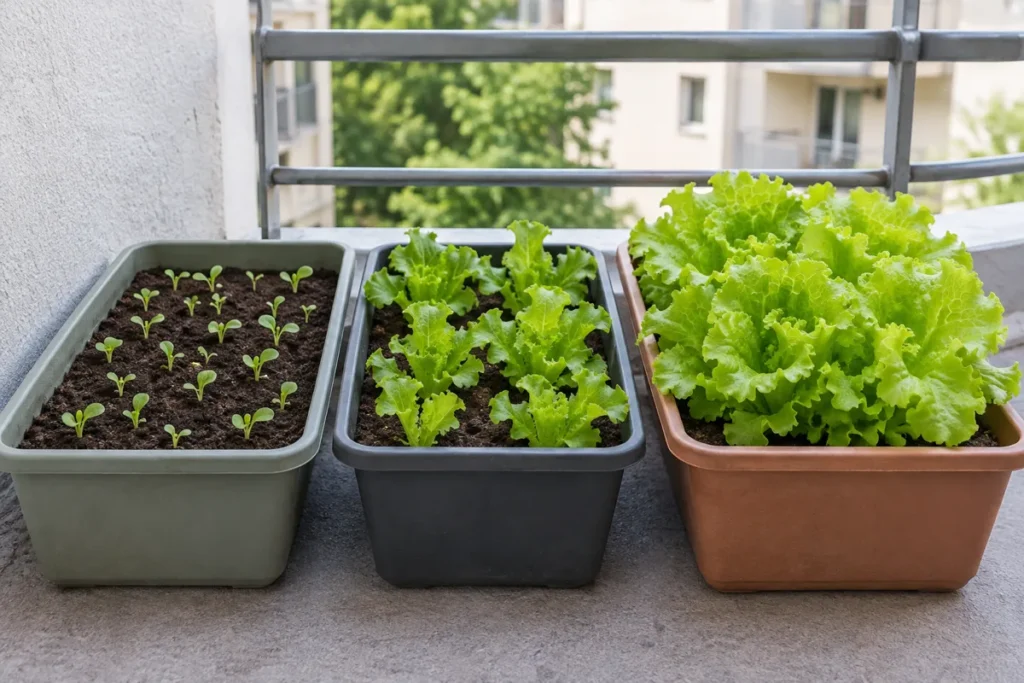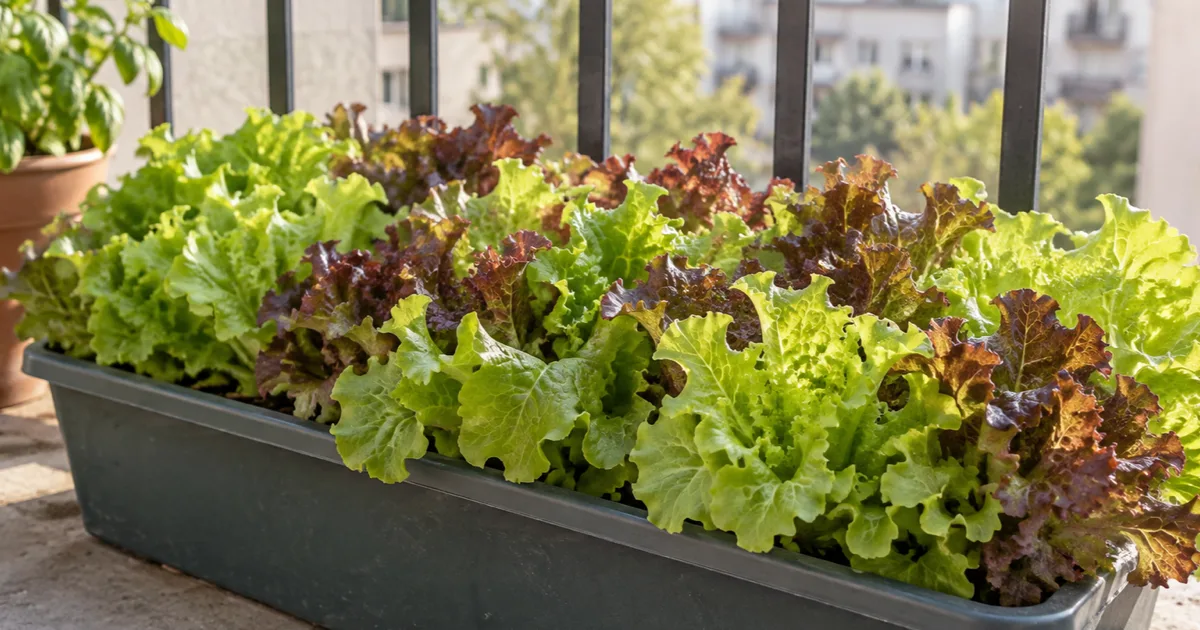
Lettuce is the fast, low-commitment counterpart to everything else in this site’s vegetable lineup. Where a potato or tomato container ties up floor space for most of a season, a single lettuce container can be producing salad within a month of sowing, and with the right harvest technique, it keeps producing for weeks after that instead of giving you one cut-and-done crop.
This guide covers what’s specific to lettuce on a balcony: picking a type suited to repeated harvests rather than one big cut, how much container space it actually needs, the cut-and-come-again technique that gets multiple harvests from one planting, and why lettuce is more likely to bolt and turn bitter on a hot balcony than in a shadier ground-level garden bed.
Which lettuce type fits a balcony container?
Looseleaf lettuce, the loose, non-heading type sold as mixes or individual varieties like Oakleaf or Black Seeded Simpson, is the better fit for a balcony container. It matures fast, tolerates a little more heat than other types before bolting, and is naturally suited to the cut-and-come-again harvest covered below, since you’re never waiting for a single tight head to fully form before getting anything usable. Romaine and other head-forming types work in containers too, but they take longer to mature and give you one harvest per plant instead of several, which makes them a less efficient use of limited balcony space.
If you’re growing lettuce alongside slower, heavier crops like the tomatoes or peppers covered elsewhere on this site, a looseleaf mix is also the more forgiving choice if your balcony’s sun and space are already spoken for by those larger plants.
How big a container does lettuce need?
Lettuce has shallow roots, so depth matters less here than it does for almost anything else on this site; 6 inches of soil depth is enough. Width is what determines how much you can grow: a wider, shallower container fits more plants than a narrow, deep one holding the same volume of soil, and a one-gallon container comfortably holds two to three plants depending on the variety. Whatever the shape, drainage still matters, lettuce is mostly water by weight and doesn’t tolerate soggy, waterlogged roots any better than a vegetable with a deeper root system does.
Planting: seeds or transplants
Lettuce seeds are tiny and germinate quickly, which makes direct sowing straight into the final container a practical option here in a way it isn’t for slower, larger crops. Scatter seeds across the soil surface and cover with no more than a quarter inch of soil; keep the surface consistently moist until they sprout, usually within a week to ten days. Thin crowded seedlings once they’re a couple of inches tall instead of trying to space perfectly at sowing time, and don’t waste the thinnings, they’re perfectly good eating on their own.
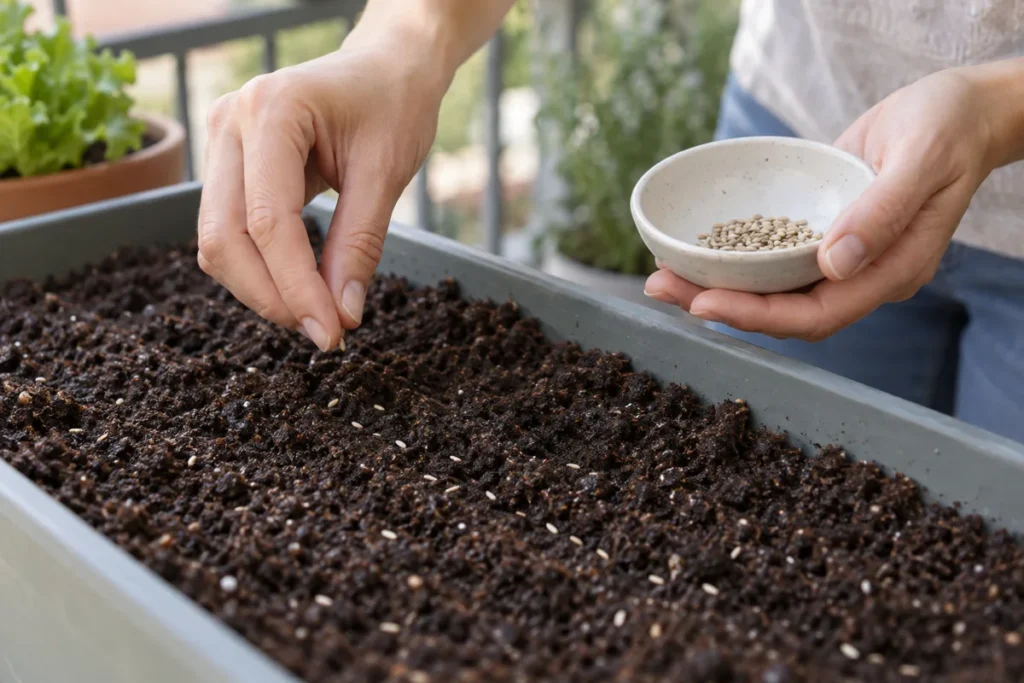
Starting seeds in trays and transplanting later works too, and gets you a head start before the balcony’s own conditions are ideal for lettuce, but it’s an extra step direct sowing skips entirely. Either way, avoid fertilizing lettuce heavily right after it sprouts; its roots are shallow and easily burned by concentrated fertilizer while the plant is still young, so hold off for several weeks until it’s established.
The cut-and-come-again technique
This is the technique that makes lettuce worth growing in a container repeatedly instead of once. Once plants reach roughly 6 to 10 inches tall, cut the leaves off with scissors just above where they emerge from the soil, rather than pulling the whole plant up by the roots. Left watered and fed afterward, the same plant regrows a fresh set of leaves and is ready to cut again in about two to three weeks, and you can repeat this cycle several times from a single planting before the plant finally starts to decline.
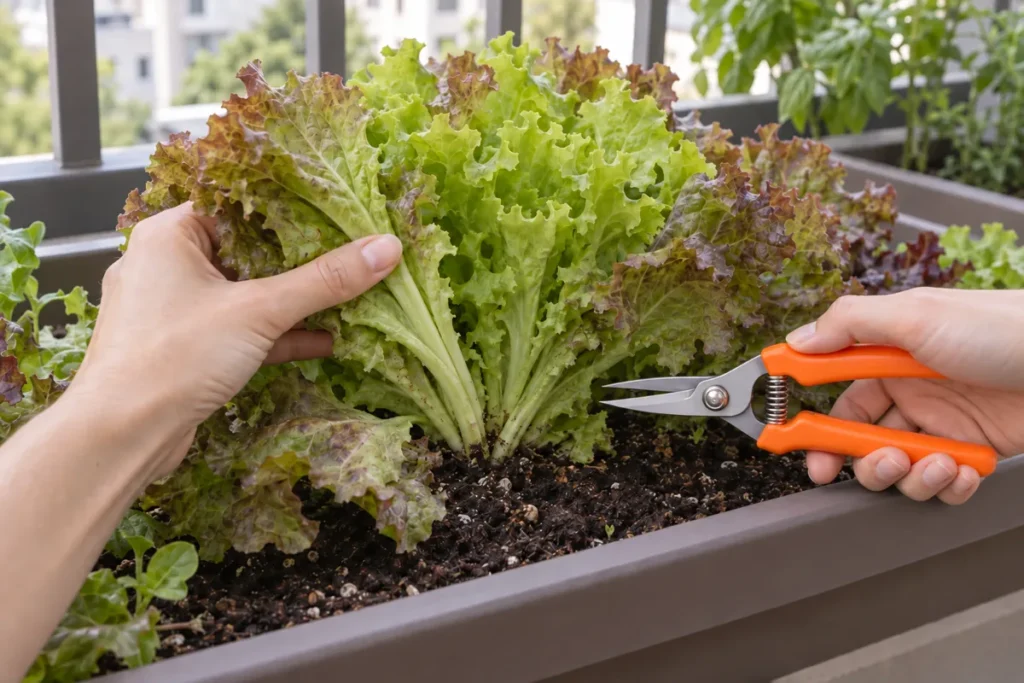
This only works with looseleaf types, which regrow from the base after cutting; a head-forming variety like a tight romaine doesn’t recover the same way once its central growing point is cut, which is the practical reason looseleaf is the better balcony choice covered above.
Why did my lettuce turn bitter and shoot up?
This is called bolting, and it’s lettuce’s response to heat and long summer days: the plant abandons leaf production, sends up a central seed stalk, and the leaves turn noticeably more bitter as it does. Dry soil speeds this process up on top of heat alone, so a lettuce container that’s been allowed to dry out during a hot stretch bolts faster than one kept consistently moist through the same weather.
A balcony is more exposed to this than a shaded garden bed often is, especially one with reflected heat off walls, glass, or pale flooring; see our guide to plants for hot, sunny balconies for other ways to manage that heat. Once a lettuce plant has bolted, there’s no reversing it; the practical response is to keep it consistently watered to slow the process as long as possible, harvest what’s still good before it turns too bitter to enjoy, and start the next succession planting instead of trying to nurse the bolted one back.
Common balcony lettuce problems
- Bitter, elongated growth is bolting, driven by heat, long days, and dry soil together; move the container somewhere shadier during the hottest stretch of the day if this happens early in the season.
- Slow or patchy germination usually means the seedbed dried out even briefly; lettuce seed is small and close to the surface, so it has almost no moisture reserve of its own while sprouting.
- Wilting despite moist soil can mean root burn from fertilizing too early or too heavily; hold off feeding young lettuce for the first several weeks.
- Leaves that never regrow after cutting usually means a head-forming variety was cut like a cut-and-come-again type; check which kind you planted before assuming something went wrong.
Succession planting for a continuous harvest
Sowing one container of lettuce and stopping there means one wave of harvests that eventually runs out or bolts, with nothing behind it. Sowing a new container, or a new section of an existing one, every two weeks through the cool part of the season keeps something at a usable stage at all times, so one planting bolting or finishing doesn’t mean waiting weeks for the next batch to catch up. This costs nothing extra beyond a bit more soil and a few more minutes every couple of weeks, and it’s the difference between an occasional salad and a steady supply.