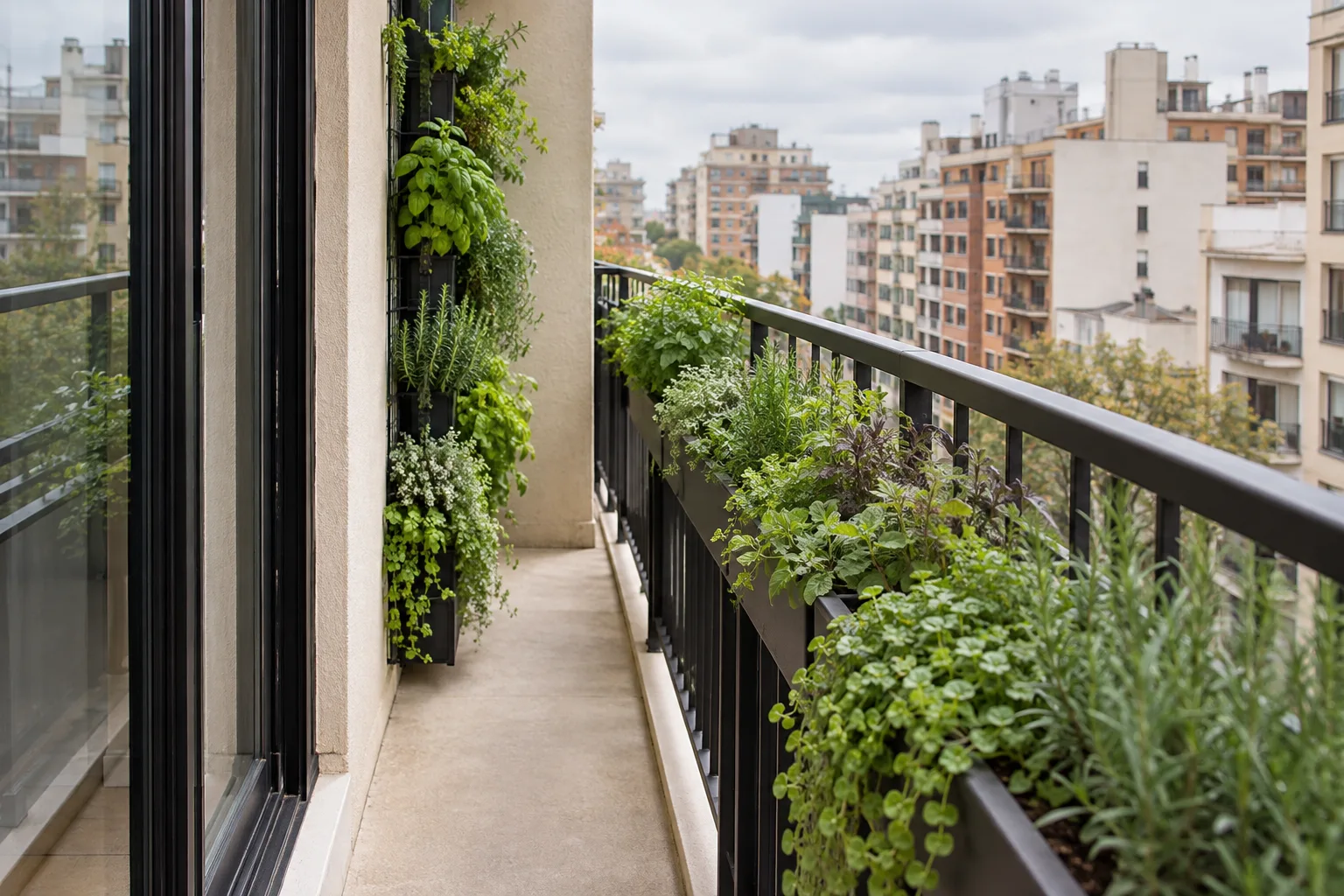
Some balconies are small. Some balconies are barely balconies at all: a strip of floor 2 feet deep, a Juliet balcony with no floor space past the threshold, or a corner ledge that fits one plant and nothing else. Most small-balcony advice, including our own guide to small balcony garden layouts for renters, is written for spaces that still have a usable floor, somewhere in the range of a modest 25 to 50 square feet, where the main challenge is arranging furniture and containers without blocking the door.
This piece is about the tier below that. If your balcony floor measures something closer to 10 to 20 square feet total, or if you do not have walkable floor space at all, the layout patterns built around furniture and floor pots mostly do not apply. A different set of rules takes over once there is nowhere to put a chair, nowhere to walk around a pot, or no floor to speak of in the first place.
What counts as a micro balcony
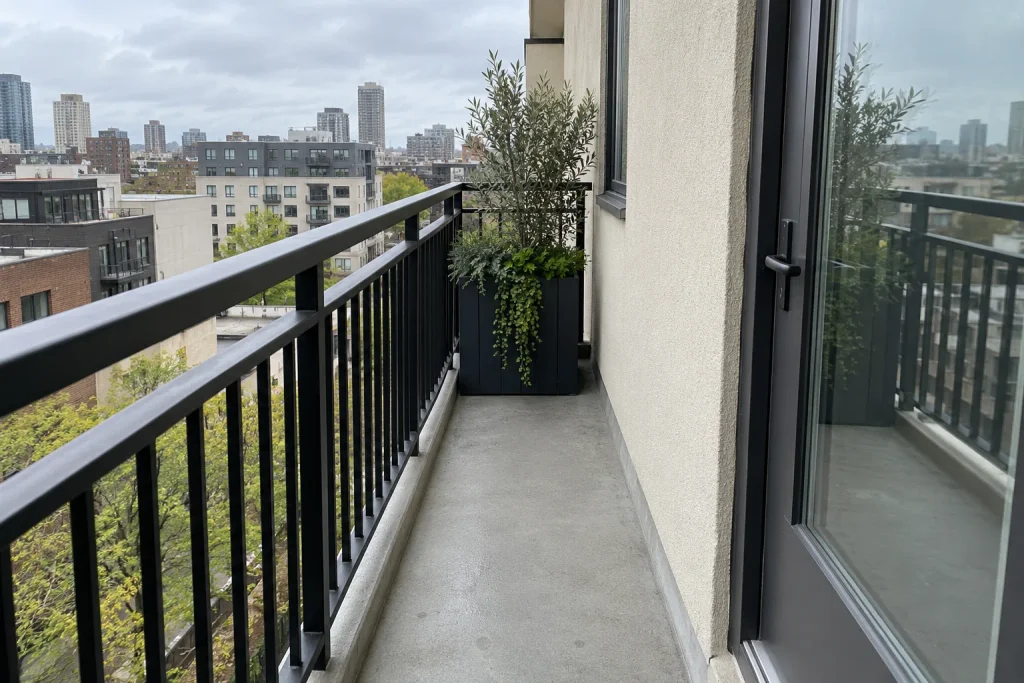
A useful way to think about it: a small balcony has room for a layout decision. A micro balcony has room for a placement decision. On a small balcony, you are choosing between arranging pots along one wall or clustering them in a corner, and there is enough floor to argue about it. On a micro balcony, often a depth of 2 to 3 feet and a width of 4 to 6 feet, every square foot is already accounted for by the door swing, the railing clearance and whatever walking path remains, which usually leaves single digits of square footage for anything at all.
A Juliet balcony is the extreme version of this. It is a railing and a door with little or no floor projecting past the threshold, sometimes only a few inches, built to meet a code requirement for a fall-protection barrier instead of creating usable outdoor floor space. If you have one of these, you do not have a small balcony garden problem. You have a railing garden problem, and the solutions below treat it that way from the start instead of forcing floor-based advice onto a space with no floor.
If you have real floor, just very little of it (roughly 10 to 20 square feet)
This is the most common version of a micro balcony: a genuine floor exists, but after the door swing and a path to the railing are accounted for, what is left would not comfortably fit even one small stool. The goal here is not to fit more in. It is to get real plant presence out of a space that cannot physically hold a floor-standing collection of pots.
Pick one wall and go up it, not across it
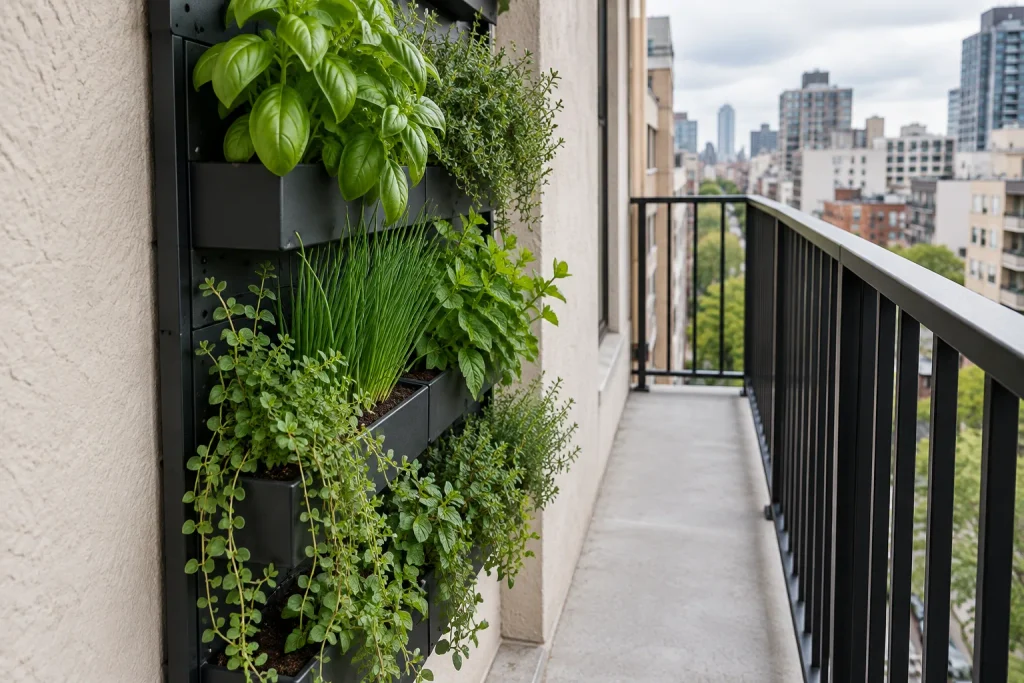
With 10 to 20 square feet total, horizontal arrangement is already a lost cause before you start. A single vertical structure, a slim ladder shelf, a wall-mounted trellis panel, or a column of stacked hanging pockets, placed against the one wall that is not the door or the railing, can hold six to ten small plants in the same footprint a single floor pot would take. The width of the structure matters more than its height on a space this size: 12 to 16 inches (30 to 40 cm) deep is usually the most a genuinely tiny balcony can spare without eating the walking path entirely.
Use the railing as your main planting surface, not an accessory to it
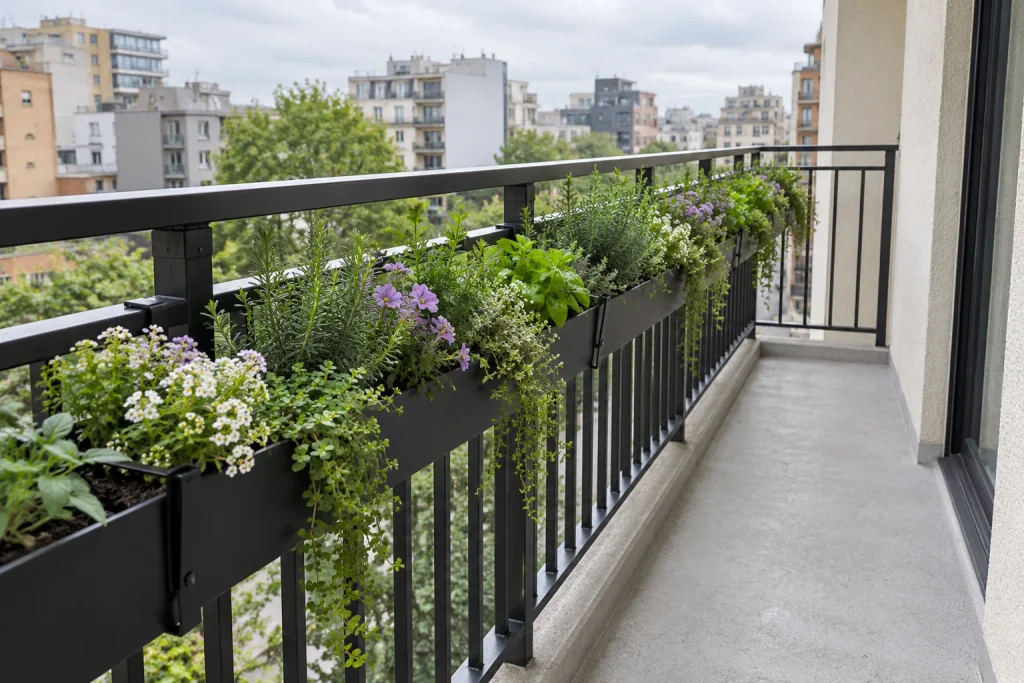
On a small balcony, railing planters are typically one layer among several. On a micro balcony, the railing is frequently the largest single surface available, and it deserves to be treated as the primary bed, not a decorative afterthought. A continuous trough-style railing planter, properly rated for its mounting hardware and hung on the inside of the rail where your building allows it, can hold a full run of trailing plants, herbs or small flowering annuals along the entire width of the balcony without consuming a single square foot of floor.
Check your building’s rules before hanging anything on a railing, and confirm the hardware is rated for the planter’s full watered weight, not just its empty weight. A planter that looks secure dry can behave very differently once the soil inside it is saturated after a rainstorm.
Choose furniture that disappears when it is not in use, or skip it entirely
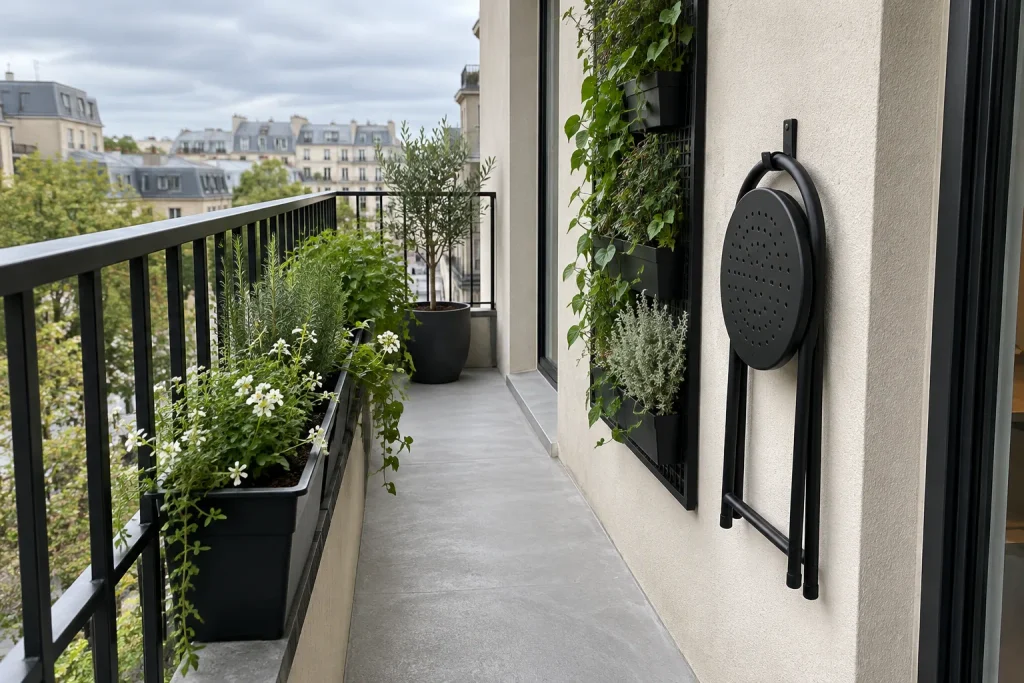
A bistro chair takes up roughly the same floor area whether your balcony is 60 square feet or 15. On a true micro balcony, that math does not work, which is why furniture-free is a legitimate, common answer here, not a compromise. If you do want somewhere to sit even occasionally, a single fold-flat stool that hangs on a wall hook when not in use, or a narrow hinged ledge seat that folds against the railing, takes the question of furniture out of the permanent floor calculation and puts it back only when you want to sit.
If you have a true Juliet balcony (no usable floor at all)
A Juliet balcony with little or no floor projection is its own category, and most general balcony-garden advice simply does not apply to it, because there is no floor to measure a layout against. Everything here has to either mount to the railing, hang from an overhead point, or sit just inside the door on the interior floor, which is a different space with different light and different rules than the balcony itself.
Treat the railing as the entire garden
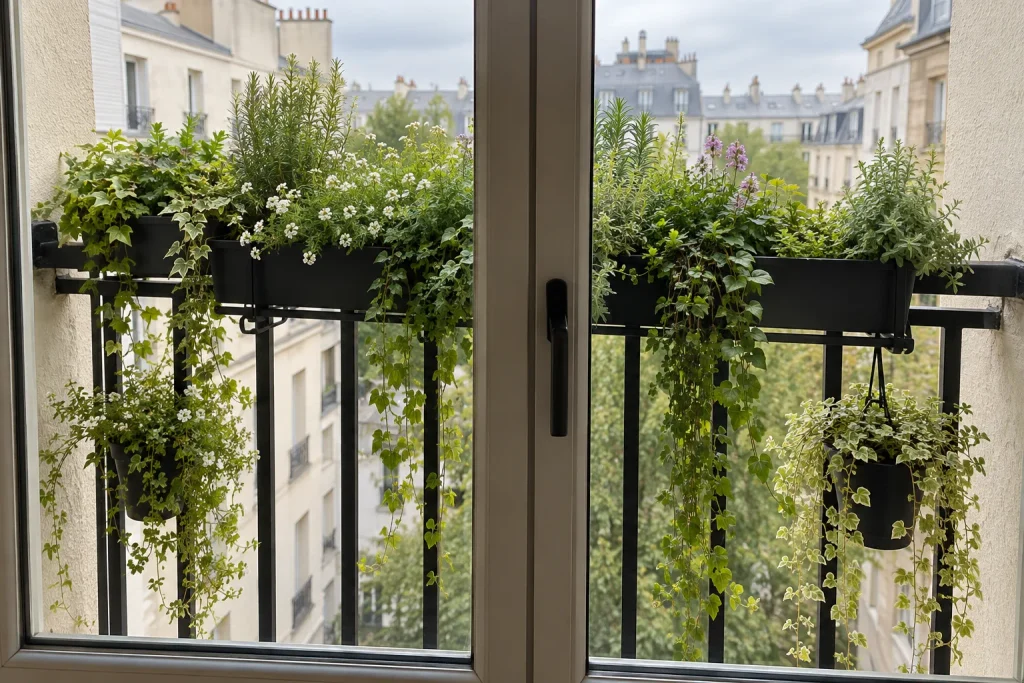
Without floor space, the railing is not one layer of the design. It is the whole design. A well-built railing planter system, troughs along the horizontal rail, a few single hanging pots clipped at intervals, and possibly a shallow planter box mounted just below the rail on the outside if your building explicitly allows exterior mounting, is the realistic ceiling of what a true Juliet balcony can hold. Trailing plants that spill downward rather than upward make the most of this limited surface, since they add visible green mass below the rail line without needing any additional mounting points.
Use the overhead structure if one exists
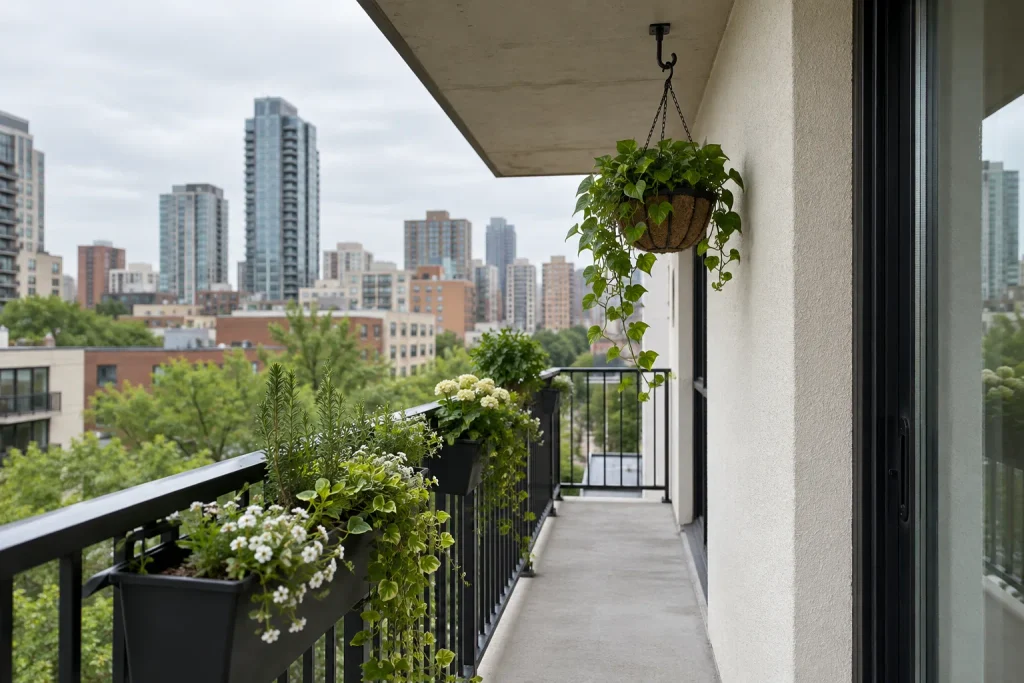
Some Juliet balconies sit under a recessed overhang or a small roof extension from the floor above. If yours does, a single overhead hook rated for the full watered weight of a hanging basket can add a plant without touching the railing at all. Confirm the structure is load-rated for a hanging weight (not just able to support its own roofing) before loading it, and never improvise a hook into drywall, stucco or anything other than real structural framing or a fixture explicitly rated for hanging loads.
Bring the garden just inside the glass
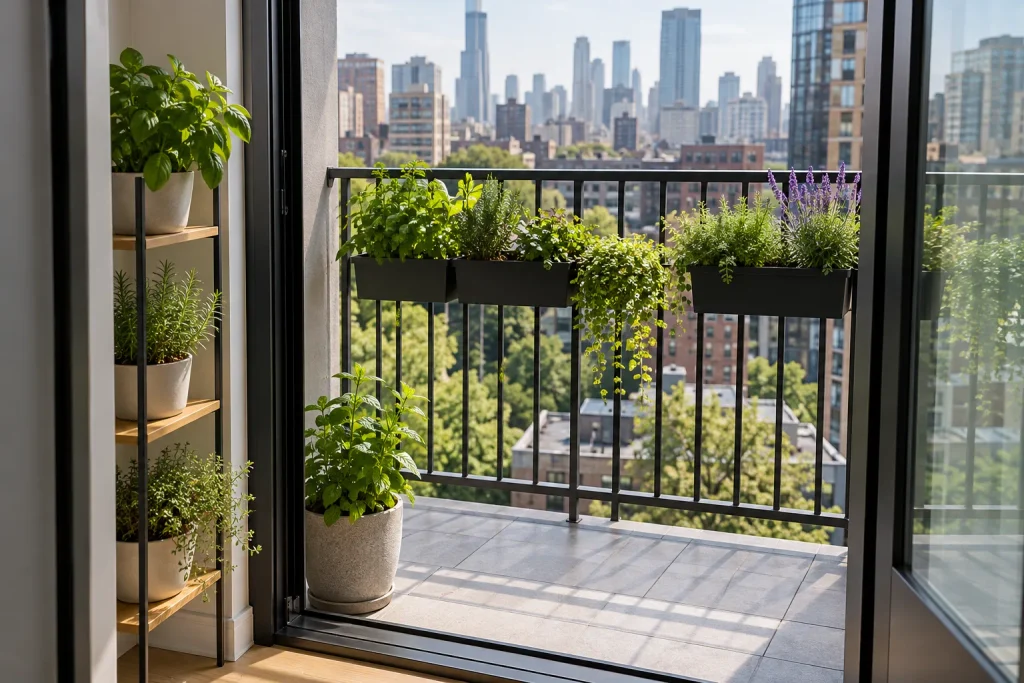
With a Juliet balcony, the interior floor just inside the door often gets more usable light than people expect, especially with a south- or west-facing door, and it is fair game for a small plant shelf or a single floor plant positioned to catch that light without blocking the door’s swing. This is indoor space functioning as overflow for an outdoor space that cannot hold its own plants, which is a reasonable workaround, not a concession, and it keeps the plants visible from the same sightline as the balcony itself.
Furniture-free planting systems worth knowing about
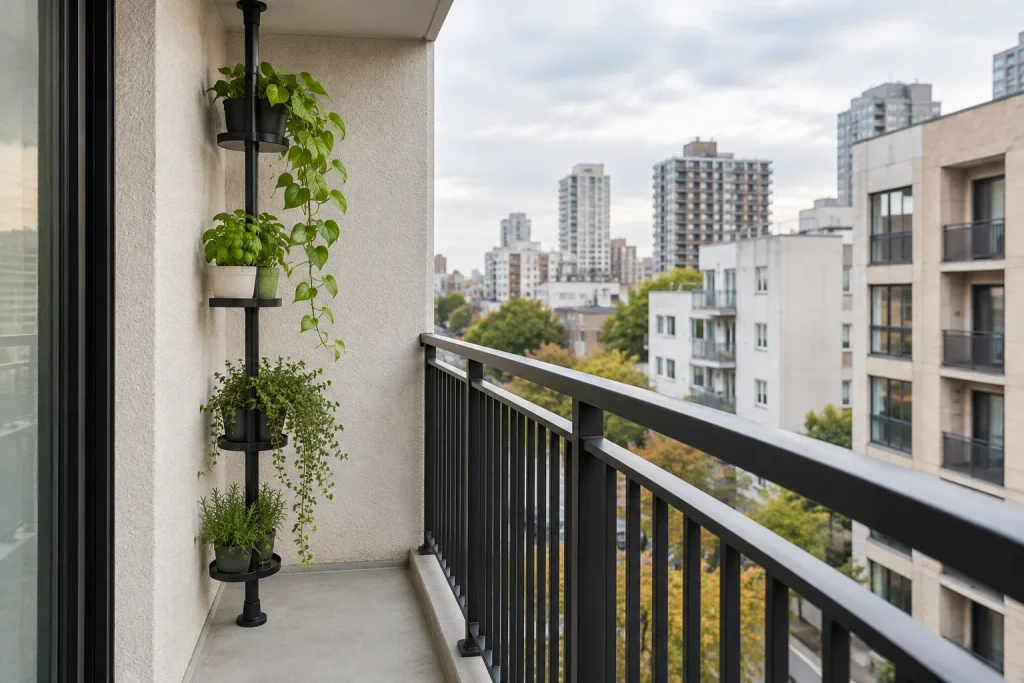
A few specific product categories solve the tiny-footprint problem better than general advice can, because they were built around the same constraint: zero or near-zero floor footprint.
- Over-the-rail hanging pots. These clip directly onto a railing’s top edge with no floor contact at all, holding one plant per unit on either the inside, outside or both sides of the rail depending on the model. They are the single easiest way to add plant count to a Juliet balcony or micro floor without touching the walking path.
- Window boxes mounted on brackets. Where the balcony structure and building rules allow exterior mounting, a window-box-style planter on brackets extends growing space outside the railing line entirely, adding square footage that was never part of the floor to begin with.
- Vertical pocket panels. Fabric or rigid-pocket systems that mount flat against a wall hold a dozen or more small plants in a footprint of just a few inches of depth, which matters enormously when depth, not width, is the scarcest resource on a micro balcony.
- Tension rod plant poles. A spring-loaded pole wedged between floor and ceiling, fitted with small bracket shelves, creates a floor-to-ceiling planting column that needs no drilling and no permanent floor footprint beyond the pole’s own small base.
Our guide to vertical gardening on a small balcony covers the hardware and plant choices for several of these systems in more depth, including which ones hold up to wind and which need a sheltered spot.
What to plant in 10 to 20 square feet or less
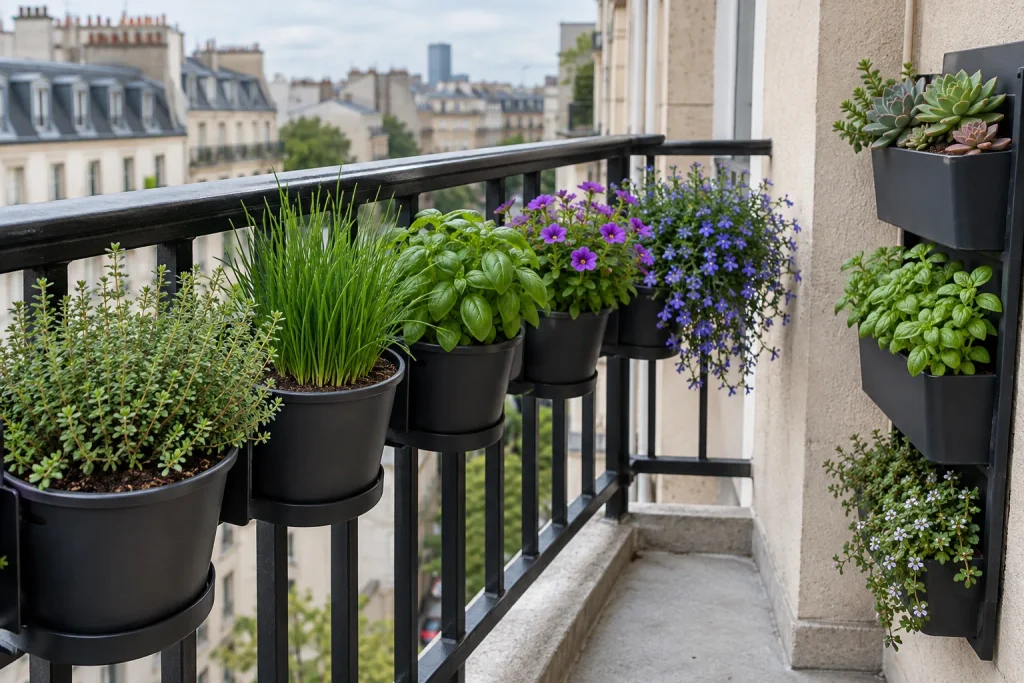
Plant choice matters more on a micro balcony than almost anywhere else, because there is no room to recover from a plant that outgrows its space. Compact herbs (thyme, chives, dwarf basil), small trailing annuals (lobelia, compact calibrachoa), and naturally petite succulents do well in the small individual pockets that over-the-rail pots and vertical panels provide. Avoid anything with a mature spread wider than the pocket or pot it starts in; a plant that needs 12 inches of width to look right will look cramped and perform poorly crammed into a 4-inch pocket no matter how carefully you water it.
Check the container size guide before committing to specific pots, since the smallest practical containers for most edible herbs are still larger than many people expect, and a true micro space has no room to discover that after the fact.
Weight still matters, even in miniature
It is tempting to assume weight limits only apply to balconies holding large furniture and oversized planters, but railing-mounted systems carry their own separate weight question that has nothing to do with the floor at all. A dozen small over-the-rail pots, each modest on its own, adds up once every one of them is fully watered, and that combined weight rests entirely on whatever clips or brackets hold them to the rail instead of being spread across a floor. Confirm the hardware rating for your specific setup instead of assuming small equals automatically safe, and do not treat “it’s only a small pot” as a reason to skip that check.
Light and wind behave differently in a tight space
A micro balcony or a Juliet balcony often sits in a more exposed position than the larger balconies one floor down or around the corner, simply because there is no deep floor area to retreat into shade cast by the building itself. Wind in particular funnels harder through a narrow gap between walls than it does across an open floor, which means a small hanging pot on an exposed railing can swing and dry out faster than the same plant would in a sheltered corner of a bigger space. Check your actual wind exposure before committing to hanging systems with a lot of surface area, like trailing plants in large baskets, and lean toward narrower, lower-profile pots in any spot that catches a strong cross-breeze.
Light can be surprisingly good on these spaces even when the floor area is tiny, especially on an upper-floor Juliet balcony with nothing shading the door from outside. Treat the light reading and the floor-space reading as two separate questions. A 12-square-foot balcony with full western sun can still support sun-loving plants in the right small pots, even though its size limits how many of them fit.
Common mistakes on the smallest balconies
- Buying a bistro set for a space that cannot hold one. Measuring the chair, not just the balcony, before buying prevents the single most common and most expensive mistake on a tiny footprint.
- Assuming small pots mean no weight limit applies. A cluster of small, fully watered railing pots adds up faster than people expect, and the hardware holding them matters as much as it does for one large planter.
- Mounting hardware into the wrong material. Stucco, drywall and thin siding are not a substitute for structural framing or a fixture rated for the load; confirm what is behind the surface before drilling or hanging anything overhead.
- Copying a layout built for a bigger balcony. A plan designed around 40 or 50 square feet of floor does not shrink cleanly to 15; most of its advantages depend on floor space that simply is not present in a true micro footprint.
- Treating the railing as decoration instead of the main growing surface. On the smallest balconies, the railing is often the only real planting surface available, and under-using it wastes the one real asset the space has.
A realistic starter plan for the smallest spaces
- Measure the actual usable depth and width, including the door swing, before choosing any hardware.
- Decide whether you have real floor (even a little) or none at all, since that single fact determines almost everything else.
- Choose one primary system, railing troughs, a vertical panel or over-the-rail pots, instead of trying to combine several at once in a space this size.
- Confirm building rules and hardware weight ratings before mounting anything to the railing.
- Select compact plants sized to the actual pocket or pot, not the plant you wish fit there.
- Add a single piece of fold-flat or wall-hung seating only if the space genuinely allows it, and skip furniture altogether if it does not.
A balcony this small will never hold the layered, multi-zone garden that a larger space can, and trying to force that outcome usually produces a crowded, unworkable result faster than it produces a satisfying one. The more realistic goal is a smaller number of well-placed plants that make the space feel green and deliberate rather than merely full, which is achievable even in a corner that measures barely more than a doormat.