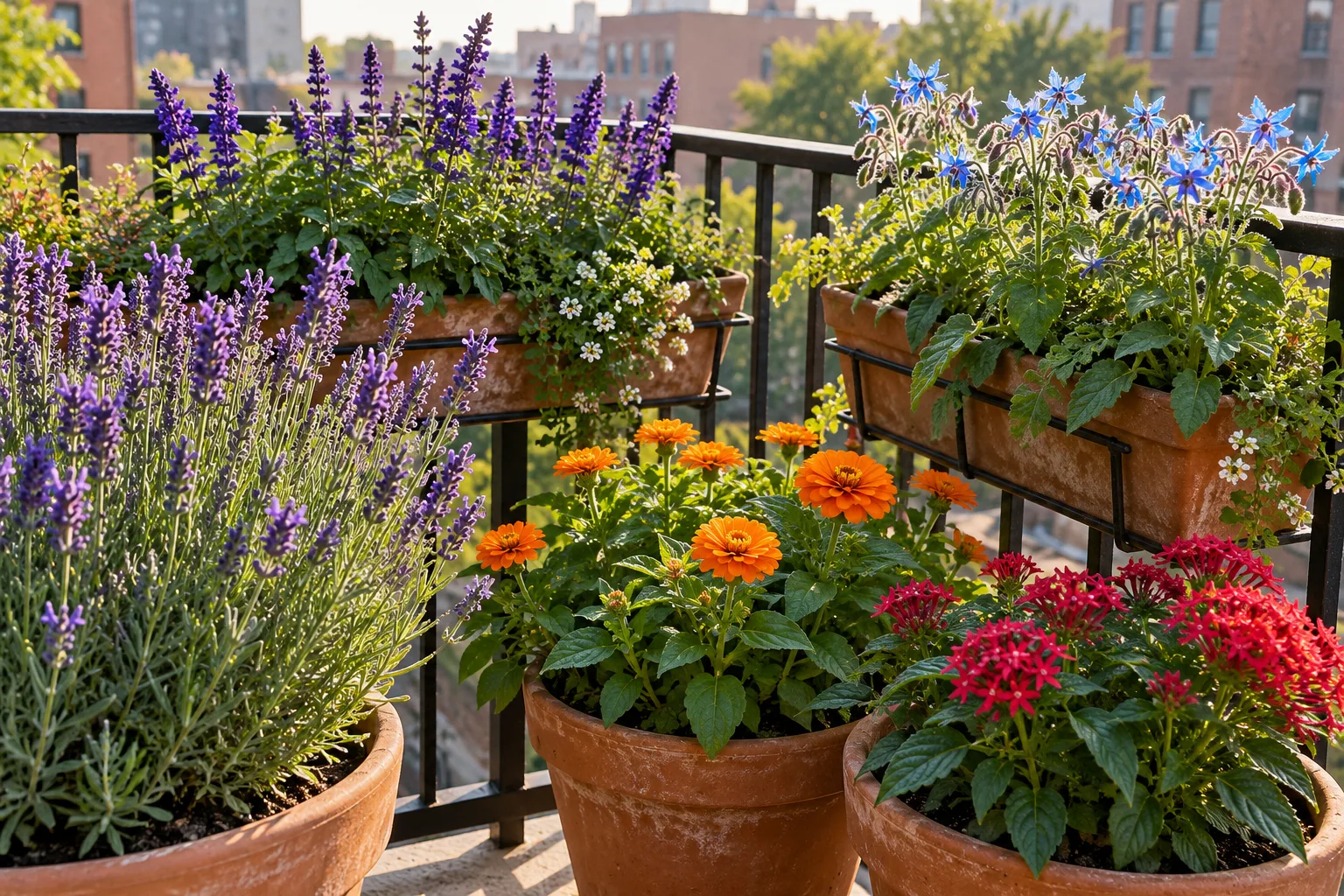
A balcony several stories up can still pull in bees, butterflies, and hummingbirds, as long as it offers what they’re looking for: nectar-rich flowers, the right shapes and colors for each visitor, and a patch of ground-level habitat substitute they can rely on. A single pot of lavender on a ninth-floor balcony genuinely gets visited; pollinators travel surprising distances and will use whatever flowering stops they can find between green spaces.
This guide is organized by the pollinator you’re trying to attract, since bees, butterflies, and hummingbirds respond to different flower shapes, colors, and bloom patterns. Pick a few plants from each group and you’ll end up with a balcony that has visitors through most of the growing season instead of a single busy week.
What pollinators need from a balcony garden
According to the University of Maryland Extension, pollinators need the same basics as any animal: food, shelter, water, and a place to raise the next generation. A container garden can supply most of that in miniature.

- Food, in the form of accessible nectar and pollen. Many modern flower cultivars are bred for showy, ruffled petals at the expense of the nectar and pollen pollinators rely on; single-flowered varieties, with one simple ring of petals around an open center, are usually the better choice over double-flowered forms of the same species.
- Host plants, not just nectar sources. Butterflies lay eggs on specific plants their caterpillars can eat, which is a separate need from adult nectar feeding. A garden with only nectar flowers and no host plants will see adult visitors but never host a full life cycle.
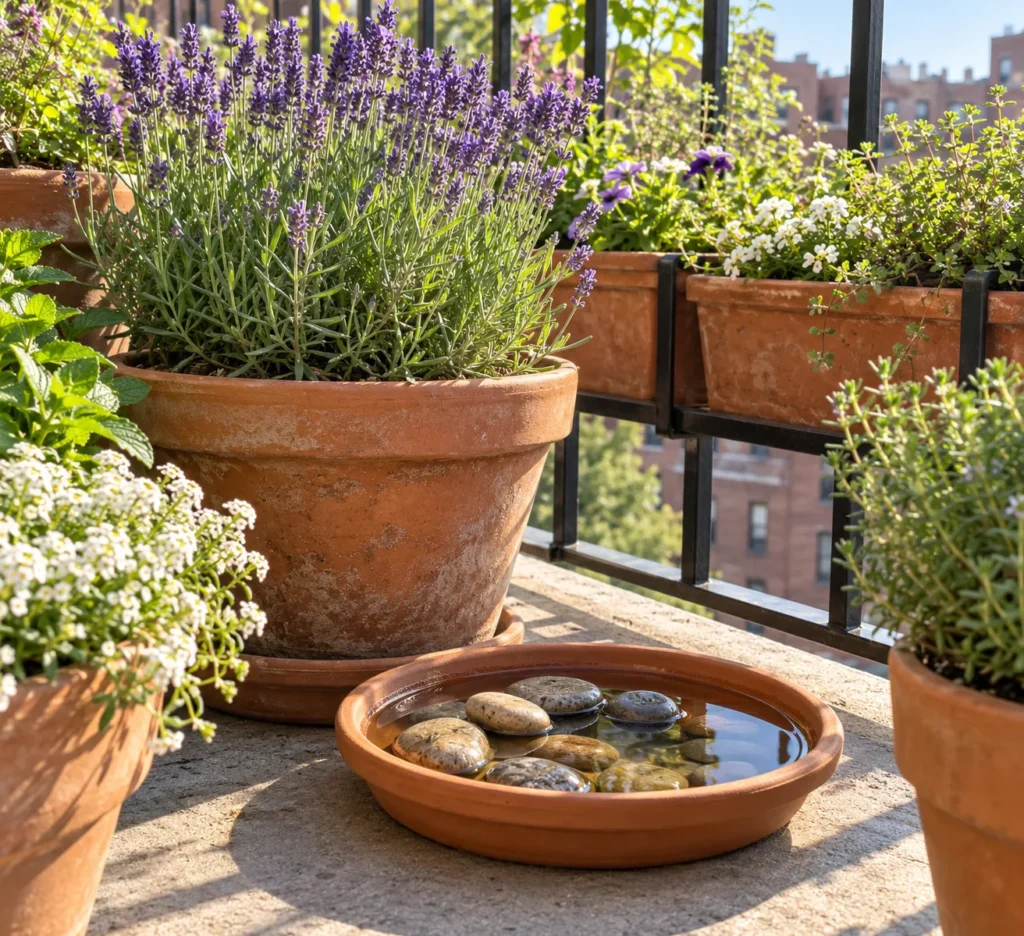
- Water. A shallow dish with a few stones or marbles poking above the waterline gives bees and butterflies somewhere to land and drink without drowning.
- No pesticides, especially systemic ones. Many nursery starts are pretreated with systemic insecticides that end up in the pollen and nectar. Ask before you buy, and avoid treating your own plants with anything broad-spectrum once pollinators are visiting.
Plants bees prefer
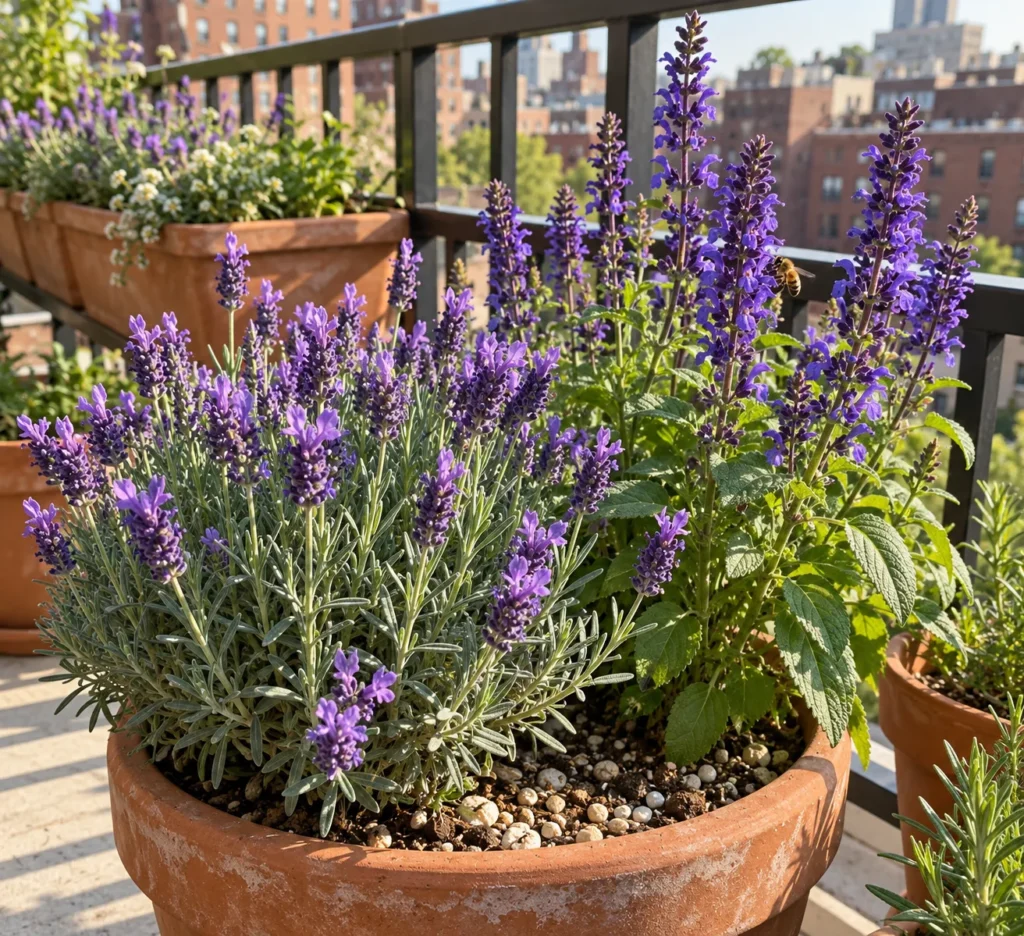
Bees are drawn to blue, purple, and yellow flowers with a landing platform shape, and they’re especially persistent visitors to herbs left to flower instead of being harvested back constantly.
- Lavender, ‘Hidcote’ or ‘Munstead.’ One of the most reliable bee plants for a container, with a long bloom window through summer. Full sun and sharp drainage in a 10 to 12 inch (25 to 30 cm) pot, and a light trim after flowering keeps it productive for years.
- Salvia nemorosa, ‘Caradonna’ or ‘Blue Hill.’ Upright spikes of small tubular flowers that bees work methodically from bottom to top. Compact enough for an 12 to 14 inch (30 to 35 cm) pot, full sun, and deadheading spent spikes encourages a second flush later in the season.
- Anise hyssop (Agastache foeniculum). Fragrant, licorice-scented foliage topped with long-lasting purple flower spikes that bees visit constantly through summer. Full sun and a 12 to 14 inch (30 to 35 cm) pot suit it well, and it tolerates dry spells once established.
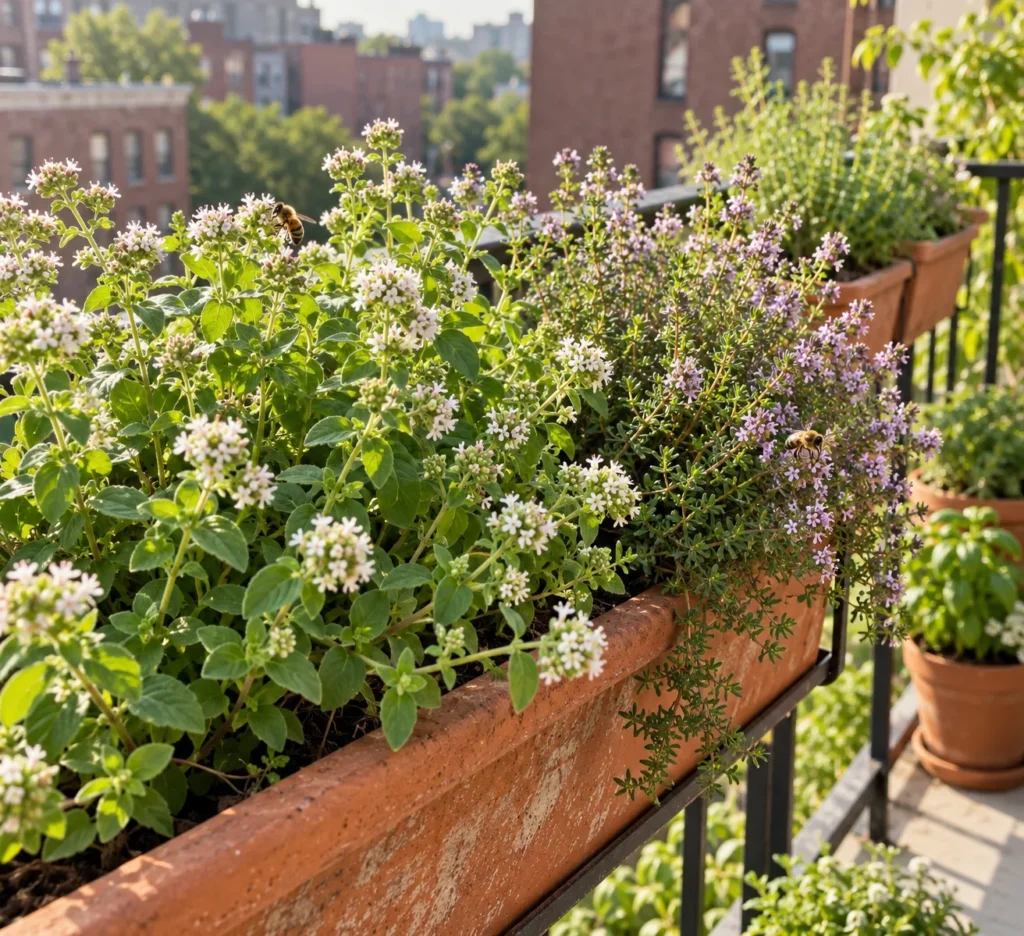
- Oregano and thyme, left to flower. Most people harvest these herbs before they bloom, but letting a portion of the plant flower turns it into a steady bee draw without sacrificing the rest for the kitchen.
- Borage (Borago officinalis). An easy annual with star-shaped blue flowers that bees visit heavily, and the flowers are edible if you want to use them yourself. It self-seeds readily, so expect volunteers the following season in the same pot.
Plants butterflies prefer
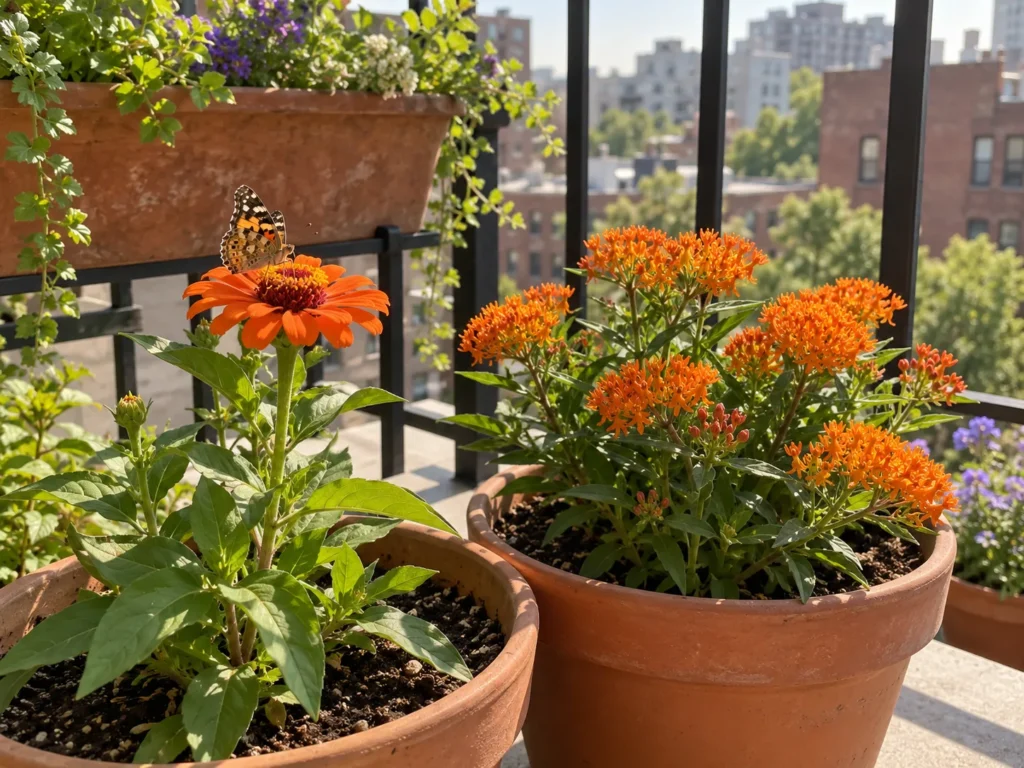
Butterflies favor flat clusters of small flowers that give them a stable landing surface, in bright colors including red, orange, yellow, and pink, and a true pollinator garden gives them somewhere to lay eggs, not just somewhere to feed.
- Zinnia, single-flowered types such as ‘Zahara’ or ‘State Fair’ singles. Avoid heavily doubled zinnia varieties, which can hide or crowd out the nectar that attracts butterflies in the first place. Full sun, a 10 to 12 inch (25 to 30 cm) pot, and continuous bloom from early summer to frost.
- Butterfly weed (Asclepias tuberosa). According to the North Carolina State Extension Plant Toolbox, its orange flower clusters serve as a nectar source for many butterflies and insect pollinators, and it’s a larval host plant for monarch butterflies specifically. It’s drought tolerant and does well in poor, dry soils, but it has a deep taproot, so plant it in its permanent container, at least 14 to 16 inches (35 to 40 cm) deep, since it resents being moved once established.
- Verbena bonariensis, or a compact form like ‘Lollipop.’ Tall, airy stems topped with small purple flower clusters that butterflies, particularly swallowtails, visit steadily through late summer. Full sun and a 12 inch (30 cm) pot for the dwarf form.
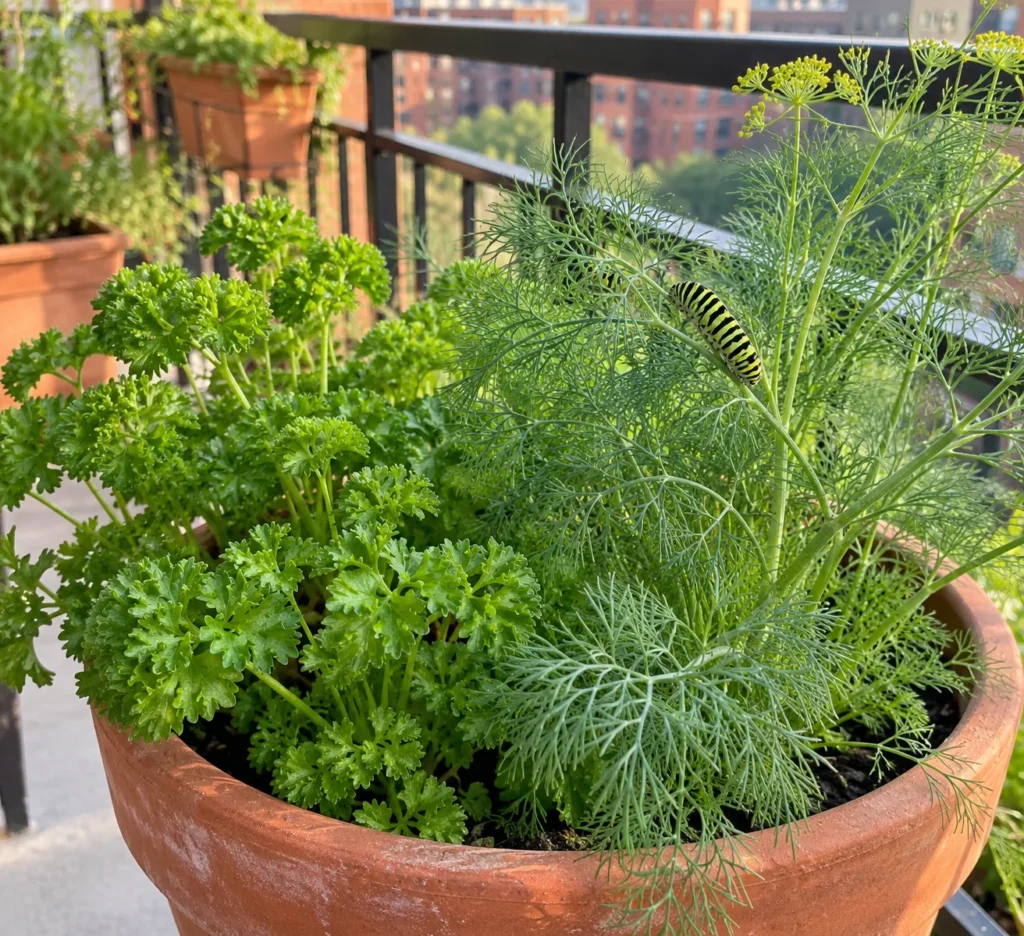
- Parsley and dill, left unharvested in part. Both are host plants for black swallowtail caterpillars, a connection the University of Maryland Extension specifically highlights. Let one plant go to flower and feed caterpillars while you harvest from a second pot for the kitchen.
Plants hummingbirds prefer
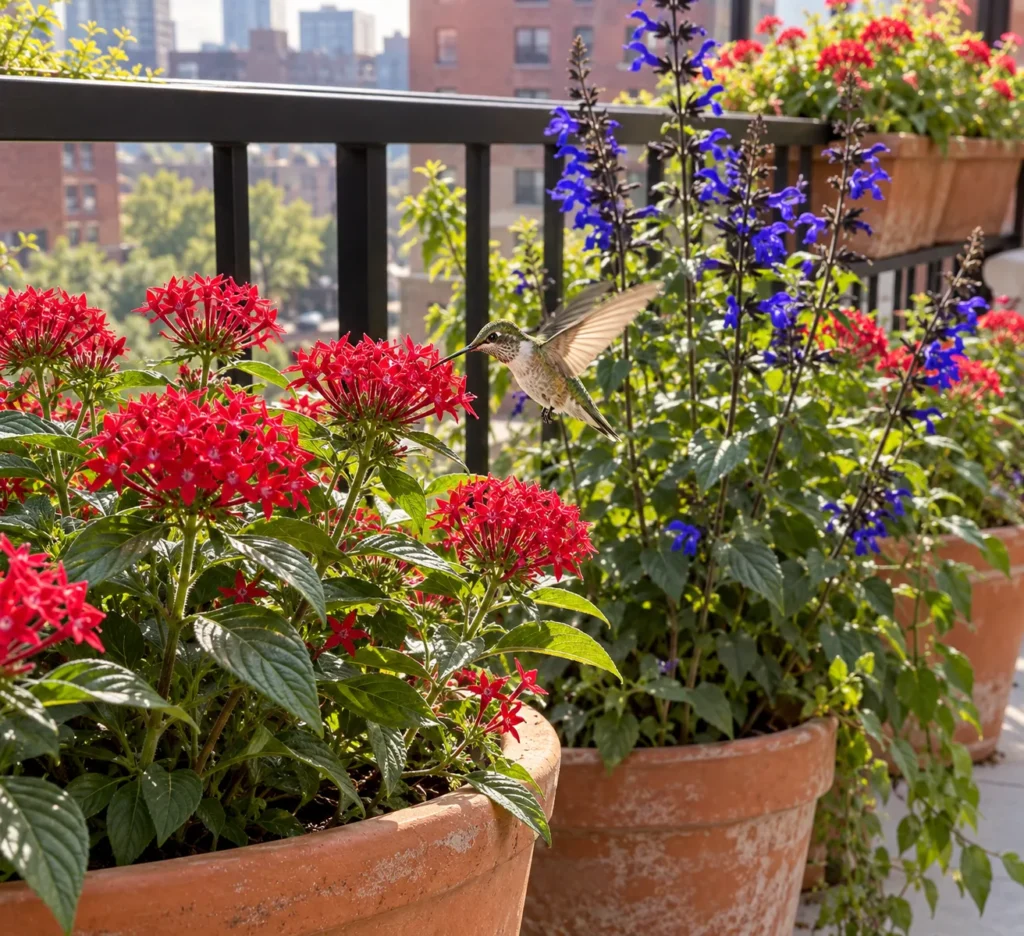
Hummingbirds key in on red and orange tubular flowers, which fit their long bills and tongues far better than flat, open blooms, though they’ll visit other colors too once they’ve found a reliable feeding spot.
- Salvia guaranitica, ‘Black and Blue.’ Deep blue tubular flowers on tall spikes that hummingbirds return to repeatedly through summer. It wants a larger pot, 14 to 16 inches (35 to 40 cm), full sun, and regular water to keep up with its vigorous growth.
- Pentas lanceolata. Clusters of small star-shaped flowers in red, pink, or white that bloom continuously from spring through fall without deadheading. Full sun and a 10 to 12 inch (25 to 30 cm) pot make it one of the easiest hummingbird plants for a container.
- Fuchsia, for a part-shade balcony. Where most hummingbird plants demand full sun, fuchsia is a rare option that blooms well in part shade, which makes it valuable for a balcony that doesn’t get all-day light. It wants consistently moist soil and benefits from afternoon shade in hot climates.
- Agastache, the same anise hyssop listed under bees. A genuine dual-purpose plant; hummingbirds work the same tubular flower spikes that bees visit, so a single pot pulls in both.
Nasturtiums and a note on native plants
A few plants are worth calling out on their own because they don’t fit neatly into one pollinator category, or because the straightforward recommendation carries a regional caveat worth knowing.
- Nasturtium (Tropaeolum majus). An easy annual with bright, funnel-shaped flowers that draw bees and the occasional hummingbird, plus edible leaves and flowers if you want double use from the same pot. Full sun, average soil, and a 10 inch (25 cm) pot; it actually performs better in soil that’s a little lean, since rich soil pushes leafy growth at the expense of flowers.
- Butterfly bush (Buddleia). Widely sold and genuinely good at pulling in adult butterflies, but it’s classed as invasive in parts of the Pacific Northwest and a few other regions, where it seeds into wild areas and crowds out native plants. Check your state or county’s invasive plant list before adding it, and favor native milkweed and native salvia species where butterfly bush is restricted.
- Native species over straight cultivars where you can find them. A locally native milkweed, salvia, or aster is often a better match for your region’s specific pollinators than an unrelated ornamental with similar flowers, since local bee and butterfly species frequently evolved alongside those exact plants. Your local extension office can point you to a regional native plant list suited to containers.
Giving pollinators water and shelter
Flowers get the attention, but the other basics matter just as much for turning occasional visitors into regulars.
- Set out a shallow water dish. A plant saucer with a layer of pebbles or marbles, topped up with fresh water, gives bees and butterflies a safe place to land and drink. Change the water every few days to avoid breeding mosquitoes.
- Leave a little bare or mulched soil exposed. Many native bee species nest in bare ground instead of hives, and a small patch of exposed soil in a large container, or a dedicated small pot of plain soil, supports species a fully mulched, fully planted balcony excludes entirely.
- Skip the broad-spectrum sprays. Even organic-labeled pesticides can harm pollinators on contact. Handpick pests or use targeted treatments only on the specific plant affected, and only in the evening after pollinators have left for the day.
- Check nursery tags for pretreatment. Some bedding plants are treated with systemic insecticides before they ever reach the store. If a tag doesn’t say, ask; it’s a reasonable question at any good nursery.
Container and placement choices that help

- Group plants in blocks instead of scattering single specimens. Pollinators forage more efficiently, and expend less energy, visiting a cluster of the same flower than hunting for single plants spread across a large balcony.
- Prioritize full sun for the bee and butterfly plants above. Nearly everything on those two lists wants six or more hours of direct light to bloom well; the fuchsia is the one real exception if your balcony leans shadier.
- Use bigger pots for anything with a taproot or vigorous root system. Butterfly weed and salvia both perform better long-term in a generous container than a cramped one, since neither likes being disturbed or repotted often.
- Keep a wind-sheltered spot for the water dish. A dish that gets knocked over or blown dry in an exposed corner won’t do its job; tuck it near the base of a larger pot where it’s protected.
Timing blooms so something is always flowering
A pollinator garden works best when it offers a continuous run of flowers instead of one busy burst followed by bare green foliage for months. Spreading bloom times across the season keeps visitors coming back instead of finding the pantry empty on a return trip.

- Early season: sweet alyssum and the first flush of salvia carry a balcony through late spring before the summer bloomers take over.
- Midsummer: zinnia, agastache, pentas, and borage hit their stride and overlap for the heaviest visitor traffic of the year.
- Late summer into fall: verbena bonariensis and a second flush of deadheaded salvia keep nectar available as other plants wind down.
Deadheading spent flowers on salvia and zinnia, instead of letting the whole plant go to seed early, is the single easiest way to stretch bloom time across more of the season without adding new plants.
Common pollinator-garden mistakes
- Choosing only double-flowered, ruffled varieties. They look impressive on a nursery bench, but many have had their nectar-bearing structures bred out in favor of extra petals. When two varieties of the same species are side by side, the plainer, single-flowered one is usually the better pollinator plant.
- Treating one pest problem with a broad spray. A single application of a non-targeted insecticide can undo months of pollinator-friendly planting in an afternoon. Identify the specific pest first and treat only the affected plant, ideally with the narrowest option available.
- Forgetting host plants in favor of nectar flowers alone. A balcony full of zinnia and salvia will feed adult butterflies, but without a host plant like dill, parsley, or butterfly weed nearby, it can’t support their caterpillars through a full life cycle.
- Expecting instant, heavy traffic. A brand-new pollinator planting often takes a full season to get discovered and become a regular stop. Established, blooming plants draw far more visitors than the same species in their first few weeks in a pot.
Where this fits with the rest of your balcony plan
Pollinator plants don’t have to live in a separate, dedicated pot. Many of the species above work well tucked among vegetables and ornamentals you’re already growing, and our guide on companion planting for balcony containers covers how flowering plants and food crops can share space productively. If you’re also curious whether certain plants work against unwanted insects the way these work for beneficial ones, our look at mosquito-repelling plants covers that separate, often misunderstood claim. And for a broader view of keeping color going across the whole season, not just for pollinators, building a balcony that keeps flowering rounds out the seasonal planning above.
A balcony doesn’t need to be large to matter to a bee or a butterfly passing through a dense neighborhood. A handful of the right flowers, a water source, and a season of patience is enough to turn a few square feet into a genuine stop on a pollinator’s route. In a city or a dense suburb, a cluster of balconies doing the same thing block by block adds up to a meaningful corridor of habitat, even if no single balcony looks like much on its own.
Start with one group, bees are usually the easiest to attract quickly with a single pot of lavender or salvia, then add a butterfly host plant and a hummingbird-friendly bloomer once you’ve seen what your balcony’s light and wind actually support. Building it in stages also makes it easier to notice which plants are pulling their weight before you commit a whole season’s container space to the rest.