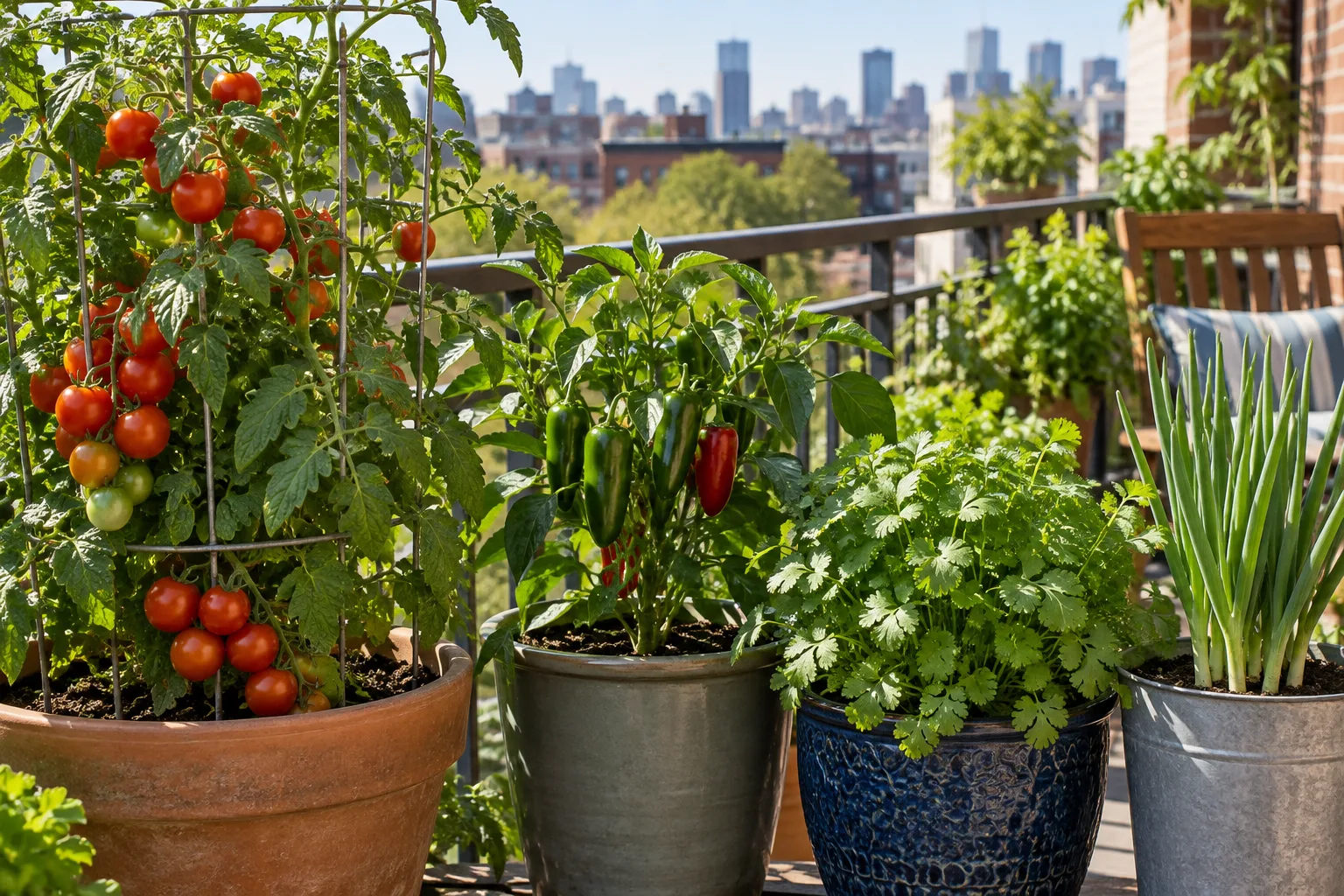
Plan a salsa garden as four small crops sharing a sunny balcony: a compact tomato, a pepper, cilantro, and green onions. Tomatoes and peppers need deeper containers; cilantro prefers cooler roots; green onions manage in shallower space. Separate pots let you water and move each crop on its own schedule.
With one compact tomato, one pepper, a shallow herb planter and a little patience, a sunny balcony can supply several fresh batches of salsa. You may still buy onions, garlic or limes; the goal is a useful harvest, not total self-sufficiency from a few square meters.
What to grow
The core balcony salsa garden has four parts:
- One compact tomato: choose a determinate patio, paste or compact cherry variety. Paste tomatoes make a thicker salsa; cherry tomatoes are often easier in cool or short seasons.
- One pepper: select a compact sweet pepper, jalapeño or another heat level you will genuinely use.
- Cilantro in succession: sow small batches instead of expecting one plant to last all summer.
- Green onions or chives: both fit a shallow planter and can be harvested a little at a time.
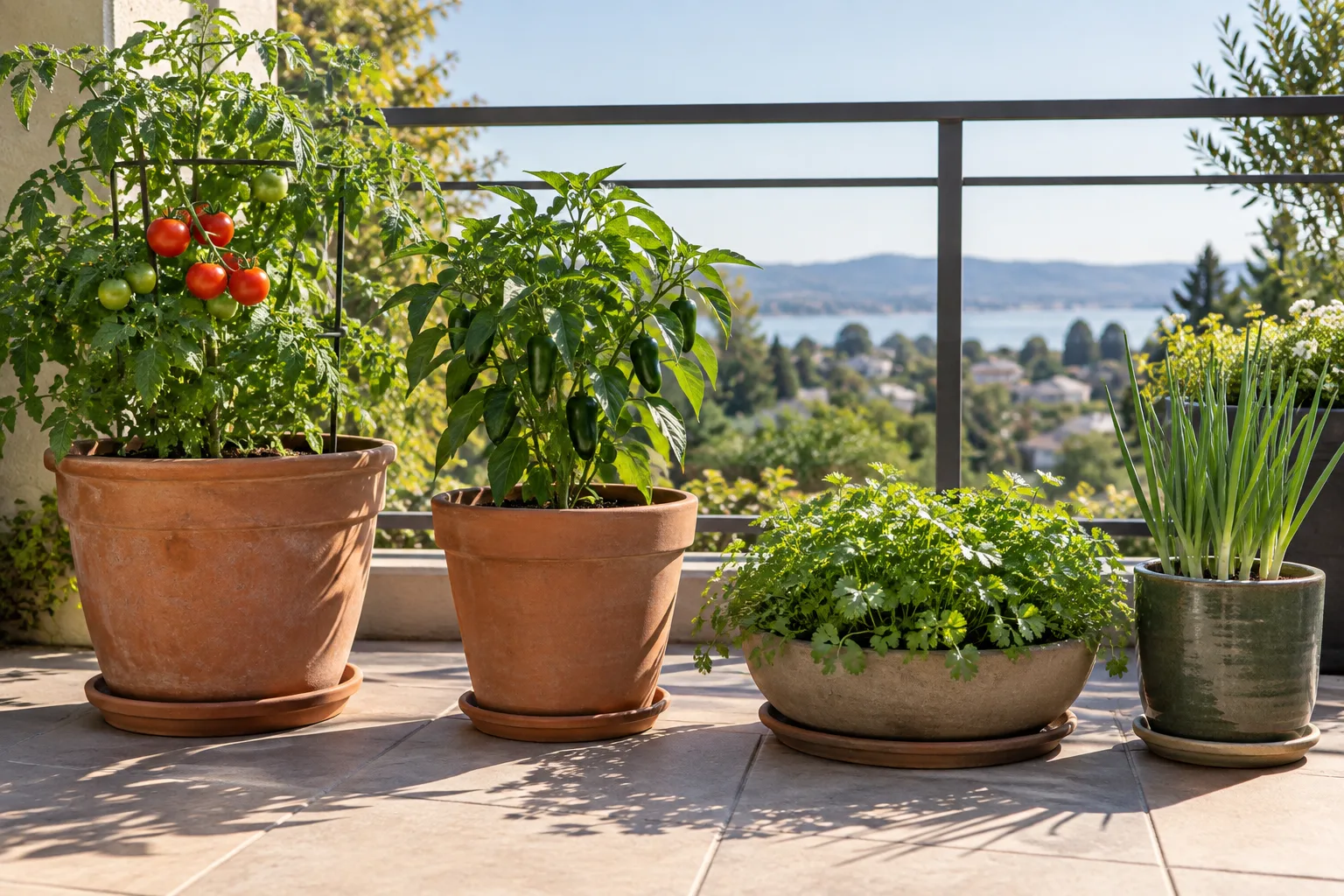
Oregano can grow in its own small pot. Garlic and full-size bulb onions are possible, but they occupy valuable container space for a long season. On a tiny balcony, it is reasonable to grow the ingredients that taste best freshly picked and buy the storage crops.
Check for at least six hours of direct sun
Tomatoes and peppers perform best with six or more hours of direct sun and warm conditions. Reflected heat from glass and pale walls can help in a cool climate, but it can also dry containers quickly in midsummer. Measure the light rather than judging by how bright the balcony feels.
If the balcony receives only three to five hours, focus on cilantro, green onions and leafy herbs. A tomato may stay alive in less light but produce disappointing growth and fruit. Our balcony sunlight guide explains how to record direct-light hours accurately.
Give each crop the right container
| Crop | Practical minimum container | Notes |
|---|---|---|
| Compact tomato | About 19 to 25 L (5 to 7 gal), roughly 35 to 45 cm wide | One plant; use a stable cage or stake |
| Compact pepper | About 11 to 19 L (3 to 5 gal), roughly 30 cm wide | One plant; wide base for wind stability |
| Cilantro | 20 to 25 cm deep rectangular planter | Sow short rows every two to three weeks |
| Green onions | 15 to 20 cm deep planter | Can share the cilantro box if spacing remains open |
| Oregano | 15 to 20 cm pot | Keep separate so it can dry slightly between waterings |
These sizes are starting points. A larger container buffers moisture and root temperature, though it adds more wet weight. Check your building rules and keep the heaviest pots near the building wall. Every conventional container needs drainage holes and a saucer that will not overflow onto the balcony below.
Use container mix, not garden soil
Fill the pots with a fresh, lightweight mix made for outdoor containers. Garden soil compacts in pots, drains poorly and adds unnecessary weight. Moisten dry potting mix before planting so it hydrates evenly instead of shedding water down the sides.
If the mix contains starter fertilizer, note how long the label says it feeds. Frequent watering leaches nutrients from containers, so fruiting crops usually need additional fertilizer later. Use a product labeled for edible container plants and follow its rate rather than improvising a stronger dose.
Plant the tomato and pepper separately
Wait until frost risk has passed and nights are reliably mild before moving warm-season seedlings outside. Acclimate them gradually to sun and wind over several days. A plant raised indoors can scorch or snap if it moves directly to an exposed balcony.
- Water the seedling in its nursery pot.
- Fill the final container, leaving enough space for the root ball and a 2 to 3 cm watering lip.
- Remove the seedling carefully and loosen only densely circling outer roots.
- Set a pepper at the same depth it grew in the nursery pot. Tomatoes can usually be planted deeper so part of the stem is buried.
- Firm the mix gently and water until excess reaches the saucer.
- Install the tomato support at planting time so you do not damage a larger root system later.
Keep the tomato cage entirely inside the railing and use soft ties. On a windy balcony, a compact determinate plant is safer and easier to support than a vigorous indeterminate vine.
Sow cilantro for cool periods
Cilantro grows quickly and bolts, sends up a flower stalk, as days become hot and long. Once it bolts, leaf production declines and the flavor changes. Rather than fighting its life cycle, sow a short row every two to three weeks and let one batch replace the last.
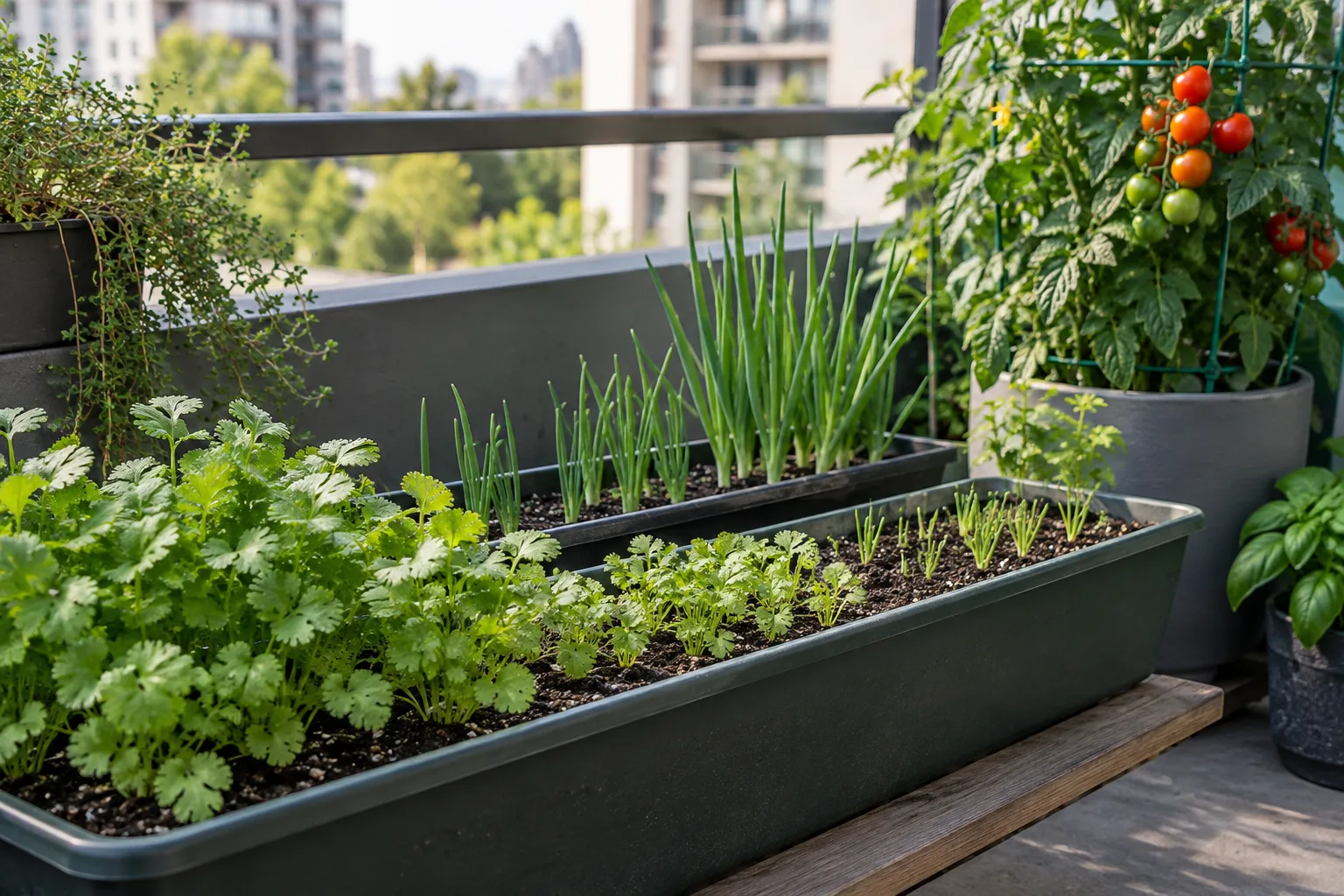
Give cilantro morning sun and some afternoon protection on a hot balcony. In very warm weather, pause sowing and start again as temperatures moderate. The flowers can support small beneficial insects, and mature seed is coriander, but do not allow dry seed to scatter into neighboring balconies.
Water by checking the mix
Do not water all four containers on an automatic calendar. Push a finger a few centimeters into the mix and lift smaller pots to learn their dry and watered weight. Tomato and pepper containers should stay evenly moist without remaining saturated. Cilantro may need more frequent checking because its planter is shallower.
Water at the base until the root zone is thoroughly moist. Empty saucers after drainage. Repeated shallow splashes wet only the surface and encourage a small root system. During hot, windy weather, check at least daily; a large fruiting tomato can use water quickly.
Feed without forcing leafy growth
Begin supplemental feeding when the potting-mix charge is due to run out, following the product label. Too much nitrogen can produce a large, soft tomato or pepper plant with fewer flowers and greater vulnerability to wind and aphids. Consistent, modest feeding is better than occasional strong doses.
Cilantro and green onions need less food than a fruiting tomato. Keeping them in a separate planter makes that difference easy to manage.
Help flowers set fruit
Tomato and pepper flowers are self-fertile, but enclosed or unusually still balconies may have less vibration than an open garden. When flowers are dry, gently tap the tomato cage or support once or twice. Do not shake the plant hard or handle wet flowers.
Extreme heat can also reduce fruit set. If flowers drop during a heat wave, protect the containers from the harshest late-afternoon reflection and keep moisture consistent. New flowers often set normally when temperatures moderate.
Harvest a useful amount, not a fantasy yield
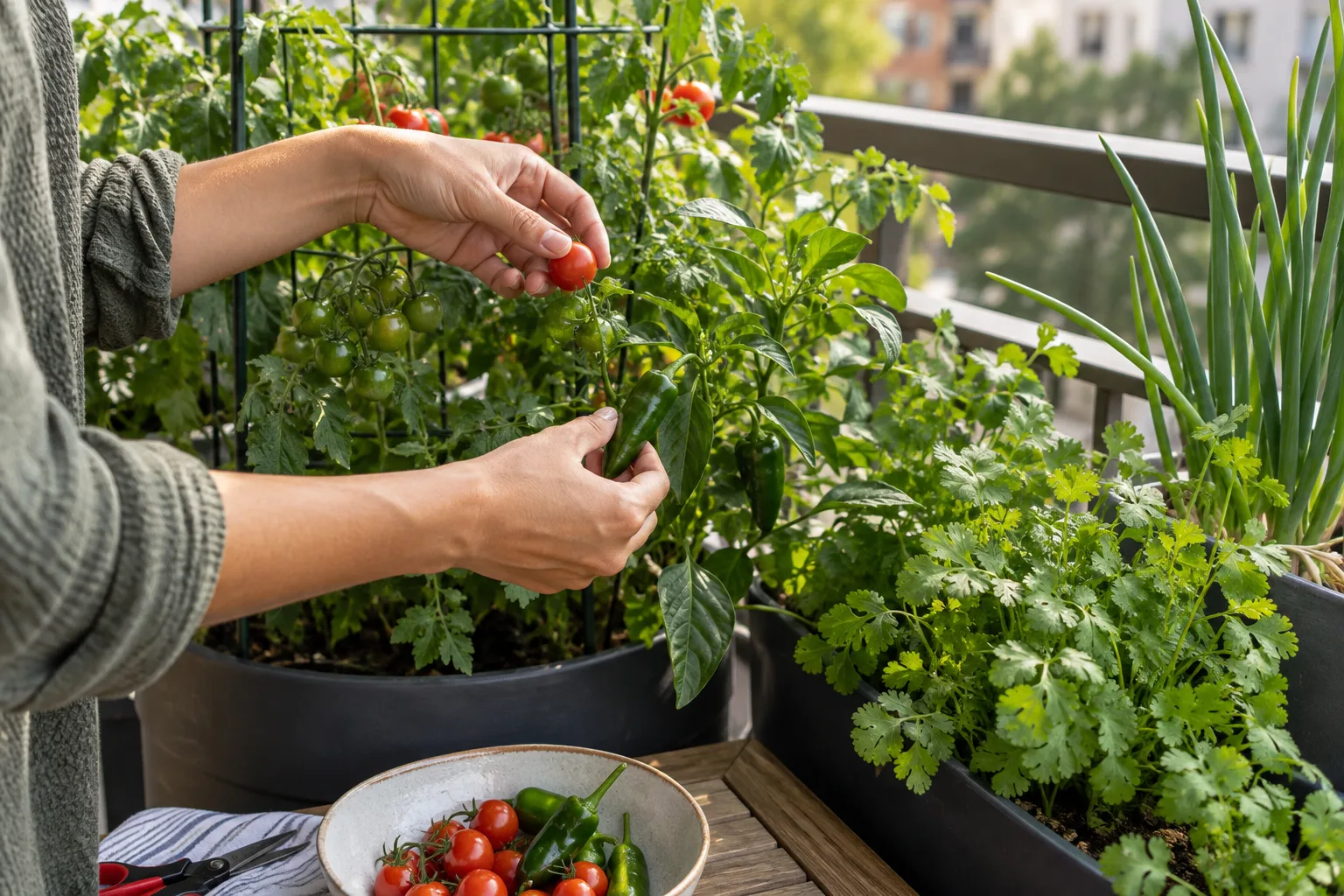
A single compact tomato and pepper will not ripen every salsa ingredient on the same day. Harvest ripe fruit as it is ready and combine it with store-bought ingredients when necessary. Pick cilantro shortly before use and cut green onion leaves from the outside without stripping the entire plant.
Wear clean gloves when harvesting or cutting hot peppers and avoid touching your eyes. Wash produce under running water before preparing it. If you preserve salsa rather than eating it fresh, use a tested canning recipe from a recognized food-safety authority; ingredient substitutions can change acidity.
Common balcony salsa-garden problems
- Tomato wilts every afternoon: check the mix below the surface. A small container, root-bound plant or hot reflected light may be drying it too quickly.
- Flowers fall without fruit: look for temperature extremes, irregular watering or excessive nitrogen before adding fertilizer.
- Cilantro bolts immediately: sow during cooler weather, provide afternoon protection and use succession plantings.
- Pepper growth stalls: cool nights, insufficient sun and an oversized wet pot are common causes.
- Leaves curl around sticky clusters: inspect the undersides for aphids and use the balcony aphid-management guide.
- Containers tip in wind: move them near the building wall, use broad-based pots and shorten overly tall unsupported growth.
The simplest first-season plan
Begin with one compact cherry or paste tomato, one mild pepper, cilantro and green onions. Skip tomatillos in the first year: they usually crop better with more than one plant for pollination and need more space than most tiny balconies can spare.
For broader plant choices, read the best vegetables for balcony containers and the balcony herb guide. The container size guide will help you compare the weight and water behavior of resin pots, grow bags and self-watering planters.
Keep the edible plan moving
Compare the tomato and pepper pots with the container vegetable guide, and choose companions from the balcony herb guide.
Plan the salsa garden as a sequence, not a single planting day
A small salsa garden is easier to keep productive when you stagger the parts. Start with the long-season crops first: tomatoes and peppers go into their final containers after local frost risk has passed and nights are reliably mild. Herbs and green onions can fill smaller gaps. Cilantro and radishes are better treated as repeat crops: sow a little at a time in cool weather rather than expecting one planting to last all summer.
Make the container plan match each crop’s root room. A patio tomato should have its own large container, a pepper needs a stable pot of its own, and herbs do best when grouped by water needs rather than packed around a thirsty fruiting plant. Basil can share the warm, sunny part of the garden, while cilantro is happier in a cooler season or shadier edge.
Harvest with a purpose. Pick ripe tomatoes and peppers regularly so the plant keeps setting fruit. Cut herbs from several stems rather than stripping one side. When a cool-season crop bolts, remove it and use that small container for a fresh sowing or a heat-tolerant herb. This rhythm gives a modest balcony garden a longer useful season than planting every seed at once.
Sources
- Illinois Extension: Planting a salsa garden
- Illinois Extension: Choosing salsa crops and varieties
- University of Minnesota Extension: Edible container gardening
- University of Minnesota Extension: Watering and fertilizing containers
Planting dates and suitable varieties depend on your climate. Follow local frost guidance and your building’s rules before setting up large food-growing containers.