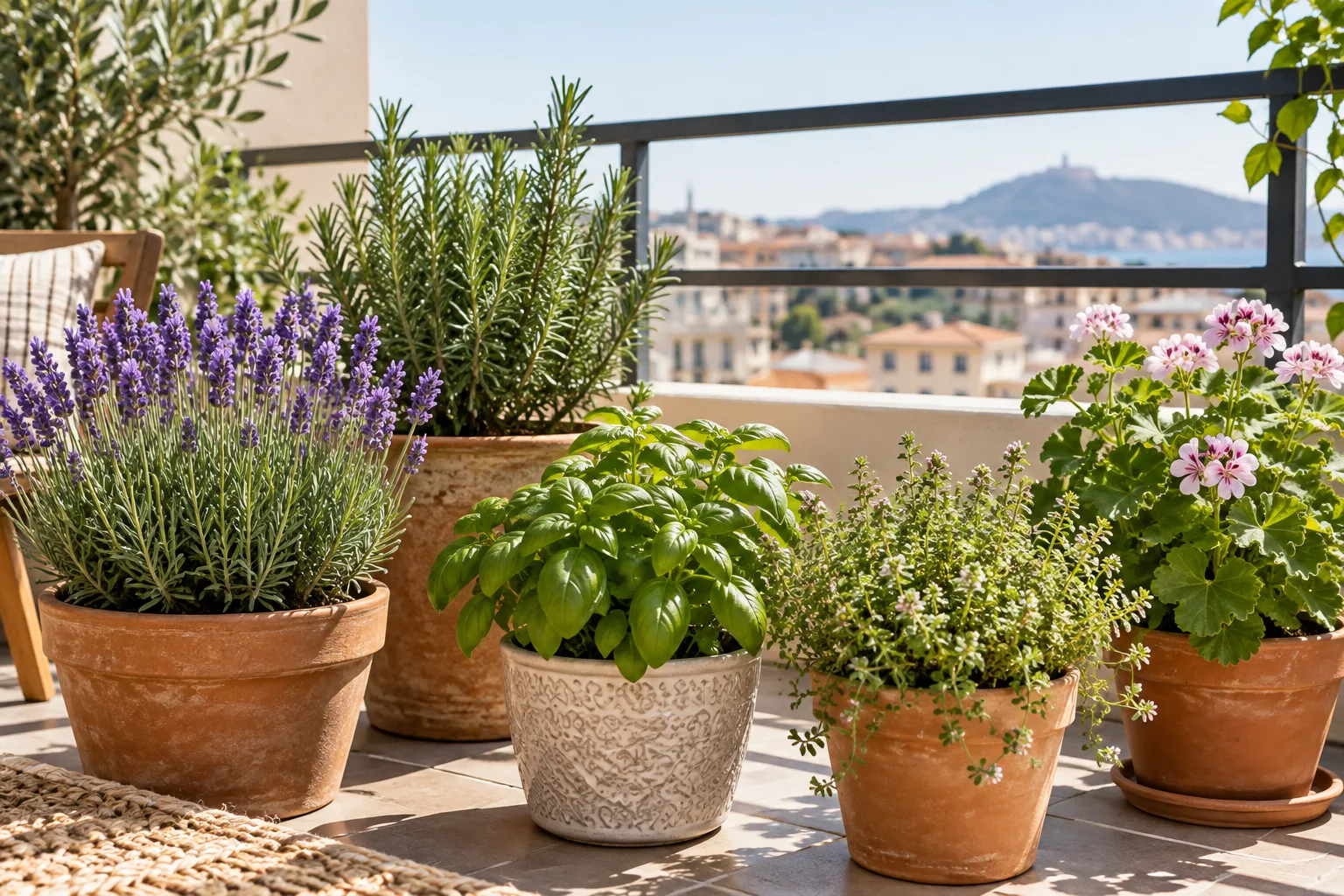
Lavender, rosemary, basil, lemon thyme and scented geranium are frequently sold or shared as “mosquito-repelling plants.” They are useful balcony plants, but a row of intact pots does not create a mosquito barrier. Research-based extension guidance is consistent: living plants do not release enough repellent compounds into the surrounding air to provide reliable protection.
That does not make the plants worthless. Grow them for fragrance, flowers or cooking. For mosquitoes, focus on removing standing water, keeping insects out through screens and using proven personal protection when bite risk matters.

Why the claim sounds plausible
Some aromatic plants contain oils or individual compounds that can repel insects when extracted, concentrated and used in a tested formulation. Citronella oil, for example, comes from grasses in the genus Cymbopogon. Oil of lemon eucalyptus is the source of an active ingredient used in some registered repellents.
An intact plant in a pot is different from a formulated product. Its volatile compounds disperse into open air, especially in balcony wind. Iowa State University Extension notes that a plant simply sitting on a patio has no meaningful effect on mosquitoes in the area. Penn State Extension similarly states that living plants do not contain enough released essential oil to repel mosquitoes effectively.
The common “mosquito plant” is not citronella grass
The plant often labeled “citronella plant” or “mosquito plant” is usually a lemon-scented geranium, commonly sold as Pelargonium × citrosum. It smells citrusy when touched, but it is not the tropical grass used to produce commercial citronella oil. Neither plant passively protects a seating area simply by growing nearby.
Lavender, basil, rosemary, mint, marigold and lemon thyme are promoted in the same way. Their scent may be enjoyable, A strong scent to a human nose does not prove mosquito protection.
Do not rub garden leaves on your skin
Crushing a leaf releases more oil. That does not make it a tested skin repellent. Plant sap and essential oils can irritate skin, cause allergic reactions or increase sun sensitivity. Concentration and duration are unknown, and “natural” does not mean harmless.
When personal protection is needed, use a repellent registered by the appropriate national regulator and follow its label. In the United States, CDC recommends EPA-registered products. In Canada, look for a Health Canada pest-control product number and follow the age and application instructions on the package.
The most useful balcony step: remove standing water
Mosquito larvae develop in water. On a balcony, overlooked saucers, buckets, watering cans and clogged drains can hold small amounts long enough to matter. CDC advises emptying and scrubbing water-holding items weekly.
- Check every saucer after watering and rain.
- Pour collected water into a bucket or indoor drain where permitted, never over the railing.
- Scrub the saucer to remove material attached near the water line.
- Store unused pots and watering cans upside down.
- Keep balcony drains clear of leaves and spilled potting mix.
- Repeat the check at least weekly during mosquito season.
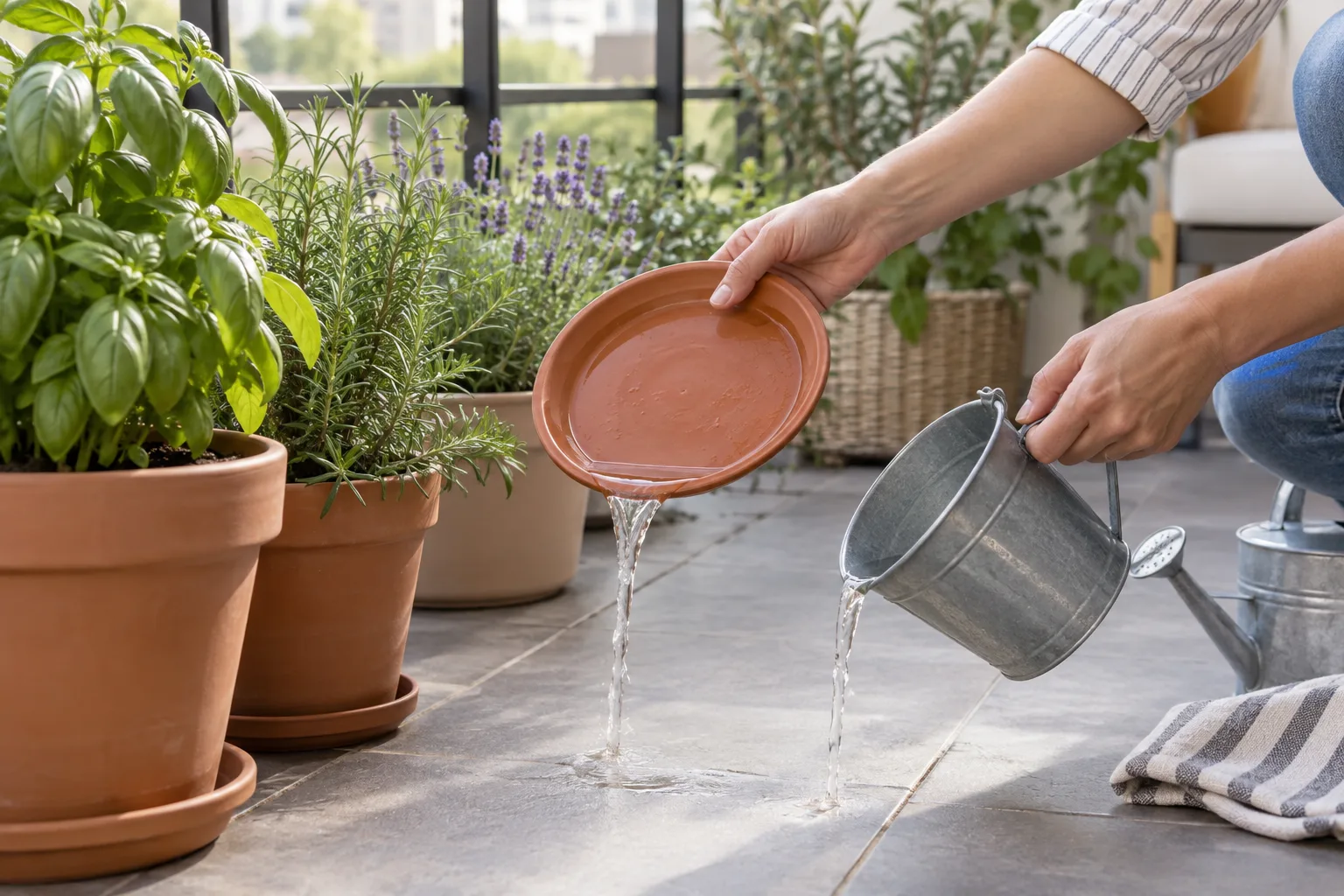
A saucer still serves an important balcony purpose: it catches drainage before it reaches the neighbor below. Keep the saucer, size it properly, water carefully, and empty it after drainage.
If the mosquitoes are coming from somewhere else
A clean balcony can still receive adult mosquitoes from nearby gutters, roof drains, courtyards, unmanaged containers or natural water sources. Their presence does not automatically mean your pots are breeding them. Inspect your own space first, then report persistent standing water in shared building areas to the property manager instead of entering restricted areas or leaning beyond the railing.
Notice when and where bites occur. A few insects around dusk call for different action than a sudden daytime increase or mosquitoes repeatedly entering through a damaged screen. Local public-health agencies can identify region-specific risks and may offer reporting or inspection guidance. Avoid spraying neighboring property, shared corridors or the air around other residents. That can expose people and pollinators without removing the water where larvae develop.
Plants also need ordinary irrigation, so the goal is not a permanently dry garden. Water the root zone, allow excess to drain, and then empty the catch tray. Moist potting mix inside a functioning container is different from an exposed pool of stagnant water.
Treat reservoir planters as closed systems
A well-designed self-watering planter has an enclosed reservoir, capped fill tube and screened or narrow overflow. Keep those parts in place and repair damaged covers. Do not use a container that leaves a broad pool of water open to insects.
If a reservoir cannot be emptied, covered or screened, follow local public-health guidance rather than adding a home remedy. Any larvicide must be labeled for the specific use and applied exactly as directed. The self-watering planter guide explains routine reservoir and overflow maintenance.
Use airflow and screens
Repair gaps in the screen on the balcony door and avoid leaving the unscreened door open at peak mosquito times. A small fan can improve comfort in a seating area because mosquitoes are weak fliers, but place it securely, keep electrical equipment dry and do not run a cord across the exit route.
A fan is a local comfort measure, not population control. It does not replace removing standing water or using registered repellent when mosquitoes may transmit disease.

What about candles, coils and spatial repellents?
Outdoor spatial repellents work by dispersing an active ingredient into a limited area. Their performance depends on the product, coverage, wind and correct use. If you consider one, choose a registered product and follow the label. Never assume that a candle is effective merely because it smells like citronella.
Many apartment buildings prohibit open flames on balconies. Smoke and vapor can also affect neighbors, so building rules and fire safety take priority.
Skip bug zappers and ultrasonic gadgets
Bug zappers kill many insects that are not mosquitoes and are not an effective way to protect a balcony seating area. Ultrasonic devices also lack reliable evidence of mosquito protection. Buying another gadget does not correct a saucer that remains full of rainwater.
Aromatic plants are still worth growing
Choose aromatic plants for specific uses:
- Basil: a productive culinary herb for a warm, sunny balcony with regular water.
- Rosemary: useful evergreen structure in a sharply drained pot; protect it according to your winter climate.
- Lavender: fragrant flowers for sun and fast drainage; avoid wet winter mix.
- Lemon thyme: compact, edible and suited to a sunny container.
- Scented geranium: attractive foliage and fragrance when touched, but not a passive repellent.
Check pet and child safety before adding any plant, especially if leaves may be chewed. Keep culinary herbs separate from any pesticide application not labeled for edible crops.
A five-minute weekly mosquito check
- Empty and scrub saucers, buckets and watering cans.
- Check the floor drain and corners for trapped water.
- Confirm reservoir fill tubes are capped.
- Repair door-screen gaps.
- Store loose containers upside down.
- Remove dense dead foliage that keeps hidden areas damp.
This routine is more useful than arranging a ring of so-called repellent plants. It also improves ordinary garden hygiene and helps you notice pests, leaks and blocked drainage early.
What the evidence supports
No potted plant has been shown to create dependable mosquito protection just by sitting on a balcony. Grow lavender, rosemary and basil because they suit the light and because you enjoy them. For mosquitoes, remove breeding water, use screens and airflow, and choose registered personal protection when needed.
For help selecting aromatic herbs by light level, see the guide to the best herbs for a balcony. If your plants develop sticky leaves or clustered insects, use the site’s separate aphid guide rather than treating every small insect as a mosquito problem.
Solve the problem you can control
If insects are feeding on the plants rather than biting people, use the aphid identification and cleanup steps. For plant selection, return to the condition checklist.
Reduce bites by removing breeding water first
Plants can make a balcony pleasant, but they are not a reliable mosquito-control system on their own. The practical priority is to remove places where mosquitoes can breed and to reduce the conditions that keep them close to where you sit. Once or twice a week, empty standing water from saucers, buckets, watering cans, tarps, and any container that holds rain. Scrub or rinse the container before refilling it; larvae can cling close to the waterline.
Keep plant saucers working for drainage rather than storage. Empty them after watering or rain, and use a pot with drainage holes so the root zone is not sitting in water. If a balcony has a drain, make sure leaves and soil are not creating a shallow puddle. These small maintenance habits matter more than choosing a fragrant plant and hoping it changes the insect pressure.
For time outside, use barriers and personal protection appropriate to your household and local public-health guidance. If mosquitoes are unusually heavy, check whether your local authority has current advice about prevention or mosquito-borne disease. A balcony garden can support a comfortable outdoor space, but it should not be treated as a substitute for source control.
Sources
- Iowa State University Extension: Do nearby plants repel mosquitoes?
- Penn State Extension: Pollinator-friendly mosquito control
- CDC: Mosquito control at home
- CDC: Preventing mosquito bites
- University of Maryland Extension: Controlling mosquitoes
- US EPA: What is an insect repellent?
Mosquito-borne disease risk and approved products vary by location. Follow current local public-health advice and the label on any registered repellent or pest-control product.