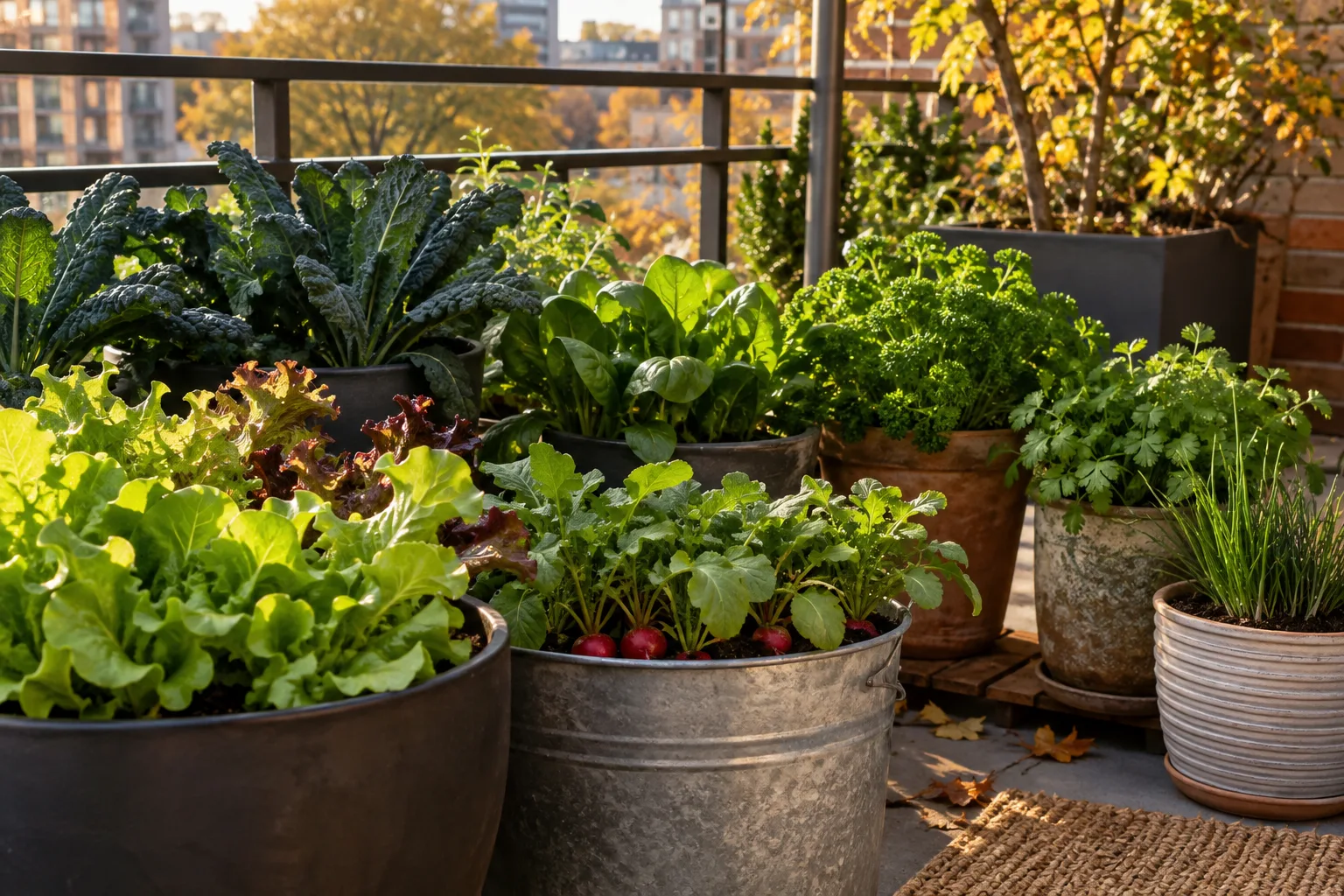
Summer vegetables get most of the attention, but a surprising number of crops flat-out prefer the milder temperatures of fall. Cool-season vegetables and herbs sown or transplanted in late summer and early fall often grow faster and taste better than the same crops struggling through a July heatwave. A balcony’s containers make this easy to manage, since you can move pots to catch the last of the season’s sun as it shifts, and you’re not committing garden bed space to a crop that only has a few weeks left to give before winter.
Here’s what to grow, how deep a container each one needs, and how to time planting against your first frost. If you’re also refreshing containers for fall color alongside these crops, see our broader guide to fall container gardening on a balcony.
Part of our complete guide to fall balcony gardening.
Quick answer: Lettuce, spinach, kale, radishes, and carrots all do well in fall balcony containers, along with cool-tolerant herbs like parsley, cilantro, and chives. Most are quick-growing, so they can be planted several weeks after summer crops finish, as long as you count backward from your area’s first frost date to make sure there’s enough time to mature.
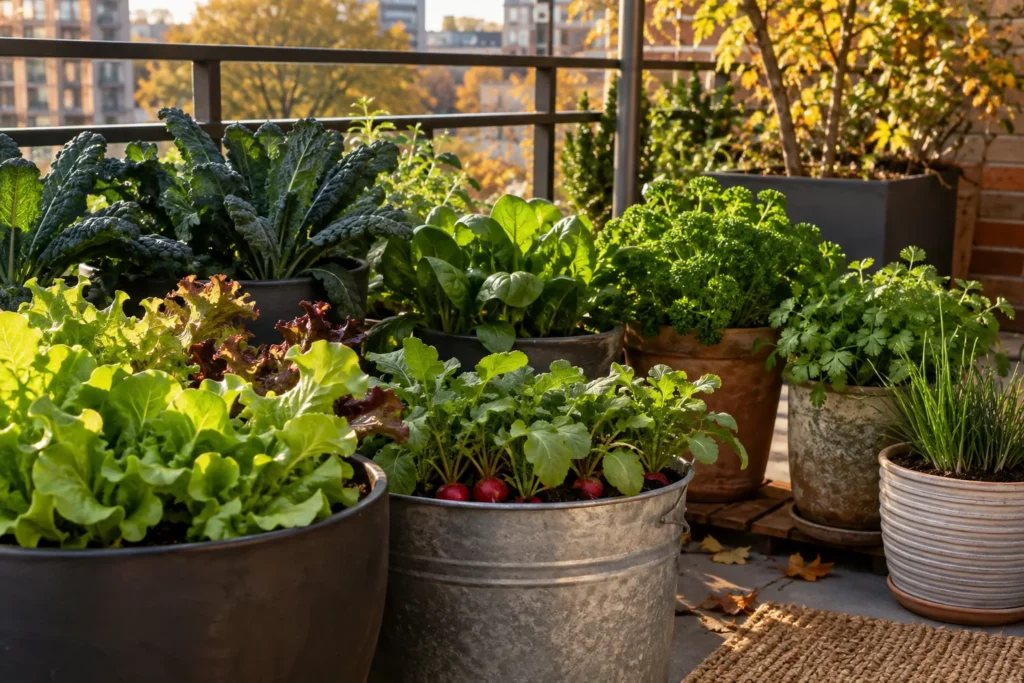
Why fall suits these crops better than summer
Many leafy greens and root vegetables are bred to grow quickly in cool conditions, and they respond to summer heat by bolting, going to seed early and turning bitter, instead of producing more to eat. Cooler fall air, paired with soil that’s still warm from summer, speeds up germination and early growth for these crops compared to a cold early-spring start, while the eventual drop in temperature keeps them from bolting the way they would in June. The result is often a sweeter, more tender harvest than the same crop grown under summer stress.
Why fall planting math is different from spring
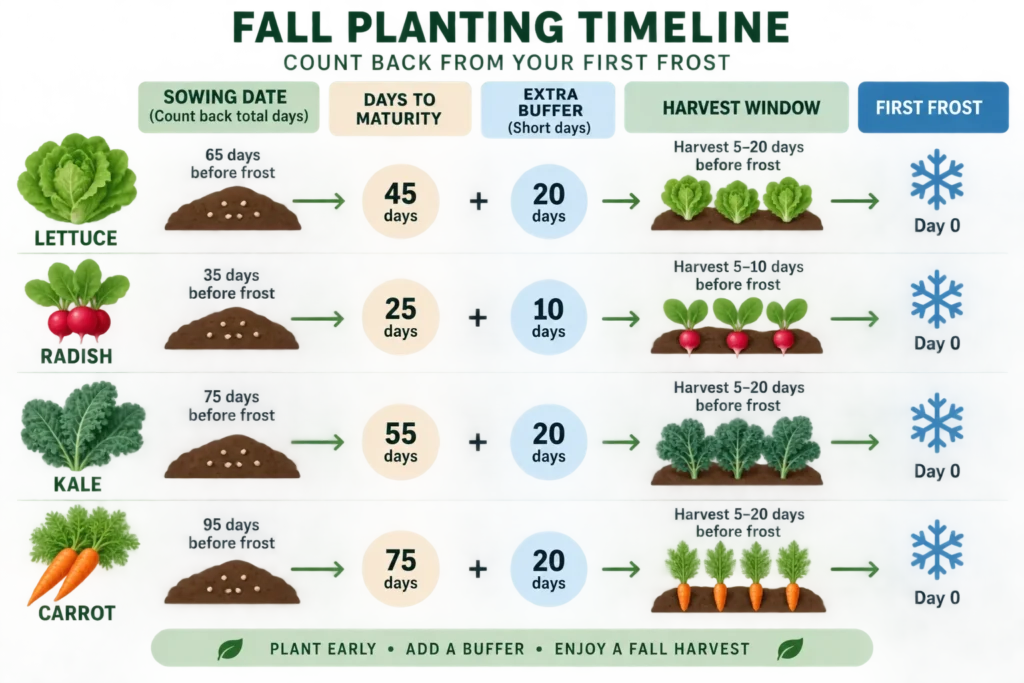
A seed packet’s “days to maturity” is usually measured under the lengthening, warming days of spring, not the shortening, cooling days of fall. As daylight hours drop through September and October, the same crop grows more slowly than its packet suggests, even though the days-to-harvest number doesn’t change. A commonly used adjustment is to add about two extra weeks, sometimes called a short-day factor, on top of the printed days-to-maturity when you’re calculating a fall planting date. That buffer is baked into the timing guidance in this guide, but it’s worth knowing why the math isn’t a straight countdown from the seed packet.
Vegetables for fall containers
Lettuce and salad greens
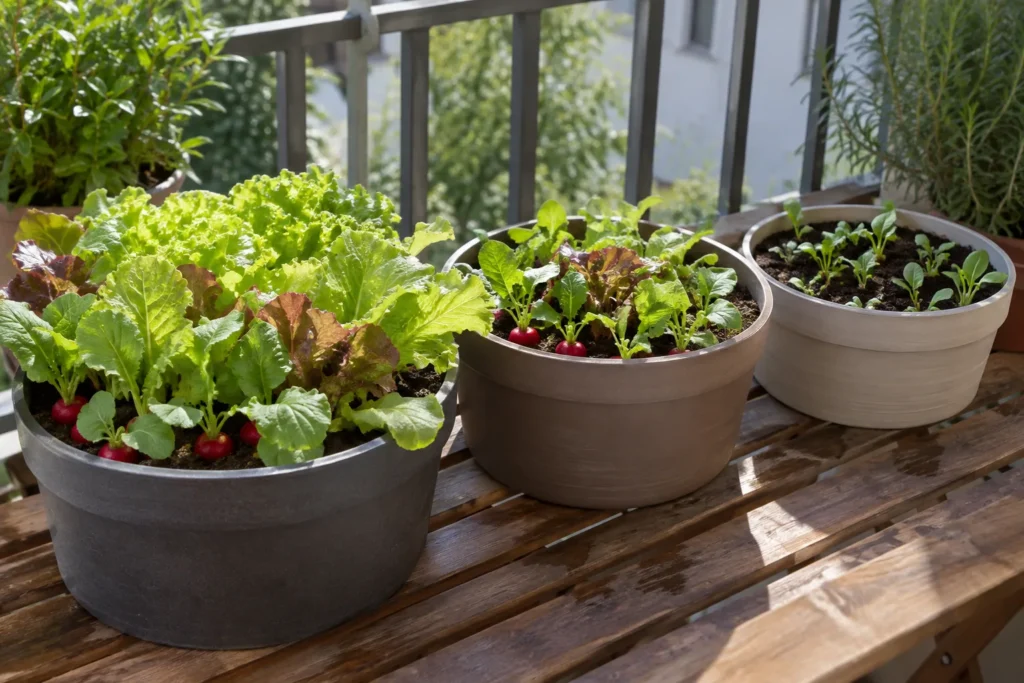
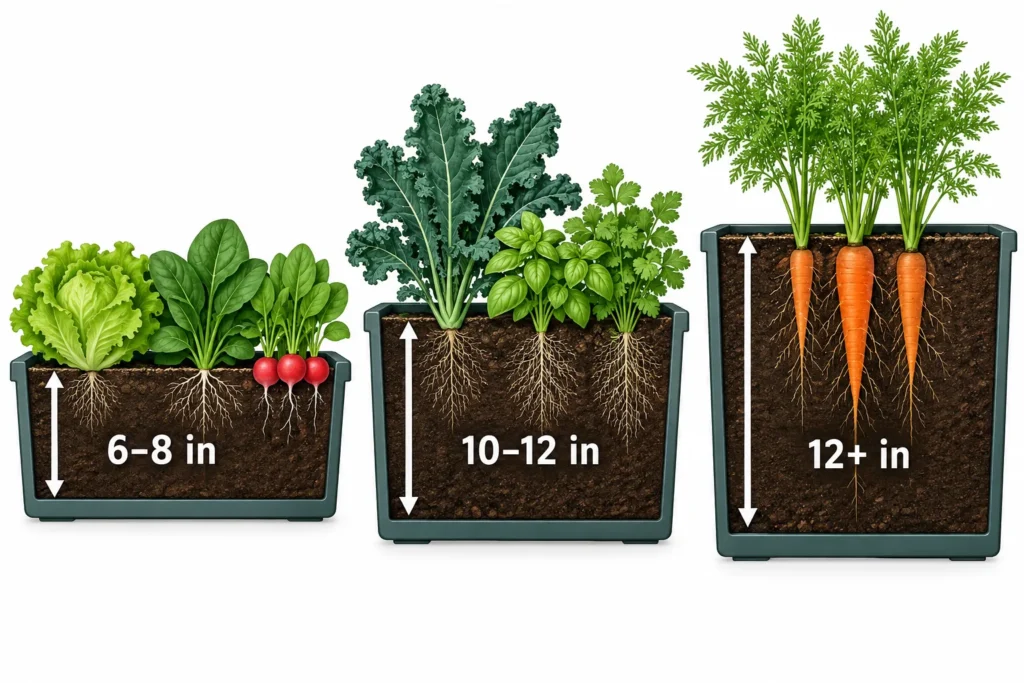
Loose-leaf lettuces are among the fastest and most forgiving fall crops, often ready to start harvesting in as little as 30 days. A pot 6 to 8 inches (15 to 20 cm) deep is enough, since lettuce roots stay shallow. Sow a few seeds every couple of weeks for a rolling harvest instead of one large batch that all matures at once.
Spinach
Spinach truly prefers cool weather, one of the few crops that seems happier once the thermometer drops, and can handle a light frost without damage, sometimes tasting sweeter afterward. It needs a similar pot depth to lettuce, around 6 to 8 inches (15 to 20 cm), and benefits from consistent moisture while it’s establishing.
Kale
Kale tolerates cold better than almost any common vegetable and improves in flavor after a frost, as the plant converts starches to sugars in response to the cold. Give it a deeper pot than lettuce or spinach, at least 10 to 12 inches (25 to 30 cm), since it grows larger and stays productive longer into the season.
Radishes
Radishes are one of the fastest vegetables available, often ready in 25 to 30 days, which makes them a good choice even for a later fall planting window when time before frost is limited. A pot 6 to 8 inches (15 to 20 cm) deep works for most round varieties; longer varieties need more depth.
Carrots
Carrots take longer than the other crops here, usually 60 to 75 days, so they need to go in earlier in the fall window to mature before a hard freeze. They need a proper, deep container, at least 12 inches (30 cm), since a shallow pot produces short, stubby, or forked roots. Choose a shorter or round variety if your deepest available container is on the smaller side.
Choosing container-friendly varieties
Seed racks and online listings often flag varieties bred specifically for containers or compact spaces, and for fall planting it’s worth also checking for words like “fast,” “quick-maturing,” or a notably short days-to-maturity number compared to other varieties of the same vegetable. A quick-maturing lettuce or a short, round carrot variety gives you more flexibility if you’re planting later in the fall window or working with a shallower container than the ideal depth listed above, without giving up on the crop entirely.
Herbs for fall containers
- Parsley. Cold-tolerant and often productive well past the first light frost; a 6 to 8 inch (15 to 20 cm) pot suits it well.
- Cilantro. Performs noticeably better in the cooler, shorter days of fall than in summer heat, which tends to make it bolt to seed quickly.
- Chives. A hardy perennial herb that tolerates cold well and often keeps producing into the start of winter in milder climates.
- Dill. Prone to bolting in summer heat, dill often does better as a fall crop, growing steadily in the cooler air without rushing to flower and set seed.
Succession planting for a steady harvest
Fast crops like lettuce and radishes are easy to oversupply if you sow an entire container at once; you end up with more salad greens than you can eat in one week and none the next. Sowing a small batch every 10 to 14 days instead, in the same pot or a rotation of a few smaller pots, spreads the harvest out over the whole fall window instead of dumping it all at once. Stop starting new succession batches once the days-to-harvest, plus your buffer for slowing fall growth, would push the harvest date past your expected first frost; let that cutoff be your planning anchor, not just a date circled on a calendar.
Caring for fall vegetable containers
Fall vegetables generally need less water than the same containers did in summer, since cooler air and shorter days slow evaporation; check the top inch of soil before watering instead of sticking to a leftover summer schedule. A light, balanced feed every few weeks supports steady leafy growth, but avoid heavy nitrogen feeding late in the season on anything you’d rather see hold steady in cold weather than push out tender new growth right before a frost.
Pests don’t fully disappear just because summer’s over. Aphids in particular can still build up on tender fall greens and brassicas like kale well into cooler weather, so keep checking the undersides of leaves. If you spot them, our guide to removing aphids from balcony plants covers safe, container-friendly treatment.
Harvesting for a longer season
How you harvest affects how long a fall container keeps producing. Loose-leaf lettuce and spinach both respond well to a cut-and-come-again approach: take the outer leaves with scissors, leave the central growing point intact, and the plant keeps generating new leaves for several more pickings instead of being harvested once as a whole head. Kale works the same way; strip the lower, older leaves as you need them and leave the top cluster of new growth to keep the plant productive. Radishes and carrots, by contrast, are one-and-done: pull them once they’ve reached a usable size, since neither regrows after harvest, and leaving a mature radish in the ground too long makes it woody and overly sharp in flavor, and an overgrown carrot can crack or turn bitter the same way.
Fall planting depths at a glance
| Crop | Pot depth | Days to harvest |
|---|---|---|
| Lettuce / salad greens | 6 to 8 in (15 to 20 cm) | ~30 |
| Spinach | 6 to 8 in (15 to 20 cm) | ~40 |
| Kale | 10 to 12 in (25 to 30 cm) | ~55 |
| Radishes | 6 to 8 in (15 to 20 cm) | ~25 to 30 |
| Carrots | 12 in+ (30 cm+) | ~60 to 75 |
| Parsley, cilantro, chives | 6 to 8 in (15 to 20 cm) | Continuous harvest |
Timing against your first frost
Count backward from your area’s average first frost date using the days-to-harvest figure for each crop, and add one to two weeks of buffer since container plants can grow slightly slower than the same crop in open ground once nights turn cold. Frost-tolerant crops like kale, spinach, and parsley have more flexibility since a light frost won’t stop them, while carrots and other longer-season crops need to be started with more of a cushion.
Once containers finish producing for the year or a hard freeze is close, it’s time to shift your attention to the containers themselves, not just what’s growing in them. Our guide to prepping a balcony garden for winter covers protecting pots, tools, and any hardy plants staying outside through the cold months. And if you’re building out your container collection for next year’s vegetables alongside this fall’s crops, see our comparison of balcony pots and containers.