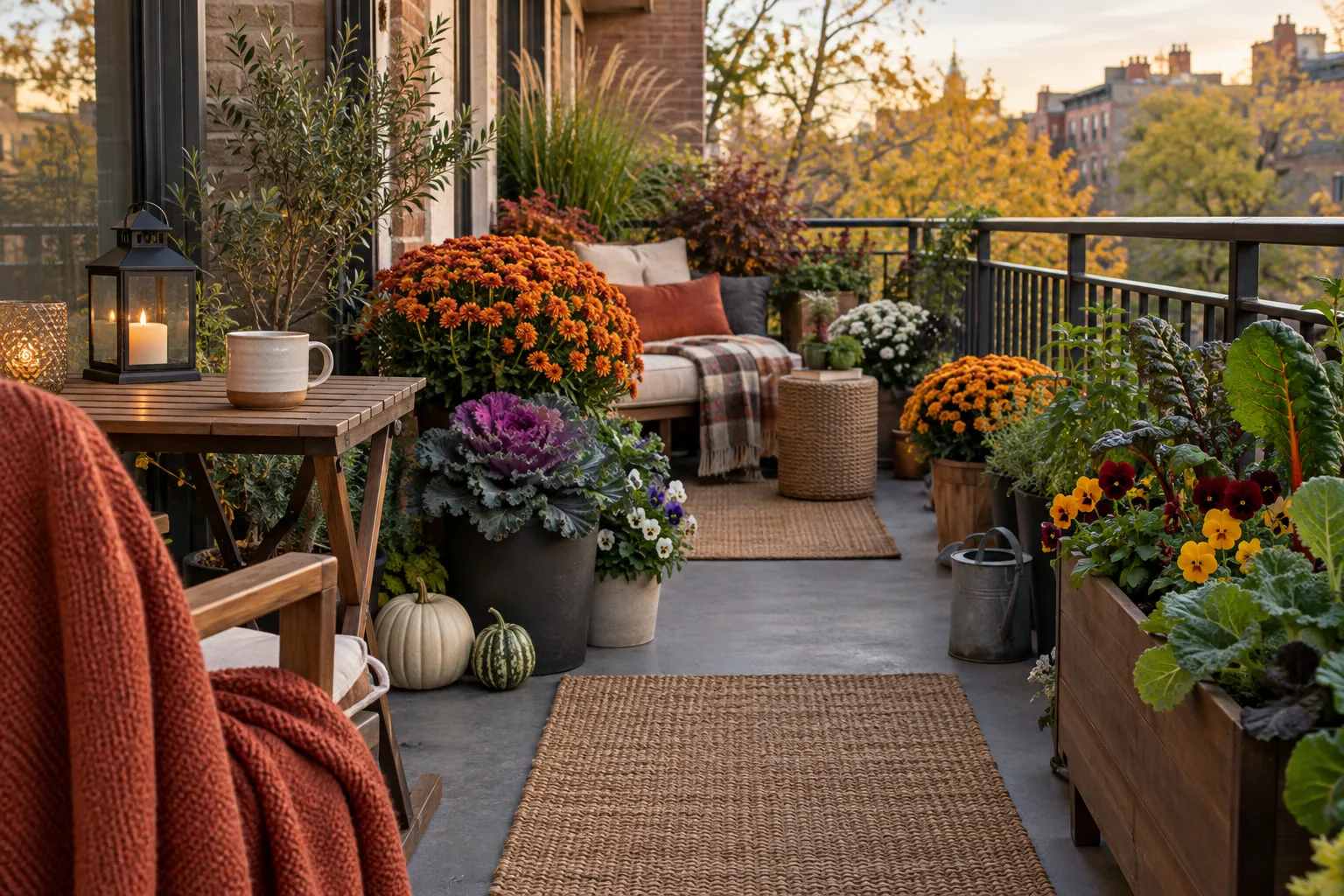
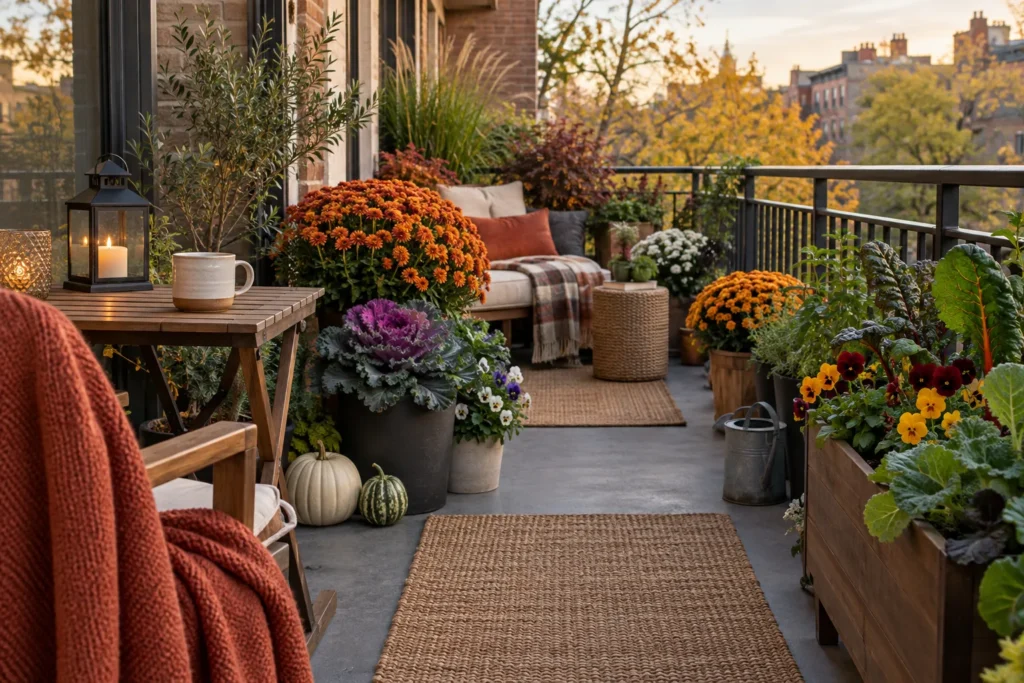
Fall is the one season a lot of balcony gardeners skip entirely, treating September as the month everything gets pulled and stored until spring. It doesn’t have to be. A balcony can stay planted, decorated, and actively used for most of autumn, and the transition into winter goes a lot smoother when it’s handled in stages instead of as one overwhelming cleanup the week of the first frost.
This page is the map for that whole stretch of the year: what to plant, how to decorate, what to grow to eat, and how to wind the season down properly. Each section below is a short summary with a link to the full guide, so use this as the starting point and go deep wherever your balcony needs the most attention right now.
Why fall is worth the effort on a balcony specifically
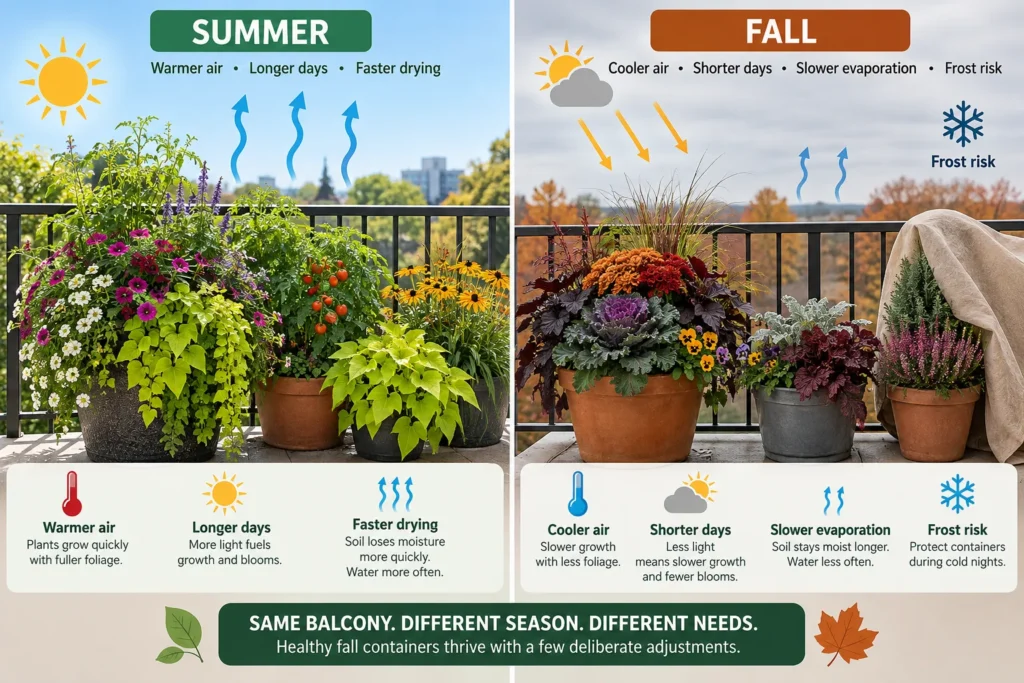
A backyard garden coasts through fall on its own momentum, soil holds warmth, established roots keep drawing water, and a gardener can afford to be a little hands-off. A balcony doesn’t have that buffer. Containers cool and dry out on a completely different schedule than ground soil, which means the plants that were thriving in August can decline fast once the season turns if nothing changes about how they’re managed. That’s really the throughline across everything below: fall on a balcony rewards a few deliberate adjustments, and punishes coasting on the summer setup a little more than an in-ground garden would.
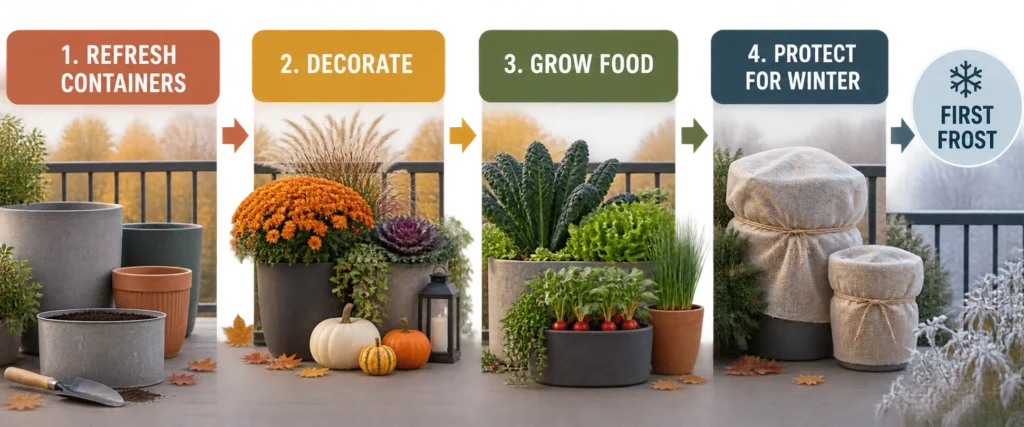
The upside is that a balcony is also small enough that those adjustments take an afternoon, not a weekend, and there’s a quiet pleasure in a fall balcony that’s still humming along while everyone else’s has already gone bare. Four short, focused stages, refresh, decorate, grow, protect, cover the entire season without turning into a second full renovation of the space.
The fall balcony timeline
| When | What’s happening | Guide |
|---|---|---|
| Early fall | Summer plants slow down or finish; first fall plantings and decor go in | Fall container gardening, Fall decor |
| Mid fall | Fall vegetables and herbs are actively growing; decor is in full swing | Fall vegetables and herbs, Fall decor |
| Late fall | Nights turn consistently cold; time to start protecting what stays outside | Winter prep |
| First hard freeze | Tender plants come in, pots get protected or emptied | Winter prep |
1. Refresh your containers for fall
Once summer annuals and vegetables stop producing, it’s time to clear them out and replant with something suited to cooler weather, mums, ornamental kale, and pansies for color, or a second round of quick vegetables if you’d rather eat than just look at the containers. Timing matters here: everything comes down to counting backward from your area’s first frost date so whatever you plant has real time to mature or establish before the cold sets in.
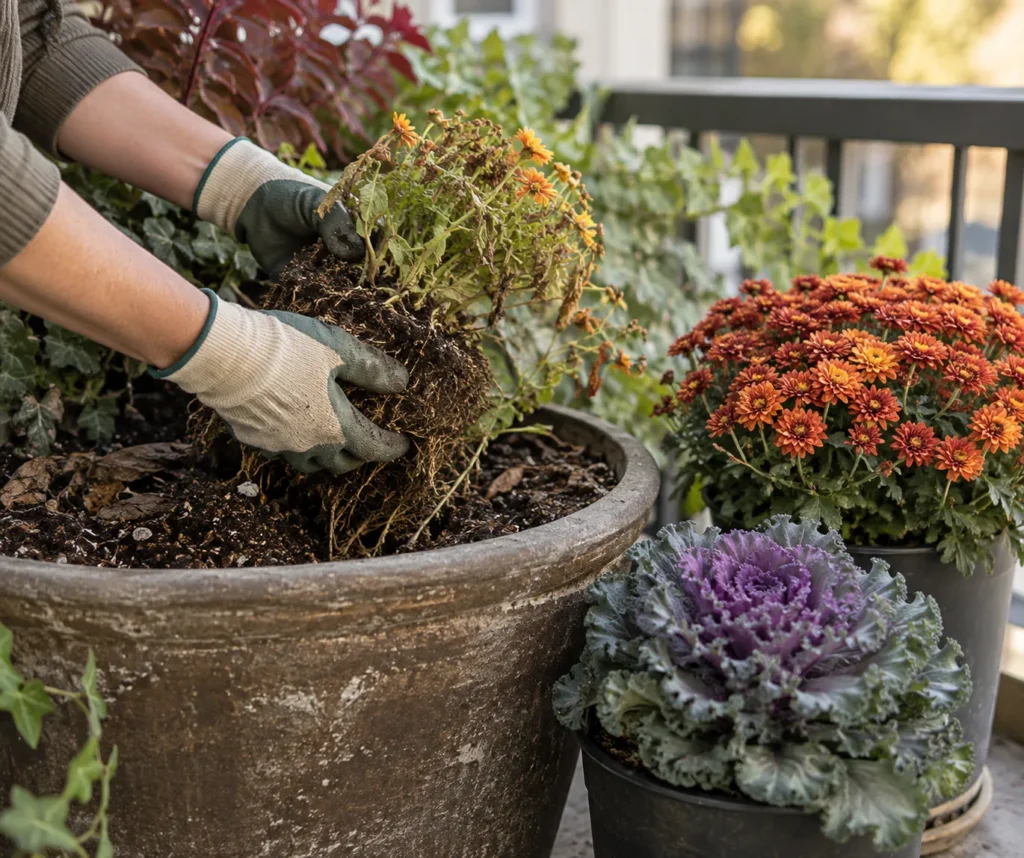
Read the full guide to fall container gardening on a balcony →
2. Decorate for the season
Fall is the one season where a balcony can lean fully into decor, not just plants: mums, mini pumpkins, warmer textiles, and a bit of amber-toned lighting layered onto whatever seating and styling setup you already have. None of it requires redoing your balcony from scratch, and most of it packs away or fades out naturally by the time winter prep starts.
Read the full guide to fall balcony decor ideas →
3. Grow something you can eat
Cooler fall weather truly suits certain vegetables and herbs better than summer heat does, lettuce, spinach, kale, and radishes among them, several of which taste better after a light frost, not worse. Container depth and days-to-harvest both matter more than usual here, since a fall planting has a real deadline in the form of the season’s first hard freeze.
Read the full guide to fall vegetables and herbs for balcony containers →
4. Protect what’s staying outside
Eventually the decorating and the fall harvest both give way to the same question: what needs to come inside, what can stay outside with some protection, and what just needs to be emptied and stored before it cracks in a freeze. Container-grown roots are more exposed to cold than roots in the ground, so this stage needs more deliberate planning than a backyard garden’s equivalent winter prep.
Read the full guide to prepping a balcony garden for winter →
A few things that apply across the whole season
- Your first frost date is the anchor for almost every fall decision. Planting timing, decor removal, and winter prep all count backward from it, so it’s worth knowing yours before the season gets going, not looking it up in a panic once temperatures drop.
- A balcony often runs a little warmer than an open yard nearby, thanks to the building behind it, which can push your effective first frost later than the official date for your area.
- None of these four stages require redoing your containers, furniture, or lighting from scratch. Fall on a balcony is mostly a layer added to a setup that already exists, not a seasonal rebuild.
Mistakes that show up across all four stages
A few habits cause trouble no matter which of the four fall stages you’re currently in, since they’re really about how a balcony behaves once the weather turns, not anything specific to decorating or planting alone.
- Keeping a summer watering schedule into fall. Cooler air and shorter days slow evaporation everywhere on the balcony, in decor planters and food crops alike, and overwatering becomes the bigger risk once that happens.
- Treating every container the same way. A pot of mums, a tray of lettuce, and a dormant perennial headed into winter all have different needs by late fall; lumping them into one care routine tends to shortchange at least one of them.
- Waiting for the first truly cold night to think about any of this. Refreshing containers, decorating, and winter prep all work better spread across the season than compressed into one rushed weekend once frost is already forecast.
- Forgetting that wind changes too. A bare, leaf-cleared fall balcony often feels windier than the same space did in summer, which affects everything from decor stability to how fast containers dry out.
Where to start
If you’re not sure which of the four guides above to open first, start with whichever matches what’s currently true on your balcony: containers still full of tired summer plants, an itch to decorate, empty pot space you’d like to put to use before winter, or a first cold snap already in the forecast. Each guide stands on its own, and together they cover a balcony from the last warm week of summer through the first hard freeze.
Quick answers to common fall balcony questions
Do I have to choose between decorating and growing food this fall? No. Most balconies have room for a couple of decor-only containers, mums, pumpkins, alongside a couple of productive ones growing lettuce or herbs. They don’t compete for the same space if you plan for both from the start, instead of treating the balcony as either purely ornamental or purely productive.
What if I’m starting all of this partway through fall, not at the beginning? Every guide above still applies, just compressed. Quick crops like radishes and lettuce still have time if planted a few weeks in, decor can go up any time before the season ends, and winter prep matters just as much whenever you get to it, arguably more urgently the later you’re starting.
Do I need to do all four stages every single year? Realistically, yes, in the sense that fall arrives annually whether or not you’re ready for it. The good news is each stage gets faster once you’ve done it a season or two and know your balcony’s specific frost timing, wind patterns, and what worked last year, at which point fall stops being a scramble and starts being just another routine part of the gardening calendar.