
Balcony pots can dry out quickly. They hold less soil than a garden bed, sit in more sun and wind than most houseplants, and usually have no irrigation to fall back on. That makes a short trip a real concern, especially once you are away for more than a few days.
How long you’re gone changes the plan
A weekend trip needs a different plan than a three-week trip. Treating them the same can leave plants waterlogged or dry by day four. Match the setup to the length of the trip.
- 2 to 3 days: a deep watering before you leave is usually enough on its own.
- 4 to 7 days: grouping pots and moving them out of direct sun buys real time, and a simple reservoir helps.
- More than a week: you need either a self-watering setup, a wicking system, or an actual person checking on things.
A weekend away: water deeply and leave it alone
For two or three days, the single most useful thing you can do is water thoroughly the morning you leave, until it runs from the drainage holes, rather than a quick splash the night before. A deep watering wets the entire root ball instead of just the top layer, which is what buys you the extra day or two. Move anything in a small pot or a hanging basket out of full afternoon sun if you can; those dry out fastest and have the least soil to buffer a missed day.
A week away: grouping, shade, and a basic reservoir
Pushing pots together until their canopies touch creates a small humid microclimate around the group, which slows evaporation for every container in it, not just the ones in the middle. Move the group out of the hottest, sunniest corner of the balcony for the week, even if that means a less attractive spot by the door.
For four to seven days, use a system that supplies water as the potting mix dries: a tested self-watering planter, a drip kit, or a wick leading from a covered, opaque reservoir. Do not leave ordinary pots sitting in one or two inches of water for a week. Saturated roots can run short of oxygen, while open water in a saucer can become a mosquito-breeding site. Run the complete setup for at least three days before your trip and check how much water the plants actually use.
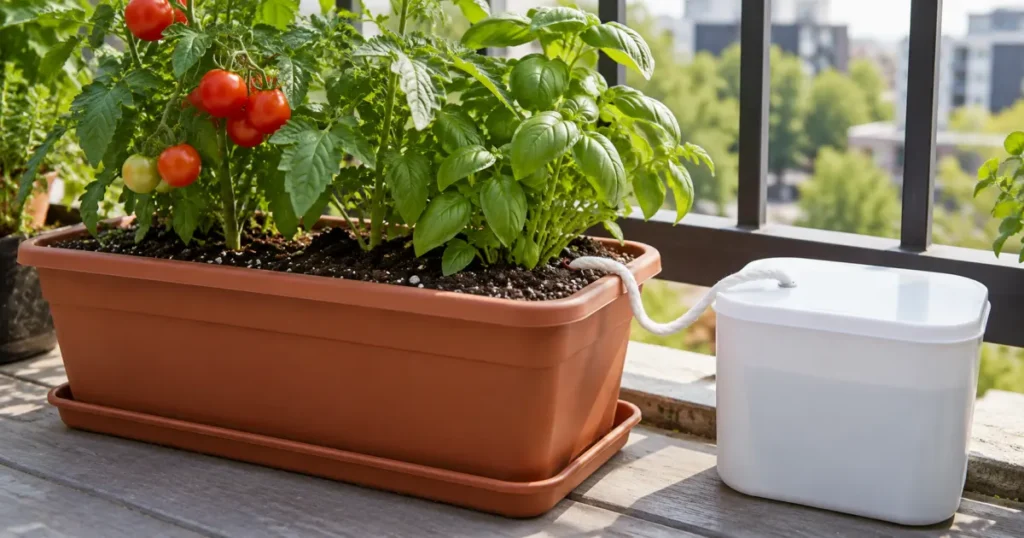
Two weeks or more: use a tested system and a backup
After about a week, improvised watering methods are less reliable outdoors. Heat, wind, pot size, and plant type all change how quickly the reservoir empties. Use a self-watering planter or covered-reservoir system you have tested in similar weather. For thirsty crops or trips beyond ten days, arrange for someone to check the plants too.
If your containers already have the setup, our guide to self-watering balcony planters covers filling the reservoir correctly before a trip, which is different from topping it up on a normal week. If you’re starting from a regular pot, a drip-style watering spike connected to a water bottle or jug can stretch a container another week or so, though it is worth testing one on a plant you don’t love a few days before you leave, since flow rate varies a lot by brand.
For trips longer than two or three weeks, arrange for someone to check the plants. A neighbor, friend, or building super can water midway through the trip. Leave a short note with exactly what to do. “Water everything until it runs out the bottom, once, around day 10” is clearer than “just keep them watered.”
Rain can help, but it does not reach every balcony. The floor above can block it, especially on a recessed or covered balcony, and wind-driven rain can miss pots against the back wall. If the balcony has a roof or overhang, do not rely on the forecast to water your plants.
Mistakes that cause more damage than skipping a watering
- Overcompensating before you leave. Soaking a plant far past normal and leaving it sitting in a full saucer for two weeks causes root rot faster than a few dry days would. See our guide to overwatering versus underwatering if you’re unsure which risk you’re managing.
- Letting trays overflow onto the balcony below. A tray or reservoir sized for a week of evaporation can overflow in a surprise rainstorm, and water running off a balcony lands on whoever is underneath. Our guide to protecting a balcony floor from water damage covers drainage and staining if this is a recurring issue, not just a vacation one.
- Moving everything into full sun “for more light.” More light also means faster drying. A sitter-free setup lasts longest in bright shade, not a sunny spot that looked generous when you set it up.
- Trusting a neighbor’s good intentions without instructions. People who don’t garden tend to either forget entirely or overwater out of anxiety. A short note removes the guesswork.
Coming home to a plant that dried out
A plant that went too dry may recover, but severe wilting can cause permanent leaf, flower, or fruit damage. Water slowly in two or three passes rather than flooding the pot once, because completely dry potting mix can repel water. After the mix is evenly moist, let excess water drain and give the plant bright shade while you assess new growth over the next day or two.
Frequently asked questions
Can balcony plants survive two weeks without water?
Some can, depending on the plant and pot size, but it is not a plan to rely on. A larger pot of succulents or drought-tolerant herbs may survive two dry weeks. Leafy vegetables and plants in small containers usually will not. For a two-week trip, set up a watering system or arrange a check-in.
What is the easiest way to water balcony plants while away for a week?
Move pots into bright shade, group them to reduce wind exposure, and use a tested wick, drip, or self-watering system with a covered reservoir. Water thoroughly before leaving, then confirm during a three-day trial that the setup keeps the mix moist without leaving roots submerged. For heat-sensitive or very thirsty plants, ask someone to check once during the week.
Do self-watering planters work for vacations?
Yes. A proven self-watering planter is one of the more dependable device-based options for a trip, but only if the reservoir is large enough for the plant and weather. Fill it, record the water level, and test it through several comparable days before relying on it while away.
Will rain water my balcony plants while I’m away?
Only if the balcony is open to the sky. Covered, recessed, or upper-floor balconies with a ceiling block most rain from reaching containers against the back wall, so a rainy forecast is not a substitute for an actual watering plan.