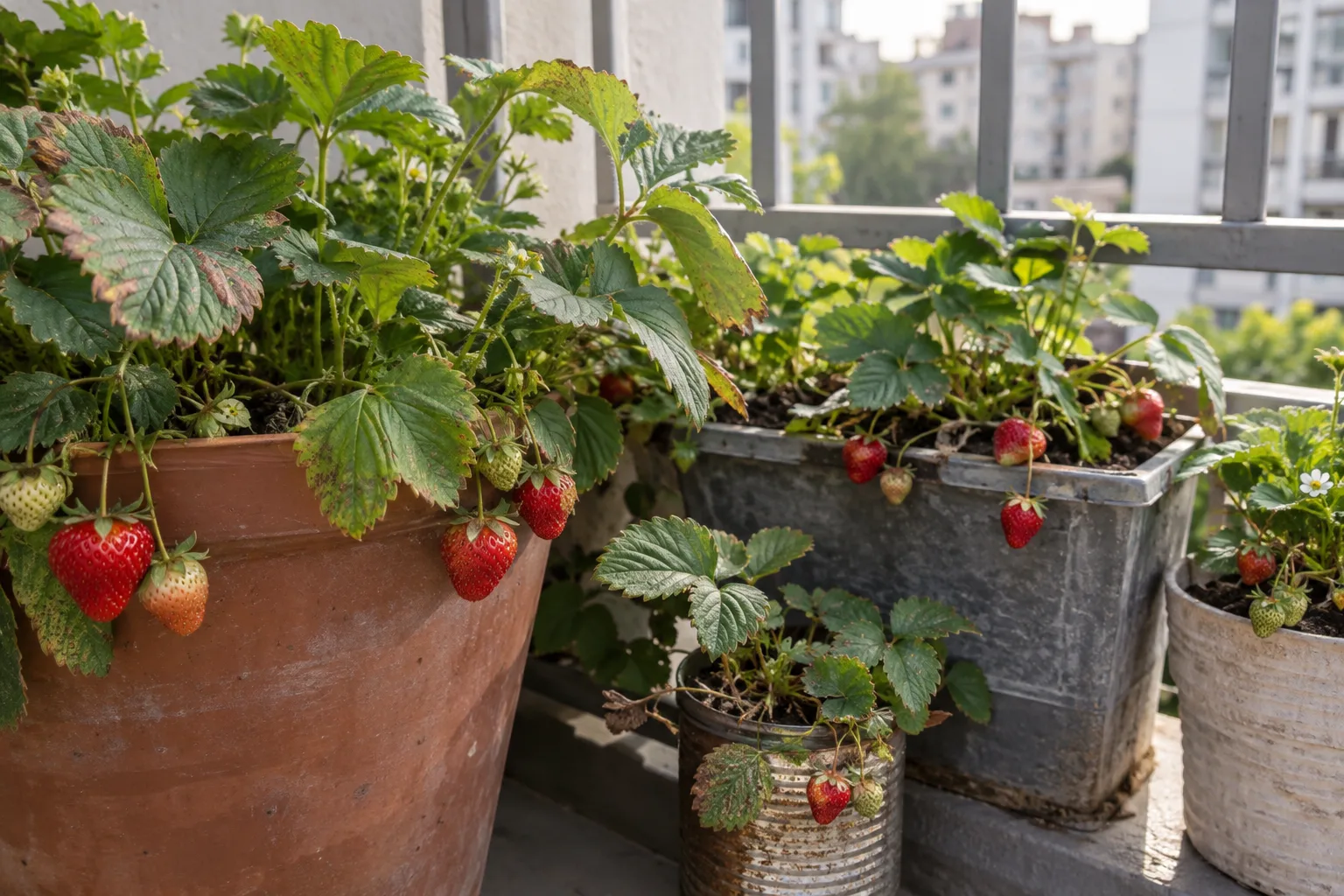
Strawberries are one of the more forgiving fruits to grow in a container, since the plants are naturally shallow-rooted and don’t need the deep soil volume a tree fruit or even a tomato would. That makes them a good fit for a balcony, where depth is often the scarcest thing a container can offer, and a rewarding one, since few container crops feel as satisfying to walk past and pick from as a strawberry plant in fruit. Getting a good harvest still comes down to a few specific choices: the right type of strawberry plant for container growing, a container that suits their shallow, spreading roots, and a watering routine that accounts for how quickly a shallow pot dries out.
This guide answers the questions that come up once you’ve decided to try it: which type to buy, how big a pot they really need, what a realistic first harvest looks like, whether pests are worth worrying about up on a balcony, and how to keep the planting going for more than one season instead of starting over every year.
Which strawberry type should I grow in a container?
Strawberry varieties fall into three general types, and they’re not equally suited to a container. June-bearing varieties produce one large, concentrated harvest in early summer and send out many runners, the long trailing stems that root into new plants, which quickly outgrow a container’s limited space. Everbearing varieties produce two or three smaller flushes of fruit across the season with fewer runners, and day-neutral varieties, the best fit for most containers, fruit nearly continuously from mid-spring into fall regardless of day length, and produce runners more sparingly than June-bearing types. Unless you specifically want one big early-summer harvest and are prepared to manage runners aggressively, a day-neutral or everbearing variety is the more practical choice for a balcony pot.
| Type | Harvest pattern | Runners | Container fit |
|---|---|---|---|
| Day-neutral | Steady, nearly continuous | Few | Best |
| Everbearing | 2 to 3 flushes per season | Moderate | Good |
| June-bearing | One large early-summer crop | Many | Needs active runner management |
How big a container do they really need?
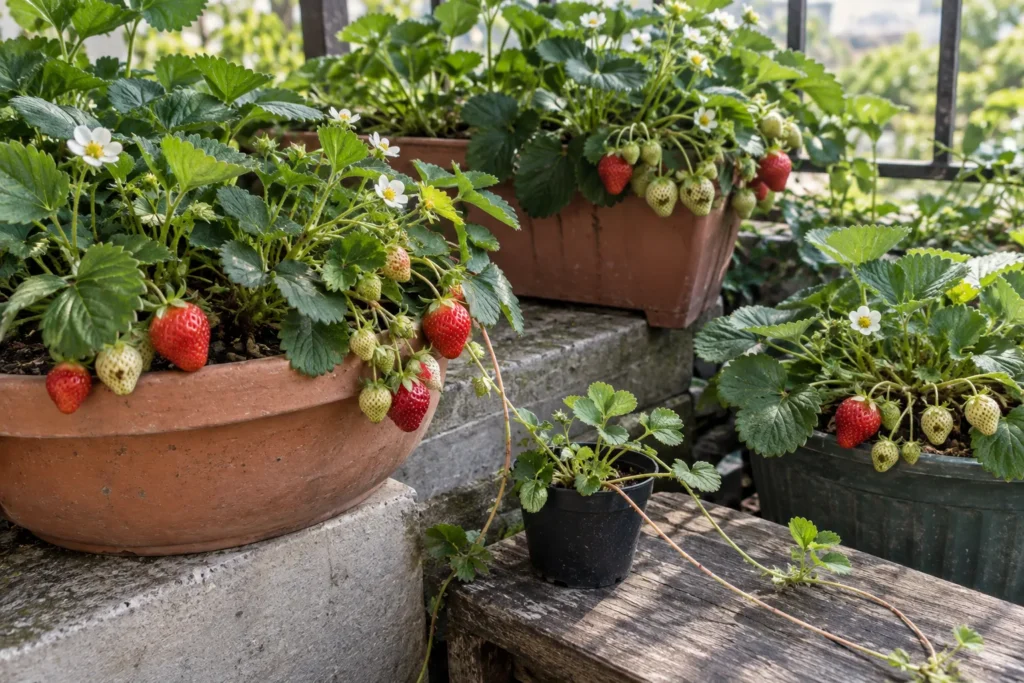
Because strawberry roots are shallow and spreading, not deep, container depth matters less here than it does for most vegetables; a pot around 8 inches (20 cm) deep is enough. Width and overall soil volume matter more, since it determines how many plants you can fit and how much of a moisture buffer the soil provides. A single strawberry plant is comfortable in a 10 to 12 inch (25 to 30 cm) pot, while a wider container or a long trough-style planter lets you space several plants roughly 8 to 12 inches apart for a noticeably fuller harvest from one container.
Strawberry jars and tiered planters, with plants tucked into pockets up the sides, are a popular space-saving option and pair naturally with the vertical growing approach covered in our guide to vertical gardening on a balcony. They come with one real tradeoff: plants in the upper pockets dry out faster than those lower down or in the top opening, since they’re more exposed and the water you add doesn’t reach them evenly from a single point. If you use one, plan to water from both the top and the side pockets individually, don’t just assume water poured in the top reaches every plant equally. For material and drainage considerations that apply to any strawberry container, see our comparison of balcony pots and containers.
Soil, sun, and watering
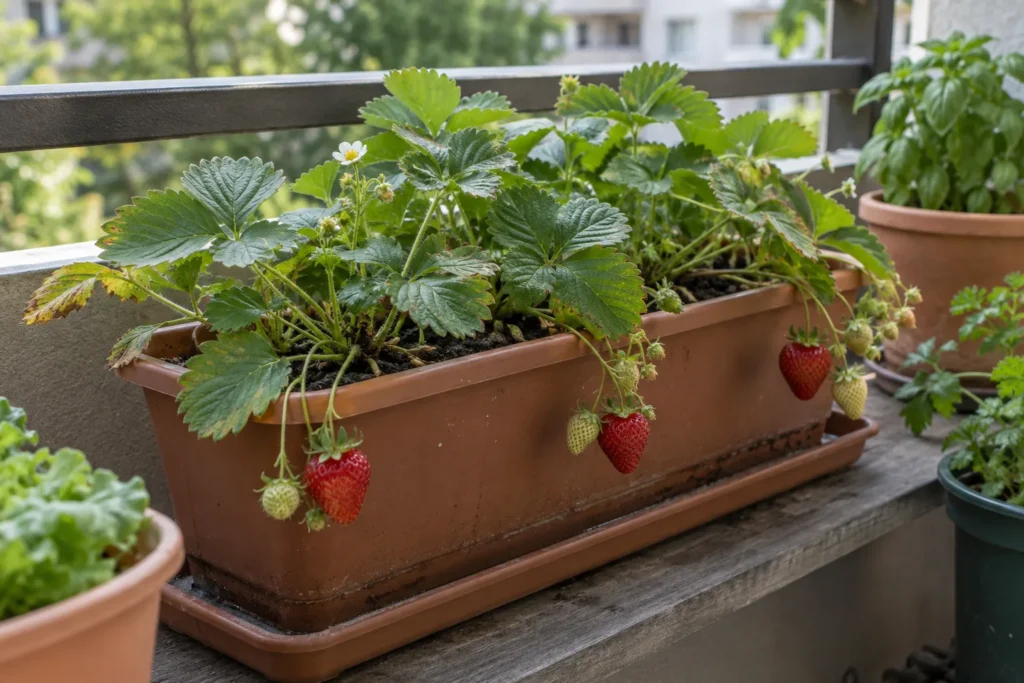
Strawberries want loose, well-draining soil and don’t tolerate sitting in waterlogged mix, so drainage holes are non-negotiable regardless of which container style you choose. A standard potting mix with some added compost suits them well. Give strawberries as much direct sun as your balcony offers; six or more hours produces noticeably better fruit than a partly shaded spot, though a couple of hours less than that won’t stop production entirely, just reduce it somewhat.
Watering is the detail most likely to trip up a first-time container strawberry grower. A shallow-rooted plant in a shallow pot dries out faster than almost anything else you’re likely to be growing, and inconsistent watering, particularly letting the pot dry out completely while fruit is forming, is a common cause of small or misshapen berries. Check the top inch of soil daily during fruiting season instead of sticking to a fixed schedule, and water more frequently in hot or windy weather when pots dry out fastest.
Why is my first-year harvest so small?
A thin first harvest is normal, not a sign anything went wrong. Newly planted strawberries, especially ones started from bare-root crowns instead of more established nursery plants, often produce a modest first-year harvest while the plant focuses on establishing roots and crown growth. Removing the first round of flowers on a brand-new planting, before it has a chance to fruit, is a technique some growers use to push more of that early energy into establishing a stronger plant, at the cost of a smaller first harvest. It’s optional, and most balcony gardeners are happy to let a new plant fruit right away and accept a lighter first year in exchange for getting strawberries that much sooner.
Managing runners in a container
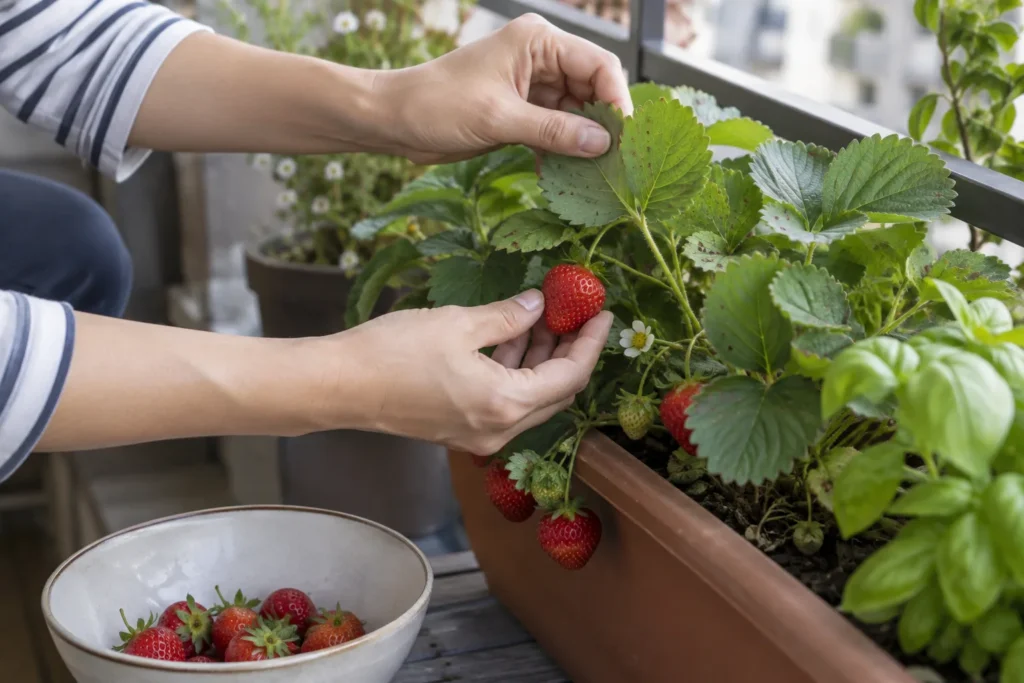
Even day-neutral and everbearing varieties send out some runners over a season. In an open garden bed, gardeners often let runners root and spread to fill in a strawberry patch; in a container, an unmanaged runner just crowds the parent plant’s limited soil and competes with it for water and nutrients. Unless you’re deliberately trying to root a runner into a second pot to propagate a new plant, snip runners off close to the main plant as you notice them, redirecting the plant’s energy back into fruit instead of an expansion it simply doesn’t have room for. If you do want to propagate, pin one runner’s small plantlet into a second, smaller pot of its own soil while it’s still attached to the parent, and once it’s rooted and established on its own, usually a few weeks, cut the connecting runner and you have a free second plant ready to replace an aging one down the line.
Do I need to protect fruit from pests on a balcony?
One real advantage of a balcony several floors up is that ground-dwelling and climbing pests, slugs, rabbits, and often squirrels, are much less of a problem than they are for an in-ground strawberry patch. Birds are still a possibility, especially on a lower floor or near mature trees, and can strip ripening berries quickly once they find them. A simple mesh cover or netting draped over the plant as fruit starts to color up is usually enough protection, and it’s worth removing during flowering so pollinators can still reach the blossoms. Check under leaves for slugs anyway if your balcony is on a lower floor or near ground-level plantings, since they can still make their way up onto a balcony given the chance and a nearby route.
Keeping plants productive for more than one season
Strawberry plants naturally decline in productivity after a few years, and container-grown plants tend to show that decline sooner than plants grown in the ground, since they have less total root room to draw on. Planning to replace plants roughly every two to three years, not expecting one planting to produce forever, keeps yields consistent instead of watching them slowly taper off. Refresh the potting mix at the same time you replace plants, since a few years of watering and root growth will have depleted and compacted the original mix, and starting new plants in tired, exhausted soil undercuts the benefit of replacing them in the first place.
In climates with real winter cold, container-grown strawberry roots are more exposed to freezing than plants in the ground, the same issue covered in our guide to winterizing a balcony garden, and need similar protection, grouping pots against a sheltered wall, insulating the container, or moving pots somewhere unheated but protected, to survive winter and come back the following spring.
Common strawberry container mistakes
- Choosing a June-bearing variety for a small container and then fighting a season’s worth of space-hogging runners instead of fruit.
- Letting the pot dry out during fruiting. Inconsistent watering is one of the most common causes of small, misshapen, or reduced berries.
- Watering a strawberry jar only from the top. Upper pockets dry out and get missed if you don’t water them individually.
- Never replacing aging plants. Expecting one planting to stay productive indefinitely leads to a slow, confusing decline in harvest size.
- Ignoring runners all season and then wondering why the main plant’s fruit production dropped off.
One last option worth knowing about: strawberries’ shallow roots and trailing habit make them a natural “spiller” in a larger mixed container, draped over the rim beneath a taller, deeper-rooted plant instead of grown on their own. Our guide to companion planting for balcony containers covers pairing plants by root depth if you’d rather combine them than dedicate a whole pot to strawberries alone.