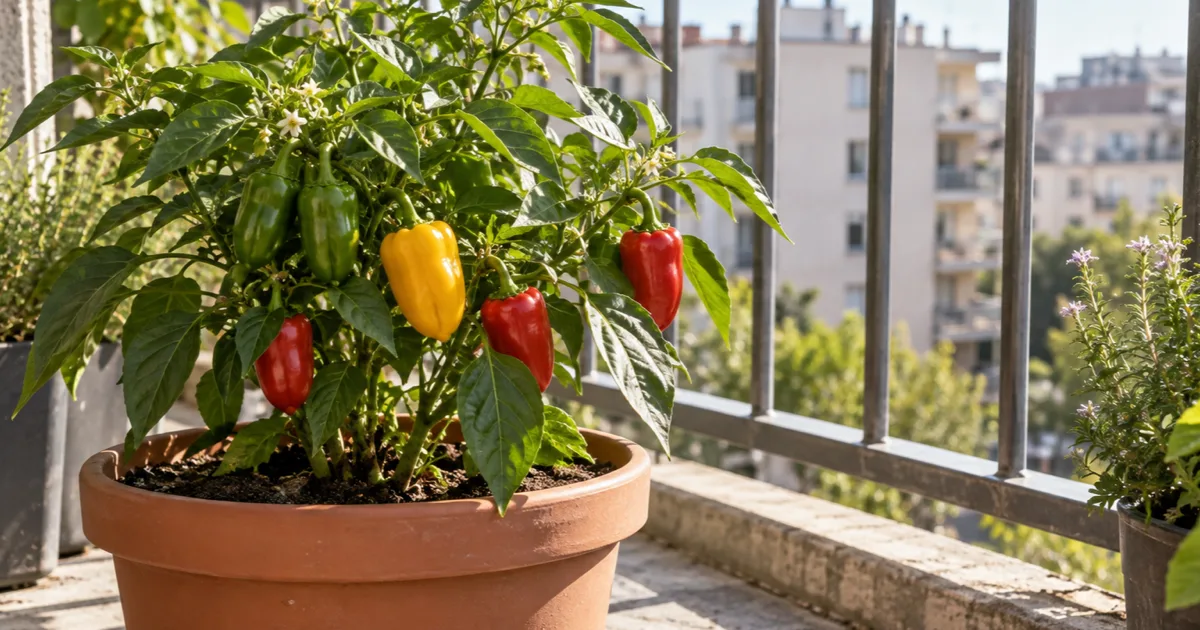
Peppers are one of the more forgiving fruiting vegetables to grow in a balcony container, but they’re also one that quietly stalls out when a balcony’s specific conditions, wind especially, work against them in ways a ground-level garden rarely deals with. Get the container size, warmth, and wind exposure right and a single pepper plant can produce for months; get any one of those wrong and you can end up with a healthy-looking plant that flowers all summer and sets almost no fruit.
This guide covers what’s specific to peppers on a balcony: picking a variety that matches how much space and warmth you have, sizing the container correctly, and the wind-driven reason pepper flowers sometimes drop without ever becoming a pepper, something that trips up more balcony growers than any pest or disease does.
Which pepper type fits a balcony container?
Bell peppers and hot peppers grow similarly, but they differ enough in size and heat tolerance to matter for container choice. Bell pepper plants tend to be bushier and benefit from staking once fruit starts weighing down the branches; they’re also the more sensitive of the two to intense afternoon sun on a balcony that runs warm. Hot peppers, jalapeños and similar bush-type varieties especially, are generally more compact and more heat-tolerant, making them a slightly easier first choice if your balcony gets strong, unshaded afternoon sun for most of the day.
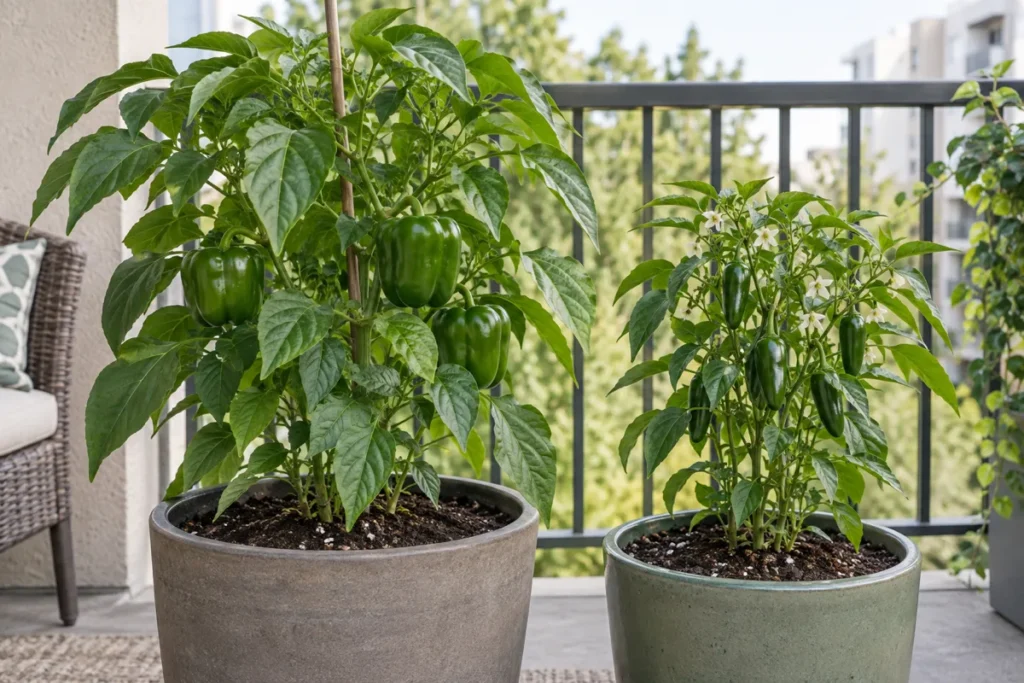
Some hot pepper varieties, particularly long chili types, can grow considerably larger over a full season than their nursery pot size suggests, sometimes needing to move into a bigger container partway through summer. If you’re not sure how much a variety will ultimately grow, checking the mature size on the seed packet or plant tag before you buy avoids a mid-season repotting scramble.
How big a container do peppers need?
A 5-gallon container, roughly a standard bucket or half-barrel planter, is a solid minimum for a single pepper plant. Whatever you use, drainage matters as much as size: holes in the bottom, and ideally a few more around the sides about an inch up from the base, keep water moving through instead of pooling around the roots. Elevating the container slightly, on pot feet, bricks, or a stand, helps drainage holes drain properly instead of sitting flush against a balcony floor.
Use potting mix instead of garden soil for the same reason it matters for every other balcony container: garden soil compacts and drains poorly once it’s confined to a pot. Our potting mix versus garden soil guide covers why the two aren’t interchangeable.
Sun and temperature
Peppers want six to eight hours of direct sun and real warmth: daytime temperatures of 70 to 80°F and nighttime temperatures of 60 to 70°F suit them best. Cooler nights slow growth and delay fruiting, which is one more reason an early-season pepper planted before the weather has properly warmed up often just sits there for weeks instead of growing, not because anything is wrong with the plant.
A balcony with reflected heat off walls or glass can work in a pepper’s favor here, unlike with some other vegetables, since peppers tolerate and even prefer that extra warmth more than most balcony crops do.
Why are my pepper flowers dropping without fruiting?
This is the problem that catches balcony growers more than any other, and it’s directly tied to wind. Even when soil moisture is technically adequate, a dry, warm, or windy day can push a pepper plant into losing water through its leaves faster than its roots can replace it, and that stress causes flowers to drop before they ever set fruit. A balcony, especially one several floors up, deals with steadier and stronger wind than a ground-level garden bed typically does, which makes this a more common problem in containers on a balcony than the same variety would face planted in the ground.
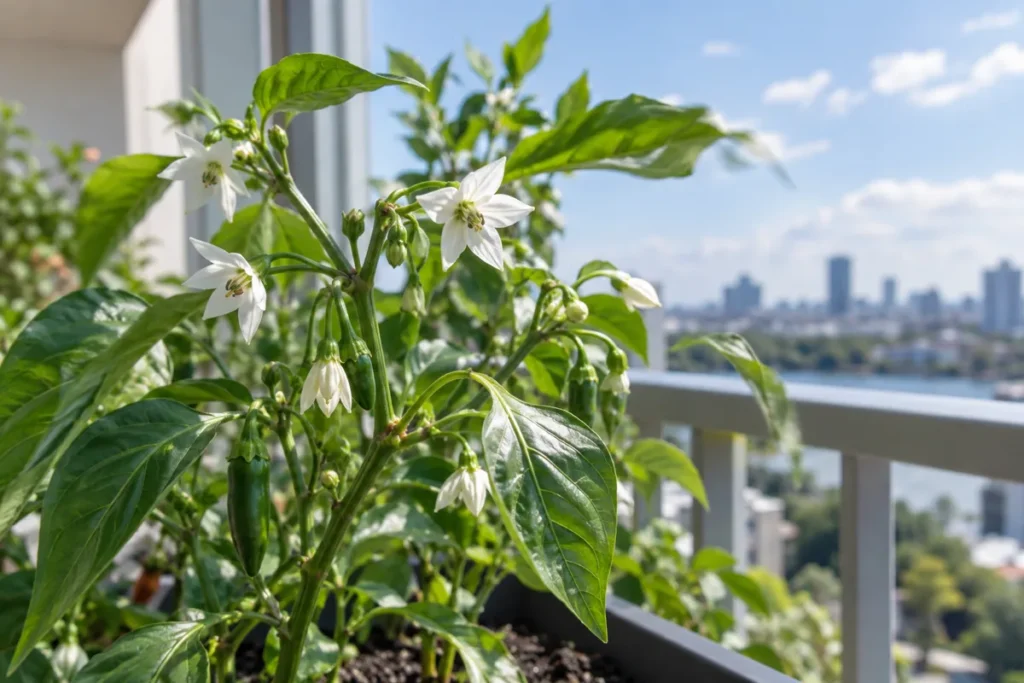
If flowers keep dropping without setting fruit, check wind exposure before assuming a pest, disease, or fertilizer problem. Moving the container to a more sheltered spot, even a few feet from an exposed railing corner, or adding a temporary windbreak on the plant’s exposed side during a particularly gusty stretch, often resolves it without changing anything else about how the plant is being cared for.
Support and fertilizing
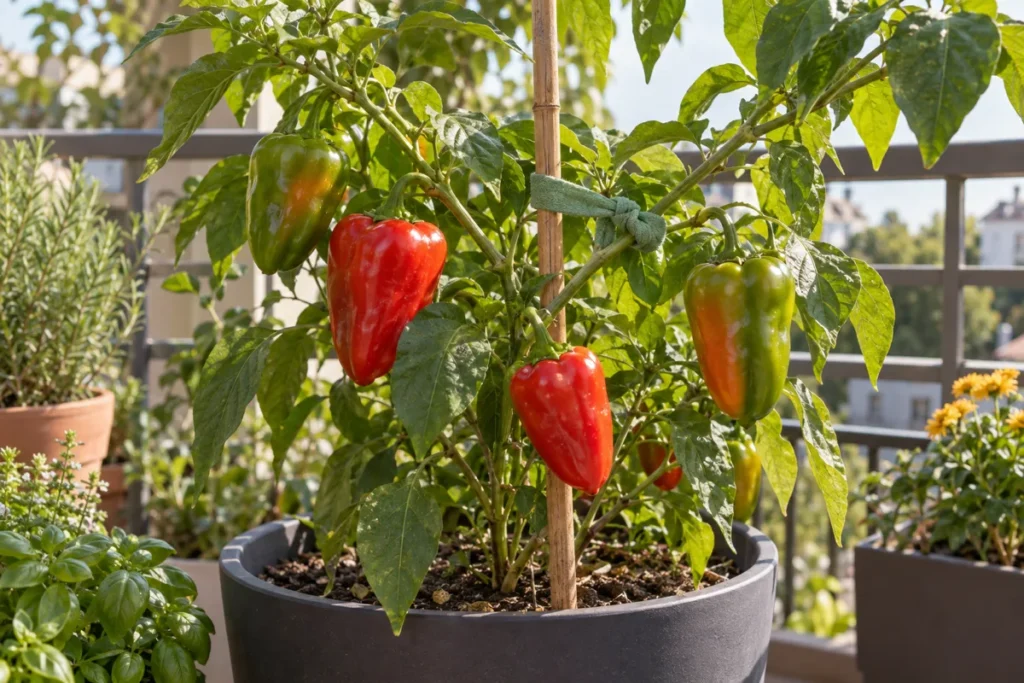
Add a stake or small cage once a plant starts setting fruit, before the branches are already bent under the weight; a loaded pepper branch snaps more easily than most people expect, especially in wind. Peppers are heavy feeders and benefit from regular fertilizing through the growing season, but it’s worth switching to a balanced or lower-nitrogen fertilizer once fruiting starts instead of continuing a high-nitrogen feeding schedule; too much nitrogen during fruiting pushes leafy growth at the expense of the calcium uptake fruit needs, and peppers are susceptible to the same blossom end rot problem covered in our tomato growing guide, the dark, sunken patch on the fruit caused by inconsistent water and calcium delivery, not a soil deficiency.
Common balcony pepper problems
- Flowers dropping without fruit is most often wind-driven transpiration stress, covered above, not a pollination or pest problem.
- Slow growth early in the season usually means the plant is still waiting for consistently warm days and nights, not that something is wrong with it.
- Blossom end rot traces back to inconsistent watering and excess nitrogen during fruiting, the same mechanism as in tomatoes.
- A branch snapped under fruit weight is a support problem; stake before fruit gets heavy, not after.
When to harvest
Peppers can be picked green, once they’ve reached full size and a firm texture, or left on the plant to ripen into their mature color, red, yellow, or orange depending on the variety; a pepper left to fully color up is generally sweeter and, for hot varieties, often noticeably different in heat than the same pepper picked green. Use scissors or garden shears instead of pulling or twisting, which can tear the stem and stress the plant; harvest in the cooler part of the morning when possible, and picking regularly once plants start producing encourages more fruit instead of letting the plant think its job is done.
Peppers and tomatoes share similar sun, water, and warmth needs, which is why they’re often grown side by side on a patio or balcony rather than treated as separate projects; if you’re already growing tomatoes, adding a pepper container nearby means one watering routine and one sunny spot doing double duty instead of two separately managed setups. Our companion planting guide covers pairing plants by water and root needs if you’re planning out a full balcony layout rather than growing peppers on their own.