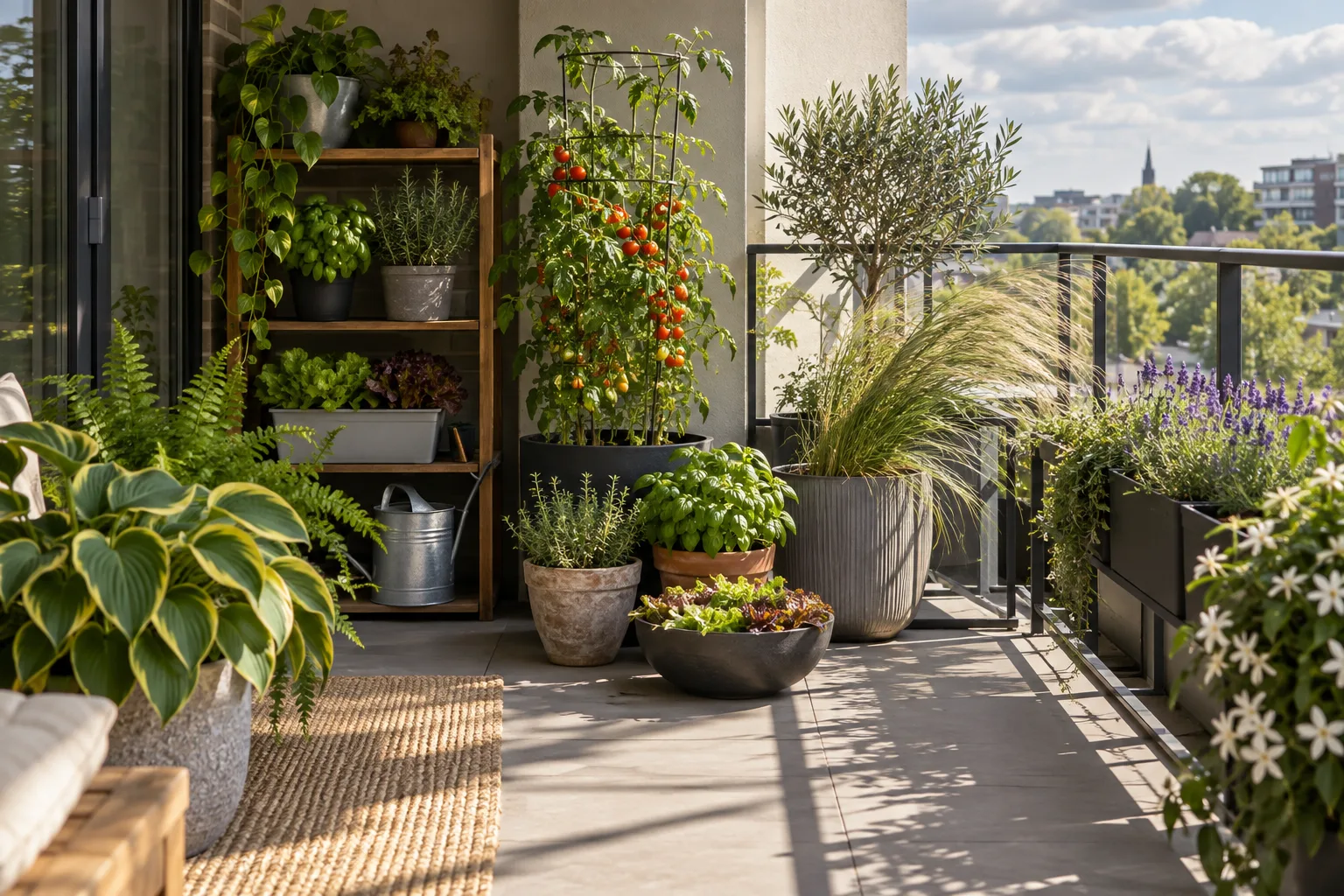
Choose the plant list after measuring four things: direct sun, wind exposure, usable container size, and the time available for watering. Those conditions narrow the choices quickly. A cherry tomato that thrives on a sunny, sheltered balcony will struggle in a north-facing or constantly windswept one.
Use the two or three sections that describe your balcony, then compare the container and maintenance notes before buying. This is a selection guide. The starting guide covers building rules, drainage, potting mix, and the order in which to set everything up.
Take four measurements first
Start with direct sun. Count the hours when direct light reaches the place where a pot will sit. Bright sky is not direct sun. UC Master Gardeners describe full sun as 6 or more hours, partial sun as 4 to 6 hours, partial shade as 2 to 4 hours, and full shade as less than 2 hours. Buildings and balcony overhangs can make direction alone misleading, so record the light on one clear day.
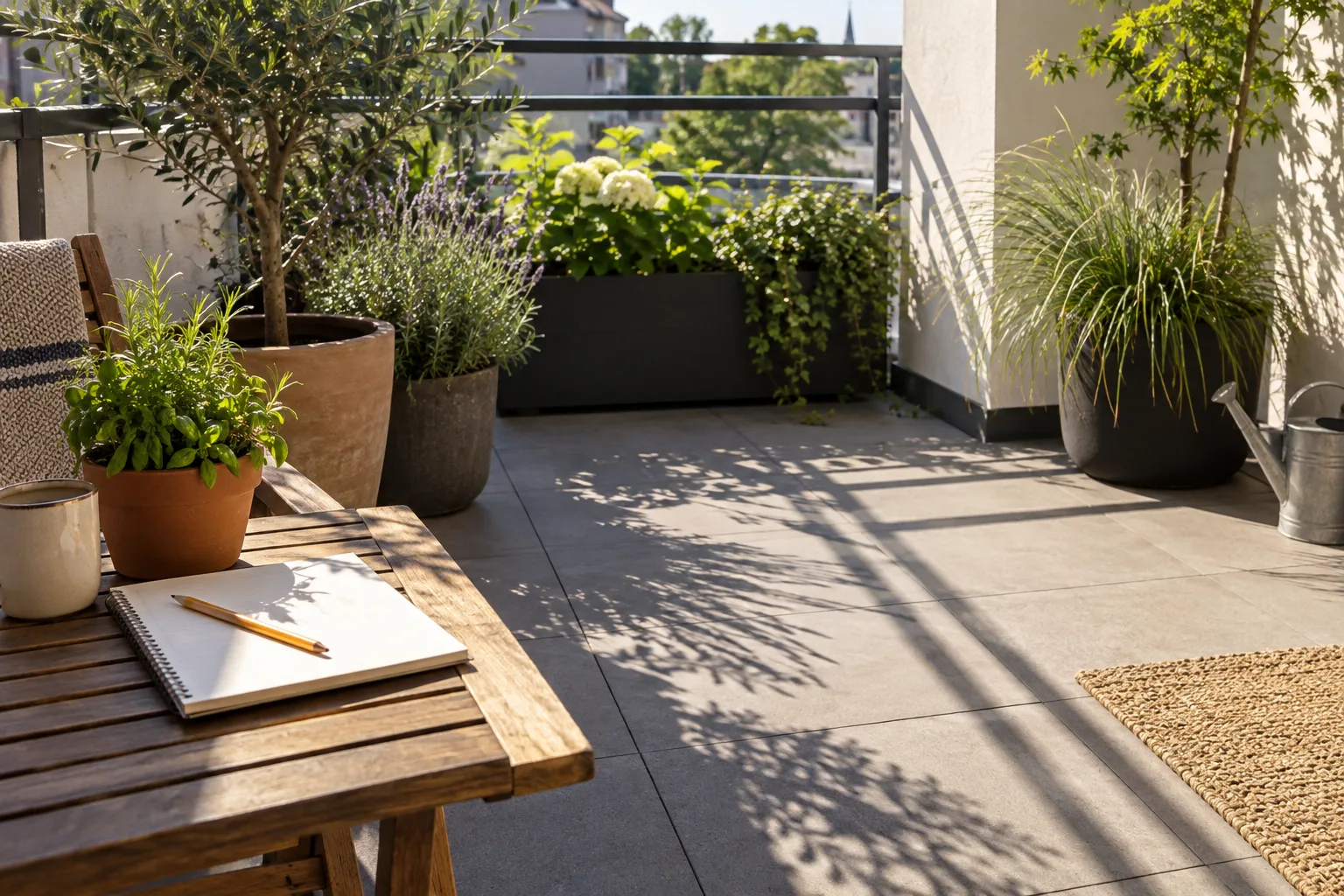
Then watch the wind and reflected heat. Notice where gusts enter and where walls or glass throw heat back toward the plants. Wind dries leaves and potting mix, and it puts extra strain on tall stems. Reflected heat increases the watering demand even when the weather forecast looks moderate. A sheltered corner may support a plant that fails near the railing.
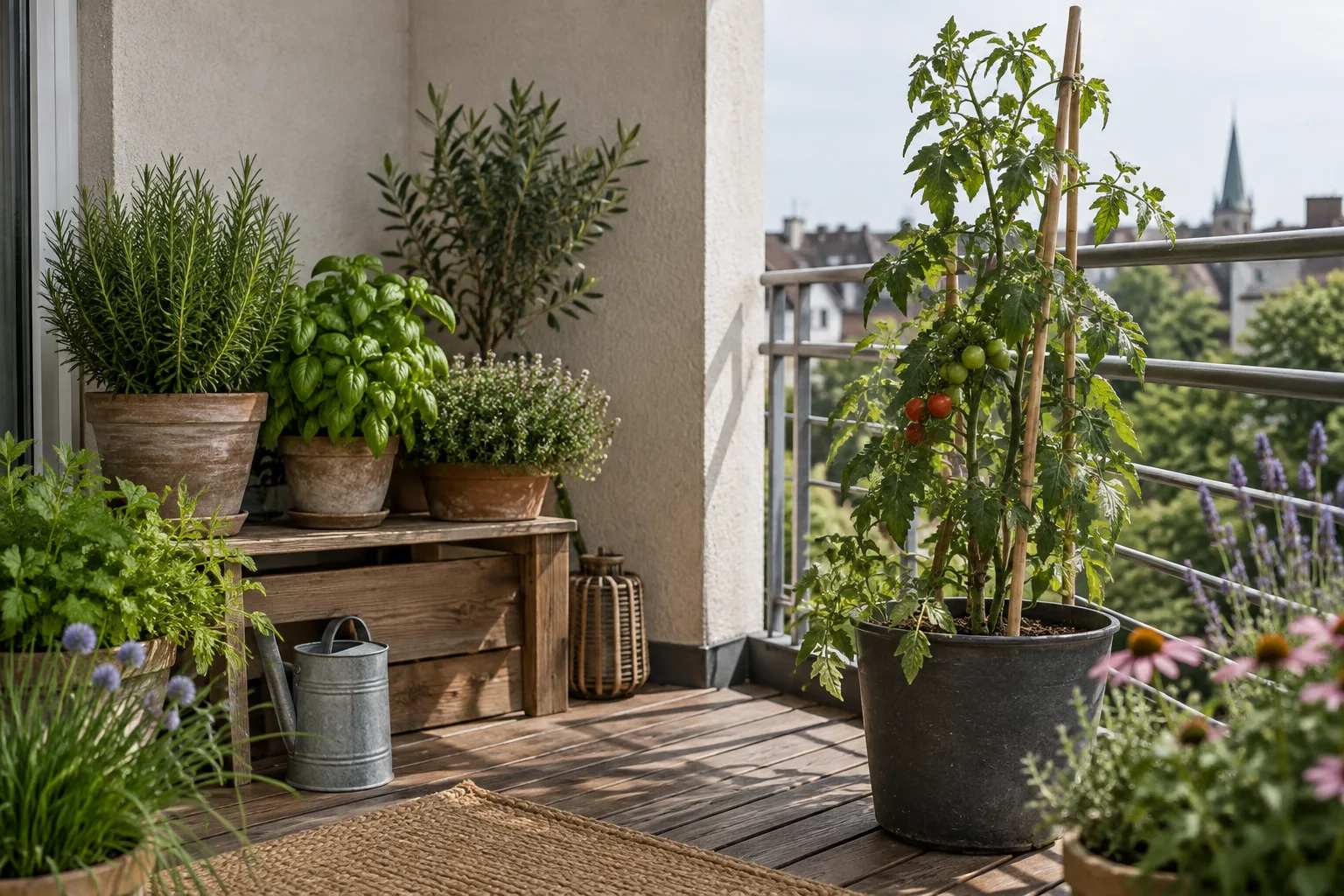
Measure the container room and read the building rules. Leave a clear path to the door and drain. Check the rules before using railing planters, screens, or permanent attachments. Wet potting mix is heavy, and the safe load for a particular balcony must come from the building or an appropriately qualified professional. This guide does not publish structural load limits.
Finally, be specific about summer watering. A thirsty tomato in a small pot may need attention every day during hot weather. Thyme or sedum in a suitable container can tolerate a missed day much better. The easiest plant is the one whose routine fits the time you have.
A quick plant-selection table
| Balcony condition | Good starting choices | Approach with care |
|---|---|---|
| 6 or more hours of direct sun | Compact tomatoes, peppers, bush beans, basil, rosemary, thyme, marigolds, sedum | Thirsty plants in undersized pots |
| 2 to 6 hours of direct sun | Leaf lettuce, chard, kale, parsley, cilantro, chives, mint, radishes, pansies | Tomatoes and peppers when the total stays below 6 hours |
| Less than 2 to 3 hours of direct sun | Mint, parsley, chives, ferns, coleus, begonias | Fruiting vegetables and Mediterranean herbs |
| Strong or frequent wind | Thyme, oregano, chives, sedum, low ornamental grasses | Tall tomatoes, large leaves, and top-heavy containers |
| Hot walls or reflected afternoon heat | Peppers, rosemary, thyme, oregano, portulaca, lantana, sedum | Cool-season greens in midsummer |
| Limited care time | Thyme, oregano, chives, sedum, hardy succulents, mint in its own pot | Small containers with thirsty crops |
The table is a filter, not a shopping list. Check the plant tag for mature size and hardiness, then read the section that matches the balcony.
Choose plants by direct sun
Full sun: 6 or more hours
Full sun supports the widest range of balcony crops. Compact or determinate tomatoes, peppers, bush beans, basil, rosemary, thyme, oregano, and sage are useful starting points. Marigolds, calendula, nasturtiums, zinnias, portulaca, and many sedums also prefer strong light.
The main limitation is water. A sunny wall, glass railing, or windy corner can dry a container faster than the same plant would dry in the ground. Use the largest practical pot for tomatoes and peppers, leave a little space between containers, and check the mix with a finger rather than watering on a fixed calendar. The hot, sunny balcony guide covers this exposure in detail.
Partial sun or partial shade: 2 to 6 hours
Leafy crops usually make better use of moderate light than fruiting crops. Try loose-leaf lettuce, chard, kale, parsley, cilantro, chives, mint, radishes, and green onions. Pansies, violas, begonias, and coleus add color where a sun-loving flower would become thin or stop blooming.
Cool-season greens may last longer with afternoon shade, though growth slows as the light drops. Cilantro also prefers cooler conditions and often bolts in heat. Tomatoes and peppers may stay alive in partial sun, but harvests are often disappointing when direct light remains well below 6 hours.
Mostly shade: less than 2 to 3 hours
Deep shade calls for a smaller list. Mint, parsley, chives, ferns, coleus, and many begonias are more dependable than fruiting vegetables. Leaf lettuce may grow slowly if the balcony is bright but receives little direct sun. Expect foliage and modest herb harvests rather than tomatoes or peppers. The shade guide separates open shade from the much darker conditions behind solid walls or deep overhangs.
Adjust the list for wind and heat
Wind-resistant planting begins with shape. Low, flexible, small-leaved plants take less force than tall plants with broad leaves. Thyme, oregano, chives, sedum, and compact grasses are easier to protect than an indeterminate tomato. Use broad-based containers, keep plants below the railing, and place the most delicate pots in the sheltered part of the balcony. The RHS notes that wind scorch develops when moving air pulls moisture from leaves faster than roots can replace it.
Heat changes the list in a different way. Peppers and Mediterranean herbs tolerate warmth, but they still need enough root room and water. Lettuce, cilantro, and other cool-season crops tend to bolt or become bitter in sustained heat. Move them into morning sun or grow them in spring and fall instead of forcing them through the hottest part of summer.
Match the plant to the container
Container size affects how much water and root space a plant has. University of Maryland Extension recommends 8 to 10 gallons and 12 to 16 inches of depth for tomatoes. Compact varieties may manage in less, but a larger volume is more forgiving. Peppers usually need a medium to large pot. Lettuce, radishes, and green onions can use shallower containers, while herbs vary with the species.
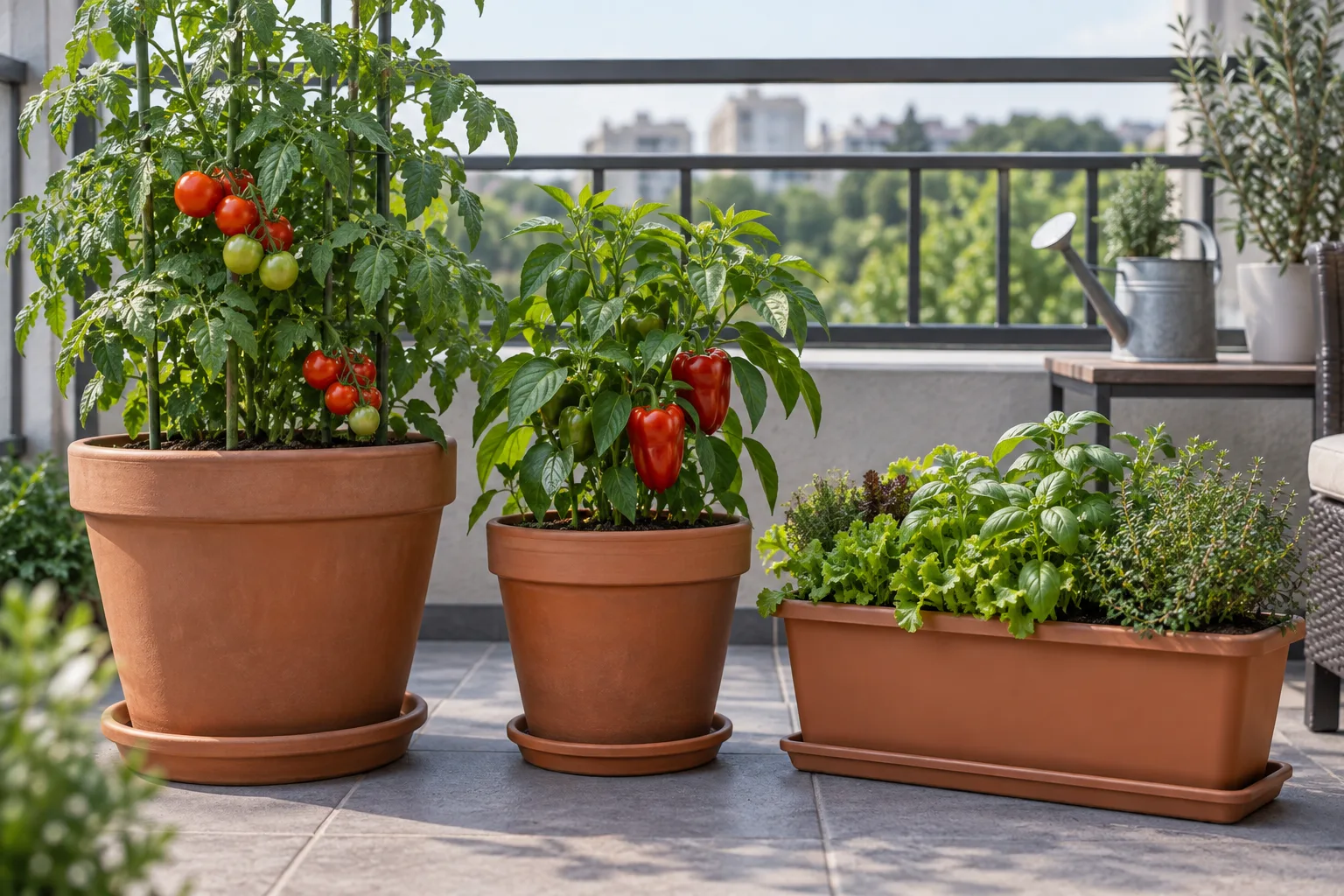
- Use deep, stable containers for tomatoes and other top-heavy crops.
- Give peppers their own medium or large pot rather than crowding them into an herb planter.
- Use shallow boxes for lettuce, radishes, and green onions, provided they drain freely.
- Keep mint alone. A container stops its runners from taking over neighboring plants.
- Use a free-draining mix for rosemary, thyme, oregano, sage, sedum, and succulents.
The container-size guide compares materials, drainage, and filled weight. If daily drying is the main problem, also read the self-watering planter guide.
Low-maintenance and beginner choices
For a sunny, exposed balcony, thyme, oregano, chives, hardy sedums, and suitable succulents are forgiving choices. Rosemary also handles heat and drying, though winter hardiness varies. In partial sun, mint, parsley, chives, loose-leaf lettuce, and chard are manageable if the containers do not dry out completely.
Beginners often get a better result from two or three compatible pots than from a large mixed collection. One herb pot, one shallow box of greens, and one seasonal flower provide different harvests without creating a complicated watering schedule. Add a demanding crop only after the first group is stable.
Flowers, edible flowers, and pet safety
Choose flowers by light in the same way as food crops. Marigolds, calendula, nasturtiums, zinnias, portulaca, and lantana prefer strong sun. Pansies, violas, begonias, and coleus tolerate less. Match the plants in a shared container by both light and watering needs.
Do not assume that every ornamental flower is edible. The University of Alaska Fairbanks edible-flower guidance stresses correct identification and avoiding plants treated with products not labeled for edible crops. If pets use the balcony, check each species in a recognized toxicity database such as the ASPCA’s before buying it. A common name alone may not identify the plant accurately enough.
Plants that are usually poor fits
- Full-size, indeterminate tomatoes in small containers become thirsty and top-heavy.
- Running bamboo can escape its container and is a poor substitute for a planned privacy screen.
- Large-leaved tropical plants lose water quickly and tear in exposed wind.
- Sun-loving herbs stay weak when direct light is very limited.
- Cool-season greens decline when they are pushed through sustained summer heat.
- Tender succulents cannot be treated as winter-hardy simply because another succulent survives locally.
A poor fit is not a bad plant. It needs a condition the balcony cannot provide safely or consistently.
Account for the season
USDA hardiness zones describe expected winter cold for perennial survival, not summer heat or balcony wind. Containers expose roots to cold on all sides, so a plant that survives in the ground may need extra protection in a pot. Iowa State and Illinois Extension both advise treating container roots as more vulnerable than in-ground roots.
Warm-season tomatoes, peppers, basil, and beans go outside after frost risk has passed and nights have warmed. Lettuce, kale, chard, radishes, parsley, and cilantro suit cooler parts of the season. Check local frost dates and the plant label rather than using one national planting date.
A final selection check
- I counted direct sun where the pot will sit.
- I know the wind path and the hottest reflected-heat area.
- The building permits the container and its placement.
- The filled pot is a conservative size for the space.
- The plant’s mature size fits without blocking the door or drain.
- The watering routine is realistic during the hottest week.
- The plant is appropriate for pets or children who use the balcony.
- I checked the season and winter hardiness rather than relying on the word “perennial.”
Open a condition-specific shortlist
Continue with plants for a shady balcony, a hot sunny balcony, or a wind-exposed balcony.
Continue with the guide that fits your balcony
Use this article to narrow the field, then open the one guide that matches the condition you need to solve. That keeps the next step practical instead of turning a plant list into a guess.
- Start a balcony garden for setup, building rules, drainage, and a realistic first week.
- Choose the right container size before committing to tomatoes, peppers, or heavier planters.
- Choose balcony vegetables when your goal is an edible harvest.
- Choose balcony herbs for compact, useful plants matched to your light.
- Plan a shaded or north-facing balcony if direct sun is limited.
- Plan a hot, sunny balcony if reflected heat and fast-drying pots are the issue.
- Build a wind-resistant balcony garden for exposed or high-floor spaces.
- Build a flowering balcony when you want color across more than one season.
- Use self-watering planters well if a steadier watering routine would make the difference.
Sources and further reading
- UC Master Gardeners: Definitions of light requirements
- Penn State Extension: Container vegetable gardening
- University of Maryland Extension: Container types and sizes for vegetables
- Royal Horticultural Society: Wind scorch
- USDA: How to use the Plant Hardiness Zone Map
- Iowa State University Extension: Cold and freeze damage
- Illinois Extension: Overwintering potted plants
- University of Alaska Fairbanks Extension: Edible flowers
- ASPCA: Toxic and non-toxic plant database